Qualitative and Quantitative Characteristics of Organic Acids in Monofloral and Honeydew Honeys from Poland: Is There a Varietal Pattern in Their Composition?
Teresa Szczęsna, Katarzyna Jaśkiewicz, Jacek Jachuła

TL;DR
This study analyzed organic acids in different types of Polish honey to see if they can help identify the honey's floral or geographical origin.
Contribution
The study identifies specific organic acids that may serve as markers to distinguish honeydew and buckwheat honeys from other varieties.
Findings
Deciduous and coniferous honeydew honeys had high levels of L-(+)-lactic acid and succinic acid.
Buckwheat honey uniquely contained D-(−)-tartaric acid.
PCA analysis clearly separated honeydew and buckwheat honeys from other varieties.
Abstract
Organic acids shape the organoleptic properties of honey and are linked to its health-beneficial properties. Their composition is affected by botanical and geographical origin, and some acids have even been proposed as markers for authentication of varietal honeys. Organic-acid composition was determined using high-performance liquid chromatography with photodiode-array detection (HPLC-DAD) in 152 samples of monofloral (willow, acacia, rape, phacelia, linden, heather, buckwheat and goldenrod) and honeydew (deciduous and coniferous) honeys from Poland. The deciduous and coniferous honeydew honeys were distinguished by high content of L-(+)-lactic acid and the presence of succinic acid as well as high total content of acids. Buckwheat honey was the only variety for which the presence of D-(−)-tartaric acid was quantified. These three honey varieties were clearly separated from the others…
Genes, proteins, chemicals, diseases, species, mutations and cell lines named across the full text — each resolved to its canonical identifier and authoritative record.
Click any figure to enlarge with its caption.
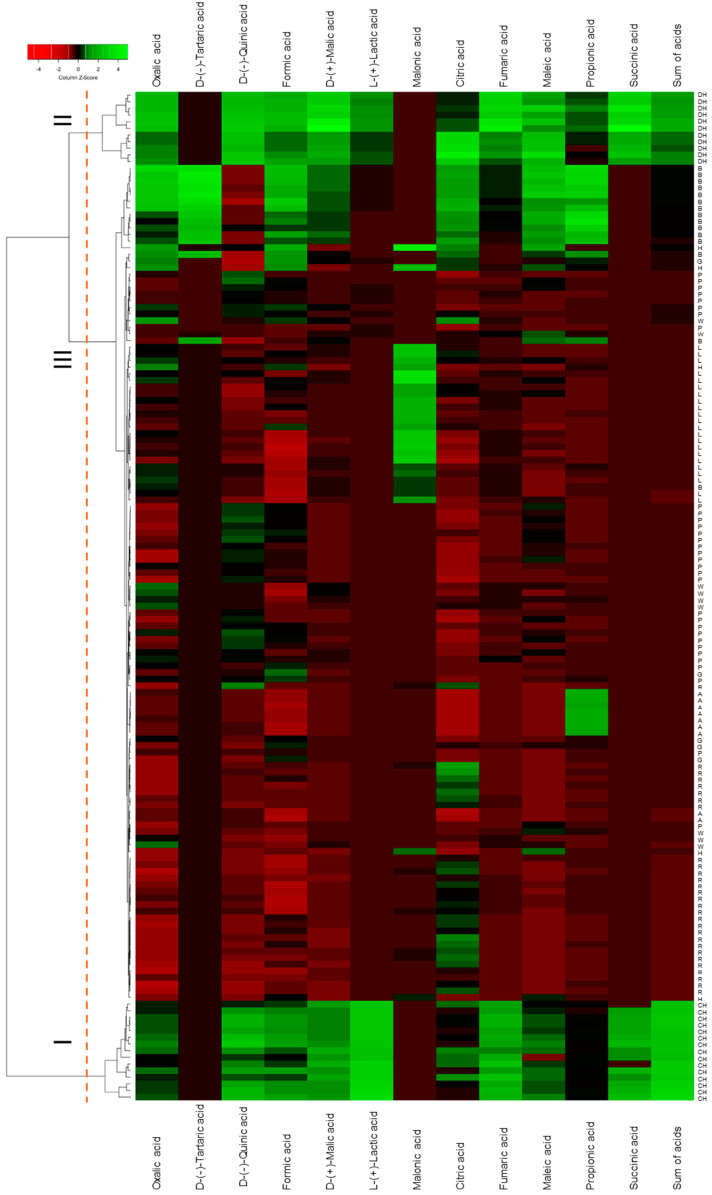 Figure 1
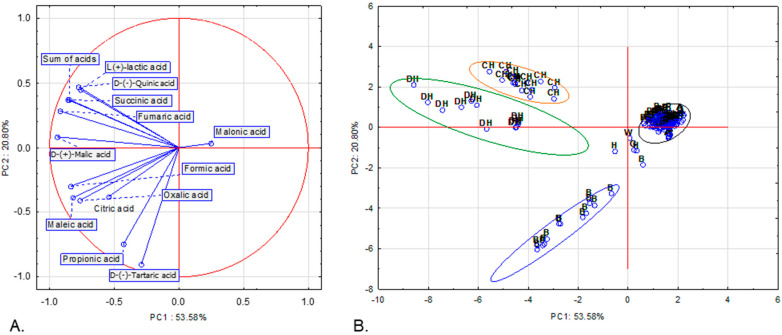 Figure 2
Peer Reviews
No public reviews on file for this paper yet. If you reviewed it on a platform where reviews are public (OpenReview, ICLR, NeurIPS, ICML), you can paste yours below so the community can read it here.
Videos
No videos yet. Explain this paper in a talk, walkthrough, or lecture? Add one.
Taxonomy
TopicsBee Products Chemical Analysis · Insect and Arachnid Ecology and Behavior · Insect and Pesticide Research