Unraveling the Intrinsic Mechanisms Controlling the Variations in Density, Sensitivity, and Thermal Decomposition of Typical Nitroguanidine Derivatives
Pengshan Geng, Songsong Guo, Xiaohong Wang, Chao Xing, Chenxi Qu, Jieyu Luan, Kewei Ding

TL;DR
This study explores how structural changes in nitroguanidine compounds affect their density, sensitivity, and thermal decomposition, offering insights for optimizing energetic materials.
Contribution
The paper reveals intrinsic mechanisms linking molecular structure to macro-level properties in nitroguanidine derivatives.
Findings
ANGN has higher density due to stronger hydrogen bonding from enhanced electrostatic and inductive interactions.
Weaker electrostatic interactions in ANQ lead to lower density and different sensitivity behavior.
A strong linear correlation (R2 = 0.92) exists between N–NO2 bond dissociation energy and NO2 mass spectral intensity.
Abstract
Nitroguanidine-type energetic materials have broad application prospects in the propellant field, and their derivative structures are numerous, with intricate changes in macro-level properties. However, due to the unclear inherent evolution mechanisms of these macro-level properties, the structural optimization of compounds and the iteration of application systems face difficulties. This work systematically investigates the variations in density, thermal decomposition, and sensitivity among nitroguanidine (NQ), 1-amino-2-nitroguanidine (ANQ), and 1-amino-2-nitroguanidinium nitrate (ANGN). Hirshfeld surface and bond dissociation energy analyses reveal that strengthened electrostatic and inductive interactions enhance the hydrogen bonding network in ANGN, leading to its higher density compared to NQ. In contrast, weakened electrostatic interactions in ANQ result in a less robust hydrogen…
Genes, proteins, chemicals, diseases, species, mutations and cell lines named across the full text — each resolved to its canonical identifier and authoritative record.
Click any figure to enlarge with its caption.
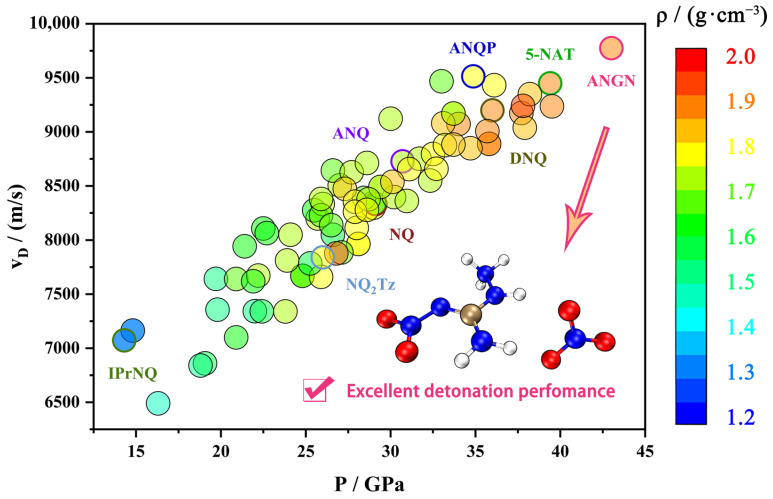 Figure 1
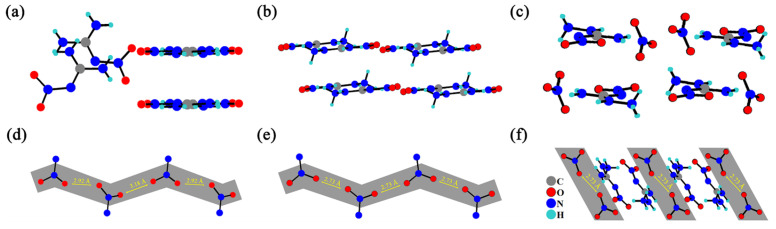 Figure 2
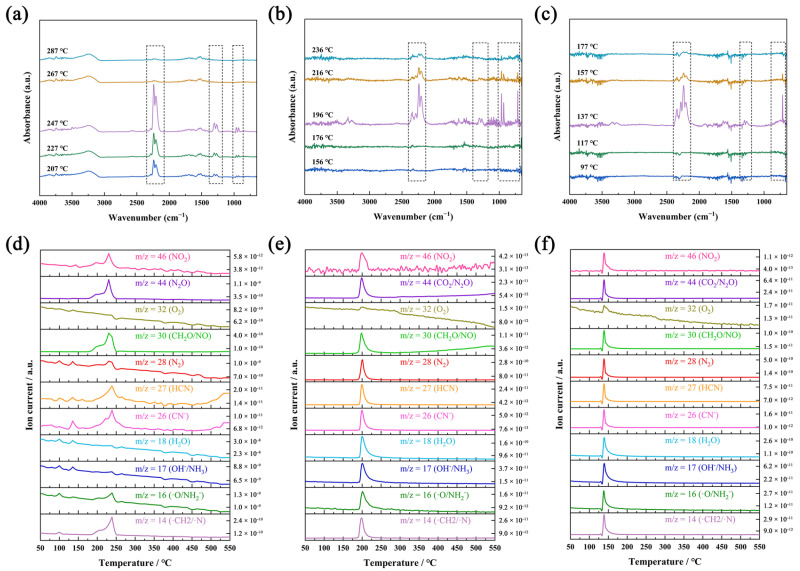 Figure 3
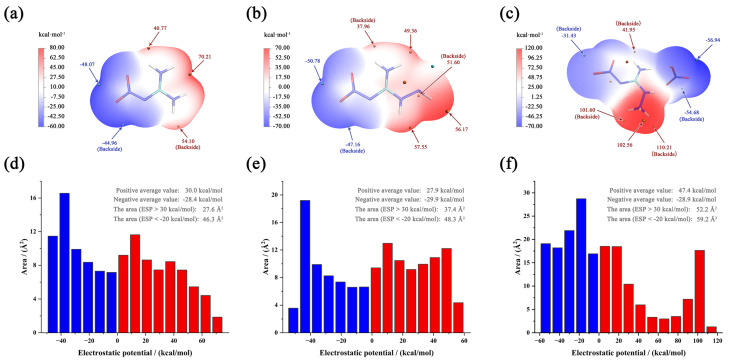 Figure 4
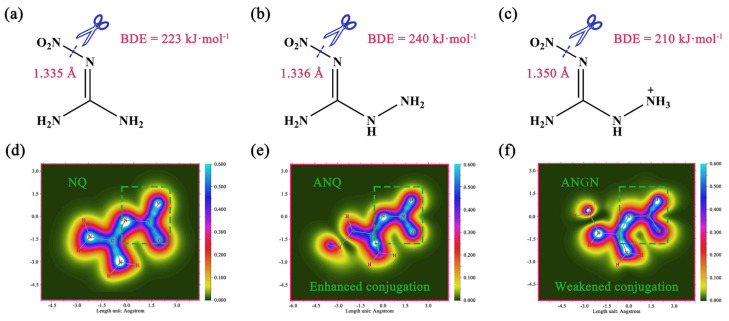 Figure 5
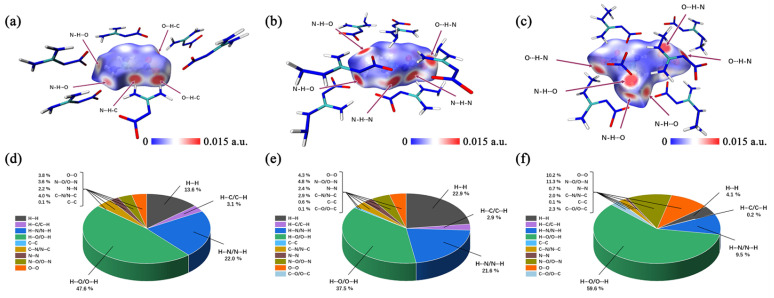 Figure 6
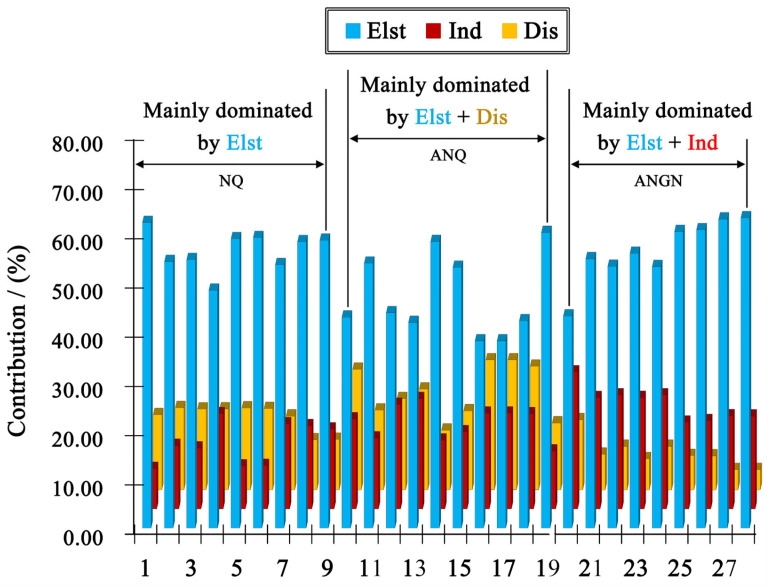 Figure 7
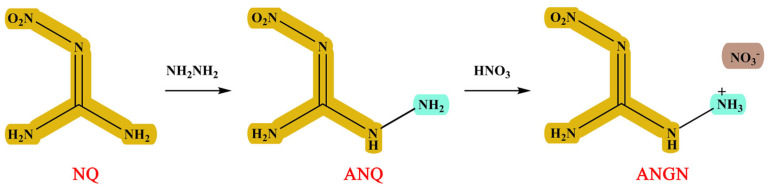 Figure 8
Peer Reviews
No public reviews on file for this paper yet. If you reviewed it on a platform where reviews are public (OpenReview, ICLR, NeurIPS, ICML), you can paste yours below so the community can read it here.
Videos
No videos yet. Explain this paper in a talk, walkthrough, or lecture? Add one.
Taxonomy
TopicsEnergetic Materials and Combustion · Rocket and propulsion systems research · Electromagnetic Launch and Propulsion Technology