Mitochondrial DNA Replication and Disease: A Historical Perspective on Molecular Insights and Therapeutic Advances
Shruti Somai, Chioma H. Aloh, Dillon E. King, William C. Copeland

TL;DR
This paper reviews the role of mitochondrial DNA replication in health and disease, and how molecular insights have shaped current therapies.
Contribution
The paper provides a historical and molecular overview of mitochondrial replisome proteins and their impact on understanding and treating mitochondrial diseases.
Findings
Mitochondrial DNA replication involves nuclear-encoded proteins like DNA polymerase gamma and Twinkle helicase.
Mutations in mitochondrial replication genes and nucleotide metabolism genes cause a range of mitochondrial disorders.
Current therapies for mitochondrial diseases are influenced by molecular insights into mitochondrial DNA replication.
Abstract
Mitochondria are vital for cellular energy production, as these organelles generate most of the cellular energy required for various metabolic processes. Mitochondria contain their own circular DNA, which is present in multiple copies and is exclusively maternally inherited. Cellular energy in the form of adenosine 5′-triphosphate is produced via oxidative phosphorylation and involves the coordinated expression of genes encoded by both the nuclear and mitochondrial genomes. Mitochondrial DNA itself is replicated by a dedicated set of nuclear-encoded proteins composed of the DNA polymerase gamma, the Twinkle helicase, the mitochondrial single-stranded DNA binding protein, as well as several accessory factors. Mutations in these genes, as well as in the genes involved in nucleotide metabolism, are associated with a spectrum of mitochondrial disorders that can affect individuals from…
Genes, proteins, chemicals, diseases, species, mutations and cell lines named across the full text — each resolved to its canonical identifier and authoritative record.
Click any figure to enlarge with its caption.
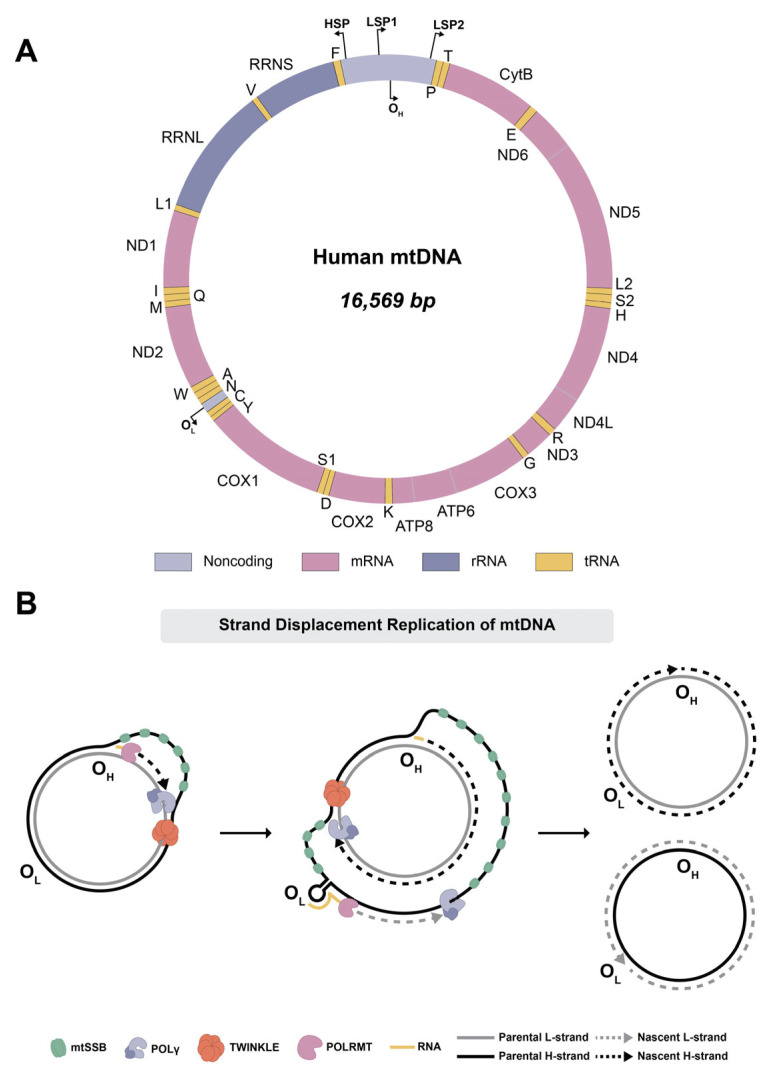 Figure 1
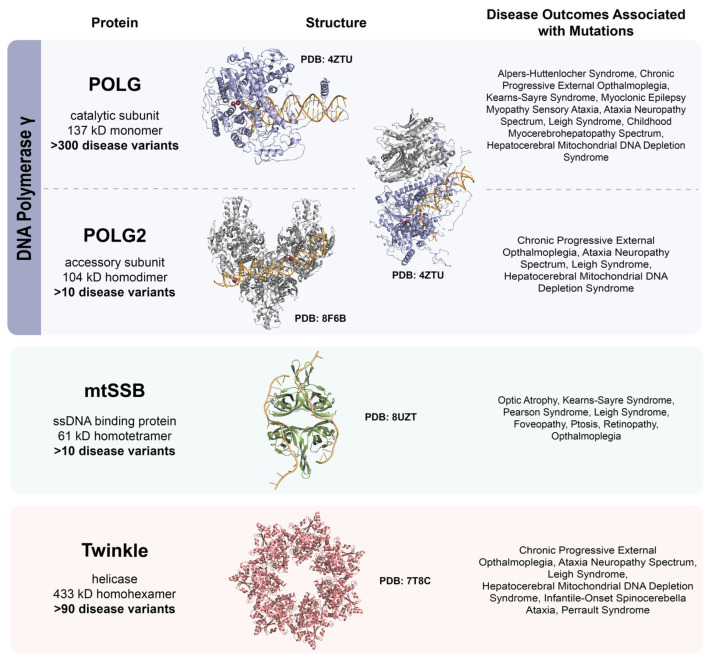 Figure 2
Peer Reviews
No public reviews on file for this paper yet. If you reviewed it on a platform where reviews are public (OpenReview, ICLR, NeurIPS, ICML), you can paste yours below so the community can read it here.
Videos
No videos yet. Explain this paper in a talk, walkthrough, or lecture? Add one.
Taxonomy
TopicsMitochondrial Function and Pathology · Metabolism and Genetic Disorders · ATP Synthase and ATPases Research