Pentosidine and Bone Properties in Autosomal Dominant Polycystic Kidney Disease
Magdalena Jankowska, Abdul Rashid Qureshi, Mathias Haarhaus, Per Magnusson, Alicja Dębska-Ślizień, Peter Barany, Olof Heimburger, Peter Stenvinkel, Bengt Lindholm

TL;DR
This study finds that elevated pentosidine levels in autosomal dominant polycystic kidney disease may be linked to changes in bone properties, suggesting a new connection between oxidative stress and bone health.
Contribution
The study identifies pentosidine as a novel marker associated with bone properties in ADPKD, distinct from other CKD etiologies.
Findings
Plasma pentosidine levels are higher in ADPKD compared to other CKD etiologies across CKD stages G1–G5.
Higher pentosidine in ADPKD individuals with preserved kidney function correlates with bone mineral density and bone material strength index.
Pentosidine is not associated with conventional bone biomarkers but is linked to cortical bone properties in ADPKD.
Abstract
Background/Objectives: Altered bone metabolism and oxidative stress are features of autosomal dominant polycystic kidney disease (ADPKD). Pentosidine, an advanced glycation end-product and a marker of oxidative stress, has been proposed as an indicator of impaired bone health. This study aimed to evaluate whether pentosidine levels are altered in ADPKD and whether they are associated with bone characteristics in comparison with other chronic kidney disease (CKD) etiologies and healthy individuals. Methods: We conducted a cross-sectional analysis of three cohorts comprising 554 adults. Participants were categorized by CKD etiology and stage (G1–G5). ADPKD stages were classified according to the Mayo Imaging Classification (MIC). Plasma pentosidine was analyzed by HPLC and ELISA. Bone material strength index (BMSi) was assessed using a microindentation technique (OsteoProbe®). Results:…
Genes, proteins, chemicals, diseases, species, mutations and cell lines named across the full text — each resolved to its canonical identifier and authoritative record.
Click any figure to enlarge with its caption.
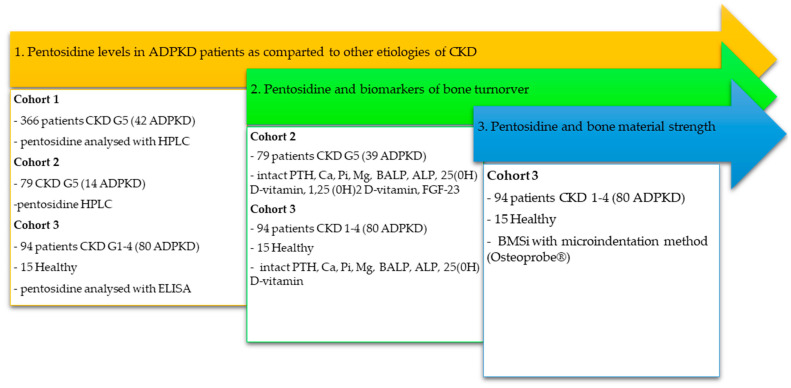 Figure 1
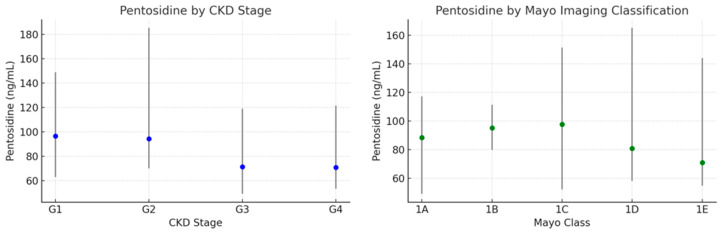 Figure 2
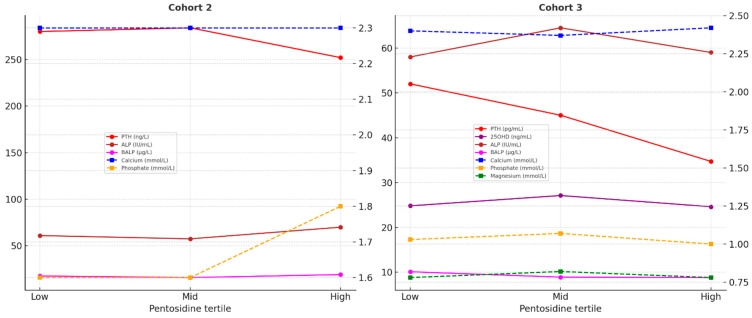 Figure 3
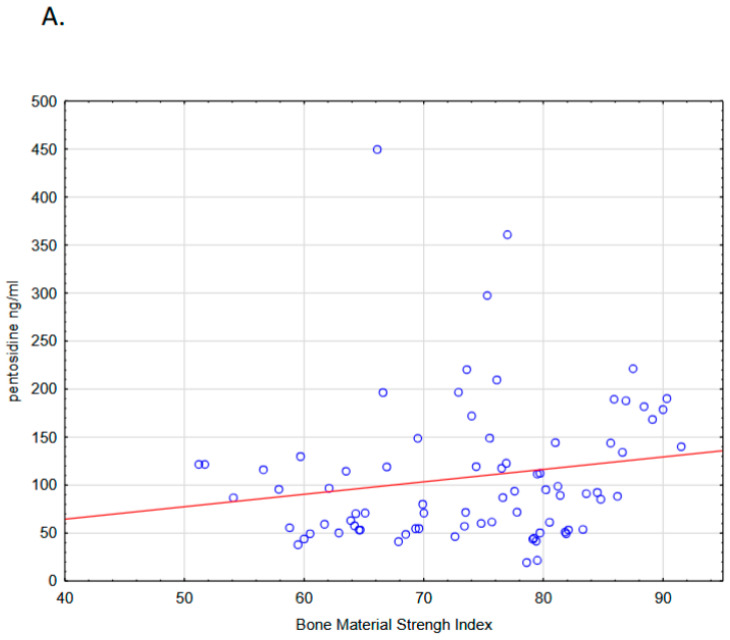 Figure 4
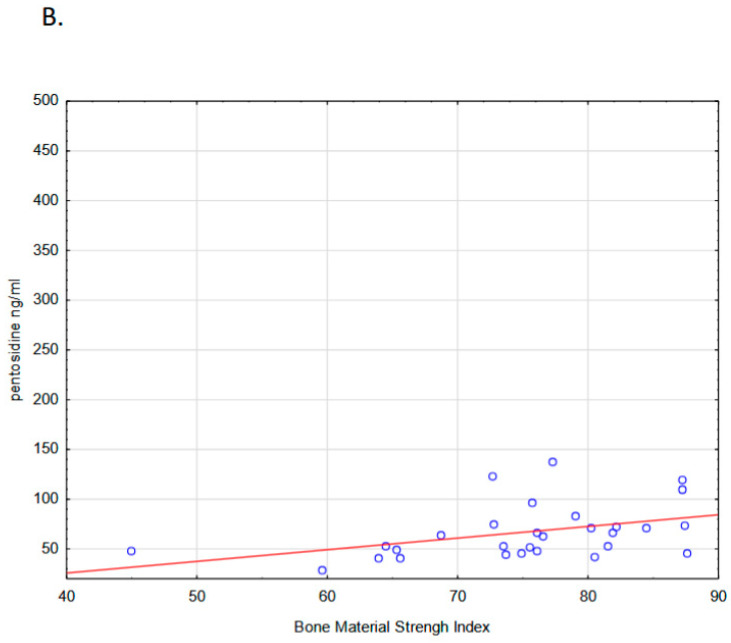 Figure 5
Peer Reviews
No public reviews on file for this paper yet. If you reviewed it on a platform where reviews are public (OpenReview, ICLR, NeurIPS, ICML), you can paste yours below so the community can read it here.
Videos
No videos yet. Explain this paper in a talk, walkthrough, or lecture? Add one.
Taxonomy
TopicsAdvanced Glycation End Products research · Genetic and Kidney Cyst Diseases · Biological Research and Disease Studies