Minimally Invasive Treatment of Three-Part Proximal Humerus Fractures: A Two-Center Comparative Study of Plate Fixation and Intramedullary Nailing
Calogero Puma Pagliarello, Vito Pavone, Fabrizio Quattrini, Pietro Maniscalco, Virginia Masoni, Corrado Ciatti

TL;DR
This study compares two minimally invasive surgical techniques for treating three-part proximal humerus fractures and finds that intramedullary nailing offers faster recovery and fewer complications than plate fixation.
Contribution
The study provides a comparative analysis of plate fixation and intramedullary nailing for three-part proximal humerus fractures, highlighting the advantages of nailing in terms of operative efficiency and recovery.
Findings
Intramedullary nailing was associated with shorter operative and hospitalization times.
The nailing group showed fewer postoperative complications and faster functional recovery.
Long-term clinical outcomes were comparable between the two techniques.
Abstract
Background/Objectives: Proximal humerus fractures account for approximately 5% of all skeletal injuries, and their optimal surgical management remains debated. The optimal fixation method for three-part proximal humerus fractures remains a matter of debate. This study aimed to compare the clinical and radiological outcomes of two minimally invasive osteosynthesis techniques—plate fixation and intramedullary nailing—for the treatment of three-part proximal humerus fractures. Methods: Sixty-six patients aged 60–80 years were retrospectively analyzed across two centers adopting different institutional preferences. Thirty-three patients were treated with minimally invasive plate fixation and thirty-three with intramedullary nailing. The mean age was 67.8 ± 4.2 years, and the mean follow-up duration was 27.2 months. Functional and clinical outcomes were evaluated using the Barthel Index,…
Genes, proteins, chemicals, diseases, species, mutations and cell lines named across the full text — each resolved to its canonical identifier and authoritative record.
Click any figure to enlarge with its caption.
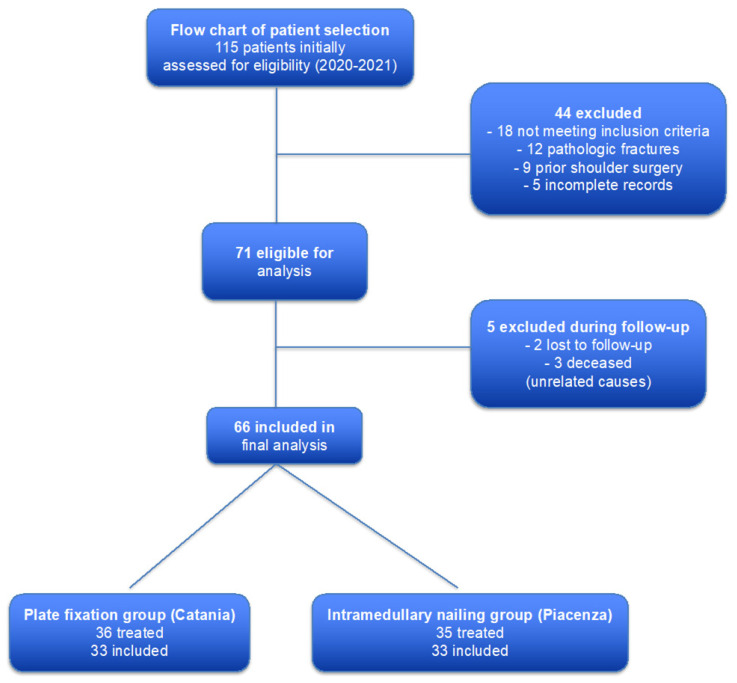 Figure 1
 Figure 2
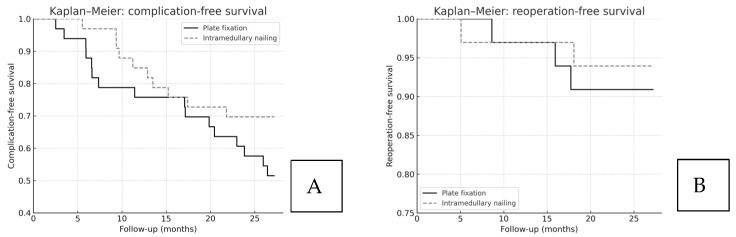 Figure 3
Peer Reviews
No public reviews on file for this paper yet. If you reviewed it on a platform where reviews are public (OpenReview, ICLR, NeurIPS, ICML), you can paste yours below so the community can read it here.
Videos
No videos yet. Explain this paper in a talk, walkthrough, or lecture? Add one.
Taxonomy
TopicsShoulder Injury and Treatment · Shoulder and Clavicle Injuries · Nerve Injury and Rehabilitation