Larvicidal Activities of Juniperus chinensis var. kaizuka Leaf Essential Oil and Its Constituents Against Dengue Vector Mosquitoes, Aedes aegypti and Ae. albopictus
Ji-Yun Chang, Kun-Hsien Tsai, Yu-Mei Huang, Yu-Yi Chang, Chong-Syuan Huang, Yu-Tung Ho, Sheng-Yang Wang, Mei-Ling Chang, Hui-Ting Chang

TL;DR
This study shows that the essential oil from Juniperus chinensis var. kaizuka leaves has strong larvicidal effects against dengue vector mosquitoes.
Contribution
The study identifies the chemical composition and larvicidal activity of Juniperus chinensis var. kaizuka leaf essential oil against Aedes mosquitoes.
Findings
The leaf essential oil showed strong larvicidal activity with LC50 values below 50 μg/mL against Aedes aegypti and Ae. albopictus.
Major constituents like limonene, sabinene, and β-myrcene also exhibited significant larvicidal effects.
Brine shrimp lethality activity was highly correlated with larvicidal activity, indicating potential for environmental control.
Abstract
Juniperus is one of the vital genera of the Cupressaceae family; many Juniperus species (juniper) have served as traditional folk medicines. The aims of this study are to analyze its chemical composition and to evaluate the mosquito larvicidal activity of leaf essential oil and its constituents. The constituents of leaf essential oil were analyzed by GC-MS. Leaf essential oil is mainly composed of hydrocarbon monoterpenes and, secondly, oxygenated monoterpenes. Leaf essential oil exhibited good brine shrimp lethality activity, which is highly correlated with larvicidal activity, with the LC50 of 49.89 μg/mL. Leaf essential oil showed a strong mosquito larvicidal activity against two Dengue vector mosquitoes, Aedes aegypti and Ae. albopictus, the LC50 values for both species were lower than 50 μg/mL. Among the major constituents of leaf essential oil, compounds limonene, sabinene, and…
Genes, proteins, chemicals, diseases, species, mutations and cell lines named across the full text — each resolved to its canonical identifier and authoritative record.
Click any figure to enlarge with its caption.
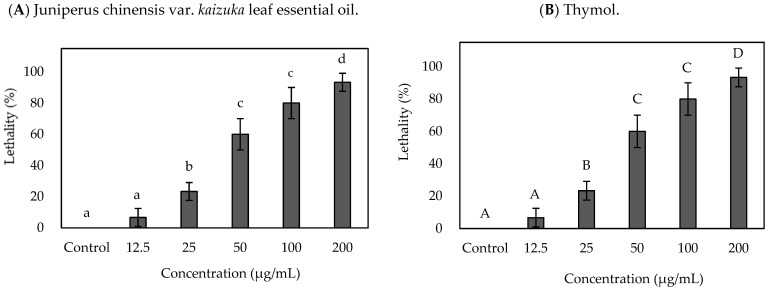 Figure 1
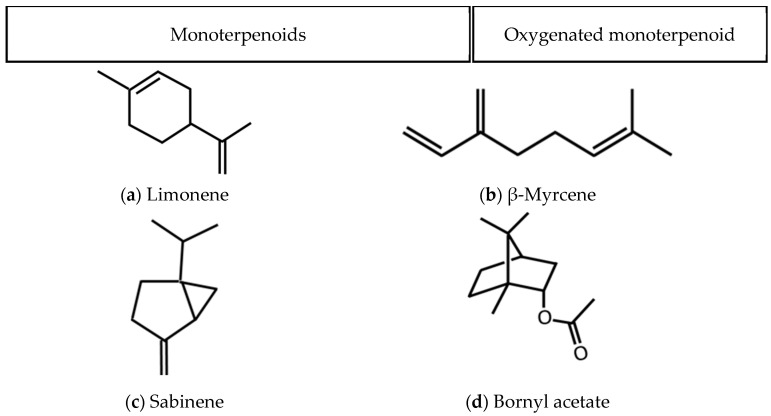 Figure 2
| RT | Compound | Formula | KI a | rKI b | Relative Content |
|---|---|---|---|---|---|
| 7.06 | α-Pinene | C10H16 | 935 | 939 | 0.98 ± 0.04 |
| 7.62 | Camphene | C10H16 | 952 | 954 | 0.93 ± 0.04 |
| 8.45 | Sabinene | C10H16 | 974 | 975 | 3.54 ± 0.13 |
| 9.11 | β-Myrcene | C10H16 | 990 | 990 | 8.11 ± 0.25 |
| 10.16 | α-Terpinene | C10H16 | 1017 | 1017 | 0.73 ± 0.03 |
| 10.77 | Limonene | C10H16 | 1033 | 1029 | 33.33 ± 1.14 |
| 11.90 | γ-Terpinene | C10H16 | 1059 | 1059 | 1.12 ± 0.04 |
| 13.08 | Terpinolene | C10H16 | 1085 | 1088 | 1.44 ± 0.05 |
| 13.74 | Linalool | C10H18O | 1098 | 1096 | 0.11 ± 0.02 |
| 17.34 | Terpinen-4-ol | C10H18O | 1179 | 1177 | 1.23 ± 0.02 |
| 22.14 | Bornyl acetate | C12H20O2 | 1284 | 1285 | 23.71 ± 0.73 |
| 26.28 | β-Elemene | C15H24 | 1388 | 1390 | 0.49 ± 0.01 |
| 30.31 | Cubebol | C15H26O | 1515 | 1515 | 1.41 ± 0.03 |
| 31.20 | β-Elemol | C15H26O | 1549 | 1549 | 14.99 ± 1.73 |
| 33.33 | γ-Eudesmol | C15H26O | 1630 | 1632 | 0.54 ± 0.38 |
| Monoterpenes | 50.19 ± 2.10 | ||||
| Oxygenated monoterpenes | 25.05 ± 0.91 | ||||
| Sesquiterpenes | 0.49 ± 0.02 | ||||
| Oxygenated sesquiterpenes | 16.94 ± 2.52 | ||||
| Total identified | 92.67 ± 0.41 | ||||
Peer Reviews
No public reviews on file for this paper yet. If you reviewed it on a platform where reviews are public (OpenReview, ICLR, NeurIPS, ICML), you can paste yours below so the community can read it here.
Videos
No videos yet. Explain this paper in a talk, walkthrough, or lecture? Add one.
Taxonomy
TopicsInsect Pest Control Strategies · Essential Oils and Antimicrobial Activity · Ziziphus Jujuba Studies and Applications
1. Introduction
Juniperus spp. (junipers), which includes more than 60 species, are evergreen trees and widely distributed throughout the Northern Hemisphere, including temperate and subtropical regions. Junipers are found in Europe, Asia, North America, and even in alpine mountainous areas of the tropics, such as Africa. Research showed that berry extracts of Juniperus communis during the first and second year of maturity also displayed antibacterial and antioxidant activities [1]. Hrytsyna et al. examined the chemical constituents and antioxidant activity of juniper cone berries collected from different populations based on a cluster analysis. Tang et al. analyzed the phenol in juniper and hops, a total of 148 phenolic compounds were tentatively identified in juniper and hops (Humulus lupulus), among which phenolic acids (including hydroxybenzoic acids, hydroxycinnamic acids and hydroxyphenylpropanoic acids) and flavonoids (mainly anthocyanins, flavones, flavonols, and isoflavonoids) were the main polyphenols by using LC-ESI-QTOF/MS (liquid chromatography coupled with electrospray-ionization quadrupole time-of-flight mass spectrometry) [2,3,4]. Mërtiri et al. reported that the extracts of juniper berries have antioxidant and antibacterial activity [5]. Ivanova et al. found that juniper leaf extracts contain a great diversity of lignans (podophyllotoxin, deoxypodophyllotoxin) [6].
J. communis is the species in this genus that is widely used in wine and gin production. The bioactivities of folk medicinal plants in this genus include spasmolytic, wound healing, antioxidant, anti-inflammatory, antimicrobial, hypoglycemic, neuroprotective, antidiarrheal, analgesic, antipyretic, hypotensive, cardioprotective, anticancer, and antileishmanial effects, etc. [6,7]. Alhayyani et al. reported that J. procera leaves’ methanolic extract has anticancer activity [7]. Mediavilla et al. analyzed the activities of the essential oil steam-distilled from the leaves of J. communis following the Cascade Principle of biomass, which were crushed and steam-distilled. And the coarse fraction obtained from the separation of distilled juniper residual biomass, as pyrolysed in the pilot scale and separated into fractions to produce biochar and absorbents for the pet industry [6]. Meringolo et al. reported that essential oils and Extracts of J. macrocarpa Sm. and J. oxycedrus possess the antioxidant and anti-proliferative activities [8]. Raasmaja et al. found the water extract of Juniperus communis L. induces cell death and sensitizes cancer cells to cytostatic drugs through p53 and PI3K/Akt Pathways [9]. Raina et al. reported that the plant Juniperus communis L. is rich in aromatic oils, invert sugars, resins, catechin, organic acid, terpenic acids, leucoanthocyanidin, alkaloids, flavonoids, tannins, gums, lignins, wax, etc., and has been used for thousands of years as an herbal medicine for the treatment of diseases in human and animals [10].
Mosquitoes are common insects in daily life. Mosquitoes would transmit pathogens that cause serious, life-threatening diseases such as malaria, dengue, chikungunya, West Nile fever, yellow fever, and Zika [11,12,13,14]. Dengue (break-bone fever) is a disease caused by the dengue virus, and in 1907, the pathogen was found to be a virus, which comprises four serotypes (DENV-1-4) with both increasing dengue incidence, with an estimated 390 million cases reported annually, and case fatality [15,16]. According to the World Health Organization (WHO), approximately half of the global population is currently at risk of dengue, with an estimated 100 to 400 million infections occurring annually, which is the viral infection transmitted to humans through the bite of infected female vector mosquitoes, mainly by Aedes aegypti and Ae. albopictus [17]. Synthetic insecticides (such as permethrin, cypermethrin, and deltamethrin), organophosphates (like malathion), and carbamates have been used to reduce the transmission of mosquito-borne diseases for decades [17,18]. Currently, the extensive use of synthetic compounds has increased substantially, making mosquito-borne disease elimination and prevention more difficult over the years due to insecticide resistance in mosquitoes [19,20]. Mosquito-borne diseases are currently considered important threats, as increasing drug resistance to synthetic larvicides leads to more mosquito-borne diseases. Many researchers investigated the new alternative drug of synthetic larvicides from plant natural products with great interest [21,22,23,24,25,26]. Karunamoorthi et al. reported that the essential oil of Juniperus procera (J. procera) (Cupressaceae) possessed the larvicidal activity against late third instar larvae of Anopheles arabiensis (An. arabiensis) Patton, which is the principal malaria vector in Ethiopia [27].
The aims of this study are to analyze its chemical composition and to evaluate the mosquito larvicidal activity of leaf essential oil and its constituents from J. chinensis var. kaizuka against dengue vector mosquitoes, Aedes aegypti and Ae. albopictus.
2. Results and Discussion
2.1. Chemical Constituents of Juniperus chinensis var. kaizuka Leaf Essential Oil
The yield of leaf essential oil of J. chinensis var. kaizuka was 0.82 ± 0.02% after 6 h hydrodistillation. The constituents of A. dammara leaf essential oil were analyzed by using GC-MS, and 21 constituents were found in the gas chromatogram. According to Table 1, the constituents, comprising 92.67 ± 0.41% the total composition, were monoterpenes (50.19 ± 2.10%), oxygenated monoterpenes (25.05 ± 0.91%), sesquiterpene hydrocarbon (0.49 ± 0.02%), diterpene hydrocarbon (13.64 ± 1.46%), and oxygenated sesquiterpene (16.94 ± 2.52%). Most of the major constituents were oxygenated monoterpenes, containing bornyl acetate (23.71 ± 0.73%) and β-Elemol (14.99 ± 1.73%).
Sowndhararajan et al. analyzed the composition of essential oils from the needles, twigs, and berries of Juniperus chinensis L. in Korea. The major were bornyl acetate (2.85–20.70%), sabinene (10.23–18.13%), α-pinene (5.80–16.26), terpinen-4-ol (5.98–31.10), limonene (3.98–6.96%), β-pinene (3.05–4.39%), γ-terpinene (2.24–8.36%), α-elemol (1.74–4.77%) and α-cadinol (2.49–3.39%) [2,20]. Constituents of J. chinensis var. kaizuka leaf essential oil in Taiwan were similar to those of J. chinensis L. in Korea. Differences between two studies of chemical constituents of leaf essential oil may be due to the solar energy, maturity of leaf, collected region, environmental temperature, relative humidity, season, etc. [28].
2.2. Brine Shrimp Lethality Activity of Juniperus chinensis var. kaizuka Leaf Essential Oil
Figure 1 shows the lethal activity of Juniperus leaves’ essential oil and thymol against the brine shrimp, respectively. A dose-dependent relationship is observed in lethal activity to brine shrimp with J. chinensis var. kaizuka leaves’ essential oil. When 50 μg/mL of essential oil is applied to brine shrimp, the mortality rate is higher than 50%. The lethal concentration value of 50% mortality, LC_50_ value, is 49.89 μg/mL of essential oil to brine shrimp. The bark of Duguetia lanceolata vulgaris, an Annonaceae plant, contains main constituents such as β-Elemene, β-Selinene, and Caryophyllene oxide with steam distillation extraction. After 4 h of extraction time, the LC_50_ value of this essential oil is 60.7 μg/mL to brine shrimp [30]. These studies indicate good lethal activities against brine shrimp with Juniperus leaves essential oil. Previous studies consider that the good lethal activity to brine shrimp corresponded to the larvicidal activity of insects and antitumor activity [30,31,32,33]. Further study will evaluate the potential of Juniperus leaves’ essential oil. Figure 1B shows the positive control group of Thymol; the LC_50_ value of this essential oil is 15.97 μg/mL. Thymol is generally recognized as safe (GRAS) by the United States Food and Drug Administration, USFDA. Thymol also affects cancer cell line activity. Blažíčková et al. (2022) found the LC_50_ values of the human colorectal cancer cell line (HCT-116) are 65 μg/mL with Thymol [32,34,35]. The brine shrimp toxicity test has been used to evaluate the extracts for larvicidal activity against insects and potential cytotoxic activity of cancer cells [32,36,37,38]. After brine shrimp nauplii were treated with different specimens for 24 h, the number of dead nauplii was counted and converted to lethality. Figure 1 shows the lethal activity of J. chinensis var. kaizuka leaves’ essential oil and Thymol. Both the treatments of leaf essential oil reached 100% lethality after 24 h incubation at the concentrations of 100 and 200 μg/mL. At the concentrations of 50 μg/mL and 25 μg/mL, leaf essential oil caused 63.3 ± 5.77% and 27.5 ± 9.57% lethality of brine shrimp, respectively. A dose-dependent relationship is observed in lethal activity to brine shrimp with Juniperus leaves essential oil. When 50 μg/mL of essential oil is applied to brine shrimp, the mortality rate is higher than 50%. The lethal concentration value of 50% mortality, LC_50_ value, is 49.89 μg/mL of essential oil to brine shrimp. Niksic et al. (2021) analyzed the Thymus vulgaris essential oil using steam distillation and evaluated brine shrimp lethal activity; results show that the LC_50_ value is 60.38 μg/mL [30]. The bark of Duguetia lanceolata vulgaris, an Annonaceae plant, contains main constituents such as β-Elemene, β-Selinene, and Caryophyllene oxide. With steam distillation extraction, the LC_50_ value of this essential oil is 60.7 μg/mL to brine shrimp [34]. These studies indicate good lethal activities against brine shrimp with Juniperus leaves essential oil. Previous studies consider that the good lethal activity to brine shrimp relates to antitumor activity [31,38,39]. Imran et al. (2021) evaluate the anti-parasitic, insecticidal, cytotoxic and anti-alzheimer potential of Ajuga bracteosa Wallich ex Bentham leaf extracts; results revealed that natural prod-ucts with significant cytotoxic potential against Artemia salina are worth further ex-ploration its bioactivities [40].
After brine shrimp nauplii were treated with different specimens for 24 h, the number of dead nauplii was counted and converted to lethality; the result is shown in Figure 1. Both the treatments of leaf essential oil reached 100% lethality after 24 h incubation at the concentrations of 100 and 200 μg/mL. At concentrations of 50 μg/mL and 25 μg/mL, leaf essential oil caused 63.3 ± 5.77% and 27.5 ± 9.57% lethality of brine shrimp, respectively.
2.3. Brine Shrimp Lethality Activity of J. chinensis var. kaizuka Leaf Essential Oil Against Dengue Vector Mosquitoes
After brine shrimp nauplii were treated with different specimens for 24 h, the number of dead nauplii was counted and converted to lethality; the result is shown in Figure 1. Both the treatments of leaf essential oil reached 100% lethality after 24 h incubation at the concentrations of 100 and 200 μg/mL. At the concentrations of 50 μg/mL and 25 μg/mL, leaf essential oil caused 63.3 ± 5.77% and 27.5 ± 9.57% lethality of brine shrimp, respectively. Table 2: Regarding the effective lethal concentration (LC_50_ and LC_90_) of J. chinensis var. kaizuka leaf essential oil and thymol, positive control, against brine shrimp after 24 h of treatment. LC_50_ and LC_90_ values of leaf essential oil were 43.06 ± 1.97 μg/mL and 88.20 ± 2.92 μg/mL, respectively, after 24 h. The toxicity of J. chinensis var. kaizuka leaf essential oil, with LC_50_ values below 100 μg/mL, can be categorized into toxic/highly toxic levels [41,42]. LC_50_ and LC_90_ values of thymol were 8.43 ± 1.46 and 15.99 ± 1.75 μg/mL, respectively, after 24 h. Result of LC_90_ values that were consistent with the findings of Niksic et al. reported in the 95% confidence interval of LC_50_ of thymol were 5.20–56.29 μg/mL [30]. The bark of Duguetia lanceolata vulgaris, an Annonaceae plant, contains main constituents such as β-elemene, β-selinene, and caryophyllene oxide with steam distillation extraction. The LC_50_ value of this essential oil is 60.7 μg/mL to brine shrimp [30].
2.4. Mosquito Larvicidal Activity of J. chinensis var. kaizuka Leaf Essential Oil and Its Constituents
Extensive uses of synthetic insecticides cause global damage to human health and the ecosystem [12,17,18,19,20]. Synthetic insecticides also pollute the aquatic environment, which is a hazardous worldwide problem, and induce long-term harmful effects on living aquatic organisms [19]. More bio-insecticides and bio-larvicides are found in natural products [19]. Table 3 presents the Effective lethal concentrations of J. chinensis var. kaizuka leaf essential oil and rotenone, a broad-spectrum natural insecticide and pesticide [43,44], against Ae. aegypti larvae.
Ae. aegypti transmits the pathogens that cause the Zika fever, dengue fever, yellow fever, and chikungunya [18,19]. Suppressing the proliferative ability is one of the solutions to reduce the transmission of mosquito-related diseases. The results displayed that leaf essential oil could be effective against fourth-instar Ae. aegypti larvae after 48 h incubation. The treatment with leaf essential oil caused 40 ± 8.16% mortality at 24 h and 82.50 ± 5.0% mortality at 48 h at a concentration of 200 μg/mL. As for the positive control, rotenone possessed Ae. aegypti larvicidal activity when the concentration was above 3.75 μg/mL and 0.938 μg/mL at 24 h and 48 h, respectively. LC_50_ and LC_90_ of specimens are shown in Table 4. LC_50_ and LC_90_ values of leaf essential oil were 155.04 ± 8.44 μg/mL and 207.07 ± 6.98 μg/mL, respectively, after 48 h.
Govindarajan et al. reported that δ-cadinene is one of the major constituents of Kadsura heteroclita essential oil, and δ-cadinene is effective against Ae. aegypti larvae [45]. The LC_50_ of δ-cadinene was 9.03 μg/mL. J. chinensis var. kaizuka leaf essential oil presented similar or higher larvicidal activity than Santalum album essential oil and the methanolic extracts of Blumea mollis, Tagetes erecta, and Lantana camera [20,32]. The LC_50_ and LC_90_ of S. Santalum album essential oil were 250.64 μg/mL and 709.06 μg/mL, respectively [20]. The LC_50_ of the methanolic extracts of Blumea mollis, Tagetes erecta, and Lantana camera were 273.68, 275.80, and 445.52 μg/mL, respectively [19].
Table 4 shows the effective lethal concentrations of Ae. albopictus larvae treated with leaf essential oil and its compounds. The order of mosquito larvicidal activity of the main constituents of leaf essential oil is Limonene > β-Myrcene > Sabinene > Bornyl acetate. Among the essential oil components, limonene exhibited the strongest larvicidal activity against Aedes aegypti. After 48 h of treatment, the LC_50_ and LC_90_ values for limonene were 36.40 μg/mL and 70.41 μg/mL, respectively, indicating its potential as an effective larvicide. After 48 h of treatment, the LC_50_ and LC_90_ values for limonene were 36.40 μg/mL and 70.41 μg/mL, respectively. The LC_50_ value of sabinene against Aedes aegypti larvae was also below 100 μg/mL. After 48 h of exposure, the LC_50_ and LC_90_ values for sabinene were 70.77 μg/mL and 70.41 μg/mL, respectively. Bornyl acetate showed lower larvicidal efficacy compared to other essential oil components, with LC_50_ and LC_90_ values of 102.43 μg/mL and 181.00 μg/mL, respectively, after 48 h of treatment.
Table 5 shows the lethal activity of compounds of J. chinensis var. kaizuka leaf essential oil. The order of mosquito larvicidal activity of the main constituents of leaf essential oil is Limonene > β-Myrcene > Sabinene > Bornyl acetate. Among them, limonene also performed the best lethal activity against Ae. albopictus larvae than that of the leaves’ essential oil. LC_50_ value for a processing period of 24 h for leaves’ essential oil is 46.74 μg/mL, and that for Limonene is 24.12 μg/mL. LC_90_ value of Limonene after 48 h processing time is 41.80 μg/mL. All of them are below 50 μg/mL. Following those results, after 48 h processing time, the LC_50_ values of Sabinene and β-Myrcene to Ae. albopictus larvae are 58.63 μg/mL and 53.52 μg/mL, and the LC_90_ of those are 114.67 μg/mL and 94.25 μg/mL. The activity of bornyl acetate is lower than that of other compounds. After 48 h of treatment, the LC50 and LC90 values are 146.57 μg/mL and 193.39 μg/mL, respectively. Except for Bornyl acetate, J. chinensis var. kaizuka leaves essential oil and its compounds (except bornyl acetate) all have good larvicidal activity against albopictus larvae, showing potential to be natural pesticides to kill Ae. albopictus larvae.
Figure 2 shows the chemical structures of major compounds of J. chinensis var. kaizuka leaf essential oil. Among the major compounds of leaf oil, limonene, β-myrcene, and sabinene showed the best mosquito larvicidal effect. These active compounds all contain the isopropenyl group. Results revealed that monoterpenoids with an isopropenyl group may exhibit superior mosquito larvicidal activity.
3. Materials and Methods
3.1. Plant Material
The fresh leaves of Juniperus chinensis var. kaizuka were collected from the campus (25.017° N, 121.540° E) of National Taiwan University, Taipei, Taiwan, in April 2022. The species was identified, and a voucher specimen (JC0423) was deposited in the Lab of Chemical Utilization of Biomaterials, School of Forestry and Resource Conservation, National Taiwan University.
3.2. Hydrodistillation of Essential Oil
The freshly collected leaves of J. chinensis var. kaizuka were hydrodistilled for 6 h using the Clevenger-type apparatus. Leaf essential oil was stored in airtight containers for further investigation [46,47,48].
3.3. Gas Chromatography-Mass Spectrometry (GC-MS) Analysis
To investigate the chemical composition of the essential oil, the analysis of leaf oil was carried out on a Trace GC Ultra (Thermo Fisher Scientific, Waltham, MA, USA) equipped with a DB-5 MS column (Crossbond 5% methylpolysiloxane, 30.0 m length × 0.25 mm diameter, thickness 0.25 μm; Agilent Technologies, Santa Clara, CA, USA). The oven temperature started from 60 °C for 3 min, programmed at 3 °C min^−1^ to 120 °C, 5 °C min^−1^ to 240 °C for 3 min. The injector temperature was held at 250 °C; injection size 1 μL neat; split ratio 10:1. The carrier gas was helium; 1.0 mL/min flow rate; ion source temperature 250 °C; mass range 50–650 amu. The constituents of essential oil were characterized by the National Institute of Standards and Technology (NIST) V.2.0 and Wiley 7.0 GC-MS libraries and Kovats indices in the reference [29]. Kovats’ indices of the constituents are determined by retention times of n-alkanes (C7–C30) on the DB-5MS column. The relative contents of constituents were determined by the peak area of the spectrum [28,45,49,50,51].
3.4. Mosquito Larvicidal Assay
Fourth-instar larvae of Aedes aegypti were obtained from Prof. Tsai’s lab at the Department of Public Health, National Taiwan University. The mosquito larvicidal assay was performed at room temperature. Ten larvae, 19.80 mL ddH_2_O, and 200 μL specimen were added to an experimental vial and incubated for 48 h. The experiment was performed in quadruplicate. Mortality was recorded at 24 h and 48 h, respectively. Median lethal concentration (LC_50_) and LC_90_ were calculated based on the mortality of each treatment. Specimens, leaf essential oil, and rotenone are dissolved in DMSO; rotenone (natural insecticide) is the positive control [31,38,52].
3.5. Brine Shrimp Lethality Assay
Brine shrimp lethality assay was performed according to the related studies [18]. The eggs of brine shrimp (Artemia salina Leach) were hatched in a segregated plastic tray filled with sea salt water (35 g/L). The time for hatching brine shrimp nauplii required approximately 48 h. To perform BST, ten nauplii were placed in an experimental vial. Then, 50 μL of leaf essential oil and 4.95 mL seawater were added to each vial. Leaf essential oil was dissolved in DMSO. The positive control is thymol. The experiment was performed in quadruplicate. The vials containing sea salt water and specimens were incubated for 24 h at room temperature. After the incubation, the number of dead nauplii was counted under a stereomicroscope (Hamlet SEM-H, Taipei, Taiwan) and converted into lethality (%), LC_50_, and LC_90_ [30,32,33].
3.6. Statistical Analysis
The Statistical Analysis and Research of data obtained in the research was analyzed by SPSS (Statistical Product and Service Solutions) (Chicago, IL, USA) Version 16 with Scheffe’s multiple comparison test, a post hoc multiple comparison method. The significance level was set to 5%. (α = 0.05).
4. Conclusions
The chemical constituents of J. chinensis var. kaizuka leaf essential oil. The Chemical composition of JUNIPERUS was analyzed by gas chromatography-mass spectrometry, and they were mainly monoterpenoids. Its major compounds were limonene (33.33%), bornyl acetate (23.71%), β-elemol (14.99%), β-myrcene (8.11%), and sabinene (3.54%). In the mosquito larvicidal activity assay, J. chinensis var. kaizuka and limonene demonstrate significant mosquito larvicidal activity against fourth-instar larvae of Aedes aegypti and Ae. albopictus, J. chinensis var. kaizuka leaf essential oil also presented excellent lethality against Artemia salina (brine shrimp). Sabinene showed the closest activity effect to essential oil; both LC_50_ values were lower than 50 μg/mL, and LC_90_ values were lower than 200 μg/mL. J. chinensis var. kaizuka leaf essential oil, which is found in rich larvicidal monoterpenoids, may be applied to the mosquito larvicidal activity for mosquito control against Dengue Vector Mosquitoes larvae, Aedes aegypti and Ae. albopictus. Results revealed that monoterpenoids with an isopropenyl group may exhibit superior mosquito larvicidal activity.
The reference list from the paper itself. Each links out to its DOI / PubMed record.
- 1Belov T. Terenzhev D. Bushmeleva K.N. Davydova L. Burkin K. Fitsev I. Gatiyatullina A. Egorova A. Nikitin E. comparative analysis of chemical profile and biological activity of Juniperus communis L. Berry extracts Plants 202312340110.3390/plants 1219340137836145 PMC 10574284 · doi ↗ · pubmed ↗
- 2Höferl M. Stoilova I. Schmidt E. Wanner J. Jirovetz L. Trifonova D. Krastev L. Krastanov A. Chemical composition and antioxidant properties of Juniper berry (Juniperus communis L.) Essential Oil. Action of the essential oil on the antioxidant Protection of Saccharomyces cerevisiae model organism Antioxidants 20143819810.3390/antiox 301008126784665 PMC 4665443 · doi ↗ · pubmed ↗
- 3Hrytsyna M. Salamon I. Peleno R. Vargova V. Identification and analysis of the content of biologically active substances of juniper cone berries and their antioxidant activity Horticulturae 202410123710.3390/horticulturae 10121237 · doi ↗
- 4Tang J. Dunshea F.R. Suleria H.A.R. LC-ESI-QTOF/MS Characterization of phenolic compounds from medicinal plants (Hops and Juniper Berries) and their antioxidant activity Foods 20199710.3390/foods 901000731861820 PMC 7023254 · doi ↗ · pubmed ↗
- 5Mërtiri I. Păcularu-Burada B. Stănciuc N. Phytochemical characterization and antibacterial activity of Albanian Juniperus communis and Juniperus oxycedrus berries and needle leaves extracts Antioxidants 20241334510.3390/antiox 1303034538539878 PMC 10968248 · doi ↗ · pubmed ↗
- 6Ivanova D.I. Nedialkov P.T. Tashev A.N. Olech M. Nowak R. Ilieva Y.E. Kokanova-Nedialkova Z.K. Atanasova T.N. Angelov G. Najdenski H.M. Junipers of Various Origins as Potential Sources of the Anticancer Drug Precursor Podophyllotoxin Molecules 202126517910.3390/molecules 2617517934500615 PMC 8433965 · doi ↗ · pubmed ↗
- 7Alhayyani S. Akhdhar A. Asseri A.H. Mohammed A.M.A. Hussien M.A. Roselin L.S. Hosawi S. Al Abbasi F. Alharbi K.H. Baty R.S. Potential Anticancer Activity of Juniperus procera and Molecular Docking Models of Active Proteins in Cancer Cells Molecules 202328204110.3390/molecules 2805204136903287 PMC 10004709 · doi ↗ · pubmed ↗
- 8Meringolo L. Bonesi M. Sicari V. Rovito S. Passalacqua N.G. Loizzo M.R. Tundis R. Essential Oils and Extracts of Juniperus macrocarpa Sm. and Juniperus oxycedrus L.: Comparative Phytochemical Composition and Anti-Proliferative and Antioxidant Activities Plants 202211102510.3390/plants 1108102535448753 PMC 9031627 · doi ↗ · pubmed ↗