Gastroesophageal reflux disease and the phantom of Barrett’s esophagus after most-often-used bariatric procedures: are future investigations necessary?
Italo BRAGHETTO, Barbara CARREÑO, Ramón HERMOSILLA, Rafael ZANABRIA

TL;DR
This review examines how common bariatric surgeries affect the risk of GERD and Barrett’s esophagus, finding that sleeve gastrectomy may increase BE risk while Roux-en-Y bypass may protect against it.
Contribution
The study highlights the need for high-quality, long-term research to clarify the effects of bariatric procedures on Barrett’s esophagus.
Findings
Sleeve gastrectomy is associated with a higher risk of Barrett’s esophagus compared to the general population.
Roux-en-Y gastric bypass appears to protect against Barrett’s esophagus.
Other bariatric procedures lack sufficient data and require further investigation.
Abstract
Studies have investigated the incidence of gastroesophageal reflux disease (GERD) and Barrett’s esophagus (BE) after common bariatric surgeries. However, many of these studies have bias or limitations. Therefore, it is crucial to determine the true incidence of GERD in long-term follow-ups (FUs) post-surgery. The aim of this study was to review and summarize long-term data regarding the incidence of post-surgical GERD and BE after various bariatric procedures, discuss the characteristics of current information available, and establish the need for future studies to determine objective functional outcomes that have not yet been reported. A narrative review was conducted using multiple electronic databases, including the review of 15 meta-analyses and over 200 articles. The quality of studies analyzing GERD and BE following bariatric surgery varies widely. Some papers provide detailed…
Genes, proteins, chemicals, diseases, species, mutations and cell lines named across the full text — each resolved to its canonical identifier and authoritative record.
Click any figure to enlarge with its caption.
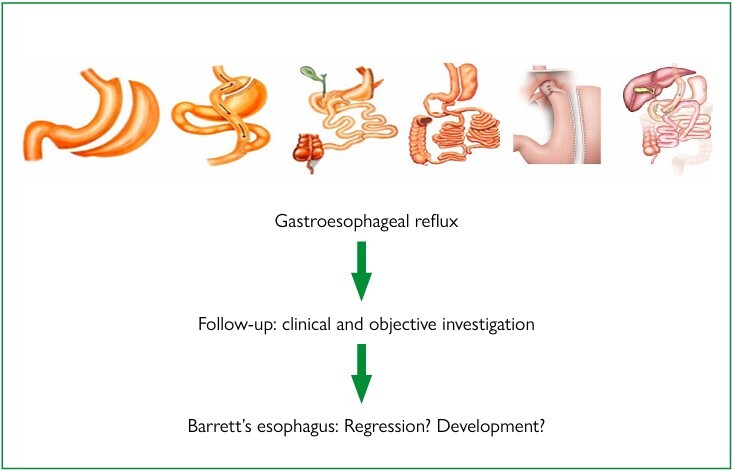 Figure 1
| SG (%) | RYGB (%) | OAGB (%) | SADI (%) | N-SG (%) | SG-Bip (%) | ||
|---|---|---|---|---|---|---|---|
| GERD symptoms | 15.2–74.7 | 2–22 | 1.6–52.1 | 6.3–7.5 | 36.6 | 1–22 | |
| PPI use | 13–61 | 7.4–64 | 19.3–27.1 | No data | No data | 2–7 | |
| Esophagitis (%) | 33.1–44.4 | 5.8–17.6 | 15–29.1 | No data | No data | ||
| A | 19–92 | 5.1–57.1 | 10 | ||||
| B | 19.4–32.7 | 6.2 | 16 | ||||
| C | 11.8–18 | 4 | |||||
| D | 9.1 | ||||||
| Barrett’s esophagus | 2.2–27.2 | 0–17.6 | 1–9.5 | No data | No data | No data | |
| Hiatal hernia | 1.2–45 | 20–53.2 | 29.2 | No data | No data | No data | |
| Esophageal carcinoma | 0.05% of cases reported | 0.003% | 5 cases reported | No data | No data | No data | |
| Author | Year | Follow-up (months) | PPI use (%) | Esophagitis A-B-C (%) | Barrett’s esophagus (%) | Hiatal hernia (%) | Cancer (%) | GERD symptoms (%) | Incompetent LES (%) |
|---|---|---|---|---|---|---|---|---|---|
| Catheline et al.
| 2013 | 60 | 33.3 | ||||||
| Qumseya et al.
| 2021 | 60 | 7.4 | 11.6 | |||||
| Kular et al.
| 2014 | 60 | 21 | 21 | |||||
| Rawlins et al.
| 2012 | 60 | 11 | ||||||
| Sebastianelli et al.
| 2019 | 78±15 | 52 | 41 | 18.8 | 76 | |||
| Felsenreich et al.
| 2022 | 120 | 70 | 44 | 13 | 50 | 55 | ||
| Soricelli et al.
| 2018 | 66 | 63.9 | 60.1 | 13.1 | 70.2 | |||
| A=22.2 | |||||||||
| B=19.4 | |||||||||
| C=18.5 | |||||||||
| Csendes et al.
| 2019 | 126 | 120 | 58.5 | 4 | 18.9 | |||
| Braghetto et al.
| 2016 | 36 | 15.5 | 1.2 | |||||
| 2019 | 60 | 4.8 | |||||||
| Dimbezel et al.
| 2020 | 35.6 | 27.1 | ||||||
| Genco et al.
| 2021 | 58 | 68.1 | 74.7 | 17.2 | 3 cases | 58.9 | ||
| A=46.3 | |||||||||
| B=32.7 | |||||||||
| C=11.8 | |||||||||
| D=9.1 | |||||||||
| Alexandrou et al.
| 2015 | 60 | 16 | ||||||
| Angrisani et al.
| 2016 | 60 | 8–15 | ||||||
| Ferrer et al.
| 2022 | 60 | 31.4 | 0.9 | 30.5 | 76 | |||
| Arman et al.
| 2016 | 140.7 | 11.1 | 21.4 | |||||
| Al Sabah et al.
| 2021 | 60 | 15.2 | 2.2 | 4.4 | ||||
| Tai et al.
| 2012 | 12 | 66.7 | 27.3 | 47 | ||||
| A=36.4 | |||||||||
| B=24.2 | |||||||||
| C=6.1 | |||||||||
| Braghetto et al.
| 2016 | 60 | 15.5 | 4.8 | 5.7 | 15.5 | 85.1 | ||
| 77.5 | |||||||||
| Yeung et al.
| 3–132 | ||||||||
| Benvenga et al.
| 2020 | 66–85.2 | 19.2 | 1.3 | 23.1 | ||||
| Bevilacqua et al.
| 2020 | 4.06 | 0.84 | 0.08 | |||||
| Salminen et al.
| 2022 | 120 | 64 | 31 | 4 | 63 | |||
| Lallemand et al.
| 2020 | 60 | 27.1 | 8.5 | 42.4 | 50.8 | |||
| Migaczewski et al.
| 2021 | 60 | 30 | 27 | 56.7 | ||||
| Swei et al.
| 2023 | 14 | 6 | 54 | |||||
| Kermansaravi et al.
| 2023 | 60 | 29.5 | 5.7 | |||||
| A=15.2 | |||||||||
| B=11.4 | |||||||||
| C=2.9 | |||||||||
| Moulla et al.
| 2023 | 30 | |||||||
| Thereaux et al.
| 2017 | 48 | 21 | ||||||
| Navarini et al.
| 2020 | 12 | 51.4 | 60 | 40 | ||||
| Matar et al.
| 2020 | 60 | 73.6 | 37.9 | 1.1 | 16.9 | |||
| Leslie et al.
| 2021 | 124 | 4.7 | 12.1 | 0.7 | 60.2 | 39.3 | ||
| Mean±SD | 68.7±32.8 | 44.3±34 | 33.8±19.1 | 8.2±7.5 | 26.4±20.4 | 44.9±22.6 | 51.8±28.6 |
| Author | Year | Follow-up (months) | PPI use (%) | Esophagitis A-B-C-D (%) | Barrett’s esophagus (%) | Hiatal hernia (%) | Cancer (%) | GERD symptoms (%) |
|---|---|---|---|---|---|---|---|---|
| Borbély et al.
| 2018 | 45.6 | 57.4 | 51.1 | 14.9 | 53.2 | ||
| A=23.4 | ||||||||
| B=17 | ||||||||
| C=4.3 | ||||||||
| D=6.4 | ||||||||
| Braghetto et al.
| 2022 | 60 | 28.9 | 5.7 | 40 | |||
| A=18.9 | ||||||||
| B=5 | ||||||||
| C=2.5 | ||||||||
| D=2.5 | ||||||||
| Santonicola et al.
| 2022 | 60–130 | 24.4 | |||||
| Wölnerhanssen et al.
| 2023 | 84±12 | 19.8 | 27 | 1.6 | 18.6 | 26.7 | |
| Felsenreich et al.
| 2020 | 14.6 | 12.9 | 12.9 | 0 | 24.4 | ||
| Salminen et al.
| 2022 | 120 | 28 | 7 | 5 | |||
| Boerlage et al.
| 2020 | 7 | 2 | |||||
| Huang et al.
| 2003 | 49 | 0.4 | |||||
| Braghetto et al.
| 2016 | 60 | 3 | |||||
| Genco et al.
| 2021 | 120 | 24.4 | 22 | 17.5 | |||
| Navarini et al.
| 2020 | 15 | 17 | 10 | ||||
| Matar et al.
| 2020 | 60 | 62.5 | 17.6 | 5.1 | 16.6 | ||
| Csendes et al.
| 2022 | 120 | 5.4 | 3.2 | 2.2 | 6.5 | ||
| Andrew et al.
| 2018 | 4.7 | ||||||
| Leslie et al.
| 2021 | 1.1 | 35.3 | |||||
| Mean±SD | 72.6±37.9 | 34.5±20.3 | 17.2±14.7 | 7.5±5.9 | 18.9±20.7 | 18.6±10.2 |
| Author | Year | Follow-up (months) | PPI use (%) | Esophagitis A-B-C (%) | Barrett’s esophagus (%) | Hiatal hernia (%) | Cancer (%) | GERD symptoms (%) |
|---|---|---|---|---|---|---|---|---|
| Landreneau et al.
| 2019 | 36 | 18.8 | |||||
| Antonopulos et al.
| 2020 | 34 | 60.9 | |||||
| Sargsyan et al.
| 2024 | 47.8 | ||||||
| Felsenreich et al.
| 2022 | 48 | 28.3 | 9.5 | 0 | 28.3 | ||
| 2023 | 60 | 33.3 | 11.1 | 0 | ||||
| Esparham et al.
| 2023 | 15 | 1 | 6 | ||||
| Kermansaravi et al.
| 2020 | 19.3 | 29.2 | |||||
| Nehmeh et al.
| 2021 | 11.6 | 4.6 | |||||
| Davarpanah et al.
| 2023 | 0–55 | ||||||
| Genco et al.
| 2021 | 27.1 | 52.1 | |||||
| Soprani et al.
| 2020 | 60 | 74 | |||||
| Szymański et al.
| 2022 | 24 | 48 | 8 | 6 | |||
| Sohrabi et al.
| 2020 | 60 | 10.6 | 6.6 | ||||
| Slagter et al.
| 2021 | 36 | 3 | 2 | 57 | |||
| Shenouda et al.
| 2018 | 6 | 45 | 55 | ||||
| Salama and Hassan
| 2017 | 12 | 4 | |||||
| Robert et al.
| 2019 | 24 | 10.1 | 1.7 | 7.7 | |||
| Plamper et al.
| 2023 | 25 | 8.3 | |||||
| Pizza et al.
| 2020 | 24 | 5.7 | 2.9 | 5 | |||
| Mustafa et al.
| 2020 | 24 | 8.5 | 0.5 | 13.5 | |||
| Mahdy et al.
| 2023 | 12 | 11 | 10.8 | ||||
| Katayama et al.
| 2021 | 6 | 70 | |||||
| Mean±SD | 27.36±17.01 | 16.40±15.13 | 23.70±22.79 | 4.80±4.18 | 7.90±15.98 | 28.38±22.59 |
| Author | Year | Follow-up (months) | PPI use (%) | GERD symptoms (%) | Barrett’s esophagus (%) | Hiatal hernia (%) |
|---|---|---|---|---|---|---|
| Deffain et al.
| 2024 | 48 | 25 | 33 | NR | NR |
| Yashkov et al.
| 2021 | 60 | 7.5 | NR | NR | |
| Surve et al.
| 2020 | 9 | 12.5 | NR | NR | |
| Admella et al.
| 2023 | 36 | 30.2 | NR | NR | |
| Mean±SD | 38.25±21.82 | 20.8±12.67 |
| Surgery | Years | Follow-up (months) | GERD postop (%) |
| Esophagitis (%) | Hiatal hernia (%) | Barrett’s esophagus (%) |
|---|---|---|---|---|---|---|---|
| SG+HH repair
| 2013 | 12–48 | 20.4±17.5 | 12–30.6 | 30.2–55 | 11–55 | 1.1 |
| SG+FP
| 2017 | 22–60 | 5±8.1 | 11–13.6 | 2–20 | NR | 0 |
Peer Reviews
No public reviews on file for this paper yet. If you reviewed it on a platform where reviews are public (OpenReview, ICLR, NeurIPS, ICML), you can paste yours below so the community can read it here.
Videos
No videos yet. Explain this paper in a talk, walkthrough, or lecture? Add one.
Taxonomy
TopicsBariatric Surgery and Outcomes · Gastroesophageal reflux and treatments · Esophageal Cancer Research and Treatment
INTRODUCTION
It is well established that obese patients experience more severe esophagitis and Barrett’s esophagus (BE) than individuals of normal weight^ 80 ^. Bariatric procedures, designed to reduce excess weight, are expected to positively impact the prevention of gastroesophageal reflux disease (GERD) and BE. Studies have investigated the incidence of GERD and BE after common bariatric surgeries, such as sleeve gastrectomy (SG) and Roux-en-Y gastric bypass (RYGB), but there is a need to evaluate other less common procedures such as one-anastomosis gastric bypass (OAGB), single-anastomosis duodenal ileostomy (SADI), fundoplication (FP)-sleeve (Nissen or Rosetti) (N-SG, R-SG), and sleeve with bipartition (SG-Bip)^ 1,15,31,33,34,36,120 ^.
Evidence suggests that the weight loss induced by these procedures could be a significant factor in reducing the risk of BE^ 54,99 ^. However, this conclusion is not entirely valid due to several biases and limitations in many studies. Conversely, the anatomical and mechanical changes resulting from these procedures could potentially contribute to the development of GERD and BE^ 7,23 ^. Therefore, it is crucial to determine the true incidence of GERD in long-term FUs post-surgery and identify which anatomical or pathophysiological factors must be investigated more deeply. The objectives are:
- To review and summarize long-term data (5–10 years) regarding the incidence of post-surgical GERD and BE after various bariatric procedures;
- To discuss the characteristics of current information available;
- To discuss whether development or regression of BE occurs following bariatric surgery;
- To establish the need for future studies to determine objective functional outcomes that have not yet been reported.
METHODS
A narrative review was conducted using multiple electronic databases (PubMed, MEDLINE, Google Scholar, and Scopus) with search terms such as "gastroesophageal reflux," "obesity," "Barrett’s esophagus," "bariatric surgery," "sleeve gastrectomy," "gastric bypass," and variations including "Roux-en-Y," "one anastomosis," "single anastomosis duodenal interposition," "gastric bipartition," and "Nissen-sleeve." We reviewed 15 meta-analyses and over 200 articles, but only those with long-term FU data and written in English were included. Studies were selected based on pre- or postoperative occurrence of BE in patients undergoing bariatric surgery, excluding those with unavailable full texts, early postoperative data, or written in other languages.
RESULTS
Numerous papers have examined GERD and BE following bariatric surgery. The quality of these studies varies widely, with some providing detailed clinical and functional outcomes, while others offer limited information. Symptoms of GERD show a broad range, with SG alone or combined with other procedures generally associated with more frequent symptoms. The same trend is observed in the use of proton pump inhibitors (PPIs) and the presence of varying grades of esophagitis post-surgery. BE is most commonly observed after SG, also reported following RYGB, especially when the surgical technique was not properly executed. Data on other bariatric procedures are scarce, and cancer development post-surgery is rare and difficult to assess^ 2,10,38,42,60,72,76,77,112 ^ (Table 1).
Table 1: Summary of GERD consequences after different bariatric procedures 2,10,38,42,60,72,76,77,112 .
Table 2 presents data reported over the past decade following long-term FU after SG. Most authors agree on the high percentage of symptoms (affecting nearly 80% of patients), the presence of esophagitis, and the use of PPIs. The rate of de novo postoperative GERD development varies from 4.06 to 74.7% (mean=33.8±19.1) and that of BE ranges from 0.2 to 27% (mean: 8.2±7.5). Notably, only seven out of 32 papers (21.9%) reported more than 10% incidence of BE. In contrast, several studies reported hiatal hernia (HH) incidence rates exceeding 20%.
Genco et al.^ 51 ^ recently reported three cases of adenocarcinoma after SG. Although the rate and probability of progression from BE to esophageal adenocarcinoma (EAC) are not well defined, the increasing popularity and execution of SG may lead to a rise in BE incidence. Clinical and endoscopic FUs are essential for prevention, early diagnosis, and epidemiologic data collection. Gastric reflux worsened more often after SG (31.8%) than after RYGB (6.3%)^ 8,9,14,17,19,20,24,26,32,37,41,43,44,48,50,51,59,61,62,67,77,78,80,83,84,88,93,94,104,110,113,115,117,125,128 ^.
Papers reporting data on GERD and BE after RYGB also show wide variation in incidence (Table 3), with some focused solely on postoperative symptoms, while others included objective results from endoscopic studies^ 12,80,100,112 ^. These papers reported incidences of various grades of esophagitis, ranging from 0.4 to 26.7%, with most being grade A, and some authors noting grade C or D esophagitis. BE incidence was confirmed at rates from 1.6 to 17.5% (mean: 7.5±5.9). Adil et al.^ 3 ^, in their meta-analysis, reported the percentage of BE and response to RYGB but warned about the quality of reports (low or intermediate). Only two papers described BE rates over 10%, likely due to technical errors^ 50 ^. Conversely, Csendes et al. demonstrated a very low rate of symptoms, erosive esophagitis, BE, and HH after 10 years of FU, probably due to a very small gastric pouch (4.46 cm)^ 3,21-23,25,35,45,50,53,77,99,100,117,123 ^. Data regarding manometry and pH monitoring are scarce.
The literature on GERD data after OAGB is scarce compared to the extensive reports after SG or RYGB. Most reports are incomplete, confusing, and of poor quality due to incomplete data and inconclusive findings. Reflux symptoms after OAGB vary widely, ranging from 0 to 55%, and PPI use is as high as 51.1%. The incidence of erosive esophagitis ranges from 15 to 70%, with BE incidence reported in only two papers (1–9.5%), indicating unreliable data (Table 4)^ 8,16,42,46,47,50,58,60,63,68,69,75,82,89,90,92,95,98,103,105,106,108,109,114,117,121 ^.
Deffain et al.^ 39 ^ conducted a retrospective study on 179 patients regarding GERD after single-anastomosis duodenoileal bypass with sleeve gastrectomy (SADI-S). Four years of FU showed that 33% had GERD and 25% used PPIs postoperatively to control their symptoms, though the method of reporting these findings was not described. Yashkov et al.^ 124 ^ reported GERD symptoms in 7.5% of patients, Surve et al.^ 111 ^ in 12.5%, and Admella et al.^ 4 ^, in a prospective study of 246 patients, noted a progressive increase in GERD after SADI-S, rising from 18.8 to 30.2% over 3 years. These papers did not report on esophagitis, HH, or BE postoperatively^ 111,124 ^ (Table 5).
Few specific data are available on outcomes after SG plus FP or HH repair (Table 6). These papers focus mainly on the presence or remission of GERD symptoms, with few reporting on esophagitis, BE, or HH post-surgery. The overall quality of evidence is low due to the observational study design, heterogeneity, lack of blinded outcome assessment, short FU periods, and evidence of publication bias. However, the combination of antireflux maneuvers with SG appears to improve preoperative symptoms. The reported rate of GERD symptoms varies depending on the FU period, with BE mentioned in only one paper. Regarding the incidence of BE post N-SG or R-SG, the rate of de novo BE after 2 years is nil, though one paper reported one case of adenocarcinoma after 5 years of FU^ 5,6,11,13,18,27,29,30,34,65,71,73,79,81,86,87,118,119 ^.
For GERD post-SG with Bipart, 32 papers were reviewed. Only four included data on GERD after the procedure, with one paper reporting a 12% incidence of GERD symptoms. There was no mention of esophagitis, HH, or BE^ 102,105 ^.
Data regarding esophagitis or BE regression or progression after other antireflux procedures such as Hill gastropexy, use of the ligament of Teres, and sphincter augmentation with the Linx device are not available.
DISCUSSION
This study focused on BE development after bariatric procedures, as GERD symptoms, esophagitis, and other GERD-related issues have been sufficiently analyzed previously. A key observation is the lack of updated information on less common bariatric surgeries regarding BE. There is significant variability in the focus of published papers: some discuss results in terms of symptoms but do not detail the specific characteristics of patient evaluations. Most current studies are conducted on SG, followed by RYGB. Data on OAGB are scarce because it is relatively newer, and no long-term studies have been reported. The situation is worse for SADI-S or SG combined with antireflux procedures, as the literature is insufficient to analyze the rate of BE development.
It has been shown that BE development is associated with obesity, making it reasonable to suggest that bariatric surgery would protect against its development. The reduced risk of BE diagnosis in bariatric surgery patients could potentially be attributed to improvements in metabolic factors such as weight and body mass index (BMI). While weight loss is likely the primary driver of BE risk reduction, other mechanisms may also be at play, including mechanical, anatomic, and hormonal changes. The current data on de novo BE may not be very accurate due to many factors, such as missing anatomic and pathophysiologic considerations that play a role in BE development or improvement after different bariatric procedures, and mainly due to unsuitable FU.
Reflux may be assessed both subjectively (clinical symptoms) and objectively (upper endoscopy, monitoring, esophageal manometry, and histologic findings in biopsy). However, these parameters are missing in most studies, making the results of this meta-analysis heterogeneous. Few papers provide complete postoperative evaluations. Additionally, many studies have short and incomplete FUs, which are insufficient for the correct diagnosis of BE. BE results from chronic acid and bile reflux over more than 5–10 years of reflux disease evolution.
Despite the lack of periodic endoscopic or histological evaluations throughout the FU, we must consider the current reported data on the postoperative incidence of BE after bariatric procedures.
The mechanisms involved in the development of GERD and BE after SG are well described in the literature, supporting the high incidence of BE, as confirmed in this review. This is very similar to the International Federation for the Surgery of Obesity and Metabolic Disorders (IFSO) report in 2018 which is as high as 4.6–6% within 5 years after surgery^ 24,26,37,41,43,44,49,62,78,104,110,113,115,125 ^. This finding is concerning, as the risk of BE in the general population is only 1–2%. If the estimates from current and other studies are correct, performing LSG could create a true "at-risk" population, with up to a six-fold higher risk of BE development^ 106 ^. Conversely, two papers reported no significant difference in BE risk between SG and RYGB cohorts (36% versus 5%; OR (odds ratio)=5.73; 95%CI (confidence interval) 5–5.11) and even suggested that bariatric surgery might protect against BE^ 5,6 ^. However, this study had many biases and limitations^ 23 ^.
In two European studies, a 5-year FU showed that 17–19% of patients who underwent SG developed de novo BE^ 50,61 ^. The Swiss Multicenter Bypass or Sleeve Study (SM-BOSS) randomized clinical trial indicated that gastric reflux worsened more often after SG (31.8%) than after RYGB (6.3%)^ 88 ^. BE after RYGB has been established as the procedure of choice for patients with GERD due to its protective action against disease progression. Interestingly, some recent studies have also found that RYGB may be associated with BE, dysplasia, and EAC development at variable periods following surgery^ 49,108,109 ^. Although gastric refluxate after RYGB is less acidic, it might still prove harmful to the esophagus, warranting further study^ 25,35 ^.
Many authors have demonstrated BE regression after RYGB, a parameter not included in Table 3. According to Gorodner et al.^ 52 ^, laparoscopic RYGB (LRYGB) is a suitable treatment for obese patients with BE, demonstrated by a 36% regression rate of this premalignant disease. Although BE persisted in the remaining patients, no progression to dysplasia was observed. More patients and longer FUs are needed for definitive conclusions. In a review including 28 articles, no cases of BE progression were reported. Postoperative BE regression rates varied from 36 to 62%. Another meta-analysis showed GERD resolution in 74.2% of the LRYGB group versus 28.0% in the LSG group. Based on our results, we recommend LRYGB for patients with severe reflux symptoms^ 20,52,70 ^.
Regarding BE after OAGB, the rates of esophagitis and BE were 15 and 1–6%, respectively. Many studies did not specify how they diagnosed GERD, with some relying solely on clinical symptoms or upper endoscopy, and fewer evaluating manometry or pH monitoring. These few papers demonstrated acidic reflux in few patients, with bile reflux noted during endoscopy. Transformation from reflux esophagitis to Barrett’s metaplasia, likely caused by bile reflux after OAGB, has been reported^ 42,64 ^.
Although OAGB can theoretically induce chronic biliary reflux, the incidence of biliary reflux and cancer risk has not been prospectively evaluated. Gastroesophageal reflux is a clear cause of BE metaplasia and adenocarcinoma of the esophagogastric junction (AEG). Although rare, five gastric cancers and two cases of AEG have been published. Clarification of this issue is urgently needed^ 28,38,40,46,47,57,60,66,92,96,97,107,116,126,127 ^. Unfortunately, our review confirmed the lack of long-term studies on de novo BE appearance or regression.
Regarding the SADI-S procedures reported by Deffain et al.^ 39 ^, Admella et al.^ 4 ^, Yashkov et al.^ 124 ^, and Surve et al.^ 111 ^, involving more than 500 patients, only GERD symptoms were reported. None of these studies provided objective mention of esophagitis, HH, or BE, nor did they include manometry or pH monitoring.
Studies have shown that SG with concomitant FP and HH repair is effective for reflux resolution and should be considered as an alternative to conventional SG in patients with obesity and HH and/or GERD. High-resolution impedance manometry (HRiM) showed increased lower esophageal sphincter (LES) function, and multichannel intraluminal impedancepH (MII-pH) showed excellent control of both acid exposure and reflux events.
For patients unwilling or unable to undergo RYGB, SG may offer a safe and effective option to avoid BE development, even for those with pre-existing BE. However, NSG remains under evaluation. Aiolfi et al.^ 6 ^ estimated an 11% postoperative GERD prevalence, and Castagneto-Gissey et al.^ 30 ^ reported a 5% postoperative GERD rate. Further studies with extended FU and direct comparisons to conventional SG are warranted^ 40,65 ^.
However, definitive and complete evaluations after long-term FU are missing.
Santoro et al.^ 102 ^ and Zhao et al.^ 126 ^ presented SG with transit bipartition (TB) as a surgical alternative effective in weight loss and GERD remission. SG+TB is potent for treating metabolic syndrome and obesity, addressing both obesity and GERD without mechanical restriction and significant malabsorption^ 101,102,126 ^. An experimental study showed that the TB procedure might protect the distal esophagus from histological changes associated with esophagitis, although clinical studies are needed to confirm these anti-reflux effects^ 122 ^.
Regarding cancer appearance after bariatric surgery, the incidence of esophageal cancer has not been well determined in large longitudinal cohort studies. Current evidence is limited, showing no difference in incidence between bariatric surgery patients and non-surgical obese patients^ 20,57 ^. Lazzati et al.^ 66 ^ reported a significant reduction in esophageal and gastric cancer incidence following bariatric surgery in a nationwide cohort. However, their multivariate analysis showed no significant difference between SG and RYGB regarding cancer incidence (hazard ratio [HR]=1.6, 95%CI 0.9–2.7, p=0.09 for SG versus RYGB). Conversely, other authors suggest that SG may increase the risk of BE development (0.02%) due to mechanisms that increase clinical GERD and progression to BE and potentially adenocarcinoma. Conversely, RYGB appears to be protective against disease progression to neoplastic BE during endoscopic surveillance (0.003%). Although acid/bile reflux decreases after RYGB, disease progression has still been observed, warranting continued endoscopic surveillance. The effect of RYGB on the development or progression of BE or EAC remains unclear^ 8,16,55,56,63,74,85,91,98 ^.
A significant limitation of this article is the consequence of the relatively low quality of the available literature on this topic. This is due to the low rate of BE detection before bariatric surgery and the lack of routine endoscopic screening before and after bariatric surgery in most studies. Additionally, there is often a lack of adherence to protocols such as the Prague classification or Seattle protocols for biopsies, small patient numbers, considerable heterogeneity, non-prospective studies, and short-term FUs. These factors introduce biases that could confound the results. Furthermore, inter-observer variation in the diagnosis of BE across the included studies may lead to observer bias. The postoperative use of PPIs, although clearly mentioned in many reports, could also potentially confound the results of the various meta-analyses.
The strengths of this investigation include an extensive data search encompassing reviews, meta-analyses, cohort series, and prospective studies. This critical analysis of the obtained data determines the current results, identifies deficiencies in the consulted articles, and highlights the need for prospective studies with comprehensive objective evaluations of patients. The IFSO supports further high-quality studies in this field, mainly prospective and/or population-based studies, to elucidate the exact magnitude of the issue and provide further guidance to the community as necessary. Researchers should particularly focus on identifying potentially confounding factors when assessing the impact of certain procedures on the development and/or progression of BE^ 49 ^.
CONCLUSIONS
Current evidence suggests that the incidence of BE is higher following LSG compared to the general population. This review provides compelling evidence that LSG may indeed lead to an increased risk of BE. Numerous studies suggest that RYGB protects against BE. To fully understand the effect of bariatric surgery on BE, other bariatric procedures must be extensively evaluated with well-controlled prospective studies with long-term FU.
The reference list from the paper itself. Each links out to its DOI / PubMed record.
- 1Aarts EO Mahawar K From the knife to the endoscope-a history of bariatric surgery Curr Obes Rep 2020933486310.1007/s 13679-020-00382-132462537 · doi ↗ · pubmed ↗
- 2Abdulkhaleq MM Alshugaig RS Farhan DA Balubaid IT Alkhaldi RA Shoaib FM Prevalence and associated factors of gastroesophageal reflux disease after laparoscopic sleeve gastrectomy Cureus 2024164 e 5792110.7759/cureus.5792138725742 PMC 11081637 · doi ↗ · pubmed ↗
- 3Adil F Al-Taan O Rashid F Munasinghe A Jain V Whitelaw D A systematic review and meta-analysis of the effect of Roux-en-Y gastric bypass on Barrett’s esophagus Obes Surg 2019291137122110.1007/s 11695-019-04083-031309524 · doi ↗ · pubmed ↗
- 4Admella V Lazzara C Sobrino L Acrich E Biondo S Pujol GebellíJ Patient-Reported Outcomes and Quality of Life After Single-Anastomosis Duodeno-ileal Bypass with Sleeve Gastrectomy (SADI-S): a cross-sectional study with 283 patients from a single institution Obes Surg 202333617546310.1007/s 11695-023-06554-x 36920683 PMC 10016163 · doi ↗ · pubmed ↗
- 5Aili A Maimaitiming M Maimaitiyusufu P Tusuntuoheti Y Li X Cui J Gastroesophageal reflux related changes after sleeve gastrectomy and sleeve gastrectomy with fundoplication: A retrospective single center study Front Endocrinol (Lausanne)202213104188910.3389/fendo.2022.104188936465617 PMC 9716307 · doi ↗ · pubmed ↗
- 6Aiolfi A Micheletto G Marin J Rausa E Bonitta G Bona D Laparoscopic sleeve-fundoplication for morbidly obese patients with gastroesophageal reflux: systematic review and meta-analysis Obes Surg 20213117142110.1007/s 11695-020-05189-633389630 PMC 8012327 · doi ↗ · pubmed ↗
- 7Al Sabah S Al Wazzan A Al Ghanim K Al Abdulrazzaq HA Al Haddad E Does laparoscopic sleeve gastrectomy lead to Barrett’s esophagus, 5-year esophagogastroduodenoscopy findings: A retrospective cohort study Ann Med Surg (Lond)202162446910.1016/j.amsu.2021.01.09633643643 PMC 7889435 · doi ↗ · pubmed ↗
- 8Alaber O Mansoor E Perez LKM Dumot J Bhatt A Chak A High grade dysplasia or esophageal adenocarcinoma in patients with a history of Roux-en-Y gastric bypass surgery: a case series Endoscopy 20215321475110.1055/a-1203-583232663878 · doi ↗ · pubmed ↗