Effect of Chlorhexidine Solution on the Tensile Bond Strength and Hardness of Two Soft Liners With Denture Base Resin: An In-Vitro Comparative Study
Deepak Kumar Samal, Tapan K Patro, Angurbala Dhal, Lokanath Garhnayak, Ullash Kumar

TL;DR
This study found that using chlorhexidine solution to clean dentures can weaken the bond and make soft liners harder, affecting their performance.
Contribution
The study empirically evaluates the impact of chlorhexidine on two common denture liner materials' mechanical properties.
Findings
Permasoft showed higher tensile bond strength and hardness than Ufi Gel P.
Chlorhexidine immersion reduced tensile bond strength and increased hardness in both liners.
Ufi Gel P was more compatible with chlorhexidine than Permasoft.
Abstract
Background Edentulism presents significant functional, nutritional, and psychological challenges, often requiring complete denture rehabilitation. Soft denture liners are used to enhance comfort and fit, and functionality of existing dentures, especially in patients with compromised oral tissues. However, the longevity of their performance is hindered by the deterioration of tensile bond strength and material softness. Chlorhexidine gluconate solution, recommended as a denture cleanser, may alter these properties. Objective To evaluate the effect of 0.2% chlorhexidine gluconate solution (HEXIDINE -ICPA Health Products Ltd, Mumbai, India) on the tensile bond strength and Shore A hardness values of two types of denture liners: acrylic-based, Permasoft (Perma Laboratories, Broadview Heights, OH, USA), and silicone-based Ufi Gel P (VOCO GmbH, Cuxhaven, Germany), bonded to heat-cured…
Genes, proteins, chemicals, diseases, species, mutations and cell lines named across the full text — each resolved to its canonical identifier and authoritative record.
Click any figure to enlarge with its caption.
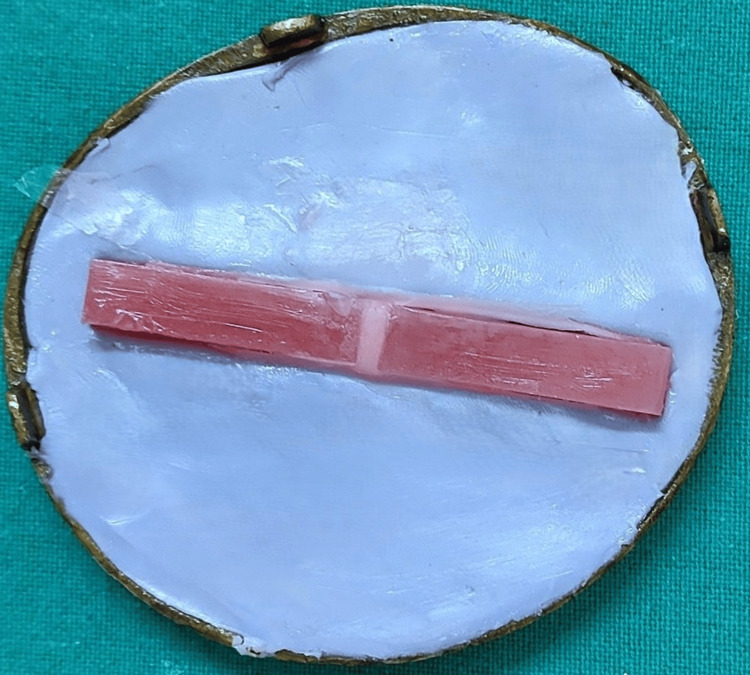 Figure 1
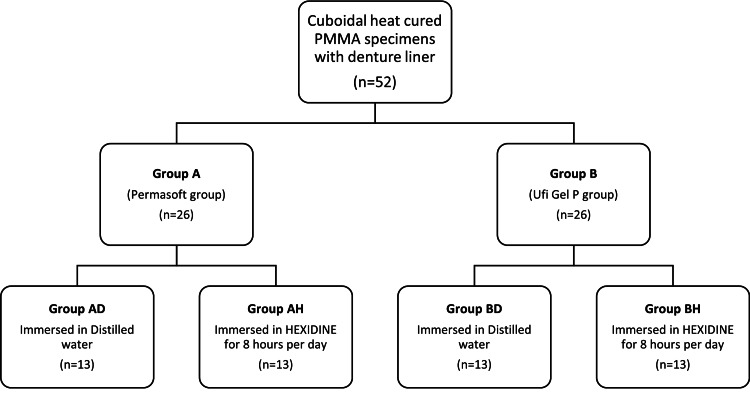 Figure 2
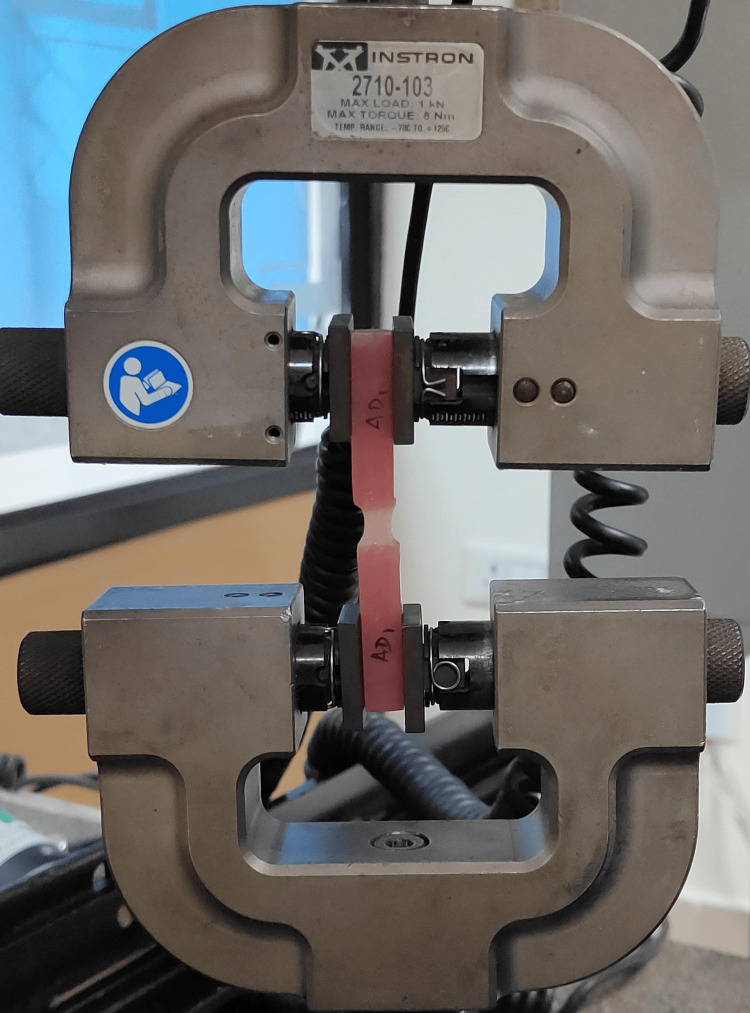 Figure 3
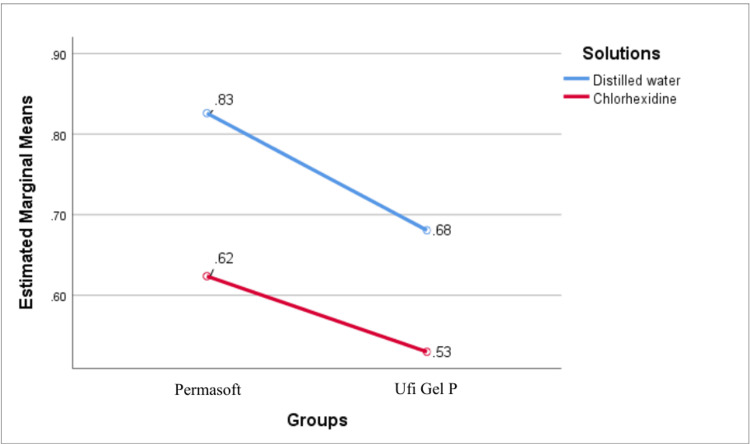 Figure 4
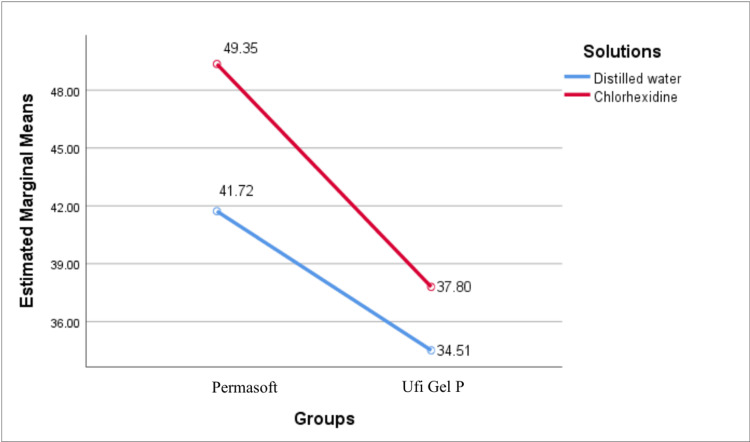 Figure 5
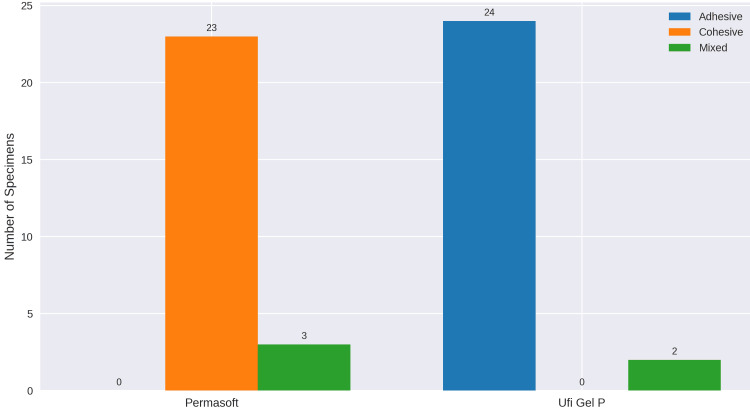 Figure 6
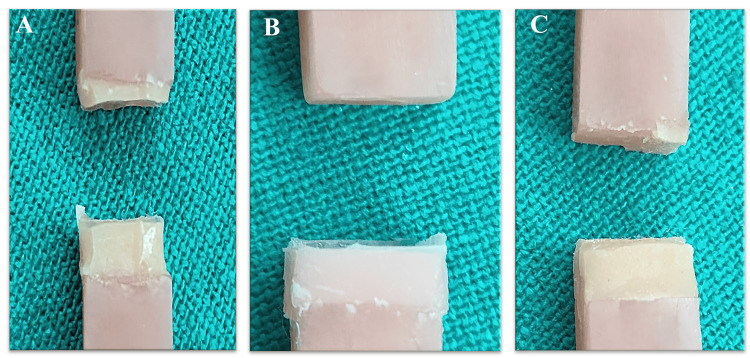 Figure 7
| Number | Mean ± SD (MPa) | t | P value | ||
| Tensile Bond Strength | Permasoft | 26 | 0.72 ± 0.13 | 3.4 | P = 0.001** |
| Ufi Gel P | 26 | 0.6 ± 0.11 |
| Number | Mean ± SD (MPa) | t | P value | ||
| Permasoft | Distilled Water | 13 | 0.826 ± 0.07 | 5.6 | P = 0.001** |
| Chlorhexidine | 13 | 0.623 ± 0.106 | |||
| Ufi Gel P | Distilled Water | 13 | 0.68 ± 0.08 | 4.6 | P = 0.001** |
| Chlorhexidine | 13 | 0.529 ± 0.08 |
| Number | Mean ± SD | t | P value | ||
| Shore A Hardness | Permasoft | 26 | 45.5 ± 4.2 | 9.6 | P = 0.001** |
| Ufi Gel P | 26 | 36.1 ± 2.6 |
| Number | Mean ± SD | t | P value | ||
| Permasoft | Distilled Water | 13 | 41.7 ± 1.6 | -11.8 | P = 0.001** |
| Chlorhexidine | 13 | 49.3 ± 1.6 | |||
| Ufi Gel P | Distilled Water | 13 | 34.5 ± 1.8 | -4.06 | P = 0.001** |
| Chlorhexidine | 13 | 37.8 ± 2.2 |
| Type III Sum of Squares | Df | Mean Square | F | P value | |
| Groups | 0.186 | 1 | 0.186 | 24.33 | P = 0.001** |
| Solutions | 0.405 | 1 | 0.405 | 53.01 | P = 0.001** |
| Groups x Solutions | 0.009 | 1 | 0.009 | 1.12 | P = 0.29*** |
| Type III Sum of Squares | df | Mean Square | F | P value | |
| Groups | 1144.9 | 1 | 1144.9 | 327.8 | P = 0.001** |
| Solutions | 387.7 | 1 | 387.7 | 111.04 | P = 0.001** |
| Groups x Solutions | 61.1 | 1 | 61.1 | 17.5 | P = 0.001** |
Peer Reviews
No public reviews on file for this paper yet. If you reviewed it on a platform where reviews are public (OpenReview, ICLR, NeurIPS, ICML), you can paste yours below so the community can read it here.
Videos
No videos yet. Explain this paper in a talk, walkthrough, or lecture? Add one.
Taxonomy
TopicsDental materials and restorations · Dental Implant Techniques and Outcomes · Dental Erosion and Treatment
Introduction
Alterations in underlying denture base tissue due to ageing, metabolic problems, defective denture use may cause some degree of discomfort and lesions, or else aggravate existing lesions in the mucosal lining. Conventional complete dentures fail to satisfy patients with traumatised mucosa, severe undercuts in the underlying bone, ridge atrophy, or bruxism [1,2].
To combat this problem, the simplest and first approach is the application of denture liners on the intaglio surface of the denture base [3]. Denture relining materials are commonly used to improve the fit between the denture and the mucous membrane [4]. These materials are recommended for clinical situations characterised by irregular bone resorption, thin atrophic mucosa, and the presence of severe bony undercuts because they act as a cushion and provide an even distribution of functional load onto the stress-bearing mucosa [5]. Studies have shown that edentulous patients reported greater comfort when their dentures were lined with soft liners and also increased the patient’s masticatory performance, biting force, and improved the chewing rhythm [6-8].
The optimum thickness for a liner is approximately 2.5 to 3 mm, which is needed to provide good shock absorption [9]. Ideal properties of resilient liners include resiliency, which is desired over a long period of time, and a durable bond to the denture base [10].
One of the problems with denture liners is the failure of the bond between the resilient denture liner and the denture base resin [11]. A successful relining depends on the bond strength between the liner and the resin base [12]. Tensile bond strength testing is one of the various methods for assessing the bond strength of soft liners. Durability of softness during clinical use is a desirable feature of a soft liner. Any increase in hardness can worsen the distribution of the masticatory load and lower the absorption of elastic energy, which is transmitted onto the mucosal membrane under dentures, thereby exacerbating the clinical problems experienced by patients [13].
Drawbacks of denture relining materials include an increase in hardness, colour changes, porosity, microbial colonisation, especially Candida albicans, insufficient tear strength, and poor bond strength [14]. To mitigate these problems, maintaining effective denture plaque control through both mechanical and chemical methods is vital. While mechanical cleansing can be an effective approach for traditional dentures, it is not recommended for soft denture liners, as the abrasive action can cause damage to these delicate, resilient materials. As a result, chemical cleansing employing specially formulated denture cleaners has proven to be the most effective strategy for controlling plaque buildup on dental liners [15]. However, such procedures may lead to changes in the properties of the soft liners.
Chlorhexidine gluconate is an antiseptic agent with a broad spectrum of antimicrobial and antifungal properties and is therefore commonly used in mouthrinses and denture cleansers [16]. Permasoft is an acrylic-based permanent soft liner, whereas Ufi Gel P is a silicone-based permanent soft liner.
Hence, the study of tensile bond strength and hardness between the soft liners and the polymethyl methacrylate (PMMA) denture base material is an essential requirement for the durability of their use in situ. Many studies have been reported on bond strength, roughness, solubility, and hardness of different soft liners; however, there is inadequate literature on the effect of chlorhexidine gluconate solution on the tensile bond strength and hardness of denture liners. Hence, this study was planned to study the effect of chlorhexidine gluconate solution on denture liners. The null hypothesis was that there would be no difference in tensile bond strength and Shore hardness between the two types of soft liners when immersed separately in distilled water and 0.2% chlorhexidine gluconate solution.
Materials and methods
This in-vitro study was conducted at the P.G. Department of Prosthodontics and Crown & Bridge, Srirama Chandra Bhanja (SCB) Dental College and Hospital, Cuttack, Odisha, and the Laboratory for Advanced Research in Polymeric Materials (LARPM), Council of Scientific and Industrial Research - Central Institute of Petrochemicals Engineering & Technology (CIPET), Bhubaneswar, Odisha. Ethical clearance was obtained from the Institutional Ethical Committee (Reg. No. IEC/SCBDCH/-3-/2023). The study was carried out over a period of two years.
Sample Size estimation
The sample size was calculated based on a previous study conducted by Mese et al. [9]. The pooled mean was 0.65 MPa with a standard deviation of 0.12 MPa, yielding an effect size of 1.08. With α = 0.05 and power = 0.80, a minimum of thirteen specimens per group was calculated. To accommodate two liner types and two immersion conditions, fifty-two specimens were prepared for tensile bond strength testing. For Shore A hardness, the pooled mean and standard deviation (SD) were 40.2 and 6.5, respectively, yielding an effect size of 1.0; twenty-six specimens were fabricated.
The specifications of the specimens were as follows: 1) For tensile bond strength testing - Fifty-two specimens cuboidal blocks of heat-cured PMMA denture base material (AcryPol R, Ruthinium, Dental Manufacturing S.P.A., Badia Polesine, Italy) of dimension 40 mm × 10 mm × 10 mm attached to a liner of dimension 3 mm x 10 mm x 10 mm. 2) For Shore A hardness testing - Twenty-six cylindrical specimens of acrylic-based liner (Permasoft, Perma Laboratories, Broadview Heights, OH, USA) and silicone-based liner (Ufi Gel P, VOCO GmbH, Cuxhaven, Germany) of height 6 mm and diameter of 10 mm.
For tensile bond strength testing
After fabrication, PMMA blocks underwent ultrasonic cleaning using distilled water to eliminate surface impurities, followed by drying with compressed air. The two PMMA blocks were placed in the flask, and the liner was applied according to the respective manufacturer’s instructions. Then the flask was closed and the liner was allowed to polymerise. Following the recovery of the specimen, the excess liner flash was cut using a sharp blade (Figure 1). As a result, a soft liner was placed between two PMMA blocks to obtain the final specimens.
Specimen with excess liner flash after polymerisation
Thirteen specimens of each liner group were immersed in distilled water and kept at room temperature for thirty days before testing. The remaining thirteen specimens of each liner group were immersed in 0.2% chlorhexidine gluconate solution (HEXIDINE, ICPA Health Products Ltd, Mumbai, India) for eight hours once per day to simulate the clinical scenario of daily disinfection and storage of the denture at night. After eight hours, they were rinsed with distilled water and immersed in it at room temperature for the next sixteen hours. This procedure was repeated for thirty days. The study design flow chart is depicted in Figure 2.
Study design flow chart for evaluation of tensile bond strength
After that, all specimens were taken from solutions and rinsed with running water before undergoing testing. All the specimens were aligned in a Universal testing machine (Instron, Norwood, MA, USA). Testing was conducted at 21 ± 1 °C. The specimens were pulled with a crosshead speed of 5 mm/min (Figure 3). For every specimen, the highest tensile stress before failure was noted. The test results were documented in MPa.
Specimen under tensile load in Universal testing machine
Failure mode evaluation
The type of failure was carefully evaluated through visual inspection and categorised as 1) adhesive: indicated separation occurring at the liner-PMMA interface, 2) cohesive: indicated failure within the liner material, and 3) mixed: indicated failure at both the liner-PMMA interface and within the liner.
Hardness testing
Following fabrication, the specimens designated for hardness testing were stored under the exact conditions as those prepared for tensile strength evaluation. After that, all specimens were taken from the two solutions and rinsed with running water before undergoing testing. A Shore A digital durometer (PosiTector® SHD, DeFelsko Corporation, NY, USA) was used for hardness testing. The final value of the hardness depended on the penetration depth of the indenter. For each specimen, five readings were obtained.
All tests were conducted by the same operator to standardise testing conditions and ensure uniformity. Standardised procedures for testing have been defined by the respective ISO and ASTM D2240 standards [17,18].
Statistical analysis
The data was analysed utilising SPSS for Windows version. 26.0, (IBM Corp., Armonk, NY). Comparisons of tensile bond strength and Shore A hardness scores were made between different types of soft liners and various solutions through the use of unpaired t-tests. Additionally, a two-way analysis of variance (ANOVA) was conducted to assess the impact of groups and solutions on both Tensile bond strength and Shore A hardness. Chi-square test was performed to evaluate the association between liner type (Permasoft vs Ufi Gel P) and observed failure modes (adhesive, cohesive, mixed). Significance level was established at P < 0.05.
Results
It was found that Permasoft had a higher tensile bond strength when compared to Ufi Gel P. The difference in mean tensile bond strength between the groups was statistically significant (P = 0.001) (Table 1).
When immersed in distilled water, it was found that both Permasoft and Ufi Gel P had higher tensile bond strength when compared to chlorhexidine (Figure 4). The difference in mean tensile bond strength of Permasoft and Ufi Gel P between the groups was statistically significant (P = 0.001) (Table 2).
Mean tensile bond strength (in MPa) for different soft liners and solutions
The results also showed that Permasoft had a higher Shore A hardness value when compared to Ufi Gel P. The difference in mean Shore A hardness values between the groups was statistically significant (P = 0.001) (Table 3).
The mean Shore A hardness values of both Permasoft and Ufi Gel P when immersed in chlorhexidine were higher when compared to distilled water (Figure 5). The difference in mean Shore A hardness values of Permasoft and Ufi Gel P between the groups was statistically significant (P = 0.001) (Table 4).
Mean Shore A hardness values for different soft liners and solutions
Two-way ANOVA tests revealed statistically significant main effects of material type and immersion medium on both tensile bond strength and Shore A hardness (P = 0.001). Permasoft exhibited higher tensile bond strength and Shore A hardness compared to Ufi Gel P. Specimens immersed in distilled water demonstrated greater tensile bond strength, whereas chlorhexidine solution exposure increased Shore A hardness values. The interaction effect for tensile bond strength was not significant (P = 0.29), indicating a uniform reduction across Permasoft and Ufi Gel P (Table 5). In contrast, a significant interaction was observed for Shore A hardness (P = 0.001), with Permasoft showing a more pronounced response to chlorhexidine solution exposure (Table 6).
Chi-square analysis revealed a statistically significant association between liner type and failure mode (χ² = 47.2, df = 2, P < 0.0001). Permasoft specimens predominantly exhibited cohesive failures, while Ufi Gel P specimens showed adhesive failures (Figure 6).
Distribution of failure modes
Discussion
Resilient denture liners offer a cost-effective and minimally invasive approach for prolonging the functional lifespan of existing prostheses. Materials intended for the relining of removable dentures must exhibit several key characteristics that encompass their compatibility with oral tissues, ability to recover from deformation, resistance to changes in shape and colour, endurance against surface wear, and the strength of adhesion to the denture base [19]. This study investigated two key characteristics of denture liners: tensile bond strength with the denture base resin and Shore A hardness.
The bonding of soft denture liners with the denture base has been assessed using tensile tests, shear tests, and peel tests. McCabe et al. suggested that using both peel and tensile test methods is relevant and effective for examining the bonding and debonding characteristics of soft material polymers [20]. Al-Athel et al. indicated that the tensile bond strength test is an appropriate method for assessing the bond strength of soft liners [21]. In this study, the bond strength between soft denture liners and PMMA denture bases was evaluated using a tensile test, as outlined by the American Society for Testing and Materials [18].
Neglecting proper denture care can significantly diminish the lifespan of dentures and lead to an alarming buildup of plaque. This accumulation not only affects the hygiene of the dentures but can also pose risks to the wearer’s oral health, creating complications that may require additional dental intervention. Chlorhexidine gluconate has been widely used as an oral mouthrinse with varying concentrations between 0.2-4%. Haydari et al. showed that mouthwash containing 0.2% chlorhexidine gluconate had a significantly better effect in preventing dental plaque than the 0.12% and 0.06% solutions [22]. So, in this study, a 0.2% chlorhexidine solution (HEXIDINE) was designated as the experimental group. In contrast, distilled water was employed as the control group, providing a neutral baseline for comparison.
The results showed that there was a significant difference in tensile bond strength and hardness between Permasoft and Ufi Gel P when immersed separately in distilled water and chlorhexidine gluconate solution (0.2%) (HEXIDINE). Thus, the null hypothesis was rejected.
Permasoft had a significantly higher tensile bond strength when compared to Ufi Gel P, both when immersed in distilled water and HEXIDINE. Similar studies were also conducted by Mese et al., in which they found that the chemical composition of liners affected the tensile bond strength [9]. This was due to the stronger bond strength between the liner and PMMA material compared to the bond strength within the liner. These results can be attributed to the similar chemical composition of the PMMA denture base and Permasoft, resulting in chemical adhesion, whereas in the case of Ufi Gel P, the bond with the PMMA denture base was mechanical in nature. These results were in contrast to the results obtained by El-Hadary et al. [23]. They found out that the silicone-based liner showed higher tensile bond strength than Permasoft. They attributed it to the improved adhesive bonding systems used with silicone-based soft liners.
Moreover, HEXIDINE affected the tensile bond strength adversely, as immersion in HEXIDINE resulted in a measurable reduction in the tensile bond strength of both the liner groups. The percentage bond strength reduction when submerged in HEXIDINE was greater for the Permasoft group compared to the Ufi Gel P group. However, the mean tensile bond strength of both subgroups of Permasoft and Ufi Gel P was 0.72 and 0.6 MPa, respectively. These values were higher than the minimum tensile bond strength needed to be acceptable for clinical usage, which was 0.44 MPa (4.5 kg/cm²) [24,25].
Regarding the failure mode, for Permasoft specimens, all failures were cohesive in nature (Figure 7A). Except for three specimens, which exhibited mixed failure (Figure 7C). This can be attributed to Permasoft’s superior bond strength, likely resulting from its similar chemistry with the PMMA denture base. Among the twenty-six Ufi Gel P specimens, most of the specimens failed adhesively (Figure 7B). While two exhibited a mixed type of failure. This was due to the lower bond strength between the liner and PMMA material in comparison to the bond strength within the liner material.
Mode of failureA-cohesive failure (Permasoft), B-adhesive failure (Ufi Gel P), C-mixed failure (Permasoft)
Permasoft exhibited a higher Shore A Hardness score when immersed in both distilled water and HEXIDINE, compared to Ufi Gel P, which recorded lower scores in both solutions. This was consistent with the findings of a study conducted by Pahuja et al., who found that silicone-based liners maintained their resiliency better than acrylic-based liners when immersed in different denture cleanser solutions [26].
Permasoft exhibited a greater percentage increase in Shore A hardness compared to Ufi Gel P. This finding was consistent with a study conducted by Brożek et al., who concluded that silicone-based relining materials were less affected by denture cleansers than the acrylic-based relining materials with respect to loss of elasticity [27]. This behaviour can be explained due to water absorption and the leaching of various substances, including monomers and plasticisers, into the storage solutions from acrylic-based liners.
Permasoft on immersion in HEXIDINE exhibited the highest Shore A hardness scores, whereas Ufi Gel P immersed in distilled water showed the lowest Shore A hardness scores. Similar results were obtained by Niarchou et al. [28]. This can be explained by a study conducted by Kaul et al., which showed that the release of plasticisers takes place more rapidly into ionised solutions, and chlorhexidine solution, being an ionised solution, resulted in higher Shore A hardness values than distilled water, which is free from ions [29]. Similarly, Kazanji and Watkinson reported that the presence of sodium and potassium ions, particularly, enhances the rate at which these plasticisers are released from soft liners, highlighting the significant impact these ions have on the behaviour of resilient materials [30].
Limitations of this study
One of the limitations of the present study was that the chlorhexidine solution used (HEXIDINE) contained additional components such as colouring agents and preservatives, which may have influenced the results and confounded the effect of pure chlorhexidine. Furthermore, the study did not account for variations in formulations of acrylic and silicone-based soft liners, limiting the generalizability of the findings. Artificial saliva, cyclic fatigue behaviour, and thermocycling may better simulate the oral environment with precise planning. Additional clinical studies can be conducted to further assess the findings of this research.
Clinical Implications
Daily immersion in chlorhexidine solution (0.2%) reduced bond strength and increased hardness in both liners. Denture hygiene regimens must be tailored to balance antimicrobial efficacy with liner preservation. The use of chlorhexidine solution (0.2%) as a denture cleanser should be minimised for a shorter duration of immersion to prolong the durability of denture liners. For patients with high hygiene needs, Ufi Gel P may offer better long-term performance.
Conclusions
This study revealed that the tensile bond strength of both Permasoft and Ufi Gel P with the denture base was acceptable for clinical usage. Chlorhexidine solution (0.2%) decreased the bond strength of both Permasoft and Ufi Gel P liners and also increased the hardness of both Permasoft and Ufi Gel P liners in comparison to distilled water. Ufi Gel P exhibits superior compatibility with chlorhexidine solution compared to Permasoft, particularly in its ability to maintain resiliency. The findings also implied that chemical denture cleansers, such as chlorhexidine solution, can be used daily to clean soft denture liners. However, in the long term, they have an adverse effect on the tensile bond strength and surface hardness.
The reference list from the paper itself. Each links out to its DOI / PubMed record.
- 1The degenerative denture ridge—care and treatment J Prosthet Dent Wendt DC 477492321974461382010.1016/0022-3913(74)90002-x · doi ↗ · pubmed ↗
- 2Clinical use of a resilient mandibular denture J Am Dent Assoc Crum RJ Loiselle RJ Rooney GE Jr 10931096831971528614210.14219/jada.archive.1971.0419 · doi ↗ · pubmed ↗
- 3Shear bond strength of two chemically different denture base polymers to reline materials J Prosthodont Ahmad F Dent M Yunus N 5966021820091951516610.1111/j.1532-849X.2009.00481.x · doi ↗ · pubmed ↗
- 4Effect of photo-irradiation on hardness of soft lining materials for denture base J Oral Rehabil Fujii K Arikawa H Kanie T Shinohara N Inoue K 7447482920021222034110.1046/j.1365-2842.2002.00868.x · doi ↗ · pubmed ↗
- 5Secular trends in socio-economic disparities in edentulism: USA, 1972-2001 J Dent Res Cunha-Cruz J Hujoel PP Nadanovsky P 1311368620071725151110.1177/154405910708600205 · doi ↗ · pubmed ↗
- 6A six-year retrospective study of Molloplast-B-lined dentures. Part I: patient response J Prosthet Dent Schmidt WF Smith DE 308313501983657833910.1016/s 0022-3913(83)80082-1 · doi ↗ · pubmed ↗
- 7A comparative study of masticatory performance in complete denture patients before and after application of soft liner Med J Armed Forces India Kar S Tripathi A Fatima T 4374437520193171973910.1016/j.mjafi.2018.03.013PMC 6838499 · doi ↗ · pubmed ↗
- 8Impact of soft liners on bite force in complete denture wearers: a prospective cohort study Cureus Singla SK Kumar S Aggarwal R Choudhary S Kaur S Kartik S Jenthuilu P 017202510.7759/cureus.77988 PMC 1185945840013230 · doi ↗ · pubmed ↗