Safe internalization of external cholecystostomy drain by endoscopic ultrasound-guided drainage using a lumen apposing metal stent with endoscopic clipping
Saburo Matsubara, Risa Sunada, Tomohiro Arai, Keito Nakagawa, Noriko Murakami, Morito Ikeda, Naosuke Kuraoka

Abstract
Genes, proteins, chemicals, diseases, species, mutations and cell lines named across the full text — each resolved to its canonical identifier and authoritative record.
Click any figure to enlarge with its caption.
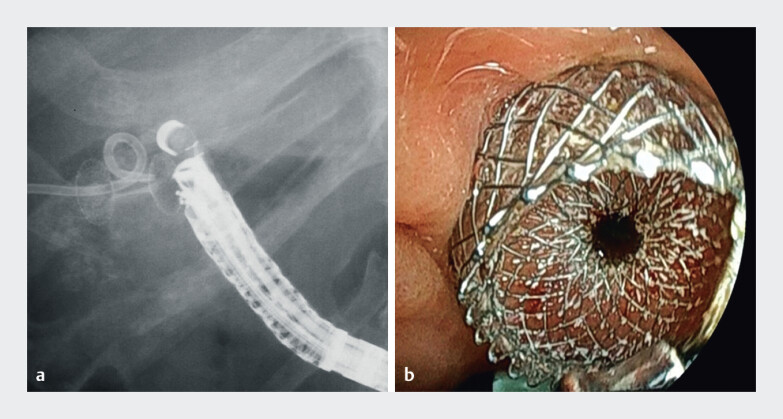 Fig. 1
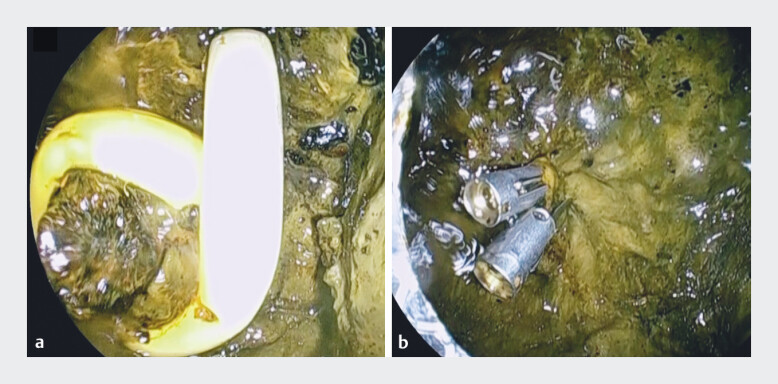 Fig. 2
Peer Reviews
No public reviews on file for this paper yet. If you reviewed it on a platform where reviews are public (OpenReview, ICLR, NeurIPS, ICML), you can paste yours below so the community can read it here.
Videos
No videos yet. Explain this paper in a talk, walkthrough, or lecture? Add one.
Taxonomy
TopicsGallbladder and Bile Duct Disorders · Esophageal and GI Pathology · Pediatric Hepatobiliary Diseases and Treatments
An 83-year-old male with metastatic pancreatic cancer derived from an intraductal papillary mucinous neoplasm undergoing chemotherapy was admitted for severe acute calculous cholecystitis with septic shock and acute renal failure. Gangrenous cholecystitis was suspected because a fluid collection near the gallbladder fundus with wall disruption was detected by computed tomography and ultrasound. Following initiation of hemodialysis and administration of broad-spectrum antibiotics and vasopressor agents, urgent percutaneous cholecystostomy (PC) was performed with an 8.5-Fr pigtail tube. After symptom resolution, the patient requested removal of the external drain prior to discharge. However, simple removal carried a risk of bile leakage because the fistula might not mature owing to poor nutritional status and mild ascites. Therefore, internalization by endoscopic ultrasound-guided gallbladder drainage (EUS-GBD) using a lumen apposing metal stent (LAMS) was attempted two weeks after admission ( Video 1 ). A 10-mm × 10-mm electrocautery-enhanced LAMS (Hot AXIOS; Boston Scientific, Marlborough, Massachusetts, USA) was deployed from the gastric antrum under EUS and fluoroscopy guidance with luminal dilation achieved by continuous saline injection through the external tube ( Fig. 1 ). A slim therapeutic endoscope (EG-840TP; Fujifilm, Tokyo, Japan) with a 3.2-mm working channel was then inserted into the gallbladder via the AXIOS after balloon dilation. Subsequently, the external tube was removed, followed by immediate closure of the puncture site with endoscopic clips (SureClip; Micro-Tech, Ann Arbor, Michigan, USA) ( Fig. 2 ). The post-procedural course was uneventful.
Safe internalization of external cholecystostomy drain by EUS-guided drainage using a lumen apposing metal stent with endoscopic clipping.Video 1
Endoscopic ultrasound-guided gallbladder drainage using a 10-mm × 10-mm Hot AXIOS. a Fluoroscopic image. b Endoscopic image.
Endoscopic closure of the puncture site using endoscopic clips. a The pigtail tip of the external tube is visible. b Closure of the puncture site with clips immediately after tube removal.
Although EUS-GBD for acute-cholecystitis unsuitable for surgery is the gold standard nowadays, patients with gangrenous cholecystitis or unstable vital signs are contraindicated for safety reasons 1 . Conversion from PC to EUS-GBD is standard care for these patients 2 ; however, bile leakage is of concern in cases with suspected immature fistula 3 . EUS-GBD using a LAMS with clipping can be a useful option for safely removing the external drain in such patients.
Endoscopy_UCTN_Code_TTT_1AS_2AH
The reference list from the paper itself. Each links out to its DOI / PubMed record.
- 1Irani SS Sharzehi K Siddiqui UDAGA Clinical Practice Update on Role of EUS-Guided Gallbladder Drainage in Acute Cholecystitis: Commentary Clin Gastroenterol Hepatol 2023211141114710.1016/j.cgh.2022.12.03936967319 · doi ↗ · pubmed ↗
- 2Chantarojanasiri T Matsubara S Isayama H Feasibility of conversion of percutaneous cholecystostomy to internal transmural endoscopic ultrasound-guided gallbladder drainage Saudi J Gastroenterol 20172331832210.4103/sjg.SJG_115_1729205183 PMC 5738792 · doi ↗ · pubmed ↗
- 3Picus D Burns MA Hicks ME Percutaneous management of persistently immature cholecystostomy tracts J Vasc Interv Radiol 1993497101 discussion 101–10210.1016/s 1051-0443(93)71827-88425098 · doi ↗ · pubmed ↗