Analyzing Sleep Behavior Using BERT-BiLSTM and Fine-Tuned GPT-2 Sentiment Classification: Comparison Study
Yihan Deng, Julia van der Meer, Athina Tzovara, Markus Schmidt, Claudio Bassetti, Kerstin Denecke

TL;DR
This paper compares subjective and objective sleep assessments using AI models to analyze clinical narratives and finds that patient-reported experiences may differ from clinical measures.
Contribution
A novel aspect-based sentiment analysis method using BERT-BiLSTM and fine-tuned GPT-2 to analyze sleep-related clinical narratives.
Findings
15% of patients showed discrepancies between subjective and objective sleepiness measures.
Sentiment analysis of clinical narratives revealed statistically significant sleepiness perception differences.
Standardized sleep tests may not fully capture patient-reported experiences.
Abstract
The diagnosis of sleep disorders presents a challenging landscape, characterized by the complex nature of their assessment and the often divergent views between objective clinical assessment and subjective patient experience. This study explores the interplay between these perspectives, focusing on the variability of individual perceptions of sleep quality and latency. Our primary goal was to investigate the alignment, or lack thereof, between subjective experiences and objective measures in the assessment of sleep disorders. To study this, we developed an aspect-based sentiment analysis method for clinical narratives: using large language models (Falcon 40B and Mixtral 8X7B), we are identifying entity groups of 3 aspects related to sleep behavior (day sleepiness, sleep quality, and fatigue). To phrases referring to these aspects, we are assigning sentiment values between 0 and 1…
Genes, proteins, chemicals, diseases, species, mutations and cell lines named across the full text — each resolved to its canonical identifier and authoritative record.
Click any figure to enlarge with its caption.
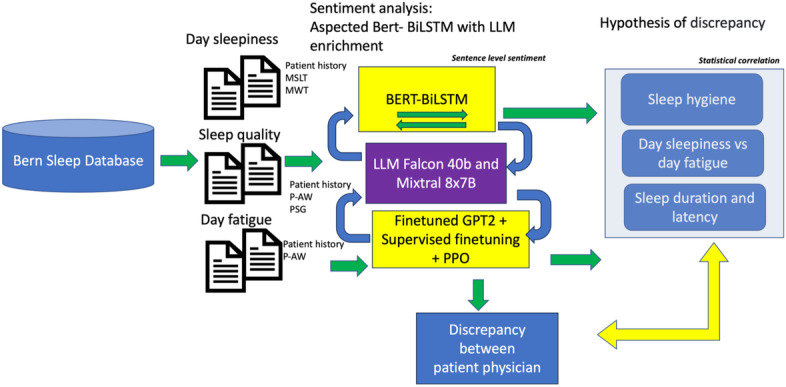 Figure 1
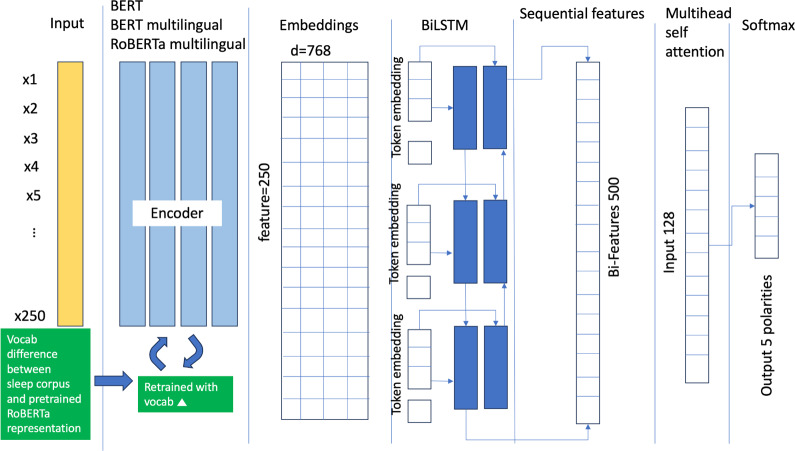 Figure 2
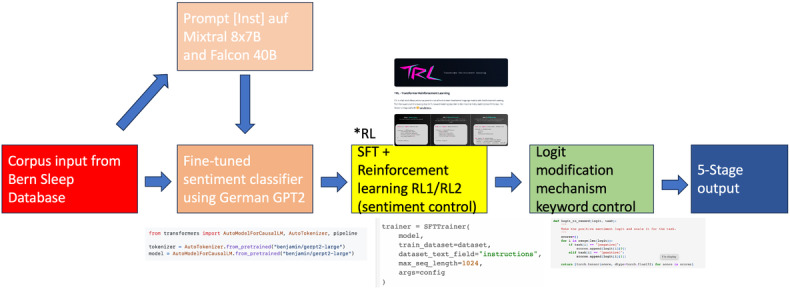 Figure 3
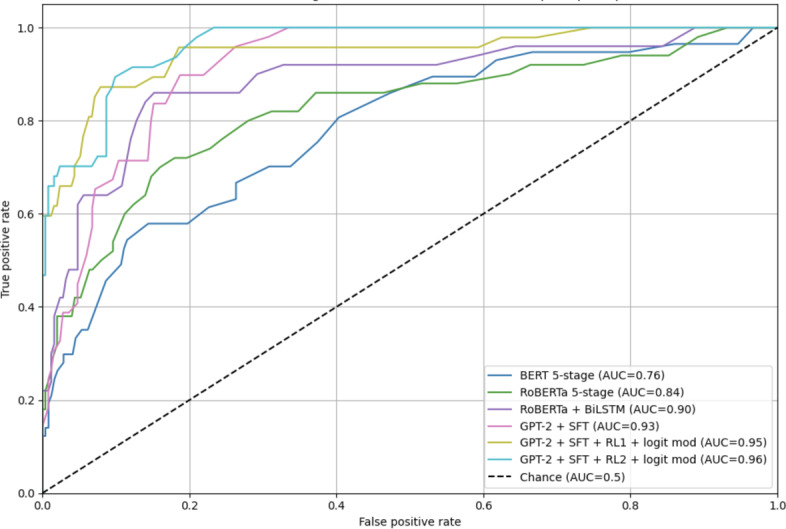 Figure 4
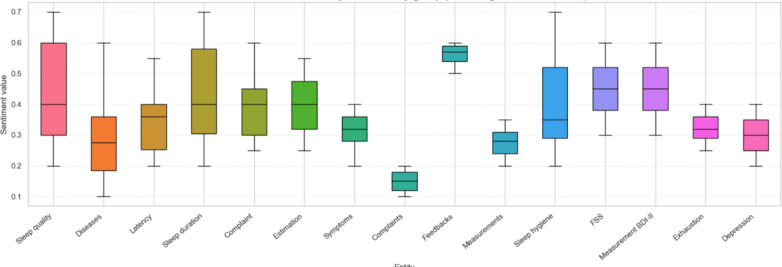 Figure 5
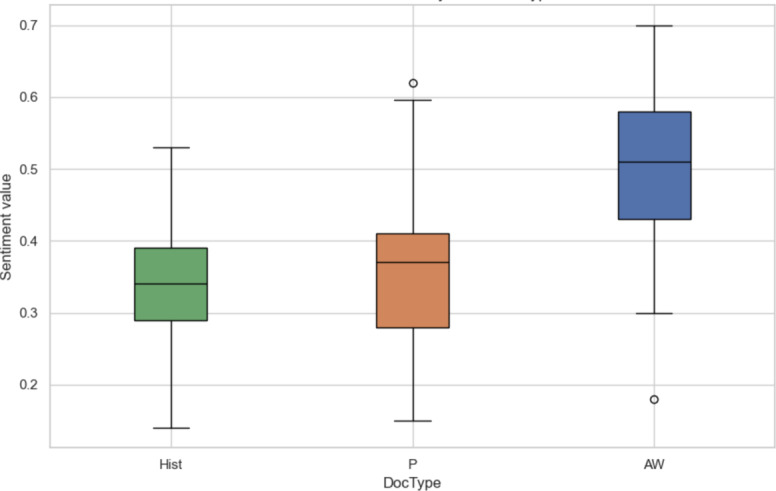 Figure 6
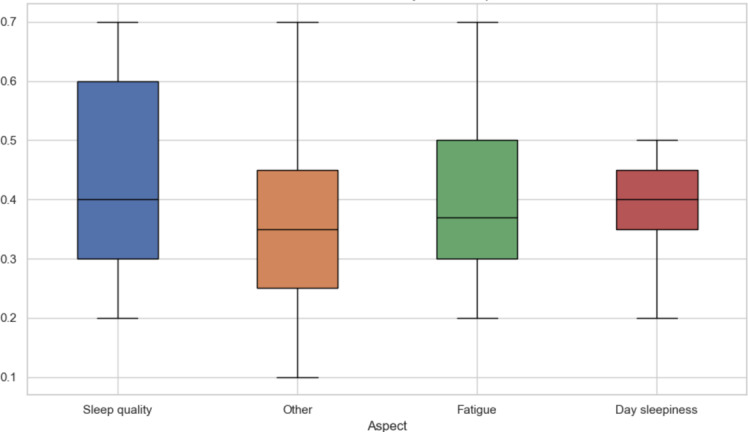 Figure 7
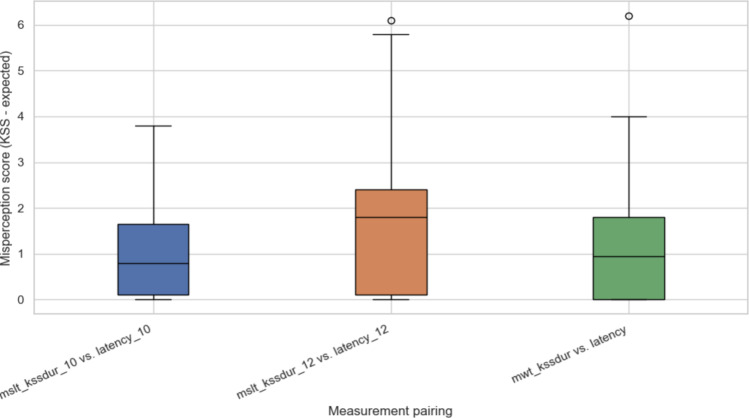 Figure 8
| Study and Method | Domain | Model type | Aspect extraction | Sentiment analysis | Subjective-objective alignment | Sleep focused | Contribution notes |
|---|---|---|---|---|---|---|---|
| Denecke and Deng [ | Clinical (general) | Rule-based+ML | Limited | ✓ | ✓ | ✓ | Early sentiment methods in clinical text |
| Aurora et al [ | Sleep disorders | Statistical correlation | ✓ | ✓ | ✓ (sleepiness) | ✓ | Compared subjective and objective sleepiness (ESS |
| Hermans et al [ | Sleep misperception | EEG | ✓ | ✓ | ✓ | ✓ | Focus on objective EEG markers of misperception |
| Denecke and Reichenpfader [ | Clinical NLP | Transformer (RoBERTa) | ✓ (limited) | ✓ | ✓ | ✓ | Survey of clinical sentiment tools |
| Ziegler et al [ | General NLP | GPT-2+RLHF | ✓ | ✓ (general) | ✓ | ✓ | Introduce RL-based |
| Our study | Sleep disorder | BiLSTM+RoBERTa/GPT-2+RL | ✓ (LLM-extracted) | ✓ (5-stage scale) | ✓ (quantified misalignment) | ✓ | Joint subjective-objective modeling, LLM-aspect extraction, scoring, feedback mining |
| Aspect | Subjective data sources | Information sources and documents | Objective data sources | Statistics |
|---|---|---|---|---|
| Daytime sleepiness (129 records) | History: Daytime sleepiness, Epworth Sleepiness Scale, MSLT | History, Multiple Sleep Latency Test, Maintenance of Wakefulness Test | MSLT and MWT: eg, “In summary, a mild daytime sleepiness can be objectified,” vigilance test results |
36 (28%) of records show SOL-KSS ESS "Mild daytime sleepiness" documented in 58 (63%) of 92 cases with MSLT 5-8 min |
| Fatigue exhaustion depressive symptoms (450 records) | History: Fatigue, Fatigue Severity Scale, BDI-II | Hist | Increased inactivity component |
FSS 189 (42%) show activity reduction "Increased inactivity" noted in 112 (89%) of 126 severe fatigue cases |
| Sleep quality (3815 records) | Hist: Sleep quality, Insomnia PSG | Hist, PSG, P-AW | PSG Report: |
2557 (67%) underestimate TST SE <80% in 82% "Reduced efficiency" documented in 94% |
| Aspects | List of entity groups | Entity count |
|---|---|---|
| Sleep quality (50 sentences) | Sleep quality, Latency, Duration, Estimation | 75 |
| Daytime sleepiness (50 sentences) | Day sleepiness, Latency, PVT (Vigilance test), ESS | 35 |
| Fatigue (50 sentences) | Fatigue Severity Scale, Measurements BDI-II | 77 |
| Entire benchmark (150 sentences) | Symptoms, Diseases, Complaints, Feedback, Measurements | 119 |
| Sentiment class | Count | Percentage | Average sentence length | Lexical characteristics |
|---|---|---|---|---|
| Very Negative | 180 | 9% | 22.4 (5.8) words | Sleep quality: "severe insomnia," "non-restorative sleep," "fragmented sleep all night" |
| Negative | 680 | 34% | 18.6 (4.2) words | Sleep quality: "frequent awakenings," "prolonged sleep latency," "restless sleep" |
| Neutral | 920 | 46% | 14.2 (3.1) words | Sleep quality: "TST 6.2 hours," "sleep efficiency 82%," "PSG: 4 REM cycles" |
| Positive | 180 | 9% | 16.8 (3.9) words | Sleep quality: "improved sleep continuity," "satisfactory sleep duration" |
| Very Positive | 40 | 2% | 19.3 (4.7) words | Sleep quality: "excellent sleep quality," "fully restorative sleep" |
| Total | 2000 | 100% | 16.8 (4.6) words | — |
| Canonical term | Variant detected in text | Cosine similarity | Matched? | English translation |
|---|---|---|---|---|
| Schlafqualität | Qualität des Schlafes | 0.86 | True | Sleep quality |
| Schlaflatenz | Zeit bis zum Einschlafen | 0.85 | True | Time to fall asleep |
| REM-Schlafanteil | REM Schlafphasen Dauer | 0.81 | False | Duration of REM sleep phases |
| Instrument | Score range | Normalization formula |
|---|---|---|
| Karolinska Sleepiness Scale (KSS) | 1‐9 | (9 – Raw Score) / (9 – 1) |
| Epworth Sleepiness Scale (ESS) | 0‐24 | (24 – Raw Score) / (24 – 0) |
| Fatigue Severity Scale (FSS) | 1‐7 | (7 – Raw Score) / (7 – 1) |
| Beck Depression Inventory II (BDI-II) | 0‐63 | (63 – Raw Score) / (63 – 0) |
| Parameter | Value |
|---|---|
| Embedding dimension | 768 |
| Transformer encoder | 12 |
| Attention head | 12 |
| Optimizer | Adam |
| Learning rate | 5e-5 |
| Epoch | 50 |
| Dropout rate | 0.2 |
| Batch size | 32 |
| Parameter | Value |
|---|---|
| GPT-2 sentiment classifier learning rate | 2e-5 |
| GPT-2 sentiment classifier batch size | 16 |
| SFT trainer learning rate | 5e-5 |
| SFT training epochs | 3 |
| SFT maximum sequence length | 1024 |
| RL | 3 |
| RL generation kwargs top-p | 0.5 |
| Maximum new tokens | 100 |
| RL PPO | 16 |
| RL PPO configuration steps | 41,000 |
| Sentiment task | Accuracy | AUC-ROC | Precision (macro) | Recall (macro) | |
|---|---|---|---|---|---|
| BERT 5-stage | 0.61 | 0.76 | 0.62 | 0.60 | 0.61 |
| RoBERTa 5-stage | 0.69 | 0.84 | 0.70 | 0.68 | 0.69 |
| RoBERTa+BiLSTM | 0.78 | 0.90 | 0.79 | 0.77 | 0.78 |
| GPT-2+SFT | 0.81 | 0.93 | 0.82 | 0.81 | 0.81 |
| GPT-2+SFT+RL1 | 0.85 | 0.95 | 0.86 | 0.85 | 0.85 |
| GPT-2+SFT+RL2+logit mod | 0.87 | 0.96 | 0.88 | 0.87 | 0.87 |
| Performance of aspect extraction | Precision | Recall | Micro | AUC-ROC |
|---|---|---|---|---|
| Falcon 40B instruct entity extraction | ||||
| Symptoms | 0.8157 | 0.7963 | 0.8054 | 0.903 |
| Diseases | 0.8321 | 0.8485 | 0.8397 | 0.920 |
| Complaints | 0.7829 | 0.7134 | 0.7466 | 0.873 |
| Feedback | 0.5416 | 0.4896 | 0.5142 | 0.757 |
| Marco | — | — | 0.7265 | — |
| Mixtral 8X7B Instruct v0.1 entity extraction | ||||
| Symptoms | 0.9175 | 0.9114 | 0.9054 | 0.953 |
| Diseases | 0.8812 | 0.8804 | 0.8797 | 0.940 |
| Complaints | 0.8411 | 0.8338 | 0.8266 | 0.913 |
| Feedback | 0.8616 | 0.8028 | 0.8312 | 0.903 |
| Marco | — | — | 0.8490 | — |
| Patient ID | KSS | Text sentiment stage | MSLT | Objective score (0‐4) | Differences KSS MSLT | Differences text MSLT |
|---|---|---|---|---|---|---|
| P001 | 2 | 2 | 5.04 | 2.992 | −0.992 | −0.992 |
| P002 | 2 | 1 | 1.12 | 3.78 | −1.78 | −2.78 |
| P003 | 3 | 2 | 7.76 | 2.45 | 0.55 | −0.45 |
| P004 | 0 | 1 | 1.13 | 3.77 | −3.77 | −2.77 |
| P005 | 3 | 1 | 0.14 | 3.97 | −0.97 | −2.97 |
| P006 | 2 | 1 | 15.99 | 0.80 | 1.20 | 0.20 |
| P007 | 0 | 1 | 9.9 | 2.02 | −2.02 | −1.02 |
| P008 | 3 | 1 | 10.54 | 1.89 | 1.11 | −0.89 |
| P009 | 3 | 3 | 8.83 | 2.23 | 0.77 | 0.77 |
| P010 | 4 | 2 | 9.93 | 2.01 | 1.99 | −0.01 |
Peer Reviews
No public reviews on file for this paper yet. If you reviewed it on a platform where reviews are public (OpenReview, ICLR, NeurIPS, ICML), you can paste yours below so the community can read it here.
Videos
No videos yet. Explain this paper in a talk, walkthrough, or lecture? Add one.
Taxonomy
TopicsMental Health via Writing · Emotion and Mood Recognition · Sentiment Analysis and Opinion Mining
Introduction
Overview
The interplay between sleep quality, daytime fatigue, and daytime sleepiness is critical for understanding and diagnosing sleep disorders. Sleep quality—a multifaceted concept encompassing depth, continuity, and restorative nature of sleep [1]—is commonly assessed through polysomnography (PSG) or questionnaires [2]. Daytime fatigue significantly impacts quality of life [3], while daytime sleepiness reflects the propensity for unintended sleep episodes.
Past studies have shown inconsistencies between subjective experiences and objective measures. For example, Zavecz et al [4] linked self-reported sleep quality to cognitive performance, while O’Donnell et al [5] reported poor alignment between PSG outcomes and patient-reported sleep quality. Similarly, Aurora et al [6] analyzed how well Epworth Sleepiness Scale (ESS) scores correspond to Multiple Sleep Latency Test (MSLT) values. In psychiatric populations, similar dissociations have been reported between perceived and physiologically measured fatigue, as demonstrated by Stanyte et al [7] who found that individuals with anxiety and mood disorders often exhibit mismatched subjective fatigue ratings and objective sleep parameters.
Critically, objective metrics such as sleep onset latency (SOL) and total sleep time (TST) require disorder-contextual interpretation. Valko et al [8] demonstrate that shortened SOL indicates pathological sleep-wake fragmentation in narcolepsy but signifies health in normal sleepers, while subjectively prolonged SOL in insomnia reflects hyperarousal despite normal PSG. Similarly, fatigue—though quantifiable via scales such as the Fatigue Severity Scale (FSS)—lacks consistent PSG correlates across disorders, complicating objectification[9].
Despite these assessments being routinely documented clinically, no study has leveraged real-world clinical records to analyze subjective-objective alignment across disorders.
To address this gap, we propose a novel natural language processing (NLP) framework for modeling subjective-objective alignment through aspect-based sentiment analysis. Our system extracts (1) patient-reported experiences, (2) objective test results (eg, MSLT and PSG), and (3) clinician commentary on alignment or mismatch between the two. This triadic analysis allows for identifying patterns of misperception—for instance, patients who perceive severe sleep onset problems despite normal PSG values.
Unlike prior work that focused on isolated biomarkers such as Apnea-Hypopnea Index (AHI) or ESS scores, our approach uses language models to extract detailed clinical reasoning from documentation. This allows identification of emerging “sleep-wake discrepancy” phenotypes, such as patients with objectively normal sleep but persistently poor subjective reports.
Sentiment Analysis in Clinical Text
Sentiment analysis in medical and clinical text has received increasing attention over the past decade [1011]. Clinical documents often contain detailed descriptions of a patient’s health status, including observations, diagnostic findings, and treatment plans. Analyzing this information is important for determining whether patient outcomes are improving or deteriorating, and for assessing the overall impact of a condition on the patient’s well-being. In addition to objective clinical data, patients’ self-reported experiences may also offer useful indicators that complement medical assessments.
Recent developments in pretrained language models, such as those introduced by Devlin et al [12], have enabled the use of BERT-based architectures for sentiment analysis across multiple languages and granularities. In our work, we define sentiment across 5 discrete levels, which facilitates scaling into a normalized range between 0 and 1. Behera et al [13] presented a model combining Word2Vec embeddings with convolutional and recurrent layers (convolutional neural network and long short-term memory), achieving 91.2% accuracy. Their method also includes polarity normalization to improve classification performance. Other established techniques for sentiment and aspect identification in English-language texts include BiLSTM [1214], TextCNN [15], TextRNN [16], TextRCNN [1718], and DPCNN [19].
With the emergence of transformer-based models, research has increasingly focused on controlling language model behavior during fine-tuning, inference, and output postprocessing [20]. For example, Ziegler et al [21] applied reinforcement learning (RL) with human feedback to improve output coherence, while Schulman et al [22] proposed the Proximal Policy Optimization (PPO) algorithm for stable policy updates. Pascual et al [23] introduced Keyword2Text, a framework that guides text generation based on semantic similarity and topic constraints. These control strategies can enhance performance in tasks such as sequence labeling and sentiment classification.
Despite these advances, the use of large language models (LLMs) for aspect recognition in German clinical text remains limited. In addition, data privacy regulations restrict the use of commercial cloud-based models in health care environments. To address these challenges, our study investigates the deployment of open-source language models in secure, on-premises settings. We evaluate their performance in aspect recognition using manually annotated German clinical data. Subsequently, we apply sentiment analysis using a fine-tuned BERT model and compare its performance to a German GPT-2 model, which we adapt through supervised learning and reinforcement-based posttraining techniques.
As can be seen in Table 1, prior work has explored sentiment in clinical text [1011], or compared ESS to MSLT [6], but none have jointly modeled aspect-level sentiment, LLM-based extraction, and alignment between subjective and objective sleep data. Our contributions include:
First application of aspect-based sentiment analysis to German clinical sleep data for sleep disorders.Integration of LLM-based aspect extraction (Falcon 40B and Mixtral 8x7B).Five-level sentiment scoring with normalization.Quantified misalignment modeling between patient-reported and physiological sleep data.Identification of misperception profiles at a large scale using real-world clinical records.
Methods
Overview
The developed pipeline for aspect-oriented sentiment analysis is shown in Figure 1. The single steps are described together with the dataset in the following. Our approach involves extracting subjective perceptions of sleep quality, daytime sleepiness, and daily fatigue from the clinical documentation. Specifically, we consider the documented patient history descriptions and the reports related to the PSG examination.
Concurrently, objective benchmarks will be gathered from numerical results in objective sources, including MSLT, MWT (Maintenance of Wakefulness Test), P-AW (Actigraphy Wrist), and parts of the PSG report.
In a first step, entities and phrases referring to our 3 aspects of interest (day sleepiness, sleep quality, and fatigue) are extracted. Once these aspects are identified, we classify them according to the sentiment expressed for each aspect separately. The next step involves calibrating the objective numerical assessments to match the subjective sentiment scores, allowing for a direct comparison between subjective and objective data. Finally, by evaluating these 2 sets of sentiment values, we statistically analyze the extent of discrepancies in the diagnosis of sleep disorders, providing insights into how patient perceptions align with clinical assessments.
Workflow of sentiment analysis in sleep disorders. LLM: large language model; MSLT: Multiple Sleep Latency Test; MWT: Maintenance of Wakefulness Test; P-AW: Actigraphy Wrist; PPO: Proximal Policy Optimization; PSG: polysomnography.
Dataset
Our dataset originates from inpatient records created at the sleep laboratory of the University Hospital Bern, covering treatments between 2000 and 2021. This collection is part of the Bern Sleep Registry [25]. Its secondary use received approval from the Cantonal Ethics Committee (KEK-Nr. 2022‐00415: “Bern Sleep Registry: the sleep disorder patient cohort of the Inselspital, University Hospital Bern”).
The database comprises German-language coded clinical records of patients diagnosed with sleep disorders. Over 10,000 of these records have been retrospectively and meticulously categorized by physicians specialized in sleep disorders based on the International Classification of Sleep Disorders, Third Edition (ICSD-III). Table 2 shows the types of text documents that are considered from this database for this paper.
For various validations, we have prepared the following manually annotated datasets to validate and fine-tune the pretrained model:
Aspect extraction benchmark: 150 sentences manually labeled to validate entity and aspect extraction performance.Sentiment analysis corpus: 2000 sentences annotated on a 5-point sentiment scale using on-premises LLMs (Falcon 40B [2627] and Mixtral 8x7B [28]), with human-in-the-loop correction.
The 2000 sentences were sampled from clinical documents belonging to 100 unique patients, spanning multiple sleep disorder categories. These sentences were drawn proportionally from patient histories, diagnostic summaries, and follow-up reports to ensure a representative mix across conditions and report types. Stratified sampling was used to balance diagnoses, age groups, and sentiment distribution. To avoid patient-level bias, no more than 10 sentences per patient were included in the annotated set.
To ensure robust analysis of subjective-objective alignment in daytime sleepiness, we included only those patients who had complete paired data for the following instruments: Karolinska Sleepiness Scale (KSS)—subjective measure, MSLT—objective physiological measure, and MWT—behavioral sleepiness measure. This resulted in a final cohort of 100 patients with complete records across all 3 modalities, allowing for valid computation of discrepancy and misperception scores. For other dimensions, such as fatigue and sleep quality, which currently lack standardized objective clinical benchmarks, we retained a broader set of records (eg, 3815 entries for sleep quality) to support exploratory sentiment-based analysis.
Aspect and Sentiment Distribution
To analyze sentiment by aspect, we annotated 50 representative sentences per aspect totaling 150 sentences. Table 3 summarizes the frequency of extracted entity groups by category, while Table 4 presents the sentiment annotations and related statistics.
Mathematical Description of Aspect-Based Sentiment Analysis for Sleep Disorder
In the following, we define the dataset and tasks considered in this paper.
Dataset Definition
Let the dataset be defined as:
D={(x_i_, A_i_, y_i_)|=1,...,N
Where:
x_i_ is the tokenized and embedded representation of sentence i, obtained via BERT or RoBERTa (shape: T×d, where T=tokens, d=embedding dimension).A_i_ is the set of extracted aspect terms from xi using LLMs (eg, Falcon 40B and Mixtral 8x7B).y_i_ is the discrete sentiment label ∈ {0, 1, 2, 3, 4} representing 5-stage sentiment levels.The normalized score is: So S_i_∈[0,1]
Aspect Extraction via LLMs
For each input sentence x_i_ and aspect category, for example, c ∈ C_Categories, we define a prompt Pc and extract:
a_i_^(^^c^^)=LLM (P_c_,x_i_)^ for each aspect category c
The union of these yields the aspect set:
A_i_=U_c_a_i_^(^^c^^)^
To align with canonical medical terms, compute cosine similarity:
sim(e, c) = cosine(embedding(e), embedding(c))
Accept the match if sim≥threshold
Sentiment Classification (BiLSTM+Self-Attention)
Input embeddingsEach xiR is passed to a bidirectional LSTM: h _ i _ =BiLSTM (x _ i _ )∈R ^ T×h ^ Sequential feature aggregation (concatenation or pooling): f _ i _ =Self – Attention (h _ i _ )∈R ^ h′ ^ Classification layer (with softmax over 5 sentiment classes): Using a linear layer with parameters W, b: with Where:
W∈R^5×h′^, b∈R^5^are learnable parameters,p_i_∈R^5^ is the predicted class distribution.
Training Objective (Supervised Fine-Tuning: L1)
Use categorical cross-entropy for supervision:
Sentiment Control via GPT-2 (L2: Reinforcement Learning)[29]
After initial fine-tuning, a GPT-2 model is trained to modify or generate text while controlling for sentiment class y_i_
Logit Biasing /Reward Shaping: to
Where is a reward signal based on:
Keyword inclusion (aspect control),Matching predicted sentiment from a fixed classifier with y_i_
The full objective (SFT+RL) becomes:
where λ∈[0,1] is a hyperparameter controlling the influence of reinforcement-based alignment.
Normalization of Subjective and Objective Measures
Min-max normalization for raw clinical scores r over scale [S_min_, S_max_]:
Examples:
Epworth Sleepiness Scale (0‐24): Fatigue Severity Scale (1-7): Beck Depression Inventory II (0‐63) Karolinska Sleepiness Scale (KSS) (1-9):
Aspect Extraction From Diagnostic Text
For aspect extraction, we define 4 distinct groups of clinical entities based on their frequency and contextual relevance, with the aim of analyzing discrepancies between subjective reports and objective clinical findings (see Table 2). While aggregating sentiment scores can offer a general view of polarity across different textual spans (eg, sentences or paragraphs), they are insufficient for capturing detailed sentiment variations related to specific medical aspects such as symptoms, complaints, diagnoses, or co-occurring conditions. To address this limitation, we implemented a fine-grained entity extraction approach that combines open-source LLMs with standard clinical entity recognition techniques.
Specifically, we use 2 self-hosted models: Falcon 40B [27] and Mixtral 8x7B [30]. Falcon 40B is a dense, decoder-only language model designed for a broad range of NLP tasks. Mixtral 8x7B, by contrast, follows a sparse mixture-of-experts architecture, activating 2 expert modules per token, thereby achieving a favorable balance between performance and computational efficiency. Despite having 46.7 billion parameters in total, only a subset is used at each step, making it suitable for resource-constrained environments. We evaluated Falcon 40B as a baseline but used Mixtral 8x7B for all final extractions reported here.
Aspect-level sentiment scoring is achieved by linking the extracted entities to their corresponding sentiment values within a given sentence. This allows us to compute sentiment scores that are specific to individual clinical aspects. The entity extraction process is carried out in 2 stages: (Stage 1) Aspect identification using prompt-based querying with the locally hosted Mixtral 8x7B model. Separate prompts are constructed for each category—symptoms, complaints, diagnoses, and patient feedback—to ensure focused and interpretable extraction.
To extract patient feedback entities, we design targeted natural language prompts structured to guide the model toward recognizing relevant subjective expressions. Below is a representative prompt used with the Falcon 40B model:
Prompt
You are a helpful clinical entity extractor. Given the following medical note, please extract any patient feedback or evaluative statements related to their condition, treatment experience, or overall well-being.
Text: “[Insert clinical sentence here]”
Output format: [feedback_1, feedback_2, ...]
The given prompt for entity extraction from clinical patient data can be efficiently reused by systematically substituting the target category in the text. By iteratively inserting each category (eg, “symptoms,” “diseases,” “complaints,” and “feedback”) into the prompt, the same prompt structure can be applied multiple times to extract entities for one category at a time. This approach allows looping over the list of aspect categories and generating a valid JSON object for each without needing multiple distinct prompts. It ensures structured and repeatable extraction across all defined aspects.
To improve the identification of measurement-related entities in German clinical texts, which are often missed by LLMs due to domain-specific phrasing in German clinical texts, we apply a semantic similarity approach based on sentence embeddings. This method is more robust to morphological variation, word order, and paraphrasing than traditional string metrics such as Levenshtein distance.
We used German-specific sentence embeddings generated by the sentence-transformers library with the multilingual model distiluse-base-multilingual-cased-v1, which supports high-quality semantic representations of German phrases.
Matching Procedure
To identify and align relevant sleep-related entities from clinical narratives, we implemented a multistep matching procedure combining lexical, semantic, and synonym-based techniques, as detailed below:
Entity candidate generation: Candidate phrases were extracted from clinical documents using regex-based pattern matching and contextual heuristics (eg, token windows around sleep-related terms).Embedding computation: Sentence embeddings were computed for each candidate phrase and compared to embeddings of canonical terms from our curated sleep measurement lexicon.Similarity scoring: Cosine similarity was used to measure semantic closeness between candidate and canonical embeddings. A similarity threshold of 0.83 was used to determine a valid match based on manual validation (see Table 5).Synonym expansion: A manually defined dictionary of common medical synonyms (eg, “Schlafqualität” ≈ “Qualität des Schlafes”) was integrated into the matching logic to further boost recall.
Objective Measure Calibration
To enable comparability across heterogeneous clinical measurements and support sentiment interpretation, we apply min-max normalization to both objective and subjective metrics. This ensures all scores lie within the interval [0, 1], where 0 indicates maximal symptom burden and 1 indicates no impairment. This transformation provides a unified scale for downstream sentiment mapping.
For objective physiological measures such as PSG-recorded sleep latency, we applied the following normalization: Normalized Latency Score=1–(Raw Value/Max Latency) where the clinically derived maximum latency was set to 120 minutes, in accordance with standard clinical PSG protocols. This formulation ensures shorter latency (indicative of better sleep initiation) corresponds to higher normalized scores.
Subjective scale normalization
For subjective clinical questionnaires (see Table 6), we used min-max normalization based on each scale’s full range. The transformation ensures that higher symptom burden maps to lower normalized values:
Normalized Score=(Max Score – Raw Score) /(Max Score – Min Score)
This ensures that 0 corresponds to the maximum raw score (most negative sentiment), and 1 corresponds to the minimum raw score (most positive sentiment).
Architecture for Clinical Sentiment Analysis
We deploy a BERT-based BiLSTM architecture to perform sentence-level sentiment classification across 5 polarity levels (see Figure 2). The model ingests token sequences up to 250 tokens, with BERT embeddings (768 dimensions) [31] providing context-aware representations.
We fine-tune both multilingual BERT and XLM-RoBERTa [32] on a corpus of 1200 German clinical sentences annotated with 5-stage sentiment labels, derived from Mixtral 8X7B prompting and manual correction (interannotator agreement >89%).
Negated expressions in German are normalized into unified tokens prior to BERT encoding to stabilize polarity signals. The resulting embeddings are processed by a BiLSTM layer followed by sequential feature aggregation. The output logits are mapped to 5 sentiment classes, which are rescaled to a [0, 1] range:
0 (very negative), 1 (negative), 2 (neutral), 3 (positive), 4 (very positive)
The model is trained using a 60/20/20 split across training (1200), validation (400), and test (400) sets.
BiLSTM based on BERT language modeling for clinical sentiment analysis.
Feature Fusion and Context Learning
The architecture incorporates multiple contextual sources:
F_Mask_: local contextual features via dynamic masking
F_weighting_: Dynamically weighted local embeddings
F_disorder_: global BiLSTM features
The 5 stages of sentiment resulting from with or without BERT alignment and fine-tuning will be evaluated on these benchmarks.
Feature Ensemble and Context Learning for BERT BiLSTM
During the unified contextual feature assembling process for sleep disorder topics, both local and global contextual features derived from the contextual feature dynamic mask technique, the dynamic weighting mechanism, and the BiLSTM layers are integrated. In addition, features enriched by LLMs are incorporated. Specifically, the learned local and global contextual features are concatenated to produce a unified contextual feature output. This procedure is mathematically represented as follows:
In this equation, represents the set of local contextual embedding vectors computed by the dynamic mask technique, while denotes the set of local contextual embedding vectors examined through the dynamic weighting mechanism. Fdisorder aspect refers to the set of global contextual embedding vectors captured via BiLSTM layers. The operator indicates the concatenation of these feature sets. These fused features are further processed through BiLSTM to capture sequential dependencies and then transmitted into Feedforward Network with Softmax to perform fine-grained aspect-based sentiment classification.
Network Configuration and Hyperparameters for BERT BiLSTM
The hyperparameter Table 7 outlines the configuration of the network, which operates in 2 main stages. In the first stage, aspect recognition is performed using the initial set of network parameters. The recognized aspects are then incorporated into the second stage through feature fusion, where they are linearly combined and pooled together with position features. This fused feature set is subsequently applied and jointly optimized within the fine-tuned RoBERTa model’s loss function. The optimization is carried out using a 5-stage polarity classification, ensuring that both aspect-level insights and positional information are effectively used for enhanced performance.
Finetuned German GPT-2 With Supervised Fine-Tuning and Logit Modification
In addition to our BERT-BiLSTM sentiment classification baseline, we fine-tune a German GPT-2 model [26,33,34] to generate text reflecting 5 clinically relevant stages of sentiment in sleep disorder narratives. As illustrated in Figure 3, our 2-stage fine-tuning approach involves both supervised learning (L1) and reinforcement learning (L2) to align the model’s generations with targeted sentiment levels. In the first stage (L1), we perform supervised fine-tuning (SFT) using the Hugging Face Transformer Reinforcement Learning (TRL) framework [28] on a corpus of 1200 annotated German clinical texts (Table 8), each labeled with 1 of 5 sentiment classes: strong negative, minor negative, neutral, minor positive, and strong positive. The SFT phase runs for 3 epochs with a learning rate of 5e-5, a batch size of 16, and a maximum sequence length of 1024 tokens, using standard language modeling loss to adapt the pretrained GPT-2 model to the clinical sleep domain and sentiment-specific instruction format. Further details regarding the implementation are available in the GitHub repository [35].
*Fine-tuned German GPT-2 followed by supervised fine-tuning, reinforcement learning, and logit modification. RL indicates the steps of reinforcement learning RL1 and RL2. RL: reinforcement learning; SFT: supervised fine-tuning.
The second stage (L2) consists of RL via PPO [33], using the sentiment classifier as a reward model. Here, the model generates responses conditioned on prompts and randomly sampled target sentiment tokens. The classifier evaluates each generation and assigns a reward signal based on the logit of the target sentiment class, encouraging the model to reinforce sentiment-accurate responses. This process is iteratively optimized over 41,000 PPO steps, using a PPO mini-batch size of 16, and generation hyperparameters including top-k=3, top-p=0.5, and a maximum of 100 new tokens per sample.
We designate these PPO training phases as RL1 and RL2, which are now clearly labeled in Figures13 *RL. Each RL phase refines the generator’s ability to follow sentiment conditioning with increasing precision. This logit-based reward shaping strategy ensures granular control over sentiment realization in the output. Our evaluation metric during PPO optimization is the accuracy of generated sentiment, as classified by the same frozen classifier used for reward computation. The combination of supervised preadaptation and reward-driven fine-tuning allows our GPT-2 model to generate sentiment-aligned narratives that preserve clinical plausibility while reflecting emotional tone variations essential for downstream affective or patient-centered NLP tasks.
Derived Subjective Sleepiness Scoring and Comparison to Objective Measures
Subjective Sleepiness Approach
To robustly assess subjective sleepiness, we combined inputs from the KSS and clinician-documented descriptions to produce a harmonized subjective score. KSS ratings were first converted to a 5-stage ordinal scale (0‐4), with thresholds mapped as follows: 1‐2=4 (very severe sleepiness),
3‐4=3, 5‐6=2, 7‐8=1, 9=0 (no sleepiness).
This reverse scoring reflects the interpretation that lower KSS values indicate greater momentary sleepiness.
In parallel, clinical text segments were processed using a sentiment analysis pipeline based on a fine-tuned GPT-2 model trained with RL to optimize accuracy across 5 sentiment stages. This model provided a text-derived sleepiness score on the same 0‐4 scale, where 0 indicated no subjective complaints and 4 indicated severe functional impairment due to sleepiness.
Objective Sleepiness Derivation
The MSLT was used to obtain an objective index of daytime sleepiness. Since shorter latencies reflect greater sleepiness, raw MSLT values were inverted and scaled onto a 0‐4 range: objective score = ((20 – MSLT latency) / 20)×4. This allowed direct comparison of subjective and objective sleepiness on the same scale.
Paired Comparison and Findings
To evaluate the degree of alignment between subjective and objective sleepiness, we performed a paired-sample t test. For each patient, we computed the difference between the harmonized KSS sleepiness stage and GPT-2-RL–derived text score and the corresponding objective sleepiness score derived from MSLT latency.
The paired-sample t test evaluates whether the mean difference between the subjective and objective scores across all patients significantly differs from zero. The test statistic is calculated using:
where d is the mean of the differences between paired observations:
S_d_ is the standard deviation of the differences:
n is the number of paired samples, x_i_ is the subjective score for patient i, and y_i_ is the objective score for patient i.
Ethical Considerations
Ethical approval for this study was obtained from the Kantonale Ethik Kommission Bern (Cantonal Ethics Committee Bern) for multiple project components: Project part 1: SNS Project (2000-2016), BASEC-ID 2016-00409 and Project part 2: Bern Sleep Registry (“The sleep disorder patient cohort of the Inselspital, University Hospital Bern*”*), KEK-Nr. 2022-00415.
The secondary use of data from the Bern Sleep Registry was also approved by the Cantonal Ethics Committee. All data were handled in accordance with institutional and Swiss data protection regulations. Informed consent was obtained as required for each project component, and all participants were informed of their ability to opt out of data use. All data were fully de-identified prior to analysis to protect participant privacy and ensure compliance with applicable data protection standards.
Results
Overview
This section presents the results of our aspect-based sentiment analysis pipeline, including [1] 5-stage sentiment classification using transformer-based models, and [2] LLM-based extraction of clinical entity aspects. The analyses were applied to a dataset of sleep-related medical texts and further supported by clinical insights into subjective-objective misperception.
Evaluation of the Aspect-Based Sentiment Analysis
Table 9 summarizes the performance of several models for 5-stage sentiment classification, evaluated using standard multiclass metrics. Initial models such as BERT and RoBERTa achieved moderate performance (accuracy 61% and 69%, respectively). Incorporating a BiLSTM layer improved performance to 78%. Further gains were achieved with a fine-tuned GPT-2 model. SFT alone yielded 81% accuracy, and RL with logit-space modulation increased it to 87%. These results demonstrate the effectiveness of multistage alignment in modeling sentiment nuances. Metrics reported in Table 9 are macro-averaged across 5 sentiment classes, based on an 80/20 stratified test split.
All metrics were computed using macro-averaging, giving equal weight to all sentiment classes. The AUC-ROC (area under the receiver operating characteristic curve) values were obtained using a one-vs-rest strategy, macro-averaged across 5 classes. These approaches ensure that both frequent and rare sentiment classes are equally represented in performance assessment.
Figure 4 visualizes the ROC curves of the models. GPT-2 variants with SFT+RL training consistently outperformed the baselines, reflecting enhanced class separability through reinforcement learning and logit regularization.
The ROC-AUC curves illustrate the one-vs-rest performance of 6 models on the 5-stage sentiment classification task using clinical text from sleep disorder records. All models perform substantially above the chance level (AUC=0.5), with performance steadily improving from BERT (AUC=0.76) to RoBERTa (AUC=0.84), and further to RoBERTa+BiLSTM (AUC=0.90). Fine-tuned GPT-2 (SFT) achieves strong performance (AUC=0.93), which is further enhanced by reinforcement learning (RL1 and RL2) and logit modification, reaching up to AUC=0.96. The stair-step shapes reflect the small test set (400 samples), but the consistent trend shows that reinforcement learning significantly boosts the model’s ability to distinguish fine-grained sentiment levels, supporting its potential for clinical decision support in contexts such as misperception of sleepiness.
AUC-ROC (area under the receiver operating characteristic curves) for 5-class sentiment classification across transformer-based models. SFT: supervised fine-tuning.
Aspect Extraction Through LLM Falcon 40B and Mixtral 8X7B
Clinical entity extraction was performed using prompting strategies applied to Falcon 40B and Mixtral 8X7B models. Table 10 compares their performance on 4 annotated categories: Symptoms, Diseases, Complaints, and Feedback. Mixtral 8X7B showed strong performance with macro F1 of 0.8490, outperforming Falcon 40B (macro F1 of 0.7265).
Since Mixtral 8X7B consistently outperformed Falcon 40B across all evaluated categories, we applied Mixtral 8X7B for all entity extraction tasks in our sentiment analysis pipeline. Beyond the benchmark evaluation, the model extracted a total of 873 unique symptom terms, along with 59 distinct diseases, 432 complaints, and 224 feedback-related entities across the full clinical corpus.
Sentiment Distribution Patterns
Currently, there are no established objective ground truth standards for evaluating misperception in insomnia, and for disorders such as hypersomnia or sleep-disordered breathing, further clinical validation is required. Thus, our focus was placed on daytime sleepiness, where both subjective (KSS) and objective (MSLT and MWT) data were consistently available.
The KSS and the ESS both assess subjective sleepiness but differ in temporal focus: KSS captures momentary state-level sleepiness, while ESS reflects trait-level sleepiness across habitual situations. Because KSS is time-specific, it aligns more directly with objective measures such as MSLT latency.
In this study, we focus exclusively on KSS—with or without clinical text—to assess momentary misperception in daytime sleepiness. This approach avoids confounding from chronic perception scales such as ESS and enables precise modeling of state-dependent discrepancies.
Figures57 visualize the distribution of sentiment values across different clinical contexts. Figure 5 presents sentiment grouped by clinical entity (eg, Sleep quality, Symptoms, and Feedback). Positive sentiment distributions were observed for Feedback and Sleep Hygiene, while negative sentiment dominated in entities such as Complaints and Diseases. Figure 6 shows sentiment variation across document types: patient-generated narratives (P) and Actigraphy Wrist (P-AW) reports tended to be more emotionally expressive than historical records (Hist). Figure 7 aggregates sentiment by clinical aspect groupings, showing that Sleep quality included more variability in sentiment, whereas Fatigue and Day sleepiness showed predominantly negative sentiment patterns—suggesting a greater emotional burden associated with these complaints.
Sentiment distribution by clinical entity group. FSS: Fatigue Severity Scale; MSLT: Multiple Sleep Latency Test; MWT: Maintenance of Wakefulness Test.
Sentiment distribution by document type (Hist:History, P:Polysomnography, P-AW:Actigraphy Wrist), 5-stage sentiment score normalized into value between 0 and 1.
Sentiment distribution by sleep disorder aspect (quality, fatigue, and sleepiness).
Subjective-Objective Mismatch in Sleepiness Reporting
To examine potential misperceptions in day sleepiness, we compared subjective KSS reports with objective latency data from MSLT and MWT protocols. KSS values were normalized to a 0‐1 range using the formula: KSS_normalized=(9–Raw Score)/(9–1) This transformation enables alignment with the inverse latency scale.
Figure 8 presents the misperception score distribution across 3 test conditions: 10 minutes pair: mslt_kssdur_10 versus latency_10, 12 minutes pair: mslt_kssdur_12 versus latency_12, and mwt_kssdur versus latency. Misperception was defined as the deviation between normalized KSS and expected sleep latency levels. Across all pairings, positive misperception scores indicate that patients tend to report higher subjective sleepiness than measured objectively. The largest variability appeared in the mslt_kssdur_12 condition, while MWT tests showed narrower error bands.
Table 11 presents a representative subset of 10 patients illustrating questionnaire-expert-validated, text-predicted, and measured sleepiness scores. Although individual patterns vary, a general trend of overestimated sleepiness is observable.
Mismatch between subjective sleepiness (Karolinska Sleepiness Scale) and objective sleep latency (Multiple Sleep Latency Test and Maintenance of Wakefulness Test) in day sleepiness documents with a threshold of 10 and 12 minutes of latency. KSS: Karolinska Sleepiness Scale; MSLT: Multiple Sleep Latency Test; MWT: Maintenance of Wakefulness Test.
A paired-sample t test conducted across the full cohort (n=100) revealed distinct patterns in the alignment between subjective and objective sleepiness assessments. While KSS scores showed a borderline nonsignificant divergence from MSLT-derived latencies (t99=2.456, P=.06), text-derived sentiment scores demonstrated a statistically significant misalignment (t99=2.324, P=.05). These findings suggest that free-text clinical narratives more consistently diverge from physiological measures of sleepiness than structured scales such as the KSS. This may reflect the emotionally nuanced and context-rich nature of patient-reported symptoms embedded in narrative records. Importantly, although both subjective measures showed overestimation of sleepiness, only the text-derived sentiment reached statistical significance (P=.05), indicating a consistent, though not necessarily larger, misalignment with physiological data. More details can be found in Multimedia Appendix 1.
Discussion
Principal Findings
This study introduced a sentiment analysis framework for clinical sleep narratives, revealing key insights into both method performance and clinical relevance. The BERT-BiLSTM architecture improved sentiment accuracy by addressing negations and drift, while the Mixtral 8X7B model outperformed Falcon 40B in aspect extraction due to better handling of complex German syntax. A fine-tuned GPT-2 model with reinforcement learning achieved high sentiment classification accuracy (87%) and offered a resource-efficient alternative to LLMs. Clinically, sentiment-derived scores revealed consistent misperception patterns—such as underestimated sleep latency and overestimated duration—highlighting the importance of aligning subjective and objective measures. These findings support the integration of sentiment-informed misperception analysis into sleep medicine workflows to improve diagnosis, treatment selection, and patient safety.
Method Evaluation
In this study, we introduced and evaluated an aspect-based sentiment analysis approach tailored to clinical narratives in sleep medicine. Several key observations emerged from our findings. First, when mapping sentiment model outputs to scalar indicators of sleep disorders, it became necessary to adjust for negations and drifted sentiment—especially in baseline BERT models. Phrases that negated the presence of symptoms or diagnoses were frequently misinterpreted as negative sentiment. This issue was mitigated using a BERT-BiLSTM architecture, which improved performance through representation adaptation and fine-tuning.
For aspect (entity) extraction using prompted LLMs, recall was generally low, particularly for feedback-related content. In contrast, precision was high for identifying symptoms, diseases, and complaints. The poor recall is primarily attributed to the token limit and the generation style of Falcon 40B under one-shot prompting. Interestingly, few-shot prompting increased precision but further reduced recall and F1-score. This reveals a trade-off that may be addressed either by increasing computational capacity (current setup: 128 GB Nvidia DGX server) or optimizing prompting strategies.
The Mixtral 8X7B model significantly outperformed Falcon 40B, delivering higher precision and recall for aspect recognition, even under single-shot settings. Its ability to handle longer input contexts and complex linguistic structures—such as German postnegation—proved particularly advantageous in the clinical domain. These results support the use of Mixtral 8x7B for German-language medical NLP tasks where nuanced comprehension is critical.
Compared to BERT-BiLSTM, a fine-tuned GPT-2 model trained on 1200 sleep-related clinical sentences achieved comparable performance (accuracy: 81%). Incorporating keyword-guided SFT and 2 RL epochs with logit modification raised accuracy to 87%. This dual-phase tuning strategy enhanced the model’s flexibility and control. It also outperformed sequential prompting approaches commonly used with larger LLMs—offering higher precision with lower resource requirements, particularly important in privacy-sensitive clinical settings.
Clinical Outcomes
The interpretation of sentiment-derived misperception patterns must consider both the nature of subjective reporting and the inherent limitations of objective measurement in clinical sleep data. Misperception—defined as a mismatch between how patients feel and how their physiological state is measured—varies across dimensions of sleep disorders, with important diagnostic and therapeutic implications.
A key finding in our study was the divergence in sentiment-derived scores for similar clinical constructs. For instance, patients frequently underestimated their sleep latency (eg, reporting quick sleep onset) yet simultaneously overestimated their sleep duration, contrary to PSG and MSLT results. This subjective-objective mismatch—commonly referred to as sleep misperception—was particularly evident across latency, duration, and fatigue indicators. While traditional statistical tests may not fully capture the nuances of sentiment-informed scores, the consistent directionality and magnitude of these mismatches highlight their clinical importance.
However, the objectification of sleep quality and fatigue is inherently complex. Short sleep latency, often seen as a marker of healthy sleep, can paradoxically indicate pathological hypersomnolence in conditions such as narcolepsy. Similarly, fatigue—unlike sleepiness—lacks a gold-standard physiological test and is primarily self-reported, making its objectification more elusive. These nuances emphasize the need to interpret subjective scores considering disorder-specific clinical contexts.
In contrast, daytime sleepiness offers a more quantifiable target for misperception analysis. Here, subjective ratings such as the KSS and text-derived sentiment scores can be directly compared with objective markers such as MSLT latency. The KSS is particularly useful in this context, as it captures state-based, momentary sleepiness, allowing for meaningful trial-by-trial comparisons. For example, KSS values close to 0 (indicating “extremely sleepy”) should theoretically align with MSLT latencies under 8 minutes. In our analysis framework, misperception magnitude increases when a patient reports low KSS (ie, “did not fall asleep”) while objective data confirm they did—for example, falling asleep within 10‐20 minutes in MSLT trials. This alignment enables fine-grained modeling of momentary misperception and supports targeted subanalysis of repeated MSLT and KSS pairs (eg, mslt_kssdur_10 vs mslt_sleeplatency_10).
From a clinical perspective, understanding the type and direction of misperception has actionable relevance.
For instance, in insomnia, patients often report exaggerated sleep difficulties (eg, longer sleep latency than measured). These cases may benefit more from cognitive behavioral therapy for insomnia rather than pharmacotherapy. Discussing the misperception with the patient is often therapeutic. However, because objective tests such as PSG are rarely used in routine insomnia management, wearable technologies (eg, smartwatches) could serve as surrogate tools to estimate sleep latency, duration, and fragmentation—offering scalable insight into real-world misperception.
In hypersomnia or sleep-disordered breathing, the opposite trend may occur—patients feel they slept well but exhibit abnormal sleep architecture or excessive daytime sleepiness in tests. In such cases, unrecognized sleepiness can elevate safety risks, such as motor vehicle or occupational accidents. Early identification of these cases using sentiment-objective comparison could trigger earlier clinical intervention or patient education.
Altogether, our sentiment analysis framework, enriched with structured objective metrics, offers a promising route for personalized assessment of sleep misperception. By comparing KSS, ESS, and text-derived sentiment scores against MSLT latency across multiple configurations, we can determine which input combination best captures the true subjective state. This multipronged analysis will inform future iterations of our clinical decision-support tools and help stratify patients for tailored treatment approaches.
Clinical Applications
Integrating sentiment analysis and misperception scoring into clinical workflows opens up new avenues for personalized, perception-aware sleep medicine:
Flag discrepancies in sleep latency and duration for targeted discussion or reassessment.Stratify patients by degree of misperception to inform whether cognitive behavioral therapy for insomnia or pharmacotherapy is appropriate.Highlight the underestimation of sleepiness in MSLT and MWT contexts for workplace or safety interventions.Incorporate wearable data to validate or challenge patient self-reporting in follow-up care.
By aligning sentiment-derived patterns with objective sleep markers, clinicians can better understand not only what the patient reports but how they perceive their condition—a critical step toward improving diagnostic accuracy, treatment matching, and long-term outcomes.
Conclusion and Future Work
This study demonstrates that sentiment analysis applied to structured clinical narratives can uncover meaningful patterns in how patients perceive and report sleep disorders—especially in identifying discrepancies between subjective self-reports and objective assessments. Among the models evaluated, the BERT-BiLSTM architecture showed strong performance in domain-specific sentiment detection. However, the fine-tuned German GPT-2 model, enhanced with supervised and reinforcement learning (PPO), achieved the highest accuracy for 5-stage sentiment classification, offering an effective balance between adaptability and computational efficiency.
Our findings highlight the clinical value of sentiment-based misperception modeling. For example, patients with insomnia often overestimate wakefulness, while those with hypersomnia or sleep apnea tend to underreport daytime sleepiness. The use of reinforcement learning techniques proved especially effective for capturing emotionally nuanced language in clinical narratives while maintaining sensitivity to domain-specific clinical distinctions.
However, this study is not without limitations. All data were drawn from a single clinical registry, which may limit the generalizability of findings across institutions or populations. Furthermore, the annotated training set for sentiment and entity extraction was relatively small, potentially constraining model robustness and the diversity of learned patterns.
In future work, we aim to expand the dataset by incorporating records from additional clinical centers and to enrich the annotation set to enable more nuanced model training and validation. Sentiment modeling will be extended to cover additional clinical entities such as pain and cognitive symptoms, while correlations between sentiment-derived misperception scores and treatment outcomes or resistance will be further explored. We also plan to integrate physiological features—such as microarousals and sleep stage transitions—to improve subtype classification and to leverage wearable sensor data to validate and calibrate sentiment-based misperception metrics. Ultimately, our goal is to develop a precision sleep medicine framework that integrates objective physiological markers with patients’ emotional and cognitive interpretations of their symptoms, captured through advanced sentiment and entity modeling of clinical narratives.
Supplementary material
10.2196/70753Multimedia Appendix 1Mismatch between subjective sleepiness (Karolinska Sleepiness Scale) and objective sleep latency (Multiple Sleep Latency Test) with a threshold of 10 and 12 minutes among 100 patients.
The reference list from the paper itself. Each links out to its DOI / PubMed record.
- 1Michal M Wiltink J Kirschner Y et al Complaints of sleep disturbances are associated with cardiovascular disease: results from the Gutenberg Health Study P Lo S One 201498 e 104324 doi 10.1371/journal.pone.0104324 Medline 25093413 PMC 4122446 · doi ↗ · pubmed ↗
- 2Kotterba S Neusser T Norenberg C et al Sleep quality, daytime sleepiness, fatigue, and quality of life in patients with multiple sclerosis treated with interferon beta-1b: results from a prospective observational cohort study BMC Neurol Aug 242018181123 doi 10.1186/s 12883-018-1113-5Medline 30143019 PMC 6107945 · doi ↗ · pubmed ↗
- 3Mendonca F Mostafa SS Morgado-Dias F Ravelo-Garcia AG Penzel T A review of approaches for sleep quality analysis IEEE Access 201972452724546 doi 10.1109/ACCESS.2019.2900345 · doi ↗
- 4Zavecz Z Nagy T GalkóA Nemeth D Janacsek K The relationship between subjective sleep quality and cognitive performance in healthy young adults: evidence from three empirical studies Sci Rep Mar 1720201014855 doi 10.1038/s 41598-020-61627-6Medline 32184462 PMC 7078271 · doi ↗ · pubmed ↗
- 5O’Donnell D Silva EJ Münch M Ronda JM Wang W Duffy JF Comparison of subjective and objective assessments of sleep in healthy older subjects without sleep complaints J Sleep Res Jun 2009182254263 doi 10.1111/j.1365-2869.2008.00719.x Medline 19645969 PMC 2975570 · doi ↗ · pubmed ↗
- 6Aurora RN Caffo B Crainiceanu C Punjabi NM Correlating subjective and objective sleepiness: revisiting the association using survival analysis Sleep Dec 12011341217071714 doi 10.5665/sleep.1442 Medline 22131609 PMC 3208849 · doi ↗ · pubmed ↗
- 7Stanyte A Podlipskyte A Alonderis A Macijauskiene J Burkauskas J Steibliene V Relationship between subjective and objective fatigue and sleep characteristics in individuals with anxiety and mood disorders: an exploratory study Physiol Behav Feb 12024274114429 doi 10.1016/j.physbeh.2023.114429 Medline 38065423 · doi ↗ · pubmed ↗
- 8Valko PO Hunziker S Graf K Werth E Baumann CR Sleep-wake misperception. A comprehensive analysis of a large sleep lab cohort Sleep Med Dec 20218896103 doi 10.1016/j.sleep.2021.10.023Medline 34742039 · doi ↗ · pubmed ↗