The roles of the small nucleolar RNA host gene family in ovarian cancer
Tao Zhang, Dapeng Wu, Zhongjie Li, Wei Han, Jie Shi, Anzhen Chen, Wenjing Zhu

TL;DR
This paper reviews how a specific group of noncoding RNAs, called SNHGs, contribute to ovarian cancer development and treatment, aiming to provide new therapeutic insights.
Contribution
The paper systematically reviews the roles and mechanisms of SNHGs in ovarian cancer for the first time.
Findings
SNHGs are aberrantly expressed in ovarian cancer and are linked to poor prognosis.
SNHGs influence ovarian cancer through multiple biological processes like proliferation and drug resistance.
The paper explores SNHG roles in diagnosis and treatment, offering new therapeutic perspectives.
Abstract
Ovarian cancer is one of the most malignant tumors in women. Long noncoding RNAs have been demonstrated to regulate multiple biological processes, including cell proliferation, migration, apoptosis, and drug resistance, in various cancers. Small nucleolar RNA (snoRNA) host genes (SNHGs) are a group of long noncoding RNAs. Studies have reported that SNHGs are aberrantly expressed in many kinds of cancers and are associated with poor patient prognosis. In ovarian cancer, SNHGs play critical roles in the development and progression of ovarian cancer via different pathways. However, there is a lack of systematic reports on the research progress of SNHGs in ovarian cancer. Therefore, we reviewed the studies on the roles of SNHGs in the early diagnosis, development, and treatment of ovarian cancer and explored the underlying mechanisms to provide new insights into the treatment of ovarian…
Genes, proteins, chemicals, diseases, species, mutations and cell lines named across the full text — each resolved to its canonical identifier and authoritative record.
Click any figure to enlarge with its caption.
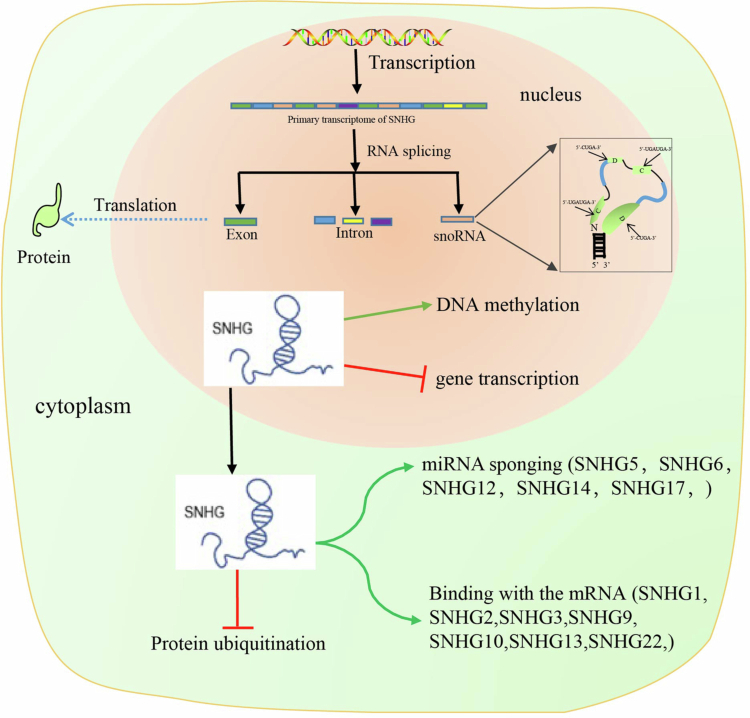 Figure 1
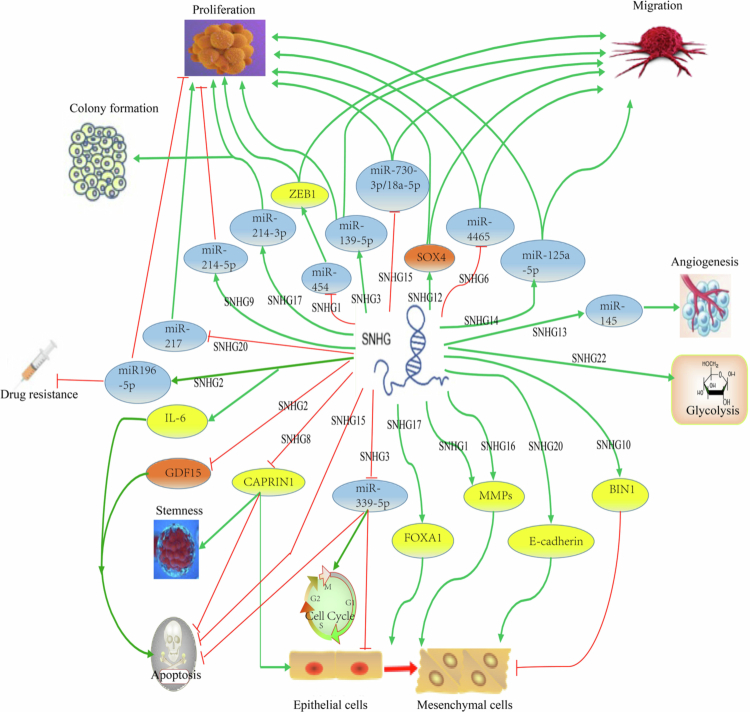 Figure 2
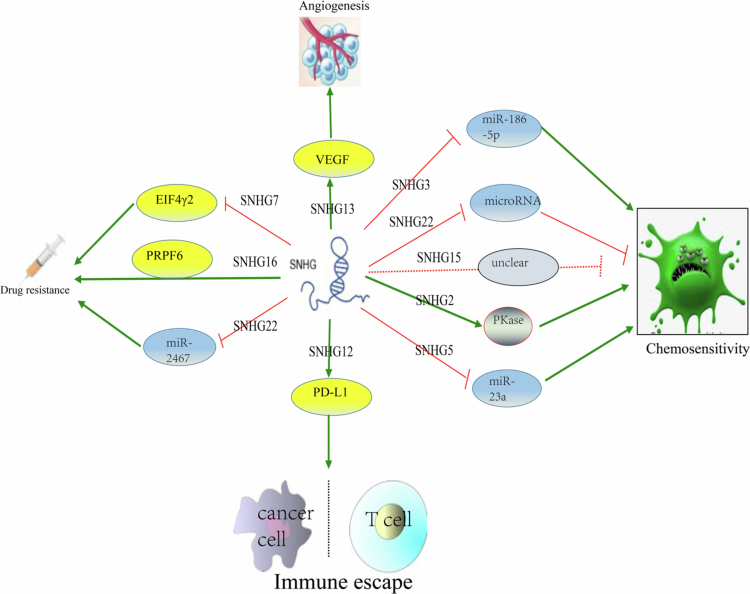 Figure 3
| SNHGs | Chromosomal location | Clinical manifestations | Targeted miRNAs | Cell lines | Effect | References |
|---|---|---|---|---|---|---|
|
| 11q12.3 | Cell proliferation, invasion, apoptosis and metastasis | miR−454 | A2780, OCC1, H8710, SKOV3 | Promotion | [ |
|
| 1q25.1 | Apoptosis, prognosis, proliferation, cisplatin resistant | miR−196-5p | Caov3, OVCAR4, OVCAR5, OVCAR8, EFO27, MCAS, SKOV3, A2780, HO8910, HEY | Inhibition | [ |
|
| 1p35.3 | Proliferation, invasion, prognosis, migration, drug resistance, G1/G0 arrest | miR−139-5p, miR−339-5p | SKOV3, OVCAR3, A2780, ES2, OV90, TOV21G, HeyA8 | Promotion | [ |
|
| 6q14.3 | Paclitaxel sensitivity | miR-23a | SKOV3, MeyA−8 | Inhibition | [ |
|
| 8q13.1 | Proliferation, migration | miR−4465 | HEK293T, ES2, RMG1, TOV21G, OVCA420, OVISE | Promotion | [ |
|
| 9q34.3 | Paclitaxel resistant | miR−3127-5p | SKOV3/PTX, heyA8/PTX, A2780 | Promotion | [ |
|
| 4q26 | Proliferation, migration, EMT, stemness | – | SKOV3, ES2, CaOV3 | Promotion | [ |
|
| 16p13.3 | Proliferation, migration, invasion | miR−214-5p | SKOV3, OVCAR3, A2780, IOSE‐80 | Inhibition | [ |
|
| 14q32.13 | Proliferation, colony formation, migration, and invasion | miR-200a-3p | A2780, SKOV3, OVCAR3, OV90 | Inhibition | [ |
|
| 1p35.3 | Proliferation, migration, immune escape | miRNA−129 | HEK293T, SKOV3, THP1, A2780, PA1, HO8910 | Promotion | [ |
|
| 4q12 | Angiogenesis, proliferation, migration, invasion | miR−145 | P4936, PC3, DU145, OVCA432, TOV112D, HO8910 | Promotion | [ |
|
| 15q11.2 | Proliferation, cell cycle | miR-125a-5p | SKOV3, IOSE80 | Promotion | [ |
|
| 7p13 | Proliferation, G1/G0 arrest, apoptosis, migration | miR−370-3p miR-18a-5p | A2780, CAOV3, SKOV3, OVCA433, ES2, HO8910, OMC685 | Promotion | [ |
|
| 17q25.1 | Proliferation, migration, invasion, paclitaxel-resistance | – | A2780, OVCAR3, SKOV3, CAOV39 | Promotion | [ |
|
| 20q11.23 | Prognosis, proliferation invasion | miR−214-3p | OVCAR3, PEO1, SKOV−3, A2780, Caov−3 | Promotion | [ |
|
| 17q25.2 | Proliferation, migration, invasion, EMT | miR−217 | SKOV3, OVCA429, OVCA433, OVCAR3, A2780 | Promotion | [ |
|
| 18q21.1 | Cisplatin- and paclitaxel-resistance, glycolysis | miR−2467 | Hey, OAW28, COV362, OVCAR3, CAOV3, SKOV3, A2780, ES2, HO8910 | Promotion | [ |
- —Qingdao Municipal Health Commission
- —Shandong Province Natural Science Foundation
- —Open found project of NMPA Key Laboratory for Quality Research and Evaluation of Traditional Marine Chinese Medicine
- —2022 Traditional Chinese Medicine Science and Technology Project of Qingdao Municipal Health Commission
Peer Reviews
No public reviews on file for this paper yet. If you reviewed it on a platform where reviews are public (OpenReview, ICLR, NeurIPS, ICML), you can paste yours below so the community can read it here.
Videos
No videos yet. Explain this paper in a talk, walkthrough, or lecture? Add one.
Taxonomy
TopicsCancer-related molecular mechanisms research · RNA modifications and cancer · Ferroptosis and cancer prognosis
Background
Ovarian cancer, including common and rare ovarian cancer,1 is the most malignant tumor in the female reproduction system.2 The most common and malignant is high grade serous ovarian cancer and endometrioid cancer, whereas rare ovarian cancers originate from many different cell types, such as germ cell, sex cord-stromal, or mixed types.3 More than 75% of ovarian patients were diagnosed at advanced stage due to its concealed location and lack of specific biomarkers for early diagnosis.4 Although there are great advances in the surgical treatment and adjuvant chemotherapy for ovarian cancer, the overall survival is still relatively short. Chemoresistance is the reason for the poor prognosis and recurrence of ovarian cancer. More than 80% of patients will experience recurrence within two years after the initial treatment is complete.5 Therefore, novel diagnostic biomarkers and target molecules for the early diagnosis and treatment of ovarian cancer are urgently needed.
Noncoding RNAs are a class of RNAs without protein-coding functions; however, they have been reported to play vital roles in the transcription, translation, and modification of genes. As transcripts of more than 200 nucleotides that lack protein-coding ability, long noncoding RNAs (lncRNAs) have been demonstrated to modulate cell proliferation, migration, and apoptosis, as well as drug resistance, by regulating the translation, modification, and differentiation of cancer cells.6-8 Among them, lncRNA SNHGs, the group of host genes of small nucleolar RNAs (snoRNAs), are long noncoding RNAs. Many studies have reported the aberrant expression of SNHGs in various tumors.9-18 For example, some of the SNHGs, including SNHG1, SNHG3, SNHG4, SNHG5, SNHG6, SNHG7, SNHG8, were reported to facilitate the proliferation, invasion and migration of hepatocellular carcinoma cells by activating downstream signaling molecules via miRNA and its target genes.12
In ovarian cancer, many SNHGs, including SNHG1, SNHG3, SNHG6, SNHG7, SNHG8, SNHG12, SNHG13, SNHG14, SNHG15, SNHG16, SNHG17, SNHG20, and SNHG22, are aberrantly highly expressed, while SNHG2, SNHG9, and SNHG10 are lowly expressed,15 the locations on chromosomes and some transcriptome structures of SNHGs are in Additional Figure 1. SNHGs can mediate the proliferation, cell cycle progression, invasion, migration, and chemoresistance of ovarian cancer cells by interfering with the expression of microRNAs, as well as influencing the EMT and related signaling pathways, providing new insights into the diagnosis and treatment of ovarian cancer.15^,^19 However, there is still a lack of reviews on the research progress of SNHGs in ovarian cancer until now.
The biogenesis and functions of SNHGs. The hydrolysis products of SNHGs in the nucleus include exons, introns and snoRNAs. SNHGs in the nucleus and cytoplasm have different mechanisms in regulating cancer genesis and progression.
In this article, we reviewed the research progress of SNHGs in the occurrence, development, diagnosis, and treatment of ovarian cancer and revealed the role of SNHGs in ovarian cancer and the underlying mechanisms comprehensively, providing new ideas and methods for the early diagnosis and treatment of ovarian cancer.
Small nucleolar RNA host genes (SNHGs)
Small nucleolar RNA host genes (SNHGs) are long noncoding RNAs that are widely distributed in the nucleus and cytoplasm of many cells. SNHGs play critical roles in the progression of various cancers, such as breast cancer,20 liver cancer,10 pituitary adenomas,21 gastric cancer,13^,^22 colon cancer,23 lung cancer,24 pancreatic adenocarcinoma,25 thyroid cancer,26 etc. Interestingly, SNHGs in the nucleus and SNHGs in the cytoplasm have different mechanisms in regulating cancer genesis and progression.15 The functions of SNHGs in the nucleus involve two pathways, including influencing DNA methylation through the modulation of methylation enzymes and repressing gene transcription through interactions with transcription factors. However, the SNHGs in cytoplasm play different roles via three other pathways: miRNA sponging and the release of miRNA targets, directly combining with mRNA to inhibit its translation and inhibiting the ubiquitylation of single proteins or protein complexes (Figure 1).
The primary transcriptome of SNHGs include exons, introns and snoRNA, which plays an important role in the process of post-transcriptional modification, ribosomal RNA cleavage, RNA silencing and alternative splicing, and telomerase maintenance.27 The hydrolysis products of each SNHG include one or more snoRNAs, for example, 8 snoRNAs, including snoRNA22, and snoRNA25−31, were embedded in SNHG1.28-30 Currently, several studies have reported that SNHGs can affect the occurrence, development, and prognosis of tumors by interacting with the internal snoRNAs.31 Among these SNHGs, SNHG1 play a critical role in many malignant tumors, including colon cancer,32^,^33 ovarian cancer,34^,^35 pancreatic cancer,36^,^37 glioma,38^,^39 and lung cancer,40^,^41 via multiple pathways and mechanisms. In ovarian cancer, 17 SNHGs reportedly participate in the proliferation of carcinoma cells, apoptosis, invasion, migration, drug resistance, and prognosis via different regulatory mechanisms.42-48
Effect of SNHGs on ovarian cancer and the underlying mechanisms
SNHGs play a vital role in promoting or inhibiting ovarian cancer via various pathways and multiple network regulatory mechanisms (Table 1). Several kinds of SNHGs, including SNHG1, SNHG3, SNHG6, SNHG7, SNHG8, SNHG12, SNHG13, SNHG14, SNHG15, SNHG16, SNHG17, NHG20, and SNHG22, are overexpressed in the early stage of ovarian cancer, and they promote the occurrence and development of ovarian cancer by influencing protein methylation, epithelial‒mesenchymal transition (EMT) and cell cycle arrest as well as promoting angiogenesis (Figure 2).
Mechanisms of SNHGs in ovarian cancer. SNHGs can affect the biological behaviors of ovarian cancer cells by regulating the expression of miRNAs or protein molecules, such as genes related to proliferation, cell cycle progression, invasion, migration, and chemoresistance. ZEB1: zinc finger E-box-binding homeobox 1, SOX4: SRY-box transcription factor 4, BIN1: bridging integrator 1, MMPs: matrix metalloproteinases, FOXA1: fork head box A1, CAPRIN1: cell cycle-associated protein 1, GDF15: growth differentiation factor 15, IL−6: interleukin−6 receptor.
SNHGs promote or inhibit ovarian cancer via microRNA
2.1
SNHGs serve as oncogenes by influencing the proliferation and migration ability of ovarian cancer cells. It has been reported that many SNHGs are aberrantly highly expressed in ovarian cancer tissues, which can promote the growth, invasion, and metastasis of ovarian cancer, and silencing these SNHGs can have opposite effects in vitro.15^,^19^,^34^,^42 For instance, SNHG1 can upregulate zinc finger E-box-binding homeobox 1 (ZEB1) by inhibiting the expression of miR−454 and then promoting the proliferation and migration of ovarian cancer,35 as shown in Additional Figure 2. Similarly, SNHG2 has been demonstrated in the ovarian granulosa cell tumor cell line KGN, where it leads to the upregulation of IL6 and increases the apoptosis rate of these cells.78 In ovarian clear cell carcinoma, SNHG6 influences the expression of the enhancer of EZH2 by sponging miR−4465, thus promoting cell proliferation and migration.43 Interestingly, SNHG12 can promote the expression of the transcription factor SOX4 in ovarian cancer tissues and increase the proliferation and migration of tumor cells.62 SNHG14 is overexpressed in ovarian cancer tissues and is negatively associated with the overall survival of patients. SNHG14 not only promotes the proliferation and migration of ovarian cancer cells by regulating the expression of microRNA-125a-5p but also promotes tumor progression by regulating the expression of DiGeorge syndrome critical region 8 (DGCR8).66 SNHG15 also promotes the proliferation of ovarian cancer cells through upregulated CDK6 via sponging miR−370-3p.68 SNHG20 promotes cell proliferation and invasion by suppressing the expression of miR−217 in ovarian cancer.75
Moreover, SNHGs can interfere with the cell cycle of ovarian cancer cells via microRNAs. In ovarian cancer, SNHG3 promotes the expression of TRPC3 by interfering with miR−339-5p and then influences the cell cycle and subsequently inhibits tumor cell apoptosis. In addition, a study showed that knockdown of the SNHG3 gene can induce cell cycle arrest in the G0/G1 phase in vitro, thus promoting cell apoptosis.57 Interestingly, SNHG15 knockdown also induced G1/G0 phase arrest and apoptosis.68 SNHG17 facilitates the expression of CDK6 (a cell cycle regulator) via molecular sponges for miR−214-3p and results in the proliferation of carcinoma cells and the formation of new clones.48
Furthermore, SNHGs can influence angiogenesis and ATPase activity and serve as proto-oncogenes to promote the progression of ovarian cancer. SNGH13 is overexpressed in ovarian cancer patients at an advanced stage accompanied by multiple metastases.79 SNHG13 can directly combine with miR−145 to regulate the expression of VEGF and then promote the formation of new blood vessels in tumors.64 In addition, SNHG3 interferes with miR−139-5p and then promotes the expression of Notch1 to promote the occurrence and development of ovarian cancer, thus serving as a proto-oncogene.55 Energy supply is critical for tumor metastasis, and SNHG22 regulated by SP1 can promote glycolysis and the proliferation of cancer cells, thus facilitating the metastasis of ovarian cancer.77
In addition, SNHGs can also suppress ovarian cancer via microRNAs. Three SNHGs, including SNHG2, SNHG9, and SNHG10, have been found to play a protective role in ovarian cancer.46^,^47^,^51 SNHG2 was downregulated in the ovarian tissues versus normal ovarian tissues, and the expression of SNHG2 is closely related to the clinical staging, pathological types, and prognosis of the ovarian cancer patients.80 It has been shown that SNHG2 can block the transcription of CCAAT/enhancer binding protein β (CEBPB)-mediated growth differentiation factor 15 (GDF15), further leading to the apoptosis of ovarian cancer cells.51 SNHG2 can also suppress ovarian cancer cell proliferation by regulating the expression of homeobox A5 (HOXA5) through miR−196-5p.52 SNHG9 suppresses the progression of ovarian cancer cells by regulating miR−214-5p/CRY2 axis, acting as a tumor suppressor gene.46 Another study showed that the low expression of SNHG10 is also associated with poor prognosis of ovarian cancer patients.47 Mechanically, SNHG10 combines with miR-200a-3p to form an RNA-induced silencing complex (RISC), which can act with tumor suppressor bridging integrator−1(BIN1), subsequently suppressing the proliferation and EMT of ovarian cancer cells.47
SNHGs influence the progression of ovarian cancer via EMT and EMT-related signaling pathways
2.2
SNHGs can affect the invasion and migration of ovarian cancer cells via interfering with EMT, EMT-related signaling pathways as well as the stemness of tumor cells.8^,^19^,^34^,^45^,^47
Recent study showed that SNHG1 and SNHG16 can regulate the activity of matrix metalloproteinases (MMPs) to promote EMT, and then influence the invasion and migration abilities of ovarian cancer cells.34^,^70 SNHG10 can upregulate tumor suppressor bridging integrator−1 (BIN1) to inhibit tumor cell proliferation and EMT. The knockdown of SNHG15 can significantly suppress the migration and invasion of epithelial ovarian cancer cells by increasing the expression of miR-18a-5p,69^,^81 and SNHG17 has been reported to promote EMT in ovarian cancer cells by upregulating fork head box A1 (FOXA1).72
In addition, SNHGs can affect the EMT properties of ovarian cancer cells via β-catenin. SNHG3 can regulate the development and progression of ovarian cancer cells and affect the diagnosis of ovarian cancer patients via the GSK3/β-catenin pathway.54 After silencing SNHG3, the expression of some metastasis-related proteins, including CDK1, MMP3, and MMP9, is evidently reduced, suggesting that SNHG3 influences protein expression in ovarian cancer tissues to affect the migration and metastasis of tumor cells.54^,^56^,^57 SNHG8 can combine with cell cycle-associated protein 1 (CAPRIN1) to influence the Wnt/β-catenin pathway, promoting the proliferation, migration, and EMT of ovarian cancer cells and suppressing cell apoptosis and stemness.45 SNHG20 has been reported to be upregulated in serous epithelial ovarian cancer and induce the expression of E-cadherin by activating the Wnt/β-catenin pathway, subsequently promoting the proliferation, migration, and EMT ability of ovarian cancer cells.73^,^82
Prospects of SNHGs in the treatment of ovarian cancer
The important role of SNHGs in various biological processes related to carcinogenesis, together with their cancer-specific expression patterns, has made SNHGs promising therapeutic targets. Therefore, many strategies have been explored for their roles in the treatment of ovarian cancer.83 Generally, there are two main approaches, which have already been applied for targeting different SNHGs in OC: to alter their expression level or to inhibit their interactions with other macromolecules.84 In the treatment for ovarian cancer, satisfied tumor cell debulking surgery and effective chemotherapeutic drugs played important roles in progression-free survival and overall survival.5^,^85-90 According to clinical guidelines and expert consensus,86 the common chemotherapeutic drugs for ovarian cancer include cisplatin, paclitaxel, tamoxifen, doxorubicin, fluorouracil, etc. It has been reported that SNHGs can influence the sensitivity of ovarian cancer cells to chemotherapeutic drugs, mediate immune escape, and regulate tumor angiogenesis to influence the therapeutic effects on cancer (Figure 3).
Prospects of SNHGs in the treatment of ovarian cancer. Based on the role of SNHGs in ovarian carcinogenesis and progression, SNHGs could play an important role in ovarian cancer treatment via regulating the expression of miRNA or protein molecules. VEGF: vascular endothelial growth factor, PD-L1: programmed death-ligand 1, PRPF6: Pre-mRNA processing factor 6, EIF4γ2: eukaryotic translation initiation factor 4 γ-2.
SNHGs can influence the chemosensitivity of ovarian cancer cells to many drugs through multiple pathways
3.1
Several SNHGs have been documented to influence the chemosensitivity of ovarian cancer cells to cisplatin.53^,^76^,^81 SNHG2 can enhance the chemosensitivity of ovarian cancer cells to cisplatin via activating protein kinase pathways, while SNHG22 can suppress the chemosensitivity of ovarian cancer cells to cisplatin via interacting with microRNAs. SNHG15 has a similar function to that of SNHG22, but its underlying mechanism is still unclear.15^,^81^,^91^,^92
SNHGs can affect the sensitivity of ovarian cancer cells to paclitaxel. It has been reported that SNHG5 enhances the sensitivity of ovarian cancer cells to paclitaxel via sponging miR-23a.58 SNHG7 mediates paclitaxel resistance in ovarian cancer cells by interacting with eukaryotic translation initiation factor 4 γ-2 (EIF4γ2), while after silencing the expression of SNHG7, it can restore paclitaxel sensitivity in tumor cells.44 Pre-mRNA processing factor 6 (PRPF6) promotes the paclitaxel resistance of ovarian cancer by regulating SNHG16.71 SNH22 influences the expression of galectin−1 (Gal−1) via interacting with miR−2467, mediating the drug resistance of cisplatin/paclitaxel during chemotherapy.76
In addition, SNHGs can influence the endocrine therapy of ovarian cancer cells. Li et al. found that SNHG3 mediates the sensitivity of ovarian cancer cells to tamoxifen by influencing glycolysis, the Krebs cycle and oxidative phosphorylation and inhibiting the expression of miR‐186‐5p.56
Moreover, SNHGs can influence the immune escape and angiogenesis of ovarian cancer cells during chemotherapy. Mechanically, SNHG12 facilitates IL-6R transcription/expression via the recruitment of NF-κB and induces the expression of programmed death-ligand 1 (PD-L1) on the surface of M2 macrophages; subsequently, the proliferation of T cells is suppressed, leading to the immune escape of ovarian cancer cells.63 Research has shown that SNHG13 can act as a therapeutic target in ovarian cancer because SNHG13 can regulate the expression of vascular endothelial growth factor (VEGF) via miR−145 and promote tumor angiogenesis.64
SNHGs and the prognosis of ovarian cancer
Ovarian cancer has the highest mortality rate among all gynecologic malignancies, and there are no specific and effective biomarkers to predict its prognosis. To date, many SNHGs have been reported to be related to the prognosis of ovarian cancer. Among them, SNHG3, SNHG6, SNHG15, SNHG16, and SNHG20 are aberrantly upregulated in ovarian cancer, and their expression levels are positively associated with multiple clinical factors, including tumor size, depth of invasion, clinical analysis, remote metastasis, pathological types, tissue differentiation of ovarian cancer, suggesting that the above SNHGs are associated with the poor prognosis of ovarian cancer.43^,^54^,^81^,^82^,^93^,^94 However, patients with low SNHG2 expression had shorter overall survival and progression free survival, and the expression level of SNHG2 was negatively associated with tumor size, depth of invasion and clinical staging, suggesting that SNHG2 could be an indicator of good prognosis of ovarian cancer.80 According to reported studies, in addition to SNHG2, SNHG5, SNHG9, and SNHG10, most SNHGs play a role as a proto-oncogene in the occurrence and progression of ovarian cancer via different pathways.42^,^46^,^64^,^80 Based on the current research, SNHGs take part in the progression of ovarian cancer in various pathways, and it can combine several factors, like CA125 and tumor size, to construct a precise predictive model for ovarian cancer.70^,^95-98
Conclusion
Above all, the dysregulation of SNHGs were significantly associated with the stage, migration, invasion, and poor diagnosis of ovarian cancer. Many studies have shown that SNHGs can regulate the progression of various tumors via activating different signaling pathways, interacting with snoRNAs and acting as sponge miRNAs. SNHGs can act as independent prognostic factors for ovarian cancer. However, the regulatory networks of SNHGs are complex, and their underlying mechanisms are still unclear. Therefore, further exploration of the mechanisms of SNHGs and snoRNAs is necessary to provide new insights and novel targets for ovarian cancer.
Consent for publication
Not applicable.
The reference list from the paper itself. Each links out to its DOI / PubMed record.
- 1Sabol M, Calleja-Agius J, Di Fiore R, Suleiman S, Ozcan S, Ward MP, Ozretić P. (In)Distinctive role of long non-coding RN As in common and rare ovarian cancers. Cancers. 2021;13(20):5040. doi: 10.3390/cancers 13205040.34680193 PMC 8534192 · doi ↗ · pubmed ↗
- 2Siegel RL, Miller KD, Jemal A. Cancer statistics, 2020. CA Cancer J Clin. 2020;70(1):7–30. doi: 10.3322/caac.21590.31912902 · doi ↗ · pubmed ↗
- 3Lisio MA, Fu L, Goyeneche A, Gao Z, Telleria C. High-grade serous ovarian cancer: basic sciences, clinical and therapeutic standpoints. Int J Mol Sci. 2019;20(4):952. doi: 10.3390/ijms 20040952.30813239 PMC 6412907 · doi ↗ · pubmed ↗
- 4Narod S. Can advanced-stage ovarian cancer be cured? Nat Rev Clin Oncol. 2016;13(4):255–261. doi: 10.1038/nrclinonc.2015.224.26787282 · doi ↗ · pubmed ↗
- 5Modugno F, Edwards RP. Ovarian cancer: prevention, detection, and treatment of the disease and its recurrence. Molecular mechanisms and personalized medicine meeting report. Int J Gynecol Cancer. 2012;22(8):S 45–57. doi: 10.1097/IGC.0b 013e 31826 bd 1f 2.23013733 PMC 3460381 · doi ↗ · pubmed ↗
- 6Kopp F, Mendell JT. Functional classification and experimental dissection of long noncoding RN As. Cell. 2018;172(3):393–407. doi: 10.1016/j.cell.2018.01.011.29373828 PMC 5978744 · doi ↗ · pubmed ↗
- 7Fang Y, Fullwood MJ. Roles, functions, and mechanisms of long non-coding RN As in cancer. Genom Proteom Bioinform. 2016;14(1):42–54. doi: 10.1016/j.gpb.2015.09.006.PMC 479284326883671 · doi ↗ · pubmed ↗
- 8Braga EA, Fridman MV, Moscovtsev AA, Filippova EA, Dmitriev AA, Kushlinskii NE. Lnc RN As in ovarian cancer progression, metastasis, and main pathways: ce RNA and alternative mechanisms. Int J Mol Sci. 2020;21(22):8855. doi: 10.3390/ijms 21228855.33238475 PMC 7700431 · doi ↗ · pubmed ↗