Erratum: 2024;7(4):590-9 (DOI: 10.31662/jmaj.2024-0127)
Fumi Ishikawa, Tatsuki Fukuie, Yasuaki Matsumoto, Daichi Suzuki, Kotaro Umezawa, Kazuma Takada, Seiko Hirai, Kenji Toyokuni, Mayako Saito-Abe, Miori Sato, Yumiko Miyaji, Shigenori Kabashima, Kiwako Yamamoto-Hanada, Kohta Suzuki, Yukihiro Ohya

Abstract
Genes, proteins, chemicals, diseases, species, mutations and cell lines named across the full text — each resolved to its canonical identifier and authoritative record.
Click any figure to enlarge with its caption.
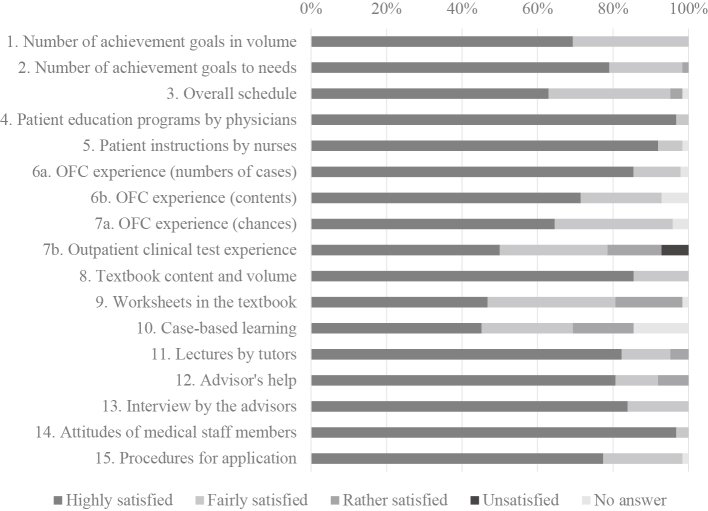 Figure 1
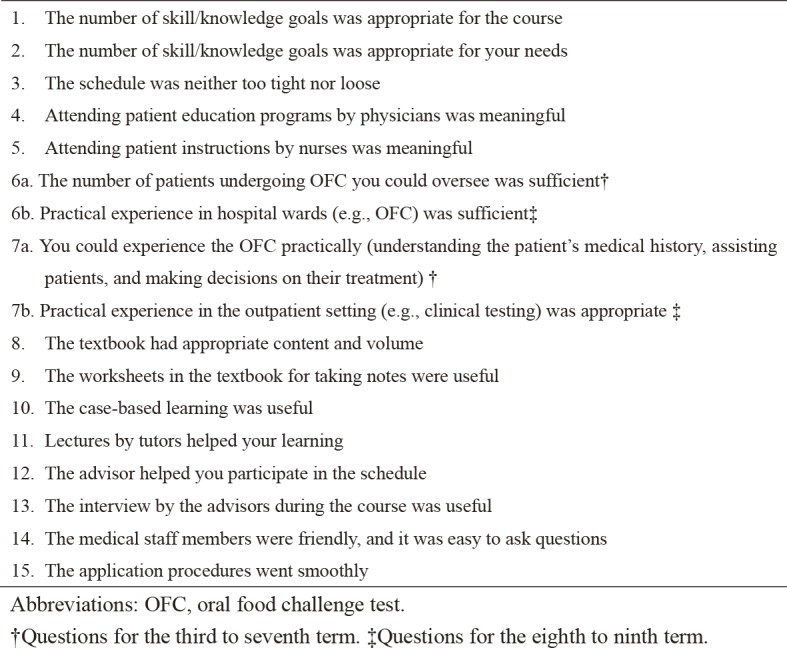 Figure 2
Peer Reviews
No public reviews on file for this paper yet. If you reviewed it on a platform where reviews are public (OpenReview, ICLR, NeurIPS, ICML), you can paste yours below so the community can read it here.
Videos
No videos yet. Explain this paper in a talk, walkthrough, or lecture? Add one.
Taxonomy
TopicsDiverse Scientific and Economic Studies · Diverse Perspectives in Modern Studies
Article: Ishikawa F, Fukuie T, Matsumoto Y, et al. A two-week, hands-on educational program for primary care pediatricians aimed at equalization of pediatric allergy practice across institutions and regions. JMA J. 2024;7(4):590-9.
Correction 1: Main text, “Educational program” of Materials and Methods section.
Original: In 2019, the contents of AD, asthma, and allergic rhinitis (AR) were added to ensure the management of coexisting allergic diseases, and an additional 36 skill/knowledge objectives and 14 behavioral objectives were set.
Corrected: In 2019, the contents of AD, asthma, and allergic rhinitis (AR) were added to ensure the management of coexisting allergic diseases, and 36 skill/knowledge objectives and 14 behavioral objectives were set.
Correction 2: Main text, “Evaluation of reaction (Kirkpatrick level 1)” of Results section.
Original: Scores for items to be studied in clinical practice, such as patient education programs by physicians (Item No. 4), instructions by nurses (Item No. 5), and experiences of OFC (Item Nos. 6 and 7) were high.
Corrected: 48 participants answered questions Nos. 6a and 7a, and 14 participants answered questions Nos. 6b and 7b. Scores for items to be studied in clinical practice, such as patient education programs by physicians (Item No. 4), instructions by nurses (Item No. 5) were high.
Correction 3: Figure 1.
The correct figure is presented below.
Correction 4: The legends of Figure 1.
Original: Answers for patient education programs by physicians (Item No. 4) and instructions by nurses (Item No. 5) were found to be highly meaningful for the participants.
Corrected: Answers for patient education programs by physicians (Item No. 4) and instructions by nurses (Item No. 5) were found to be highly meaningful for the participants. Questions Nos. 6a and 7a were for the third to seventh term and questions Nos. 6b and 7b were for the eighth to ninth term.
Correction 5: Main text, “Evaluation of knowledge and skills (Kirkpatrick level 2)” of Results section.
Original: Between the eighth and ninth terms, improvements were seen in all items; nevertheless, only two items were statistically significant.
Corrected: Between the eighth and ninth terms, improvements were seen in all items; nevertheless, only four items were statistically significant.
Correction 6: Main text, “Evaluation of behaviors (Kirkpatrick level 3)” of Results section.
Original: Between the third and seventh terms, significant behavioral improvements in six of seven items were shown, except for Item No. 1, which all the respondents achieved already before the course.
Corrected: Between the third and seventh terms, significant behavioral improvements in five of seven items were shown, except for Items Nos. 1 and 2, which many respondents achieved already before the course.
Correction 7: Table 3.
The correct table is presented below. The changes are underlined.
Correction 8: Supplementary Table 1.
The correct table is presented below.