Sarcopenia in liver transplantation: A comprehensive bibliometric study of current research trends and future directions
Yang Li, Yang Xiang, Xiaoyan Yan, Changjiang Lu, Jing Huang, Lei Dai

TL;DR
This study explores the link between sarcopenia and liver transplantation using bibliometric and bioinformatics methods to guide future research and clinical practices.
Contribution
The study identifies shared genes and biological processes linking sarcopenia and liver transplantation, offering new insights into their molecular mechanisms.
Findings
78 biphenotypic target genes were identified, including IL1B, ADIPOQ, and TNF.
Key biological processes like 'response to peptide hormone' were highlighted as significant.
Routine sarcopenia assessments are recommended for liver transplant candidates.
Abstract
The long-term survival and quality of life of liver transplantation (LT) recipients has emerged as a critical focus, where managing sarcopenia (a syndrome of diminished muscle mass and strength) and perioperative nutrition is paramount. This study aimed to delineate the knowledge landscape and identify key research trends and potential molecular mechanisms linking LT and sarcopenia through bibliometric and bioinformatics analyses. This study employs bibliometric and bioinformatics analyses to evaluate research trends and molecular mechanisms linking LT and sarcopenia. Data were retrieved from Web of Science database, and tools such as CiteSpace, VOSviewer, and R were used for data analysis and visualization. A total of 448 studies published over the past two decades were analyzed. Our bibliometric analysis revealed geographical distribution patterns, authorship networks, journal…
Genes, proteins, chemicals, diseases, species, mutations and cell lines named across the full text — each resolved to its canonical identifier and authoritative record.
Click any figure to enlarge with its caption.
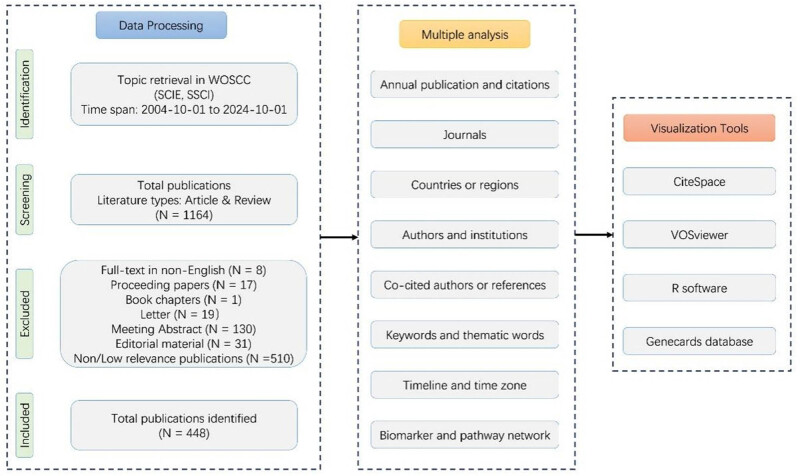 Figure 1
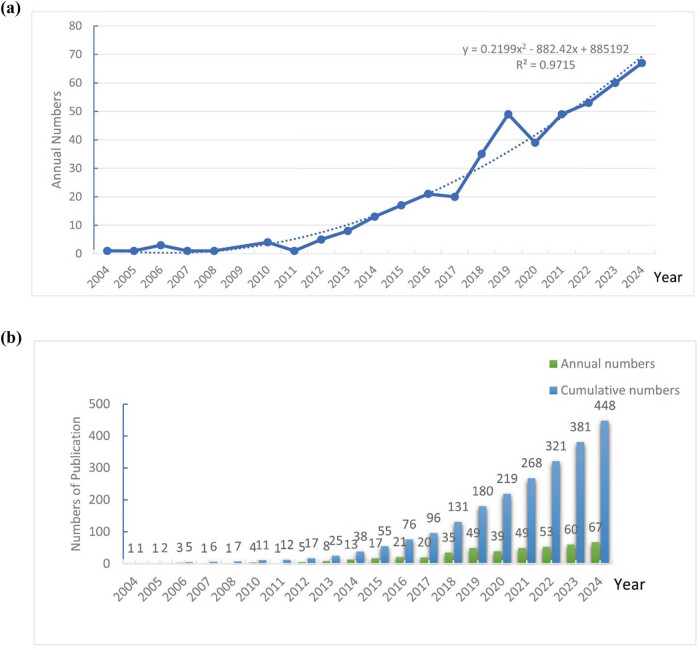 Figure 2
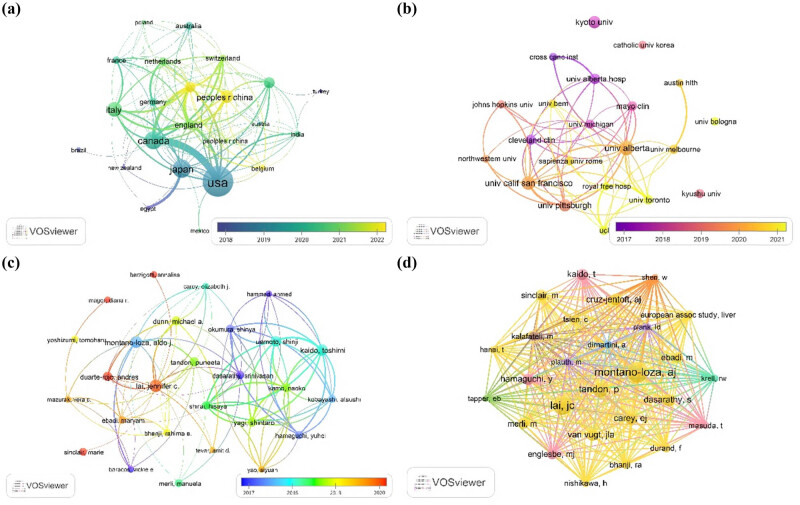 Figure 3
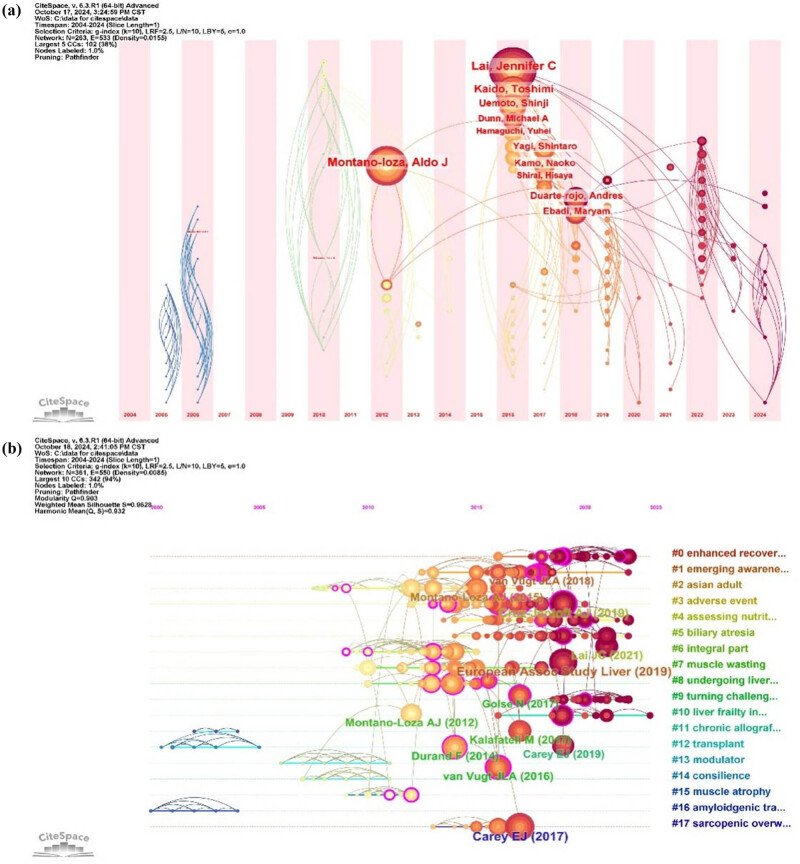 Figure 4
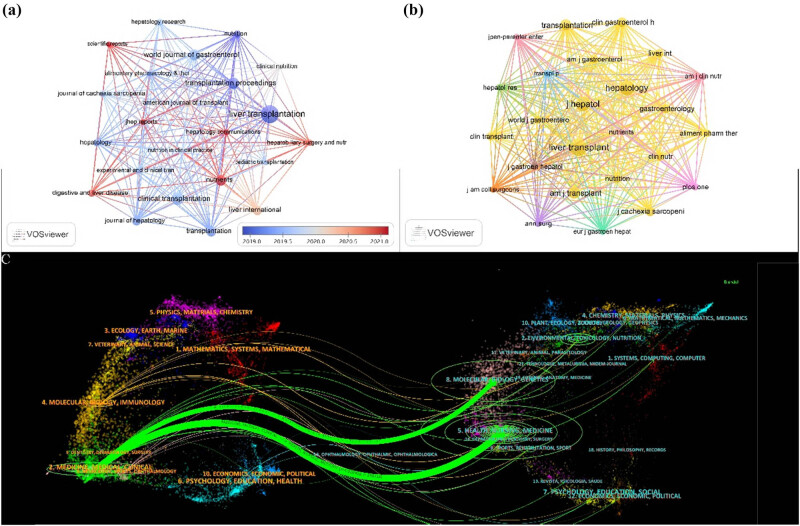 Figure 5
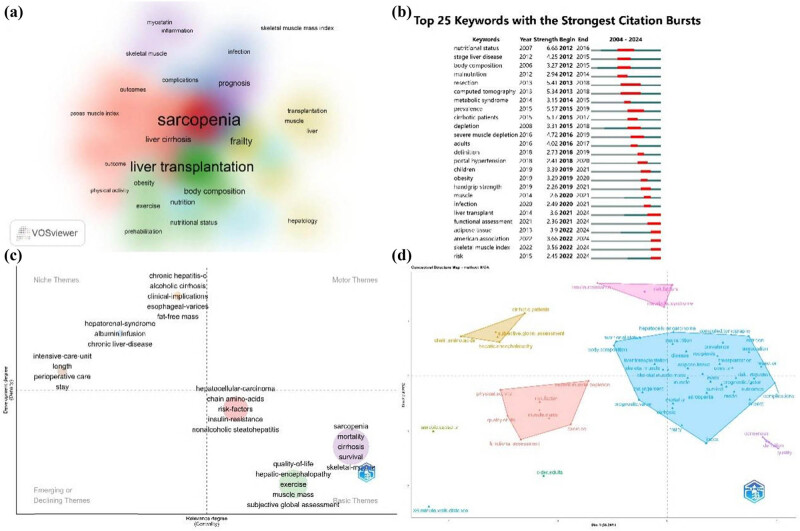 Figure 6
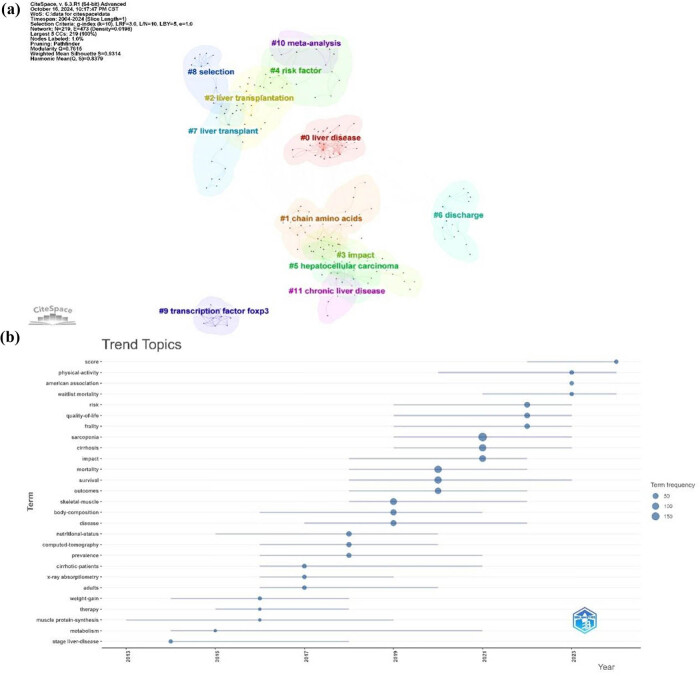 Figure 7
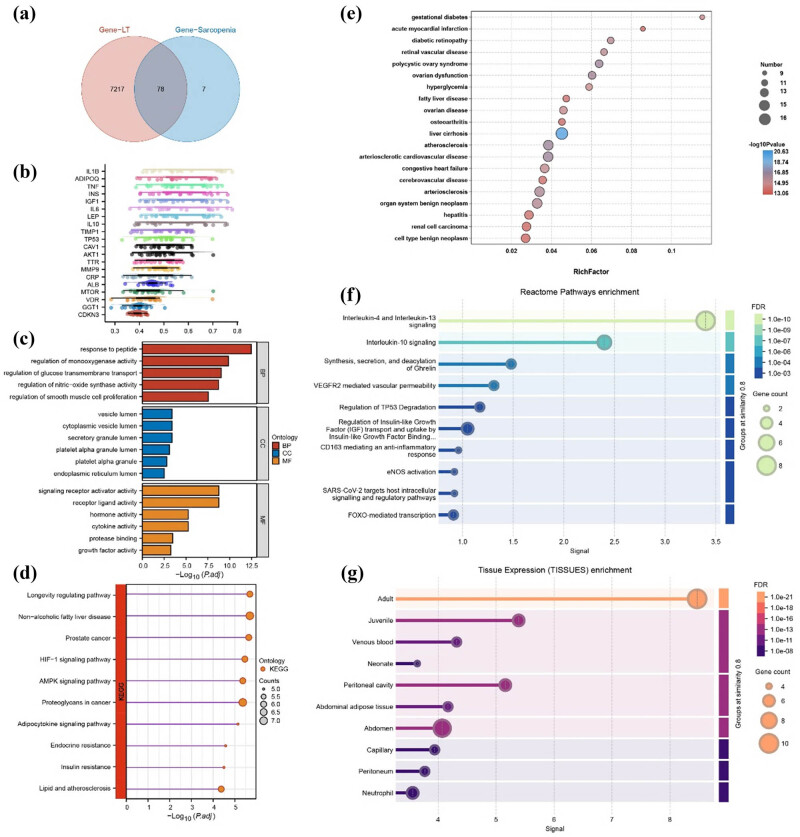 Figure 8
| Rank | Country | Documents | Citations | Average number of citations/publications | Institution | Documents | Citations | Average number of citations/publications |
|---|---|---|---|---|---|---|---|---|
| 1 | USA | 130 | 7,354 | 56.57 | University of Alberta | 34 | 2,273 | 66.85 |
| 2 | Japan | 61 | 2,451 | 40.18 | University of California, San Francisco | 30 | 1,941 | 64.70 |
| 3 | Canada | 59 | 4,180 | 70.85 | University of Pittsburgh | 24 | 1433 | 59.71 |
| 4 | Italy | 43 | 1,335 | 31.05 | Kyoto University | 23 | 1,385 | 60.22 |
| 5 | Peoples’ R China | 43 | 693 | 16.12 | University of Alberta Hospital | 15 | 2,034 | 135.60 |
| 6 | South Korea | 29 | 682 | 23.52 | Cleveland clinic | 13 | 1,737 | 133.62 |
| 7 | Spain | 27 | 514 | 19.04 | University of Toronto | 12 | 336 | 28.00 |
| 8 | England | 26 | 715 | 27.50 | Mayo clinic | 12 | 854 | 71.17 |
| 9 | The Netherlands | 17 | 837 | 49.24 | UCLA | 11 | 494 | 44.91 |
| 10 | Germany | 17 | 671 | 39.47 | University of Michigan | 11 | 1,221 | 111.00 |
| Rank | Author | Documents | Citations | Average number of citations/publications | H-index | G-index | Co-cited authors | Citations |
|---|---|---|---|---|---|---|---|---|
| 1 | LAI, JENNIFER C. | 27 | 1,908 | 70.67 | 18 | 27 | MONTANO-LOZA, ALDO J. | 524 |
| 2 | MONTANO-LOZA, ALDO J. | 24 | 3,457 | 144.04 | 22 | 25 | LAI, JENNIFER C. | 442 |
| 3 | KAIDO, TOSHIMI | 22 | 1,082 | 49.18 | 14 | 23 | TANDON, PUNEETA | 317 |
| 4 | UEMOTO, SHINJI | 20 | 1,059 | 52.95 | 13 | 20 | CAREY, ELIZABETH J | 215 |
| 5 | YAGI, SHINTARO | 15 | 412 | 27.47 | 9 | 15 | DASARATHY, SRINIVASAN | 198 |
| 6 | TANDON, PUNEETA | 15 | 1,482 | 98.80 | 13 | 15 | VAN VUGT, JEROEN L. A. | 189 |
| 7 | DUARTE-ROJO, ANDRES | 15 | 911 | 60.73 | 11 | 15 | CRUZ-JENTOFT AJ | 188 |
| 8 | DUNN, MICHAEL A. | 14 | 1,049 | 74.93 | 13 | 14 | HAMAGUCHI, YUHEI | 180 |
| 9 | KAMO, NAOKO | 13 | 386 | 29.69 | 9 | 13 | KAIDO, TOSHIMI | 174 |
| 10 | SHIRAI, HISAYA | 12 | 394 | 32.83 | 9 | 12 | SINCLAIR, MARIE | 168 |
| Rank | Author | Title | Key point | DOI | Total Citation | Journal | Year |
|---|---|---|---|---|---|---|---|
| 1 | ENGLESBE MJ | Sarcopenia and mortality after liver transplantation | Sarcopenia assessment | 10.1016/j.jamcollsurg.2010.03.039 | 621 | J AM COLL SURGEONS | 2010 |
| LT outcomes | |||||||
| Psoas muscle area | |||||||
| Post-transplantation mortality | |||||||
| Patient frailty indicators | |||||||
| 2 | MONTANO-LOZA AJ | Muscle wasting is associated with mortality in patients with cirrhosis | Sarcopenia prevalence | 10.1016/j.cgh.2011.08.028 | 606 | CLIN GASTROENTEROL H | 2012 |
| Liver cirrhosis | |||||||
| Mortality prediction | |||||||
| LT evaluation | |||||||
| Muscle mass assessment | |||||||
| 3 | TANDON P | Severe muscle depletion in patients on the liver transplant wait list: its prevalence and independent prognostic value | Sarcopenia prevalence | 10.1002/lt.23495 | 430 | LIVER TRANSPLANT | 2012 |
| LT candidates | |||||||
| Prognostic significance | |||||||
| Waiting list mortality | |||||||
| Muscle depletion predictors | |||||||
| 4 | DASARATHY S | Sarcopenia from mechanism to diagnosis and treatment in liver disease | Sarcopenia in cirrhosis | 10.1016/j.jhep.2016.07.040 | 396 | J HEPATOL | 2016 |
| Muscle mass assessment | |||||||
| LT outcomes | |||||||
| Mortality risk | |||||||
| Therapeutic targets | |||||||
| 5 | HAMAGUCHI Y | Proposal for new diagnostic criteria for low skeletal muscle mass based on computed tomography imaging in Asian adults | Sarcopenia assessment in LT | 10.1016/j.nut.2016.04.003 | 361 | NUTRITION | 2016 |
| Psoas muscle mass index (PMI) as a predictor | |||||||
| Sex-specific cutoff values for low skeletal muscle mass | |||||||
| Sarcopenia’s impact on post-transplant survival | |||||||
| Asian population criteria for sarcopenia | |||||||
| 6 | CAREY EJ | A multicenter study to define sarcopenia in patients with end-stage liver disease | Sarcopenia definition | 10.1002/lt.24750 | 339 | LIVER TRANSPLANT | 2017 |
| LT | |||||||
| SMI | |||||||
| Wait-list mortality | |||||||
| Muscle wasting thresholds | |||||||
| 7 | LAI JC | Development of a novel frailty index to predict mortality in patients with end-stage liver disease | Frailty index for cirrhosis | 10.1002/hep.29219 | 330 | HEPATOLOGY | 2017 |
| LT candidates | |||||||
| Mortality prediction | |||||||
| MELD score supplementation | |||||||
| Extrahepatic complications | |||||||
| 8 | KAIDO T | Impact of Sarcopenia on Survival in Patients Undergoing Living Donor Liver Transplantation | Sarcopenia assessment | 10.1111/ajt.12221 | 303 | AM J TRANSPLANT | 2013 |
| Living donor liver transplantation (LDLT) | |||||||
| Post-transplantation mortality | |||||||
| Muscle mass correlation | |||||||
| Perioperative nutritional therapy | |||||||
| 9 | DURAND F | Prognostic value of muscle atrophy in cirrhosis using psoas muscle thickness on computed tomography | Sarcopenia and mortality | 10.1016/j.jhep.2014.02.026 | 284 | J HEPATOL | 2014 |
| LT | |||||||
| MELD score | |||||||
| Psoas muscle thickness (TPMT) | |||||||
| Prognostic marker | |||||||
| 10 | VAN VUGT JLA | Systematic Review and Meta-analysis of the Impact of Computed Tomography–Assessed Skeletal Muscle Mass on Outcome in Patients Awaiting or Undergoing Liver Transplantation | Sarcopenia assessment | 10.1111/ajt.13732 | 260 | AM J TRANSPLANT | 2016 |
| LT outcomes | |||||||
| MELD score supplementation | |||||||
| Muscle waste as a prognostic marker | |||||||
| Preoperative skeletal muscle mass and survival |
| Rank | Author | Title | Key point | DOI | Total Citation | Journal | Year |
|---|---|---|---|---|---|---|---|
| 1 | MONTANO-LOZA AJ | Muscle wasting is associated with mortality in patients with cirrhosis | Sarcopenia prevalence | 10.1016/J.CGH.2011.08.028 | 144 | CLIN GASTROENTEROL H | 2012 |
| Liver cirrhosis | |||||||
| Mortality prediction | |||||||
| LT evaluation | |||||||
| Muscle mass assessment | |||||||
| 2 | ENGLESBE MJ | Sarcopenia and mortality after liver transplantation | Sarcopenia assessment | 10.1016/J.JAMCOLLSURG.2010.03.039 | 138 | J AM COLL SURGEONS | 2010 |
| LT outcomes | |||||||
| Psoas muscle area | |||||||
| Post-transplantation mortality | |||||||
| Patient frailty indicators | |||||||
| 3 | TANDON P | Severe muscle depletion in patients on the liver transplant wait list: Its prevalence and independent prognostic value | Sarcopenia prevalence | 10.1002/LT.23495 | 119 | LIVER TRANSPLANT | 2012 |
| LT candidates | |||||||
| Prognostic significance | |||||||
| Waiting-list mortality | |||||||
| Muscle depletion predictors | |||||||
| 4 | CAREY EJ | A multicenter study to define sarcopenia in patients with end-stage liver disease | Sarcopenia definition | 10.1002/LT.24750 | 109 | LIVER TRANSPLANT | 2017 |
| LT | |||||||
| SMI | |||||||
| Wait-list mortality | |||||||
| Muscle wasting thresholds | |||||||
| 5 | MONTANO-LOZA AJ | Severe muscle depletion predicts postoperative length of stay but is not associated with survival after liver transplantation | Sarcopenia in cirrhosis | 10.1002/LT.23863 | 105 | LIVER TRANSPLANT | 2014 |
| LT outcomes | |||||||
| Mortality prediction | |||||||
| Post-transplant complications | |||||||
| Muscle mass assessment | |||||||
| 6 | CRUZ-JENTOFT AJ | Sarcopenia: European consensus on definition and diagnosis | Sarcopenia definition and diagnosis | 10.1093/AGEING/AFQ034 | 97 | AGE AGEING | 2010 |
| European Working Group on Sarcopenia in Older People (EWGSOP) criteria | |||||||
| Muscle mass and function assessment | |||||||
| Clinical utility and statistical accuracy balance | |||||||
| Mortality prediction in cirrhosis patients | |||||||
| 7 | DURAND F | Prognostic value of muscle atrophy in cirrhosis using psoas muscle thickness on computed tomography | Sarcopenia and mortality | 10.1016/J.JHEP.2014.02.026 | 95 | J HEPATOL | 2014 |
| LT | |||||||
| MELD score | |||||||
| Psoas muscle thickness (TPMT) | |||||||
| Prognostic marker | |||||||
| 8 | VAN VUGT JLA | Systematic Review and Meta-analysis of the Impact of Computed Tomography–Assessed Skeletal Muscle Mass on Outcome in Patients Awaiting or Undergoing Liver Transplantation | Sarcopenia assessment | 10.1111/AJT.13732 | 92 | AM J TRANSPLANT | 2016 |
| LT outcomes | |||||||
| MELD score supplementation | |||||||
| Muscle waste as a prognostic marker | |||||||
| Preoperative skeletal muscle mass and survival | |||||||
| 9 | KAIDO T | Impact of Sarcopenia on Survival in Patients Undergoing Living Donor Liver Transplantation | Sarcopenia assessment | 10.1111/AJT.12221 | 91 | AM J TRANSPLANT | 2013 |
| LDLT | |||||||
| Post-transplantation mortality | |||||||
| Muscle mass correlation | |||||||
| Perioperative nutritional therapy | |||||||
| 10 | MONTANO-LOZA AJ | Inclusion of sarcopenia within MELD (MELD-Sarcopenia) and the prediction of mortality in patients with cirrhosis | Sarcopenia impact on LT | 10.1038/CTG.2015.31 | 91 | CLIN TRANSL GASTROEN | 2015 |
| MELD score limitations | |||||||
| Muscularity assessment improvement | |||||||
| Mortality prediction in cirrhosis | |||||||
| Sarcopenia as a prognostic indicator |
| Rank | Journal | Documents | Citations | Average number of citations/publications | JIF (2024) | JCR | Co-cited Journal | Co-citations | JIF (2024) | JCR |
|---|---|---|---|---|---|---|---|---|---|---|
| 1 | Liver Transplantation | 38 | 3,039 | 79.97 | 4.7 | Q1 | Journal of Liver Transplantation | 1,806 | 4.7 | Q1 |
| 2 | Clinical Transplantation | 20 | 402 | 20.10 | 1.9 | Q3 | Hepatology | 1,380 | 12.9 | Q1 |
| 3 | Transplantation Proceedings | 18 | 120 | 6.67 | 0.8 | Q4 | Journal of Hepatology | 1,251 | 26.8 | Q1 |
| 4 | World Journal of Gastroenterology | 17 | 684 | 40.24 | 4.3 | Q1 | American Journal of Transplantation | 780 | 8.9 | Q1 |
| 5 | Nutrients | 16 | 279 | 17.44 | 4.8 | Q1 | Transplantation | 638 | 5.3 | Q1 |
| 6 | Liver International | 13 | 272 | 20.92 | 6.0 | Q1 | Clinical Gastroenterology and Hepatology | 495 | 11.6 | Q1 |
| 7 | Transplantation | 13 | 501 | 38.54 | 5.3 | Q1 | Journal of Cachexia, Sarcopenia and Muscle | 495 | 9.4 | Q1 |
| 8 | Journal of Hepatology | 12 | 1,599 | 133.25 | 26.8 | Q1 | Gastroenterology | 455 | 25.7 | Q1 |
| 9 | American Journal of Transplantation | 10 | 707 | 70.70 | 8.9 | Q1 | Liver International | 409 | 6.0 | Q1 |
| 10 | Hepatology | 9 | 1,062 | 118.00 | 12.9 | Q1 | Nutrition | 391 | 3.2 | Q2 |
Peer Reviews
No public reviews on file for this paper yet. If you reviewed it on a platform where reviews are public (OpenReview, ICLR, NeurIPS, ICML), you can paste yours below so the community can read it here.
Videos
No videos yet. Explain this paper in a talk, walkthrough, or lecture? Add one.
Taxonomy
TopicsNutrition and Health in Aging · Clinical Nutrition and Gastroenterology · Liver Disease and Transplantation
Introduction
1
Liver transplantation (LT) is an important therapeutic option for individuals with end-stage liver disease [1–3], considerably improving survival rates and quality of life [4]. Nonetheless, post-transplant complications are common among recipients [5], with muscle wasting diseases such as sarcopenia being particularly prevalent [6]. Sarcopenia, characterized by gradual loss of skeletal muscle mass and strength [7,8], has been identified as a negative factor that can impede recovery and shorten the overall survival in LT patients [9]. The relationship between LT and sarcopenia is complex, underscoring the necessity for further research to elucidate their interplay and potentially improve patient outcomes and inform clinical approaches. Recent studies in this domain have highlighted the importance of investigating molecular mechanisms underlying sarcopenia development in the context of LT [10].
Recent studies have demonstrated that preoperative muscle mass serves as a significant predictor of postoperative outcomes [11,12]. Sarcopenic patients exhibit higher rates of complications and mortality compared to their non-sarcopenic counterparts [13,14]. This correlation emphasizes the importance of personalized therapies aimed at preserving muscle mass before and after LT. However, the present research shows substantial gaps in our understanding of biochemical pathways and genetic variables related to sarcopenia in LT patients.
To overcome these challenges, we propose a multimodal research framework that integrates bibliometric analysis with biological mechanism investigation. Bibliometric analysis sheds light on the trends and hotspots in the research landscape around LT and sarcopenia [28–30], elucidating key patterns in publication output, authorship, and institutional contributions. This quantitative assessment establishes a foundation for identifying major study themes and prospective areas for future exploration. Concurrently, biological mechanism analysis can uncover the underlying genetic and molecular networks linking sarcopenia to LT, thereby revealing promising treatment targets.
The purpose of this work is to comprehensively analyze the association between LT and sarcopenia using a dual methodological approach that combines bibliometric insights with biological interventions. By reviewing the available literature, we aim to identify key genes and molecular pathways associated with both disorders, potentially uncovering biomarkers for early detection and intervention. Furthermore, this study seeks to enhance the current understanding of sarcopenia’s impact on liver transplant outcomes, ultimately guiding clinical practice toward more effective management strategies for at-risk populations.
To our knowledge, existing studies on sarcopenia in LT patients remain predominantly narrative, focusing on clinical features and management. While informative, they offer limited quantitative insight into the evolution of the field or the molecular mechanisms linking LT and sarcopenia. Our study introduces an integrative approach to address these gaps: (1) we employ bibliometrics to objectively map 20 years of research trends, collaborations, and knowledge foundations, providing a macro-analytic perspective beyond traditional reviews; (2) we further analyze transcriptomic data to identify novel hub genes and signaling pathways that may mechanistically connect LT to sarcopenia, offering new directions for basic and translational research. This dual methodology combines science mapping with mechanistic discovery, advancing the current literature both quantitatively and biologically.
Materials and methods
2
Data processing
2.1
The Web of Science (Clarivate Analytics, Philadelphia, USA) (https://webofscience.clarivate.cn/wos/alldb/basic-search) is a premier database for bibliometric analyses, recognized for its broad disciplinary coverage, precise citation indexing, and diverse analytical metrics [15,16]. These features enable researchers to identify emerging themes and trends in their respective fields. For our bibliometric analysis, we extracted publication data on LT and sarcopenia from the Web of Science Core Collection (WoSCC), specifically utilizing the Science Citation Index Expanded (SCIE) and Social Sciences Citation Index (SSCI) editions. To minimize bias arising from data updates, all search, extraction, and downloading activities were conducted on the same day. Our literature review focused exclusively on articles and reviews, with the search methods, results, and terminology [17–19] detailed in Figure 1.
Flowchart of bibliometric analysis. The flowchart demonstrated the detailed search strategy, inclusion and exclusion criteria, and analysis software. WOSCC: web of science core collection; SCIE: science citation index expanded; SSCI: social science citation index.
Search strategy
2.2
The query formulation was as follows: (1) TS = (sarcopen* OR myopeni* OR dynaponi*); (2) TS = (muscle OR muscular); (3) TS = (atroph* OR weak* OR depletion* OR loss* OR wasting*); (4) 2 AND 3; (5) 1 OR 4; (6) TS = (LT) OR (liver transplant*) OR (Liver Grafting) OR (Grafting, Liver) OR (Liver Transplant*) OR (Transplantation, Liver) OR (Transplant, Liver) OR (Transplantation, Hepatic) OR (Hepatic Transplantation*) OR (hepatic graft∗); (7) 5 AND 6. Then, three researchers (one is a Chief Physician from the LT department, one is a PhD in hepatology, and one is a senior clinical nutrition assessment specialist, all with over 10 years of experience in the field and substantial expertise in systematic literature review) independently evaluated each article to ensure the accuracy and consistency of the pre-processed data [20]. In total, 448 relevant publications were identified, and the original data, which included full records and cited references, were retrieved in text format.
Multiple analyses and visualization
2.3
In this study, we conducted a comprehensive multi-dimensional analysis of research landscape in the field of sarcopenia and LT, including publication quantity and growth rate, leading countries and institutions, high-contributing authors and journals, frequently-cited references, temporal trends of active authors and publications, keyword bursts and clustering, and thematic trends. The analyses and visualizations were conducted using Excel (version 2016, Microsoft, DC, USA) [21], R software (version 4.2.1) (https://www.r-project.org/) with the bibliometrix package [22], CiteSpace (version 6.3.R1, 64-bit, advanced) (https://citespace.podia.com/) (java-based high-performance scientific literature analysis tool) [23], and visualization of similarities viewer (VOSviewer) (version 1.6.20, CWTS, Leiden University, The Netherlands) (https://www.vosviewer.com/) (a free, open-source software for bibliometrics and scientific visualization) [24]. This multi-dimensional approach effectively elucidates the current status, focus, and trends of sarcopenia in the context of LT, providing valuable insights to enhance the understanding of this field’s dynamics and provide information on future research.
Biological mechanism analysis
2.4
GeneCards, The Human Gene Database (Weizmann institute of Science, Rehovot, Israel) (https://www.genecards.org/) [25], is a user-friendly knowledge base that provides comprehensive information on human multiple-omics data. Using this tool, we successfully retrieved gene sets associated with sarcopenia and LT. For each gene set, we filtered genes categorized as “protein coding” and a relevance score greater than 1 and performed an intersection analysis to identify genes common to both LT and sarcopenia. Subsequently, the Friends analysis [26] was employed to calculate the importance of each gene based on network topology parameters and further analyze their functions and regulatory mechanisms in relevant biological processes (BPs). Hub genes were identified from the target genes using this analysis and visualized via a cloud plot.
Furthermore, we performed enrichment analysis of hub genes, including Gene Ontology (GO), Kyoto Encyclopedia of Genes and Genomes (KEGG) [27], and Disease Ontology (DO) enrichment analyses [28]. Using the “DOSE” and “org.Hs.eg.db” packages (version 3.24.2), we explored potential disease categories related to the hub genes in DO analysis. GO analysis provided detailed insights into the BPs, cellular components (CCs), and molecular functions (MFs) associated with the hub genes, while KEGG enrichment analysis investigated the pathways and mechanisms linked to these genes.
Additionally, we analyzed the functional protein association networks of the hub genes using the STRING database (https://cn.string-db.org/) [29]. The analysis was performed with the following parameters: maximum false discovery rate ≤0.05, minimum signal ≥0.01, and minimum strength ≥0.01. Reactome pathway analysis [30] and tissue expression (TISSUES) enrichment analyses were also conducted. These analyses collectively suggested potential pathways and future research directions from a biological mechanism perspective.
Results
3
Figure 1 illustrates the detailed workflow and results of the literature identification and screening process.
Worldwide overview
3.1
According to our search strategy, a total of 448 studies related to LT and sarcopenia (321 articles and 127 reviews) were retrieved from the WoSCC database over the past two decades. These publications received significant contributions from 47 countries and regions, 664 institutions, 2,546 authors, and 146 journals.
Publication metrics analysis
3.2
By evaluating the number of publications in the fields of LT and sarcopenia over the years, we visualized the publication trends using Excel (version 2019) and constructed a bivariate linear equation to predict future trends (Figure 2a):
\documentclass[10pt]{article}\usepackage{wasysym}\usepackage[substack]{amsmath}\usepackage{amsfonts}\usepackage{amssymb}\usepackage{amsbsy}\usepackage[mathscr]{eucal}\usepackage{mathrsfs}\usepackage{pmc}\usepackage[Euler]{upgreek}\pagestyle{empty}\oddsidemargin -1.0in\begin{document}\[y=0.2199{t}^{2}-882.42t+885192\text{}({R}^{2}=0.9715).]\]\end{document}Distribution and growth trend of publications about sarcopenia and LT. (a) Increasing trends in annual publications from 2004 to 2024 with a polynomial function and fitted curve by using Microsoft Excel 2019. (b) Annual cumulative number of publications from 2004 to 2024.
Based on this model, the field is expected to experience sustained exponential growth in the coming years. Additionally, we identified 2014 as a significant turning point, dividing the publication growth rate and total volume into two phases: Period I (2004–2013) and Period II (2014–2024). During Period I, the annual publication volume was below ten, with the growth rate approaching zero. However, since 2014, publications have grown rapidly, with the volume in 2024 expected to be 3.15 times higher than that in 2014. Furthermore, the total volume over the next decade is predicted to increase by a factor of 9.79 compared to the previous decade (Figure 2b). This accelerated growth suggests that the field is garnering increasing scientific attention, which is likely to accelerate the overcoming of existing research bottlenecks.
Analysis of the distribution of countries and institutions
3.3
Our analysis revealed that the total number of publications from the top ten countries in this field was nearly three times greater than the total output from other countries. Notably, the United States led in both publication volume (n = 130) and citation count (n = 7,354). Among the top ten countries, 70% were from Europe and North America, while 30% were from Asia, with the publications of the former exceeding those of the latter by a factor of 2.4. Among Asian countries, Japan had the highest publication volume (n = 61) and citation count (n = 2,451), while China ranked fifth with 43 publications and 693 citations but had the lowest average citation per publication (16.12). Although Canada ranked third in publication volume, it held the highest average citation per publication (70.85) (Table 1). Additionally, overlay visualization revealed that publications from the United States and Japan were relatively early (2018–2019), while other European and North American countries published mainly during 2020–2021. China saw a sharp increase in publication volume starting in 2022 (Figure 3a). Network analysis also showed that international collaborations were primarily concentrated among the top ten countries.
Network visualization of geography, institutions, and authors on research related to sarcopenia and LT. (a) Network map of countries on research of sarcopenia and LT. (b) Network map of institutions on research of sarcopenia and LT. (c) Network map of authors on research of sarcopenia and LT. (d) Network map of co-cited authors on research of sarcopenia and LT.
Half of the top ten contributing institutions in this field were based in the United States, with only one institution from Japan, Kyoto University (Rank 4, 23 publications and 1,385 citations). The University of Alberta in Canada has produced the highest number of publications in the last 20 years (34 publications and 2,273 citations). However, in terms of average citation per publication, University Alberta Hospital (135.60), Cleveland Clinic (133.62), and University of Michigan (111.00) all exceed 100, far outperforming other institutions (Table 2). Similarly, we found that these leading institutions published relatively early, mainly between 2017 and 2019. Moreover, network analysis revealed that institutions in North America had close collaborative ties, while Japanese institutions were relatively isolated (Figure 3b).
Analysis of authors’ and co-cited authors’ distribution
3.4
The top ten contributing authors were predominantly from medical institutions in the United States, Canada, and Japan, with half of them being Japanese scholars. An interesting observation was that these five Japanese scholars were all affiliated with Kyoto University and collaborated closely with one another. They had co-authored a total of 82 publications in the fields of LT and sarcopenia, which had been cited 3,333 times. To further assess their academic impact, we used the H-index (which balances the quantity and overall quality of an author’s publications) and the G-index (which emphasizes the influence of highly cited articles). Among the top contributors, LAI, JENNIFER C from the University of California, San Francisco, USA, had published the most articles (n = 27) and had the highest G-index (n = 27). Meanwhile, MONTANO-LOZA, ALDO J from the University of Alberta in Canada had the most citations (n = 3,457), with an average citation per publication of 144.04, an H-index of 22, and a G-index of 25, all of which were high (Table 2). Additionally, network analysis revealed that Japanese scholars published earlier (2017–2018), while their European and American counterparts focused more on publications post-2019, and there was a lack of close academic collaboration between the two groups (Figure 3c).
We further explored the collaborative relationships within the academic community using co-citation analysis, which refers to the simultaneous citation of two or more articles by subsequent research. Among the top ten authors with high contributions, four were also with high co-citations. MONTANO-LOZA, ALDO J had the highest co-citation count (n = 524), followed by LAI, JENNIFER C (n = 442) and TANDON, PUNEETA (n = 317) (Table 2). Similar to the high-contributing authors, the high co-cited authors were primarily clustered into two categories: one consisting of European and American scholars and the other of Japanese scholars (Figure 3d).
Analysis of references and co-cited references
3.5
We summarized the key information of the top ten highly cited and highly co-cited references in Tables 3 and 4. The results showed that all of the top ten highly cited references had been cited more than 250 times, with the first-ranked reference by ENGLESBE MJ (DOI: 10.1016/j.jamcollsurg.2010.03.039) and the second-ranked reference by MONTANO-LOZA AJ (DOI: 10.1016/j.cgh.2011.08.028), both having been cited over 600 times. All references focused on the assessment of muscle mass and prognostic factors in LT patients. Notably, three references proposed integrating the model for end-stage liver disease (MELD) score with sarcopenia into the LT evaluation system (seventh, nineth, and tenth ranks), while two others suggested criteria or thresholds for muscle wasting (fifth and sixth ranks) (Table 3).
Six of the top ten highly cited references were also among the top ten most co-cited references. Particularly, we found that ENGLESBE MJ (DOI: 10.1016/j.jamcollsurg.2010.03.039), MONTANO-LOZA AJ (DOI: 10.1016/j.cgh.2011.08.028), and TANDON P (DOI: 10.1002/lt.23495) not only ranked among the top three highly cited references but also ranked among the top three most co-cited references. Furthermore, we observed that MONTANO-LOZA AJ had the greatest impact, as three of the top ten most co-cited references were his works. In his 2014 article in “LT” (DOI: 10.1002/LT.23863), he presented a new and critical viewpoint: severe sarcopenia may not be linked to outcomes after LT (Table 4). However, all of these high-impact articles were clinical studies, and there is currently a lack of basic research exploring the underlying mechanisms between sarcopenia and LT.
Time zone analysis of authors and timeline analysis of references
3.6
To gain a comprehensive understanding of the distribution of authors, collaboration networks, and the dynamic evolution of research hotspots in the fields of sarcopenia and LT, we performed a temporal analysis of the authors in this domain. The results revealed that representative authors can be categorized into three distinct periods. In the first period, Montano-Loza, Aldo J, emerged as a leading figure, driving the surge in publications in 2012. According to the author’s annual ring analysis, Montano-Loza, Aldo J not only published extensively but also achieved a high citation rate, maintaining significant scholarly attention in subsequent years. The second period, spanning from 2016 to 2019, was marked by a dramatic increase in publications, with key figures such as Lai, Jennifer C, and Kaido, Toshimi becoming prominent contributors. This phase witnessed the rise of numerous highly cited scholars, reflecting a shift toward a more diversified authorship landscape compared to the first period, where one prominent author stood out. Additionally, collaborations among various academic groups strengthened during this time, particularly within Asian academic circles, with Japan rapidly gaining prominence. In the following 2 years, the field experienced a temporary decline in research activity until the third phase began in 2022, when the research trend revived. During this phase, new scholars formed tight-knit collaborations, and citations continued to rise. However, the long-term significance and value of research conducted during this phase remain to be determined through future assessments (Figure 4a).
Visualized analysis of time zone and timeline. (a) Time zone map of authors on research of sarcopenia and LT. (b) Timeline map of references on research of sarcopenia and LT.
We conducted a more detailed global analysis of the evolving research hotspots in this field through a timeline graph. The results revealed that research in this domain has been particularly concentrated since 2012, forming 17 distinct thematic clusters (Figure 4b). Themes such as #0 Enhanced Recovery, #1 Emerging Awareness, #3 Adverse Event, #4 Assessing Nutrition, #7 Muscle Wasting, #11 Chronic Allograft, and #17 Sarcopenic Overweight have gained increasing attention over time, reflecting their growing prominence in the past decade. Classical LT-related topics, such as #8 Undergoing LT, #9 Turning Challenge, and #10 Liver Frailty Index, have continued to attract sustained attention. Notably, the most representative articles for each of these themes are among the top ten most-cited publications in the field.
Analysis of journals’ and co-cited journals’ distribution
3.7
We performed a statistical analysis of 146 journals that published literature in the fields of sarcopenia and LT over the past two decades. Among these, LT had the highest publication volume (n = 38; 22.9%) and received the most citations (n = 3,039; 35.1%). Among the top ten highly cited journals, eight are ranked in the Q1 quartile of the Journal Citation Reports (JCR), indicating their high recognition and strong willingness to disseminate research in this field. All eight of these journals have an impact factor greater than four, with Journal of Hepatology having the highest impact factor (IF = 26.8). Its citation count ranked second only to LT (n = 1,599, 18.5%), with 12 publications (7.2%). Following closely was Hepatology (IF = 12.9), with 1,062 citations (12.3%) and 9 publications (5.4%). Although these two journals ranked eighth and tenth in terms of total publications, their average citations per publication ranked first (n = 133.25) and second (n = 118.00), respectively (Table 5). This suggests that these prestigious journals have rigorous manuscript selection processes and that the published articles possess high scientific value. These journals were closely interconnected, and based on the publication timeline, we can categorize them into four distinct periods:
- (1) The 2019.0–2019.5 period, represented by LT, Nutrition, and Transplantation Proceedings.
- (2) The 2019.5–2020.0 period, represented by Clinical Transplantation and World Journal of Gastroenterology.
- (3) The 2020.0–2020.5 period, during which Liver International (IF = 6.0; Q1) and American Journal of Transplantation (IF = 8.9; Q1) led with high publication volumes.
- (4) The 2020.5–2021.0 period, during which journals such as Nutrients (IF = 4.8, Q1) showed sustained growth in publication volume (Figure 5a).
Network visualization of journals and co-cited journals. (a) Network map of journals on research of sarcopenia and LT. (b) Network map of co-cited journals on research of sarcopenia and LT. (c) Dual-map overlay of journals on research of sarcopenia and LT (left: clustering of citing journals; right: clustering of cited journals; colored path: citation relationships between the citing journals and the cited journals).
Regarding co-cited journal analysis, nine out of the top ten journals were in the Q1 quartile, with only one in Q2. Four journals had an impact factor exceeding 10, and two surpassed 20. Notably, 50% of the journals exhibited a co-citation count greater than 500. Among these, LT led with the highest co-citation frequency (n = 1,806; 22.3%), followed by Hepatology (n = 1,380; 17.0%), Journal of Hepatology (n = 1,251; 15.4%), American Journal of Transplantation (n = 780; 9.6%), and Transplantation (n = 638; 7.9%) (Table 5). A co-citation network diagram further revealed robust, intricate, and tightly interconnected co-citation relationships among the top 10 journals (highlighted by yellow circles) (Figure 5b).
The dual-map overlay serves as a tool to visualize citation link mapping from the global citing base map to the global cited base map. Using this method, we analyzed the citation relationships between different journals and their distribution across various disciplines. As depicted in Figure 5c, two primary green citation paths represented the literature published in Molecular/Biology/Genetics (z-value = 1.85; f-value = 121,667) and Health/Nursing/Medicine, both predominantly cited by literature within the Medicine/Medical/Clinical field.
Analysis of keyword bursts
3.8
To comprehensively and accurately identify the core themes, research trends, and emerging directions in the field, we conducted a co-occurrence analysis combining keywords and author keywords. The top 25 author keyword network was visualized using a density diagram. We observed that keywords centered around LT, along with physical condition-related terms (e.g., body composition, obesity, exercise, prehabilitation, and nutritional status) (green), emerged early and have remained a focus of sustained attention, representing classic themes in the field. In contrast, keywords centered around sarcopenia, along with outcome-related terms, liver cirrhosis, and physical evaluation (e.g., psoas muscle index and physical activity) (red), likely represent emerging research directions or hot topics. Furthermore, research related to complications and infections is relatively sparse (blue), while studies on frailty, hepatology, muscle, and similar topics are more abundant (yellow). Notably, keywords such as myostatin, inflammation, skeletal muscle, and prognosis not only frequently appeared in the literature but also emerged later (purple), indicating that these are recent research hotspots (Figure 6a).
Visualized analysis of keyword bursts and thematic words. (a) Density visualization of co-occurrence author keywords of 448 literature reports. Changes in color refer to the clustering density (core areas within the research field). (b) Burst strength and time duration of the top 25 keywords with the strongest citation bursts. (c) Thematic analysis of the field of LT and sarcopenia. (Themes are grouped into four broad categories according to their development and relevance degrees: niche themes, motor themes, emerging or declining themes, and basic themes.) (d) Conceptual structure map of keyword burst.
Additionally, we analyzed the burst terms among the top 25 based on their emergence time and citation intensity. Nutritional status was identified as the earliest burst term, with the strongest citation bursts between 2012 and 2016 (Str = 6.68). This was followed by surges in research on resection (Str = 5.41) and computed tomography (Str = 5.34) during the 2013–2018 period. Emerging hotspot themes in the field began to surface during the mid-period of the 2004–2024 period, with the overall trend shifting from the clinical/nutritional status to muscle depletion/complications and eventually toward more refined sarcopenia evaluation standards (functional assessment and skeletal muscle index – SMI) (Figure 6b).
Analysis of hotpots and frontiers
3.9
We employed thematic term analysis to explore the core themes in the field of sarcopenia combined with LT. By analyzing the development and relevance degree of the terms, they were categorized into four domains: niche themes, basic themes, emerging or declining themes, and motor themes. In niche fields, themes focused on medical care (including intensive care unit length and perioperative care stay), liver diseases (e.g., hepatorenal syndrome, albumin infusion, and chronic liver disease), and protopathy and complications (e.g., chronic hepatitis C, alcoholic cirrhosis, clinical implications, esophageal varices, and fat-free mass). In classical and well-developed fields, themes were clustered into three groups: underlying mechanism (e.g., hepatocellular carcinoma, chain amino acids, risk factors, insulin resistance, and nonalcoholic steatohepatitis), assessment and intervention (e.g., quality of life, hepatic encephalopathy, exercise, muscle mass, and subjective global assessment), and epidemiology and prognosis (e.g., sarcopenia, mortality, cirrhosis, survival, and skeletal muscle) (Figure 6c). However, no themes were identified in the motor and emerging/declining fields, suggesting that these two areas may represent breakthrough opportunities for future research.
Additionally, a descending dimension method with the MCA algorithm was used to perform a re-clustering analysis of co-occurrence keywords. The resulting conceptual structure map revealed five clusters. The largest cluster, shown in blue, encompassed the majority of themes, focusing on clinical nutrition assessment, complications, transplantation, and prognosis (Figure 6d). These results are consistent with the previous analysis and further expand the understanding of the hot topics in this field from another perspective.
Furthermore, CiteSpace was used to conduct a clustering analysis of the keywords in the literature from 2004 to 2024 in this field. A total of 12 clustering themes were obtained, among which #3 impact, #6 discharge, #8 selection, #9 transcription factor foxp3, and #10 meta-analysis are new themes differing from previous analyses (Figure 7a), indicating new directions for exploration. Simultaneously, we conducted a temporal trend visualization analysis of trend topics (Figure 7b). The results are largely consistent with Figure 6b. It is particularly noteworthy that the nine topics during the period from 2019 to 2021, including sarcopenia, cirrhosis, impact, mortality, survival, outcomes, skeletal muscle, body composition, and disease, received the greatest attention and emphasis, with rapid development in research, literature, collaboration, and citations surrounding them. Overall, the focus of the topics has shifted from pathophysiology (e.g., stage liver disease, metabolism, etc.) to the current refined evaluation criteria and prognostic models (e.g., score, waitlist mortality, etc.). The shift in research hotspots indicates a change in scientists’ attitudes and approaches to research in this field, pointing to potential rapidly developing research directions and key areas in the future.
Trend analysis of research on LT and sarcopenia. (a) Clustering analysis of keywords. (b) Timeline of topic trends in the research refers to LT and sarcopenia.
Analysis of biological mechanisms underlying LT and sarcopenia
3.10
According to the screening criteria, we retrieved 7,295 LT-related target genes and 85 sarcopenia-related target genes from the GeneCards database. By intersecting these two datasets, we identified 78 overlapping target genes that are commonly related to both LT and sarcopenia (Figure 8a). Due to the lack of gene expression profile data, we used Friends analysis as an alternative to machine learning for further screening of hub genes that potentially play key roles in the BPs of these two disease phenotypes. As shown in the raincloud plot, the top 20 out of 78 biphenotypic genes were ranked based on gene similarity, with IL1B showing the strongest correlation with other genes (similarity index (SI) = 0.60), suggesting its potential central role. Other closely related genes included ADIPOQ, TNF, INS, IGF1, IL6, LEP, IL10, TIMP1, TP53, and CAV1, all of which demonstrated strong correlations with SI values greater than 0.5, indicating their collaborative involvement in the BPs underlying LT and sarcopenia (Figure 8b).
*Biological and genetic analyses of LT and sarcopenia. (a) Potential interactive target genes for LT and sarcopenia. (b) Friends analysis of the target genes. (c) GO analysis of the target genes. (d) KEGG analysis of the target genes. (e) DO analysis of the target genes. (f) Reactome pathway enrichment analysis of the target genes. (g) TISSUES analysis of the targets. GO: gene ontology; KEGG: Kyoto Encyclopedia of Genes and Genomes; DO: disease ontology; TISSUES: tissue expression. *P <0.05, **P <0.01, and **P <0.001.
To explore the potential biological mechanisms linking these two disease phenotypes, we conducted GO and KEGG enrichment analyses on the top 20 hub genes. In terms of BPs, pathways such as “response to peptide,” “regulation of monooxygenase activity,” “regulation of glucose transmembrane transport,” “regulation of nitric-oxide synthase activity,” and “regulation of smooth muscle cell proliferation” (all P.adj <0.001) were identified as the primary mechanisms involved in the progression of these diseases. CC analysis highlighted terms like “vesicle lumen,” “cytoplasmic vesicle lumen,” “secretory granule lumen,” “platelet alpha granule lumen,” “platelet alpha granule,” and “endoplasmic reticulum lumen” (all P.adj <0.01). MF analysis revealed functions such as “signaling receptor activator activity,” “receptor ligand activity,” “hormone activity,” “cytokine activity,” “protease binding,” and “growth factor activity” (all P.adj <0.001) as being closely related to these two disease phenotypes (Figure 8c). Based on KEGG pathway analysis, the key pathways primarily focused on cellular energy metabolism (e.g., AMPK signaling pathway), lipid metabolism (e.g., adipocytokine signaling pathway), endocrine metabolism (e.g., endocrine resistance), and tumor metabolism (e.g., proteoglycans in cancer) (all P.adj <0.001) (Figure 8d).
Furthermore, leveraging the disease association information of these hub genes, we constructed a disease association network. This revealed that liver diseases (e.g., fatty liver disease, liver cirrhosis), diabetes-related diseases (e.g., diabetic retinopathy, gestational diabetes), cardiovascular diseases (e.g., atherosclerotic cardiovascular disease, acute vascular disease, arteriosclerotic cardiovascular disease), and tumor-related diseases (e.g., organ system benign neoplasm and renal cell carcinoma) were significantly associated with LT and sarcopenia (all P.adj <0.001). These findings suggest the existence of common features and potential shared mechanisms among these diseases (Figure 8e).
To further elucidate the potential biomolecular mechanisms and histological distribution of these top 20 hub genes, we performed reactome pathway analysis and tissue expression (TISSUES) enrichment analyses. Beyond confirming the regulation of insulin-like growth factor (IGF) consistent with the aforementioned enrichment results, we uncovered additional precise pathways: interleukin-4/interleukin-13/interleukin-10 signaling, ghrelin BP, VEGFR2-mediated vascular permeability, regulation of TP53 degradation, CD163-mediated anti-inflammatory response, eNOS (endothelial nitric-oxide synthase) activation, SARS-CoV-2 targeting host intracellular signaling and regulatory pathways, and FOXO-mediated transcription (Figure 8f). Additionally, we found that these hub genes were predominantly enriched in adults compared to minors and infants and exhibited high expression levels in abdominal adipose tissues, the peritoneum, venous blood, capillaries, and neutrophils (Figure 8g).
Discussion
4
Sarcopenia is an age-related condition that has garnered increasing international attention [31,32]. It is closely linked to nutrition [33], liver diseases [34], cardiovascular diseases [35], and cancers [36]. In our country, sarcopenia significantly affects the survival and quality of life of patients undergoing LT for end-stage liver disease [37,38]. Both pre- and post-transplantation sarcopenia have been reported to correlate with poor postoperative outcomes, emerging as a critical research frontier. Therefore, elucidating the underlying mechanisms and interactions between sarcopenia and LT is crucial. This study innovatively integrated bibliometric analysis with bioinformatics tools, aiming to move beyond previous research that predominantly focused on surgical outcomes or mechanisms of muscle atrophy [39,40], thereby providing a multidimensional perspective on the knowledge structure, evolutionary trajectory, and future trends of this emerging field. In contrast to previous studies predominantly focused on validating prognostic associations or isolated mechanisms, the core value of this research lies in constructing a multi-level analytical framework of “macro-trends–knowledge structure–molecular network.” It organically links active research clusters, key scholarly contributions, potential driver genes, and biological pathways for the first time, thereby providing an unprecedented systematic perspective and a series of testable new hypotheses for understanding the pathogenesis of sarcopenia in the context of LT.
We identified 448 studies related to LT and sarcopenia over the past 20 years from WoSCC. Mathematical modeling of publication trends revealed a marked exponential growth in research output beginning in 2014 (Figure 2a), a pattern indicative of the field’s growing significance and momentum. This surge coincides with the initial operationalization of sarcopenia by the European Working Group on Sarcopenia in Older People (EWGSOP), which provided essential diagnostic criteria that galvanized systematic research [8]. Prior to this consensus, studies primarily emphasized the role of nutritional indicators – such as albumin and body composition – in LT prognosis [41], yet lacked standardized, objective measures for assessing sarcopenia. The establishment of consensus definitions enabled skeletal muscle evaluation to evolve into a widely adopted clinical tool for nutritional assessment, disease stratification, and prognostic prediction. Furthermore, the accelerated growth since 2014 likely reflects increasing recognition of sarcopenia as a pivotal determinant of post-LT outcomes and quality of life. Broader trends, including heightened focus on nutritional health during global public health challenges such as the COVID-19 pandemic, influenza, and monkeypox [42], may have also contributed to the expanded scientific interest in this area.
An analysis of research performance across countries and regions reveals significant geographic disparities and an evolution in collaborative patterns within the field of LT and sarcopenia research. European and North American countries dominate in both academic output (n = 309; 69.0%) and influence (n = 15,606; 64.4%), while Asian countries follow distantly (133 publications, 29.7%; 3,826 citations, 15.8%) This distribution strongly correlates with levels of economic development, healthcare infrastructure, and research investment, underscoring the role of high-resource settings in shaping global knowledge production in this domain. Notably, despite an overall increase in international collaboration, substantial barriers to cooperation persist among leading institutions. For instance, while Kyoto University in Japan is recognized as a top-contributing institution, it exhibits limited collaborative links with key North American and European research entities (Figure 3b). This relative isolation may stem from several factors: differences in study populations and disease etiology may lead to divergent research priorities; the lack of standardized diagnostic criteria may hinder comparative studies; and there may be lingering challenges in the visibility and integration of non-English speaking research communities within global academic networks. These observations highlight the need for standardized methodologies and shared data platforms to improve the generalizability and interoperability of research findings.
Furthermore, author collaboration networks reveal that some highly productive Japanese research teams exhibit a pattern of high output yet relatively limited international engagement. Their early and prolific contributions (Figure 3c) were characterized predominantly by domestic or institutional partnerships. This insular collaboration pattern may be influenced by region-specific study designs – such as a focus on single-center cohorts or Asian patient populations – as well as distinct clinical priorities. While such an approach fosters regional research identity and may address local health concerns, it may also limit the global dissemination and integration of findings, as reflected in the distinct cluster structures observed in co-citation networks. Temporal analysis indicates an encouraging trend toward diversification since 2019, with the emergence of new countries, institutions, and researchers entering the field. However, achieving truly equitable and deeply integrated global research collaboration remains challenging. Future efforts should prioritize the development of inclusive partnerships that account for varied regional disease burdens and clinical needs. Strategic resource allocation and policy support should aim to foster methodologically robust, translatable, and equitable research partnerships that can address both global priorities and locally relevant questions in LT and sarcopenia.
The three most cited and co-cited references are identical, underscoring their foundational role in this field. The study by Englesbe et al. was among the first to systematically establish a robust correlation between sarcopenia and post-LT mortality, proposing sarcopenia as an objective marker of patient frailty with potential implications for clinical decision-making and organ allocation policies [43]. Montano-loza et al. further articulated the prognostic impact of muscle wasting in patients with cirrhosis, stimulating subsequent research into mechanisms, diagnostics, and interventions in this subpopulation [44]. Tandon et al. provided the first systematic assessment of sarcopenia prevalence among patients on the LT waitlist and demonstrated its independent prognostic value superior to conventional nutritional metrics such as BMI [45]. These three highly cited/co-cited references established the foundation for sarcopenia research in LT, triggering a wave of related studies. Furthermore, dual-map analysis reveals that research themes on LT and sarcopenia have evolved from an initial focus on pharmacological and clinical aspects toward molecular mechanisms, public health, and integrated therapeutic strategies (Figure 5c). This shift emphasizes the growing importance of multidisciplinary approaches and suggests a future research trajectory increasingly oriented toward mechanistic insight and translational applications.
In CiteSpace, modularity (Q-index) and weighted mean silhouettes (S-index) are used to evaluate the overall framework performance of keyword clustering networks. A Q-value >0.3 is regarded as an indication of a strong network structure. The credibility threshold is set as follows: an S-value >0.5 is considered moderate and reasonable and an S-value >0.7 is highly credible [46]. In our study, the Q-value was 0.7615 and the S-value was 0.9314, suggesting a robust and highly credible clustering network (Figure 7a). This network illustrated that research in the field primarily focused on four aspects: liver diseases, tumors, risk factors and prognosis, and molecular mechanisms. Early studies primarily centered on the prevalence of sarcopenia and its impact on the prognosis of LT patients. Carey et al. defined sarcopenia in patients with end-stage liver disease through a multicenter study and explored its prognostic implications [47]. Golse et al. proposed a new definition of sarcopenia in LT patients and suggested diagnostic criteria based on CT imaging [48]. As research advanced, scholars began to investigate the pathogenesis of sarcopenia, including hepatic–muscle axis mediators (e.g., hyperammonemia, low growth hormone levels, endotoxemia, etc.) [49–51], as well as the role of gut microbiota [52]. In recent years, research has gradually shifted toward clinical interventions such as nutritional support, resistance training, and hormone supplementation to improve the prognosis of sarcopenic patients [53]. Current research hotpots and trends have shifted from a broad form to a more detailed one. The proposal of novel scoring models, such as the MELD-sarcopenia scoring model [54] and sarco-model (MELD-Na + sarcopenia) [55], scientifically underscored the significance of incorporating sarcopenia into LT evaluation systems and clinical decision-making for liver allocation. Bi et al. explored the application of artificial intelligence in cancer imaging, offering new insights for the radiological assessment of sarcopenia [56]. Kim et al. developed a machine learning model for sarcopenia identification based on muscle radiomics features [57]. Additionally, Chinese researchers have made unique contributions to LT for hepatocellular carcinoma (HCC), with Xiao et al. identifying chitinase-3-like protein 1 (CHI3L1) as a biomarker associated with both sarcopenia and tumor recurrence risk [58,59]. They also proposed using radiomics to assess the degree of sarcopenia in HCC patients [60]. Future research will increasingly focus on the precise, diversified, and intelligent assessment of sarcopenia, integrating radiomics and artificial intelligence technologies to further optimize prognostic prediction models. The research paradigm in this field is undergoing a profound shift from “phenomenological observation” to “mechanistic dissection” and finally to “precision intervention.”
Currently, the mechanistic research on sarcopenia in the domain of LT is still in its preliminary stages. Inter-organ interactions have become a novel research focus. Studies suggest that the gut–liver–muscle axis mediates a multi-organ interaction, which is a critical factor in the onset and progression of sarcopenia. The specific mechanisms include: (1) impaired liver function leading to hyperammonemia, which inhibits muscle synthesis, activates muscle autophagy, and enhances the ubiquitin–proteasome pathway, thereby accelerating muscle breakdown [49]. (2) Low levels of growth hormone resulting in reduced muscle protein synthesis, further exacerbating sarcopenia [50]. (3) Cirrhotic patients frequently endure gut microbiota dysbiosis and endotoxemia, where the former indirectly affects muscle metabolism through modulation of gut barrier function and immune regulation, while the latter activates inflammatory pathways that inhibit muscle synthesis and promote muscle breakdown [51,52]. (4) Fibroblast growth factor 21 (FGF21) may influence muscle mass by regulating mitochondrial function and energy metabolism [61]. Although these studies have revealed some of the mechanisms of sarcopenia in LT, the overall mechanism remains ambiguous. Our bioinformatics findings push this understanding to a broader dimension. The 78 dual-phenotype target genes and 20 hub genes (e.g., IL1B, ADIPOQ, etc.) we identified do not function in isolation but are intensively enriched in several highly interconnected functional modules: 1) The Immunometabolism Cross-Talk Network: the intertwining of insulin resistance and anti-inflammatory response pathways mediated by IL-4/IL-10/IL-13 suggests that the chronic inflammatory microenvironment may directly disrupt muscle homeostasis by modulating insulin sensitivity and lipid metabolism (ADIPOQ function). This provides a novel mechanism for understanding the link between cirrhosis-associated metabolic disorders and sarcopenia. 2) The Cellular Stress and Survival Regulation Network: pathways such as TP53, FOXO, AMPK, and HIF-1 constitute a core regulatory module responding to energy crisis, oxidative stress, and DNA damage. We hypothesize that various perioperative stressors in LT (ischemia–reperfusion injury, metabolic disorders, and infection [6]) may synergistically activate this network, inducing mitochondrial dysfunction and protein degradation, thereby exacerbating or triggering muscle wasting. This moves beyond the traditional nutritional explanation framework, positioning sarcopenia as a manifestation of a systemic stress response in muscle tissues. 3) Potential Inter-organ Communication Mechanisms: Factors like FGF21 may not only be metabolically active hormones secreted by the liver but also key messengers in inter-organ crosstalk. These findings collectively paint a picture far more complex than the “liver–muscle axis,” hinting at a “multi-organ network disease” model involving the liver, gut, immune system, adipose tissues, and muscles. This lays a solid theoretical foundation for developing future combination interventions targeting specific pathways (e.g., modulating FOXO activity, improving insulin sensitivity, or targeting specific inflammatory factors). Furthermore, our study also raised a key scientific question: Does the predominant mechanism of sarcopenia vary based on its etiology and population? In HCC-associated sarcopenia, activation of the TP53 pathway might simultaneously drive carcinogenesis and muscle atrophy, forming a “comorbid” mechanism. While the role of CHI3L1 [59,60] suggested a previously unrecognized interaction between the tumor microenvironment and muscle metabolism. Therefore, future research must emphasize population specificity and develop precise phenotyping, rather than treating sarcopenia as a single disease.
Looking forward, this study points to several highly promising directions: first, leveraging multi-omics data integration to further elucidate the dynamic expression changes of these hub genes before and after LT and their causal relationship with clinical outcomes. Second, exploring the integration of radiomics and biomarkers could help build a “digital biopsy” predictive model that reflects both macro-morphology and micro-function. Third, promoting mechanism-oriented clinical trials: our findings strongly suggest that future interventions should not be limited to nutritional support or exercise alone but should consider testing the effectiveness of combination therapies targeting immunometabolism (e.g., anti-inflammatory nutritional formulations, insulin sensitizers) or modulating cellular stress (e.g., AMPK activators) in the LT perioperative period.
Certainly, recognizing the limitations of the study is critical for determining future research objectives. One significant issue is the reliance on retrospective data from a single database, which may not include the entire corpus of literature on LT and sarcopenia (selection bias). Second, the results of this study may be influenced by publication bias (i.e., studies with positive results are more likely to be published). Furthermore, the mechanisms inferred from bioinformatics require functional validation and causal confirmation through in vitro cell models, genetically modified animal experiments, and prospective clinical studies. Future research should concentrate on multi-center collaborations involving diverse patient populations to enhance the generalizability of findings. Moreover, prospective studies are required to investigate the temporal dynamics of muscle mass changes in LT patients and their implications on recovery and survival, filling the major gaps revealed in our research.
Conclusions
5
This work integrates bibliometric and bioinformatics approaches to comprehensively evaluate the literature on LT and sarcopenia, uncovering the key research trends, shared biomarkers, and potential pathological processes. Both illnesses share numerous similarities in etiology and progression but may also engage in reciprocal aggravation, forming a complex vicious cycle. Nevertheless, high-quality evidence elucidating their mechanistic interplay remains limited. Moving forward, research should prioritize the convergence of mechanistic exploration and clinical translation, which will be essential to advancing the field and improving prognostic outcomes for affected patients.