Mentored Flip-Jigsaw method: enhancing sectional anatomy education
Khatere Roozbehi, Sajad Borzoueisileh, Marjan Roozbehi, Hassan Vafapour, Ali Aazami, Amrollah Roozbehi

TL;DR
Adding peer mentorship to the flipped Jigsaw method improved student outcomes in learning sectional anatomy, including better satisfaction and efficiency.
Contribution
This study introduces structured mentorship integrated with the flipped Jigsaw method to enhance educational outcomes in health sciences.
Findings
Mentorship-enhanced groups showed higher metacognitive scores, especially in conditional knowledge.
Learner satisfaction and interaction skills improved significantly with mentorship.
Educational efficiency increased while mental effort decreased in the mentorship group.
Abstract
Student-centered teaching strategies are increasingly used in health sciences education to promote critical thinking and deeper learning. This study aimed to evaluate the effectiveness of combining the flipped Jigsaw method with structured mentorship, compared to the flipped Jigsaw method alone, in improving educational outcomes for radiologic technology students learning sectional anatomy. A quasi-experimental, two-phase study was conducted with 42 radiologic technology students across two academic periods. In the first phase, students were taught using the flipped Jigsaw method. In the second phase, the same instructional approach was enhanced with peer mentorship from senior students. The outcomes assessed included metacognition, learner satisfaction, interaction, learning performance, mental effort, and educational efficiency. Standardized questionnaires and anatomy tests were used…
Genes, proteins, chemicals, diseases, species, mutations and cell lines named across the full text — each resolved to its canonical identifier and authoritative record.
Click any figure to enlarge with its caption.
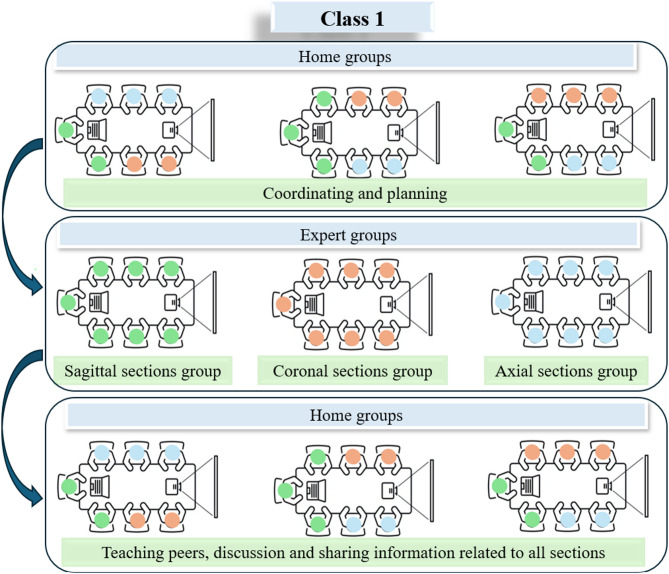 Figure 1
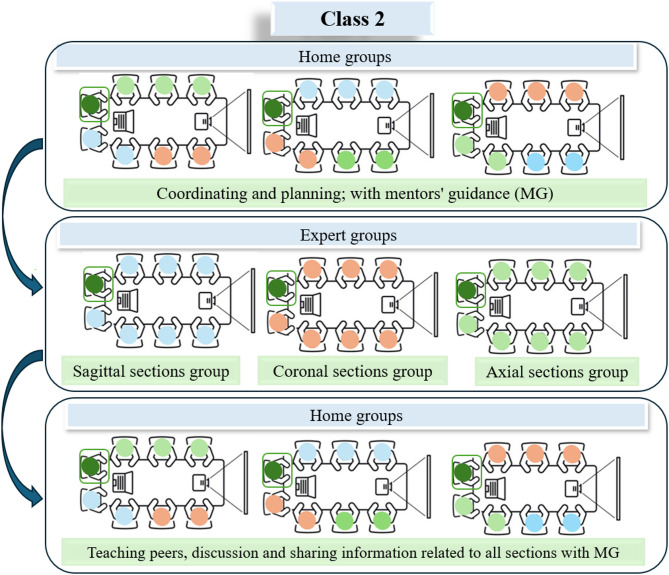 Figure 2
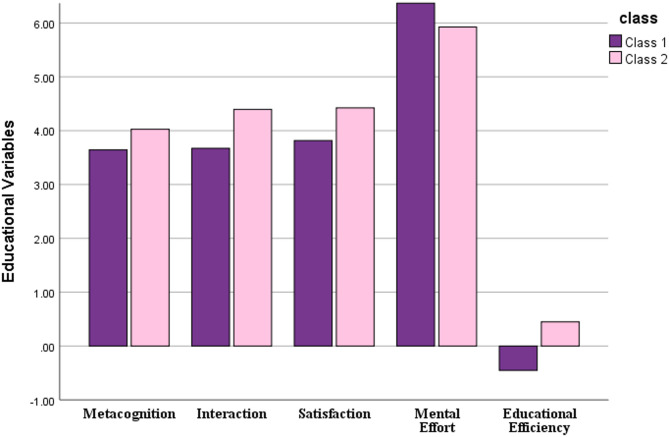 Figure 3
- —https://doi.org/10.13039/501100007119Yasuj University of Medical Sciences
Peer Reviews
No public reviews on file for this paper yet. If you reviewed it on a platform where reviews are public (OpenReview, ICLR, NeurIPS, ICML), you can paste yours below so the community can read it here.
Videos
No videos yet. Explain this paper in a talk, walkthrough, or lecture? Add one.
Taxonomy
TopicsAnatomy and Medical Technology · Innovative Teaching Methods · Problem and Project Based Learning
Introduction
Traditional teacher-centered instruction, which often involves direct teaching and lecture-based delivery, continues to be widespread in educational settings and is effective for conveying standardized content [1, 2]. In this approach, the teacher is viewed as the primary source of knowledge, while students tend to play a passive role [3]. Although this model supports consistency and content delivery [4], it may limit students’ cognitive development, engagement, and ability to apply knowledge in clinical or real-life contexts [5]. In contrast, student-centered approaches, which emphasize active participation, problem-solving, and collaboration, have gained popularity for fostering critical thinking and learner autonomy [6–9]. These methods allow learners to take ownership of their educational journey and better adapt to evolving professional environments [3].
Student-centered teaching includes a variety of methods, such as flipped classrooms, project-based learning, and collaborative methods like Jigsaw [7, 10]. In flipped classrooms, students prepare by reviewing materials before class and engage in discussions and activities during class time, which enhances their application of knowledge and critical thinking skills [2, 11]. The Jigsaw method, a collaborative learning approach in which students become “experts” on specific subtopics and then teach their peers, has shown to improve communication skills, retention, and active participation [12–14]. When integrated, the flipped and Jigsaw methods form the “flip-Jigsaw” model, which combines the strengths of both approaches by maximizing pre-class preparation and peer-based learning in class [15, 16].
In recent years, mentorship has been identified as a powerful complement to both student-centered and teacher-centered approaches, particularly by offering personalized guidance and fostering professional academic skills, including professional development and education [17–19]. Mentorship also provides a platform for continuous feedback and role modeling, which aligns well with the goals of modern medical education and lifelong learning [20, 21]. Adding mentorship to the flip-Jigsaw model can further support students by enhancing motivation, satisfaction, metacognitive reflection, academic interaction and improving clinical reasoning skills [17, 22, 23].
The aim of this study is to design, implement and assess a teaching method for sectional anatomy that combines the flip-Jigsaw approach with structured mentorship, to enhance the educational experience and clinical preparedness of radiologic technology students.
Methods
Study design
This was a prospective, two-phase, quasi-experimental study conducted over two academic periods. The study employed a comparative design to assess the outcomes of two instructional interventions applied to enhance cognition and academic skills of radiologic technology students.
Setting and participants
The study was conducted at Yasuj University of Medical Sciences (YUMS), Iran. The research sample included all radiologic technology students enrolled in two consecutive academic periods of spring 2023 and spring 2024 who participated in a sectional anatomy course in the fourth semester, in 3 units (51 h theoretical classes). The students passed limb, trunk and head and neck anatomy, each in two units (26 h theoretical and 17 h practical classes), in their previous three semesters. None of the students had prior exposure to the course content or the instructional methods used.
To assess the baseline knowledge of students in each class, we calculated their mean baseline scores out of a maximum of 20, based on their performance in anatomy courses taken prior to the start of our study. These scores reflect the average grades or assessment results from all relevant anatomy coursework completed by the students before participating in sectional anatomy course.
Instructional interventions and outcomes
In class 1, the flipped Jigsaw method was implemented in the semester of spring 2023. Students were organized into “home” and “expert” groups to collaboratively learn and practice cross-sectional anatomy using models, atlases and sectional images. Students were stratified based on their prior performance in anatomy courses. Block randomization was then employed to ensure an equal distribution of high- and low-performing students across the study groups. Seven students were assigned to each group. The class was facilitated by one tutor and three mentors (one for each group). Prior to the start of the course, a needs assessment was conducted through interviews with the aim of evaluating the current situation and identifying educational needs from the perspectives of both mentors and students. The primary objective of this needs assessment was to examine the effectiveness of existing instructional methods, including student-centered approaches.
The content was divided into three main sections: head and neck (brain, face, and neck), trunk (spine, thorax, abdomen, and pelvis), and limbs (shoulder, elbow, wrist, pelvis, thigh, knee, and foot). In the first home group, each student was assigned one of the sagittal, coronal, or axial cuts, and then all students responsible for the same type of cut gathered in an expert group. In the expert groups, each subsection was thoroughly practiced using sectional images corresponding to the assigned cut (sagittal, coronal, or axial). In the second home group, the expert students took turns presenting their assigned content to the other members (Fig. 1). The sessions were held once a week, each lasting two hours.
Fig. 1. Flipped Jigsaw flow diagram in class 1
In class 2, the flipped Jigsaw method was supplemented with mentorship in the semester of spring 2024. All stages of group formation and content assignment to each student were carried out similarly to the previous class, but in consultation with senior students who served as mentors throughout the entire implementation and had a good understanding of the junior students, including their learning habits and preferences. Seven students were assigned to each group. Mentors, assigned to each group, facilitated academic interaction by providing motivation, guidance, technical troubleshooting, and immediate feedback to enhance educational efficiency. Both interventions utilized identical educational materials, including reference books and atlases, anatomical models, images, and instructor-prepared slides, structured as Reusable Learning Objects (RLOs). The content was divided into manageable sections, and students engaged in theoretical and practical sessions over two weeks. A dedicated tutor monitored group dynamics and provided feedback in both periods (Fig. 2).
Fig. 2. Flipped Jigsaw flow diagram in class 2
To ensure readiness, mentors underwent prior training, and necessary infrastructure was established. A coordination session was held with the educational team, mentors, and students to simplify content delivery and foster student engagement. Mentors, due to their cognitive and social alignment with students, facilitated feedback exchange between students and instructors.
The study evaluated six key outcomes across two classes. The Metacognition Outcome included eight dimensions: Procedural, Declarative, Conditional, Information Management, Debugging, Planning, Comprehension, and Evaluation. The Satisfaction Outcome comprised seven dimensions: Objectives, Methods, Motivation, Content, Management, Aids, and Impacts. The Interaction Outcome consisted of eight dimensions: Relationship, Preparedness, Discussion, Participation, Share, Concern, Agreement, and Closure. Three other educational outcomes were investigated including Learning, Mental Effort, and Educational Efficiency.
Data collection tools
Data was collected using a combination of standard questionnaires and anatomy tests. Learning outcome was assessed through formative and summative tests. Interaction skills were measured using the Kalamazoo Communication Skills Checklist. Metacognition was assessed with the Schraw and Dennison Metacognitive Awareness Inventory. Both questionnaires are provided in the Supplementary file. Mental effort was quantified using a 0–12 scoring system (0 = least effort, 12 = greatest effort) for each question. Educational efficiency was calculated based on the relationship between learning outcome and mental effort using Formula 1. Student satisfaction was evaluated through a learner satisfaction questionnaire.
Formula 1.
\documentclass[12pt]{minimal} \usepackage{amsmath} \usepackage{wasysym} \usepackage{amsfonts} \usepackage{amssymb} \usepackage{amsbsy} \usepackage{mathrsfs} \usepackage{upgreek} \setlength{\oddsidemargin}{-69pt} \begin{document}$$\:\text{E}\text{d}\text{u}\text{c}\text{a}\text{t}\text{i}\text{o}\text{n}\text{a}\text{l}\:\text{e}\text{f}\text{f}\text{i}\text{c}\text{i}\text{e}\text{n}\text{c}\text{y}=\:\frac{Z\:score\:of\:Learning\:-Z\:score\:of\:Mental\:effort\:}{\sqrt{2}}$$\end{document}The anatomy tests were image-based practical examinations conducted in the virtual examination hall and included multiple-choice questions as well as sectional image identification.
Data analysis
Data was analyzed using SPSS software (version 25). Descriptive statistics were used for demographic and baseline data. For normally distributed data, repeated measures ANOVA was employed to compare outcomes between the two periods. For non-normally distributed data, equivalent non-parametric tests were used. Statistical significance was set at p < 0.05.
Ethical considerations
Ethical approval was obtained from the institutional review board of Yasuj University of Medical Sciences. All students and mentors provided informed consent after receiving detailed information about the study’s purpose. Anonymity was maintained for all questionnaire responses.
Results
Baseline characteristics
In this study, we implemented the Jigsaw Method in Class and the Jigsaw Method combined with mentorship in Class 2, with each class consisting of 21 students. The mean age of Class 1 was 23.82 ± 0.98 years, and Class 2 had a mean age of 23.23 ± 1.47 years. The mean baseline score for previous anatomy courses was 12.72 ± 1.2 for Class 1 and 13.29 ± 0.9 for Class 2. A comparison of baseline anatomy knowledge between the two classes yielded a P-value of 0.082, indicating no significant difference in their prior anatomy knowledge.
Needs assessment
The needs assessment conducted for sectional anatomy education revealed that traditional teaching methods fail to actively engage students and are predominantly characterized by one-way communication from instructors. Additionally, a noticeable deficiency was observed in the development of practical skills, particularly in interpreting cross-sectional images.
Metacognition domains
Higher mean scores were seen in Class 2 across all metacognitive dimensions. The Conditional knowledge dimension reached statistical significance between two classes (P = 0.015), while other dimensions showed unsignificant increase from Class 1 to Class 2. The detailed results of this outcome are presented in Table 1.
Table 1. Metacognition outcome reported based on eight dimensionsMetacognition outcomeClassNMeanStd. deviationMean difference95% CI of the differenceP-ValueLowerUpperProcedural1183.570.97−0.419−0.9460.1090.1162213.990.64Declarative1183.770.97−0.279−0.7910.2330.2772214.050.58Conditional1183.490.99−0.625−1.120−0.1310.0152214.110.49Information Management1183.700.79−0.305−0.7360.1270.1612214.010.53Debugging1183.740.86−0.351−0.8160.1150.1352214.100.56Planning1183.600.88−0.337−0.8050.1310.1532213.930.54Comprehension1183.710.96−0.259−0.7550.2380.2982213.970.54Evaluation1183.570.91−0.474−0.9670.0200.0592214.050.59
Satisfaction domains
Class 2 demonstrated greater mean scores in all satisfaction dimensions. Statistically significant differences were observed between the two classes for Objectives (P = 0.045), Methods (P = 0.012), Motivation (P = 0.006), Content (P = 0.029), Management (P = 0.004), and Impacts (P = 0.047), while the Aids dimension showed a non-significant increase from Class 1 to Class 2 (P = 0.058). The detailed results of this outcome are presented in Table 2.
Table 2. Satisfaction outcome reported based on seven dimensionsSatisfaction OutcomeClassNMeanStd. deviationMean difference95% CI of the differenceP-ValueLowerUpperObjectives1213.950.86−0.477−0.943−0.0120.0452214.430.66Methods1213.551.18−0.750−1.329−0.1710.0122214.300.65Motivation1213.800.95−0.659−1.122−0.1960.0062214.450.51Content1213.681.11−0.614−1.162−0.0650.0292214.300.63Management1213.731.21−0.841−1.404−0.2770.0042214.570.50Aids1214.051.05−0.500−1.0180.0180.0582214.550.60Impacts1213.950.79−0.409−0.813−0.0050.0472214.360.51
Interaction domains
Higher average scores were achieved by Class 2 across all interaction-related dimensions. Statistically significant differences were found between the two classes for Relationship (P = 0.003), Preparedness (P = 0.002), Discussion (P = 0.001), Participation (P = 0.007), Share (P < 0.001), Concern (P < 0.001), Agreement (P < 0.001), and Closure (P = 0.005). The detailed results of this outcome are presented in Table 3.
Table 3. Interaction outcome reported based on eight dimensionsInteraction outcomeClassNMeanStd. deviationMean difference95% CI of the differenceP-ValueLowerUpperRelationship1193.750.89−0.682−1.118−0.2450.0032214.430.46Preparedness1193.620.68−0.585−0.947−0.2230.0022214.200.46Discussion1193.690.86−0.733−1.148−0.3170.0012214.430.41Participation1193.820.74−0.548−0.933−0.1620.0072214.360.46Share1193.450.93−0.939−1.386−0.4920.0002214.390.43Concern1193.570.79−0.900−1.301−0.4990.0002214.470.45Agreement1193.660.78−0.797−1.186−0.4070.0002214.450.43Closure1193.830.75−0.614−1.029−0.1990.0052214.440.56
Learning, mental effort and educational efficiency outcomes
Class 2 showed increased mean scores for Learning and Educational Efficiency, with a reduced mean score for Mental Effort. Statistically significant differences were found between the two classes for Mental Effort (P = 0.008) and Educational Efficiency (P = 0.005), whereas the Learning dimension showed a non-significant increase from Class 1 to Class 2 (P = 0.107). Table 4 shows the detailed results of these outcomes.
Table 4. Learning, mental effort and educational efficiency outcomes compared between class 1 and class 2Educational outcomeClassNMeanStd. deviationMean difference95% CI of the differenceP-ValueLowerUpperLearning12176.7713.02−5.273−11.741.1940.10722182.047.50Mental Effort1216.8761.210.9510.26261.63850.0082215.9251.14Educational Efficiency121−0.4511.20−0.900−1.507−0.2940.0052210.4490.74
Discussion
This study evaluated the effectiveness of a student-centered teaching method combining the flipped Jigsaw approach with mentorship compared to the flipped Jigsaw method alone in teaching sectional anatomy to radiologic technology students. The findings of our needs assessment emphasize the need to revise current teaching methods and adopt innovative, student-centered approaches to improve learning and professional readiness. Our results demonstrated that integrating mentorship with the flipped Jigsaw method significantly improved outcomes across metacognition, satisfaction, interaction, learning and educational efficiency while reducing mental effort. A bar plot demonstrating a comparsion of mean outcomes between class 1 and class 2 is seen in Fig. 3. These findings align with the growing body of evidence supporting student-centered approaches supplemented by mentorship in medical education.
Fig. 3. Bar plot demonstrating a comparsion of mean outcomes between class 1 and class 2
The metacognition outcomes revealed higher mean scores across all dimensions in Class 2, with a statistically significant improvement in conditional knowledge (P = 0.015). This suggests that mentorship enhances students’ ability to apply knowledge strategically in context. The non-significant improvements in other dimensions, such as procedural and declarative knowledge, indicate a positive trend that may require larger sample sizes to achieve statistical significance. These results are consistent with Sanaei et al. (2019), who found that the Jigsaw method improved self-regulated learning in nursing students, suggesting that collaborative methods foster metacognitive skills [24]. However, our study incorporated mentorship, which likely amplified the effect on conditional knowledge by providing personalized guidance, aligning with Caruso et al. [25], who reported mentorship’s role in enhancing professional development [25].
After adding mentorship, higher satisfaction scores were seen across six of seven dimensions, including objectives (P = 0.045), methods (P = 0.012), motivation (P = 0.006), content (P = 0.029), management (P = 0.004), and impacts (P = 0.047). These findings indicate that mentorship enhances students’ perceptions of the learning experience, likely due to personalized feedback and role modeling. Our study extends their findings by demonstrating that mentorship further amplifies satisfaction across multiple dimensions, possibly by fostering a supportive learning environment. However, the non-significant increase in the aids dimension (P = 0.058) suggests that both groups perceived learning resources similarly, consistent with Bakr et al.’s (2012–2016) observation that digital resources alone may not fully account for improved outcomes without active engagement strategies [26].
Interaction outcomes showed significant improvements in all eight dimensions for Class 2, including relationship (P = 0.003), preparedness (P = 0.002), discussion (P = 0.001), participation (P = 0.007), share (P < 0.001), concern (P < 0.001), agreement (P < 0.001), and closure (P = 0.005). These results highlight mentorship’s role in fostering collaborative and communicative skills. This corroborates Wilson et al. [27], who found that the Jigsaw method improved communication and collaborative learning skills in pharmaceutical management students, though their study did not include mentorship [27]. The significant improvements in our study suggest that mentorship enhances peer interactions by providing structured guidance, aligning with Caruso et al. [25], who noted mentorship’s positive impact on academic interactions [25]. The robust interaction outcomes in Class 2 also echo Amani et al. (2024), who identified enhanced social skills as a key benefit of the Jigsaw method, further amplified by mentorship in our study [28].
Integrating flipped Jigsaw with mentorship demonstrated a non-significant increase in learning scores (P = 0.107), a significant reduction in mental effort (P = 0.008), and a significant improvement in educational efficiency (P = 0.005). The reduced mental effort in Class 2 suggests that mentorship alleviates cognitive load, possibly by clarifying complex concepts through individualized support. This aligns with Gillispie et al. (2015), who reported improved student performance in a flipped classroom setting, though their study did not assess mental effort [2]. The significant improvement in educational efficiency in our study indicates that mentorship optimizes learning outcomes relative to cognitive demands, a finding not explicitly addressed in prior studies like Lin et al. [7], who noted enhanced problem-solving and critical thinking in flipped classroom settings [7].
Some challenges in the implementation of the Jigsaw learning method, are excessive time consumption, inadequate logistics, limited faculty supervision, and insufficient preparation by peers [29]. To overcome these, we optimized the duration of activities to prevent fatigue, managed group allocation and movement to minimize noise and confusion, ensured more frequent faculty monitoring and guidance, and encouraged thorough preparation through pre-session reading materials and clearer role assignments.
Conclusion
The integration of mentorship with the flipped Jigsaw method significantly enhances metacognition, satisfaction, interaction, and educational efficiency while reducing mental effort in radiologic technology students learning sectional anatomy. This study underscores the potential of integrating mentorship with active learning strategies to prepare radiologic technology students for clinical practice effectively.
Study limitations
Limitations include the relatively small sample size, which may limit the generalizability of the findings, and the quasi-experimental, single-site design led by a single instructor, which introduces the possibility of cohort-specific or novelty effects. Additionally, the absence of a delayed post-test prevents assessment of long-term knowledge retention, and the lack of extended follow-up restricts evaluation of whether gains translate into clinical application. Future research should address these issues by employing larger, multi-site cohorts, including multiple instructors, and incorporating long-term follow-up measures to confirm the durability and practical impact of these benefits.
The reference list from the paper itself. Each links out to its DOI / PubMed record.
- 1Persky AM, Mc Laughlin JE. The flipped classroom–from theory to practice in health professional education. Am J Pharm Educ. 2017;81(6).10.5688/ajpe 816118 PMC 560772828970619 · doi ↗ · pubmed ↗
- 2Thomas PA, Kern DE, Hughes MT, Tackett SA, Chen BY. Curriculum development for medical education: a six-step approach. JHU; 2022.10.1097/ACM.000000000000258030681454 · doi ↗ · pubmed ↗