Management of Low-Grade Ductal Carcinoma In Situ in a Supernumerary Breast: A Case Report
Alicia Bui, Jacob F Oyeniyi, Bailey A Loving, Jean Llenos, James Fontanesi

TL;DR
A rare case of breast cancer in ectopic tissue is reported, highlighting the challenges in detection and treatment.
Contribution
Presents a case of low-grade DCIS in a supernumerary breast and discusses its management with surgery and radiotherapy.
Findings
Ectopic breast tissue can develop ductal carcinoma in situ.
Treatment involved surgical excision and adjuvant radiation.
Ectopic breast cancer is often missed by standard screening methods.
Abstract
Supernumerary breast tissue arising from incomplete regression of the mammary ridges is rare. This ectopic tissue is affected by the same hormonal influences as a normal breast and can lead to both benign and malignant changes. We describe a case of a female with ductal carcinoma in situ (DCIS) in ectopic breast tissue located below the left inframammary fold. The lesion was surgically excised and treated with adjuvant external beam radiation to the tumor bed. Ectopic breast carcinoma is a rare condition and is often undetected by screening mammography due to its unusual location. Management should involve a multidisciplinary team and adhere to established protocols for breast cancer treatment. We discuss the role of radiotherapy in the treatment of ectopic breast carcinoma.
Genes, proteins, chemicals, diseases, species, mutations and cell lines named across the full text — each resolved to its canonical identifier and authoritative record.
Click any figure to enlarge with its caption.
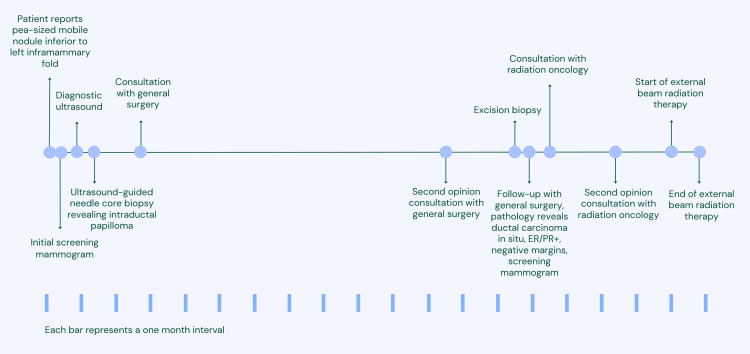 Figure 1
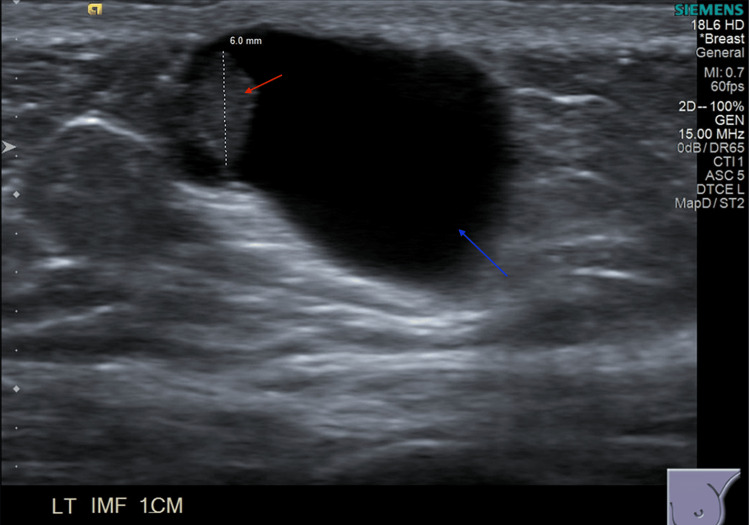 Figure 2
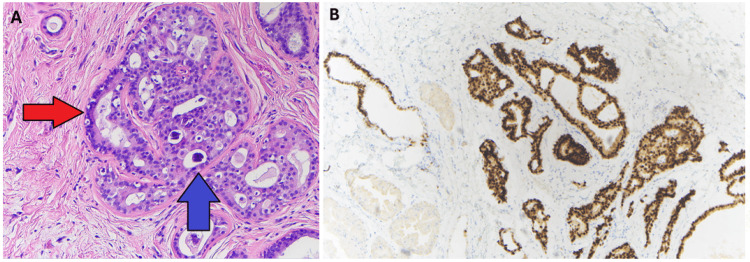 Figure 3
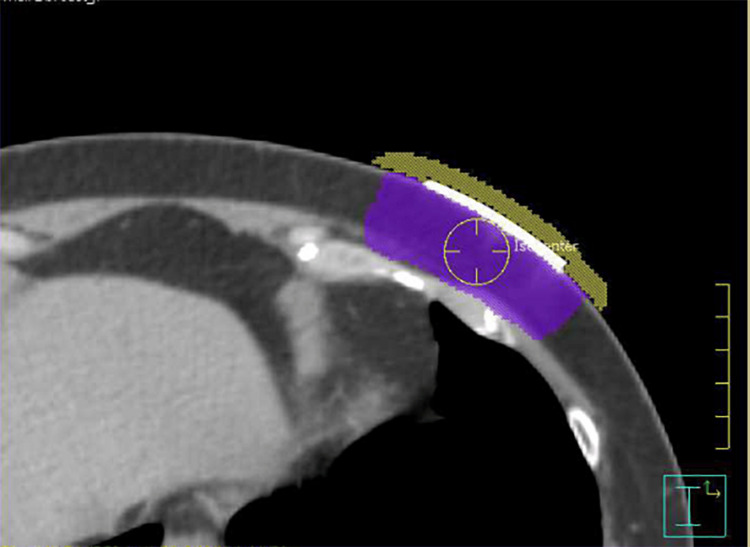 Figure 4
Peer Reviews
No public reviews on file for this paper yet. If you reviewed it on a platform where reviews are public (OpenReview, ICLR, NeurIPS, ICML), you can paste yours below so the community can read it here.
Videos
No videos yet. Explain this paper in a talk, walkthrough, or lecture? Add one.
Taxonomy
TopicsBreast Cancer Treatment Studies · Breast Lesions and Carcinomas · Cancer and Skin Lesions