Two-factor synaptic consolidation reconciles robustness with pruning and homeostatic scaling
Georgios Iatropoulos, Wulfram Gerstner, Johanni Brea

TL;DR
This paper introduces a new model explaining how memories are preserved in the brain by combining synaptic pruning and homeostatic scaling during sleep.
Contribution
A novel two-factor synaptic model that unifies memory consolidation mechanisms with robustness to noise and experimental observations.
Findings
The model reproduces experimental signs of synaptic pruning and memory formation.
It predicts sublinear scaling of synaptic noise with synaptic strength, supported by data.
The model outperforms previous ones in replicating developmental trends in neural connectivity.
Abstract
While most experiences are forgotten after only a few days, some memories can last an entire lifetime. The neurophysiological mechanisms that enable such memory preservation are poorly understood but are believed to be active during sleep, when neurons replay past events, prune their synapses, and regulate their firing. We provide a unified mathematical explanation for these processes in the form of an algorithm that stores memories in neural networks with maximal noise robustness. By representing each synapse as a product of two factors, our model automatically removes and tunes appropriate connections, while homeostatically scaling each neuron’s input. Our model reproduces experimental signs of activity-dependent rewiring and long-term memory formation in synaptic, cortical, and psychological data, and offers testable predictions. Memory consolidation refers to a process of engram…
Genes, proteins, chemicals, diseases, species, mutations and cell lines named across the full text — each resolved to its canonical identifier and authoritative record.
Click any figure to enlarge with its caption.
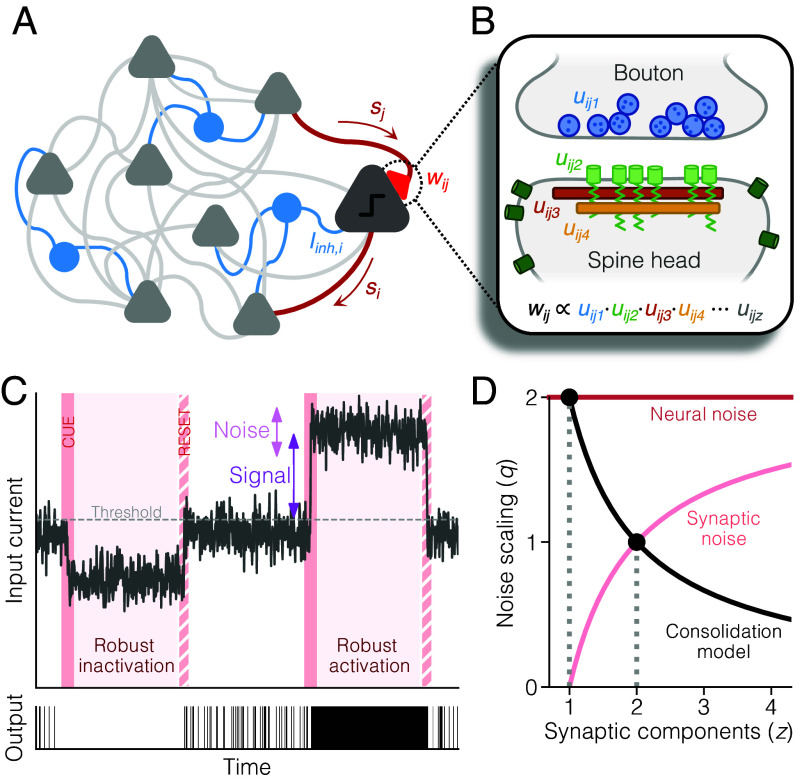 Figure 1
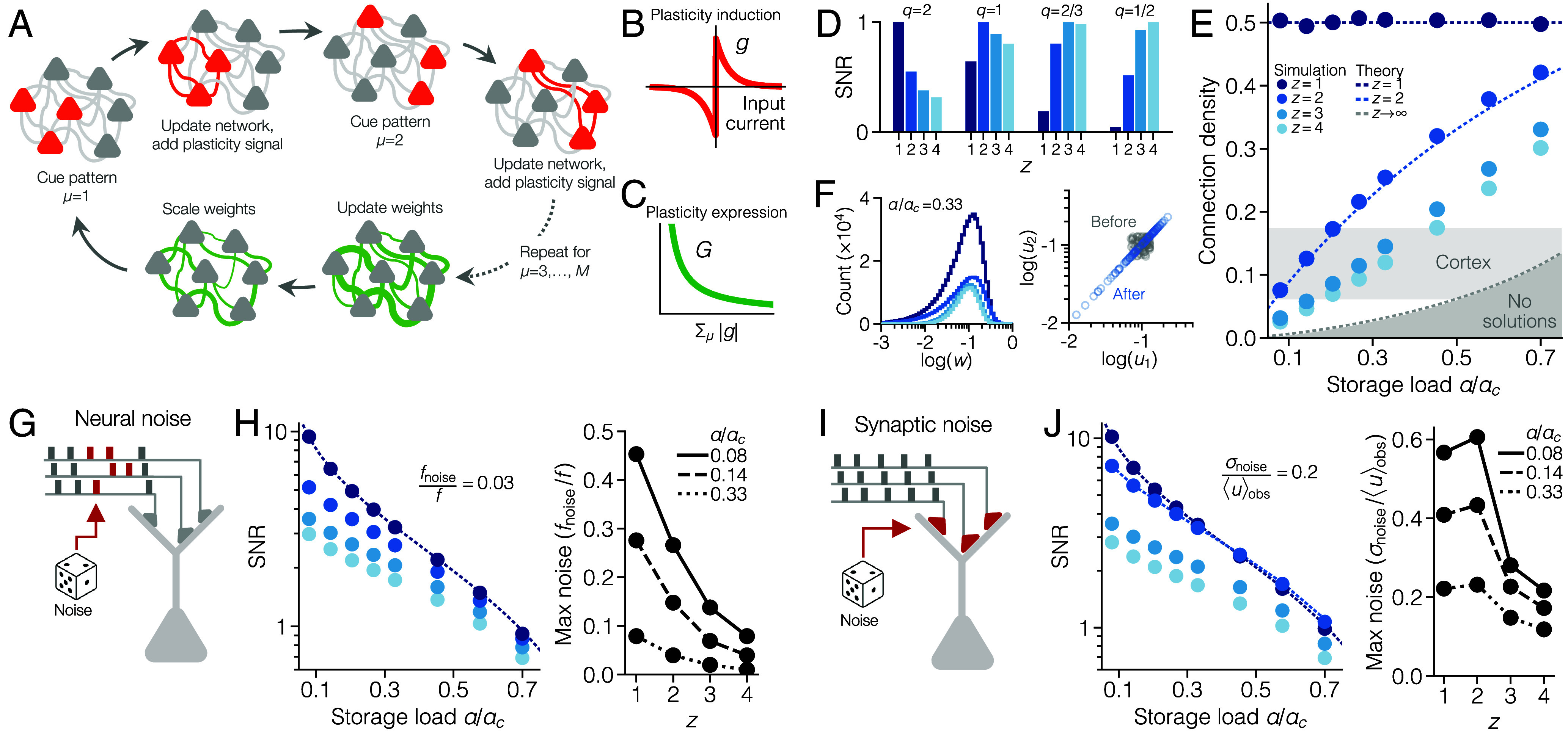 Figure 2
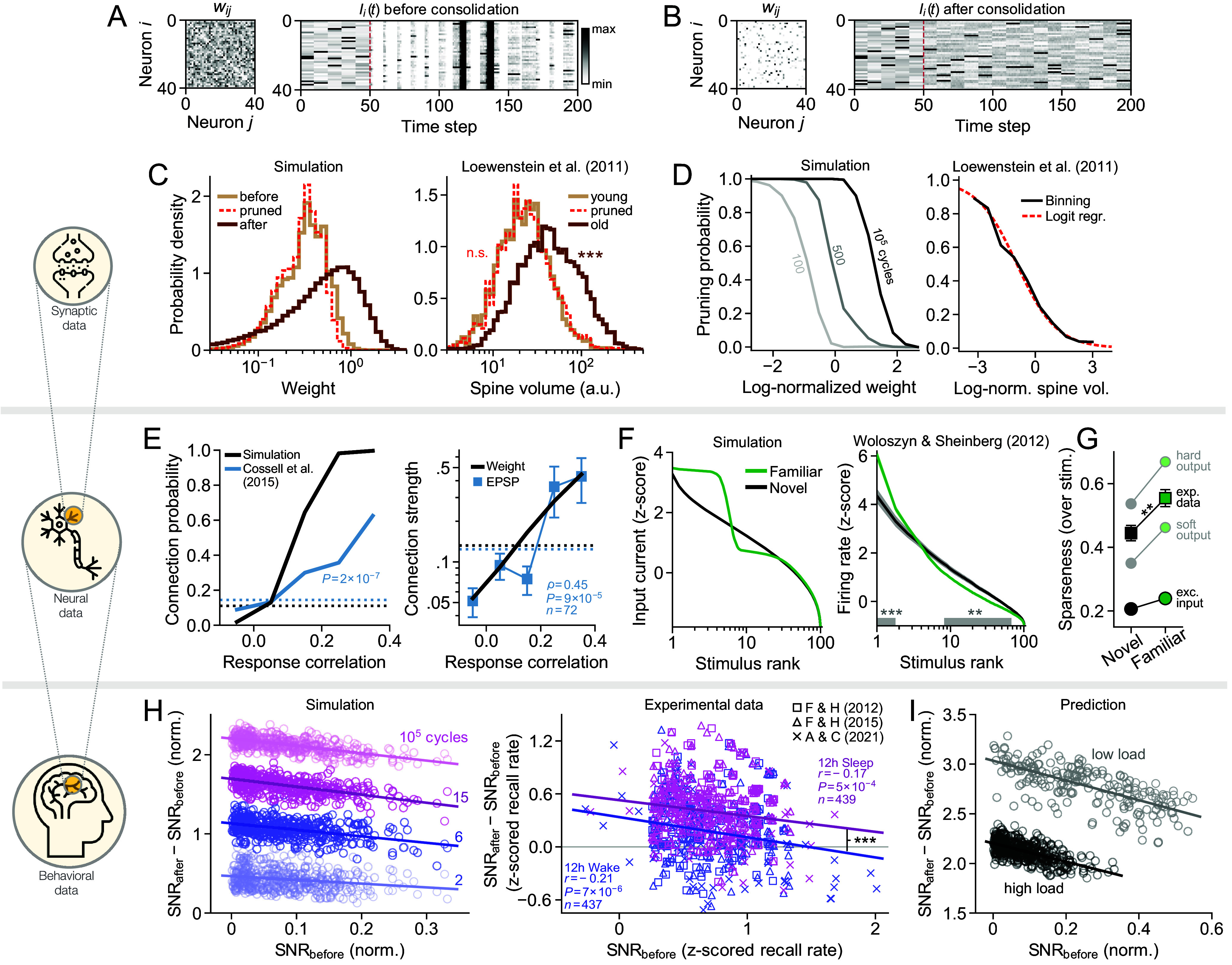 Figure 3
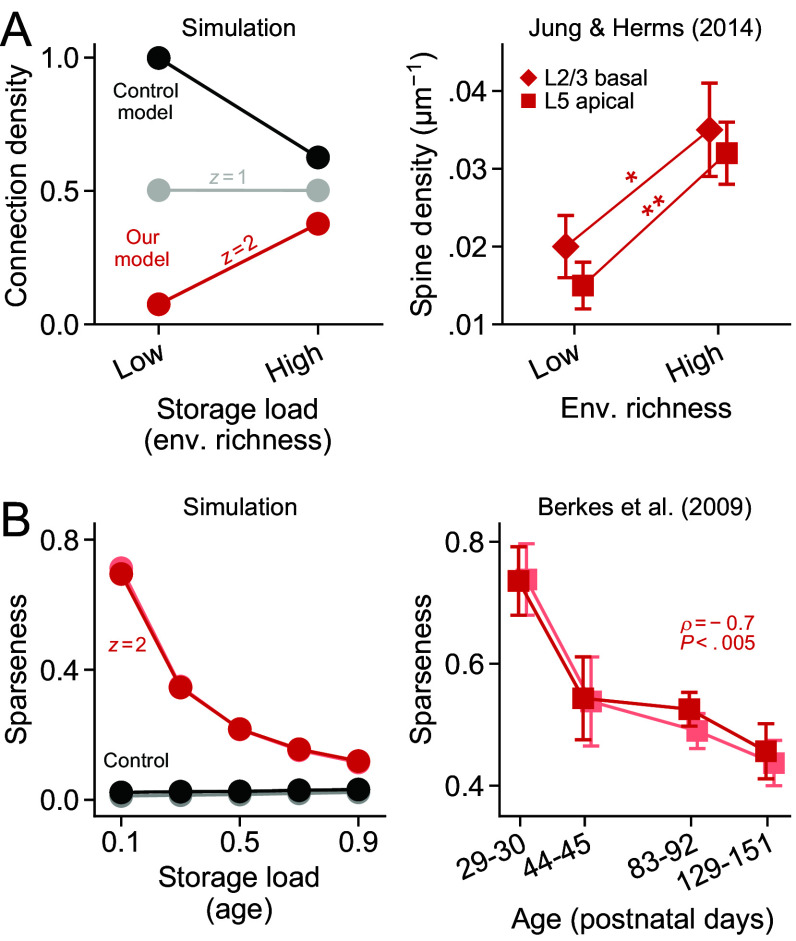 Figure 4
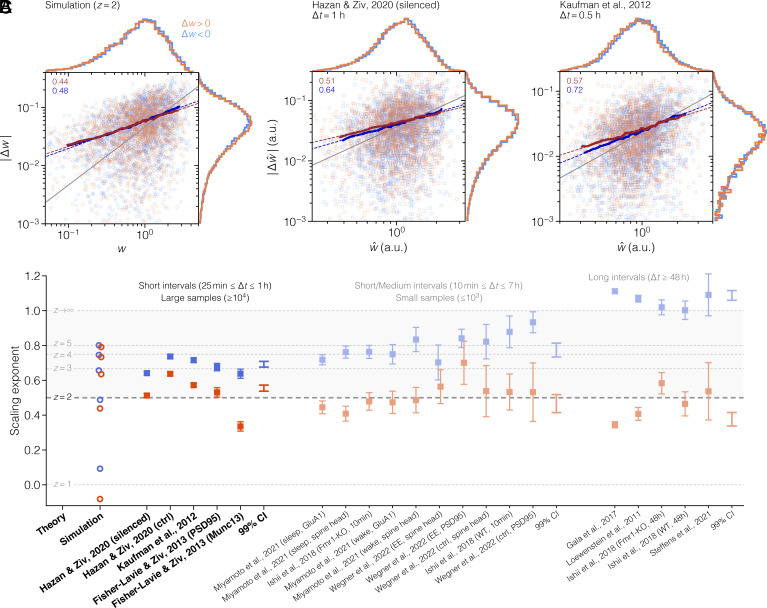 Figure 5
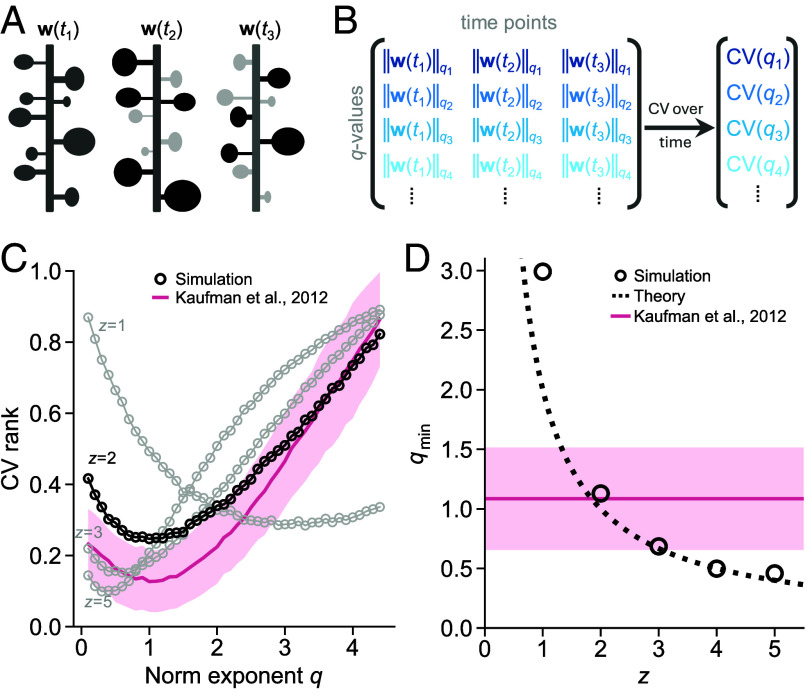 Figure 6
Peer Reviews
No public reviews on file for this paper yet. If you reviewed it on a platform where reviews are public (OpenReview, ICLR, NeurIPS, ICML), you can paste yours below so the community can read it here.
Videos
No videos yet. Explain this paper in a talk, walkthrough, or lecture? Add one.
Taxonomy
TopicsSleep and Wakefulness Research · Neural dynamics and brain function · Neuroscience and Neuropharmacology Research