Proximity to explosive synchronization determines network collapse and recovery trajectories in neural and economic crises
UnCheol Lee, Hyoungkyu Kim, Minkyung Kim, Gabjin Oh, Pangyu Joo, Ayoung Park, Dinesh Pal, Irene Tracey, Catherine E. Warnaby, Jamie Sleigh, George A. Mashour

TL;DR
This paper shows how systems like the brain and stock markets can be predicted to collapse or recover based on their proximity to a physics phenomenon called explosive synchronization.
Contribution
A physics-based framework is introduced to estimate a system's proximity to explosive synchronization, enabling prediction of collapse and recovery dynamics.
Findings
Proximity to explosive synchronization predicts rapid collapse and slow recovery in systems like the brain and stock markets.
The framework was validated using EEG data during anesthesia and stock market data during the 2008 crisis.
Systems closer to first-order transitions show more instability and slower recovery.
Abstract
Why do some systems collapse abruptly and recover slowly, while others remain resilient? We show that the difference depends on how close a system’s second-order phase transition is to the first-order (explosive) limit, quantified as explosive synchronization (ES) proximity. Incorporating this measure into conventional criticality analysis provides a way to predict a network’s behavior during crises. Using this approach, we demonstrate that the loss and recovery of consciousness under anesthesia, as well as the collapse and recovery of stock markets during the 2008 economic crisis, can be systematically predicted as either rapid or slow. This framework offers a unified, physics-based tool for anticipating transition trajectories across complex systems. Complex systems such as the conscious brain and financial markets often operate near criticality, a regime that supports flexible and…
Genes, proteins, chemicals, diseases, species, mutations and cell lines named across the full text — each resolved to its canonical identifier and authoritative record.
Click any figure to enlarge with its caption.
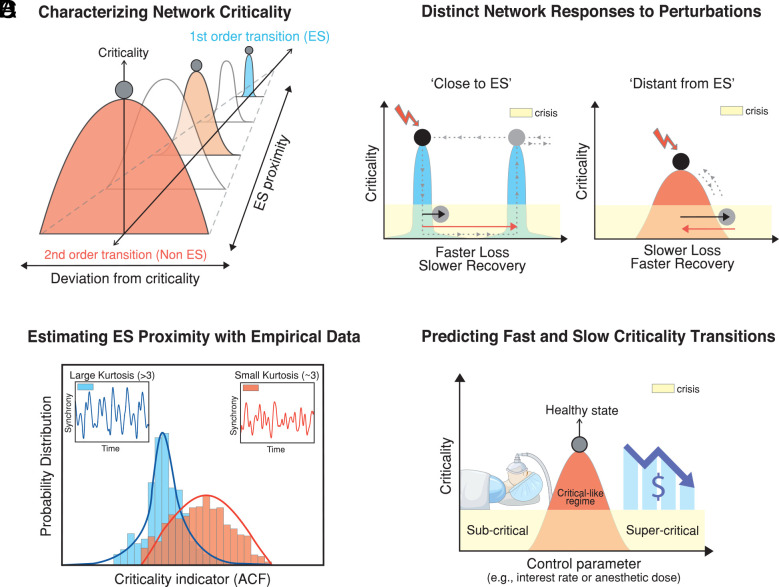 Figure 1
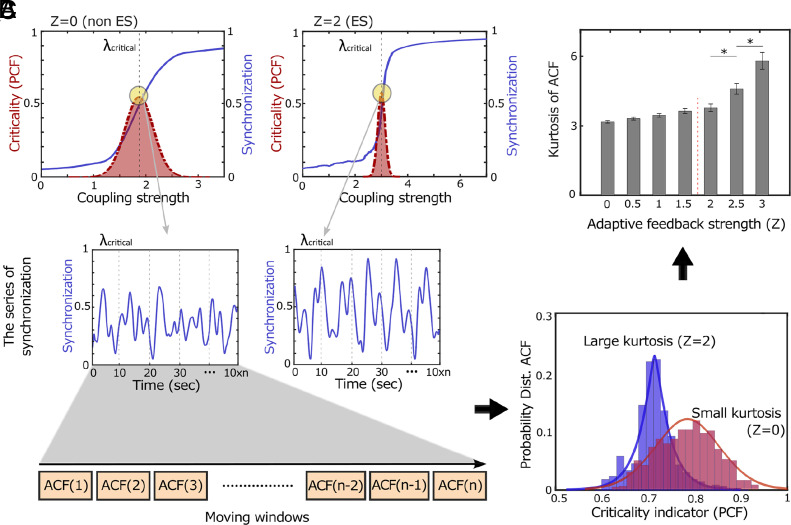 Figure 2
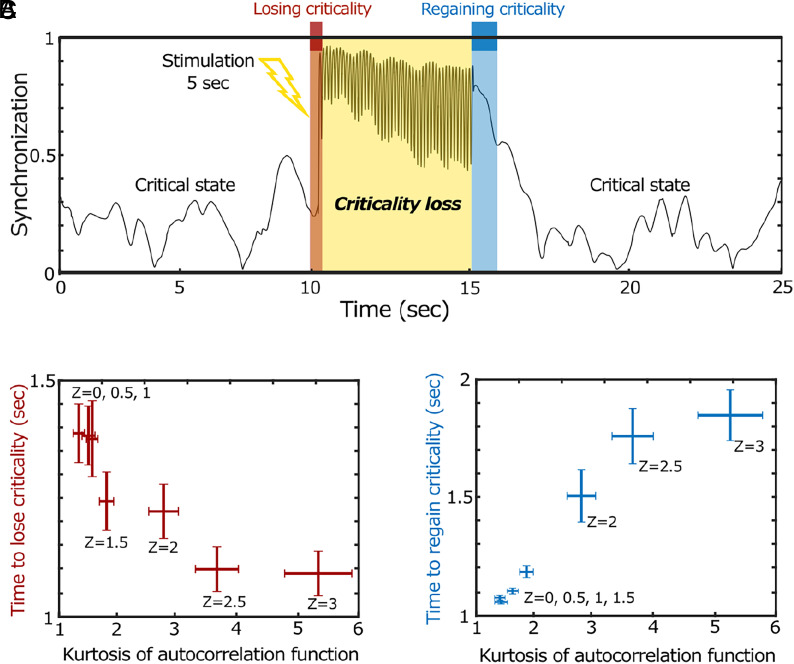 Figure 3
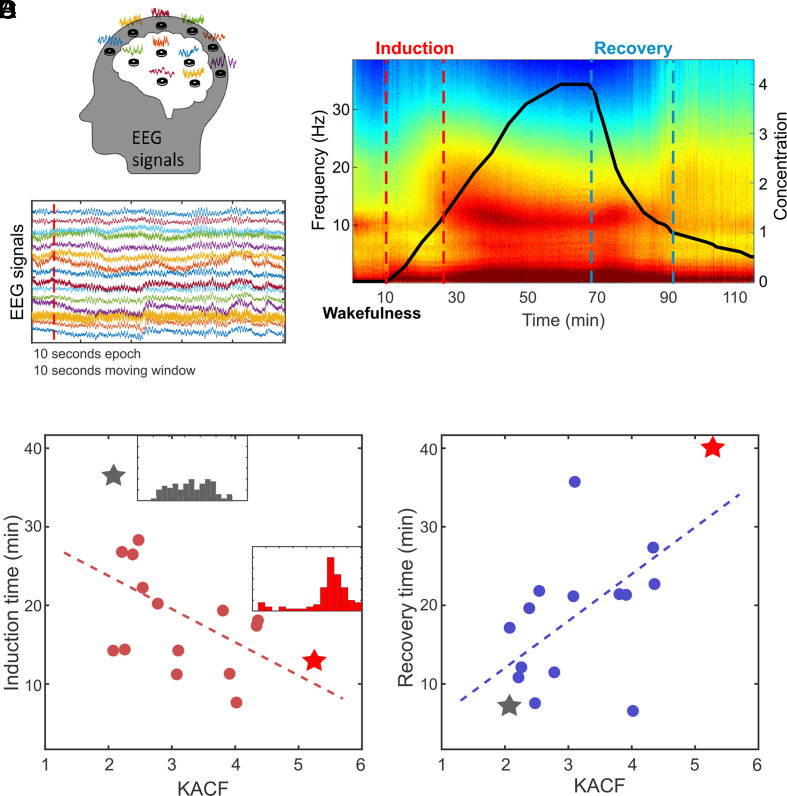 Figure 4
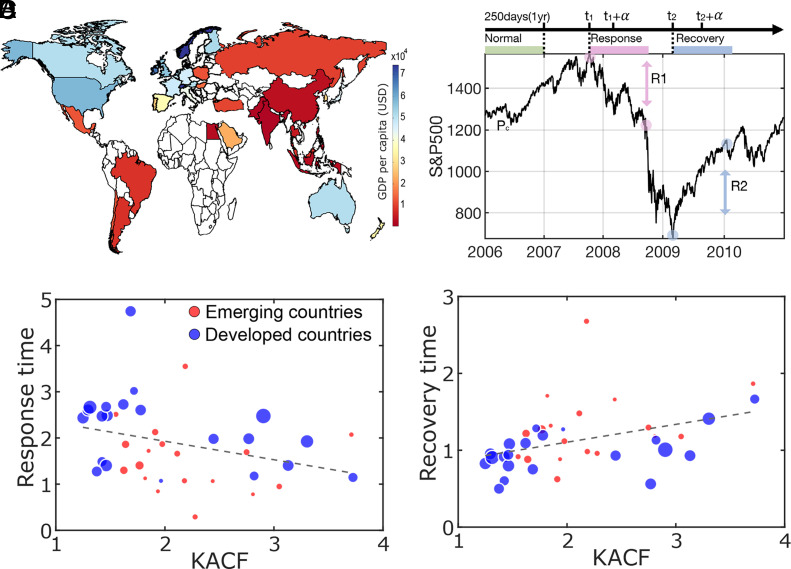 Figure 5
Peer Reviews
No public reviews on file for this paper yet. If you reviewed it on a platform where reviews are public (OpenReview, ICLR, NeurIPS, ICML), you can paste yours below so the community can read it here.
Videos
No videos yet. Explain this paper in a talk, walkthrough, or lecture? Add one.
Taxonomy
TopicsFunctional Brain Connectivity Studies · Ecosystem dynamics and resilience · Neural dynamics and brain function