The impact of evodiamine on human anaplastic thyroid cancer therapy—an in vitro and in vivo study
Yin-Che Lu, Tsung-Hsing Lin, Kai-Liang Tang, Chin-Ho Kuo, Yi-Sheng Zhang, Yi-Ping Chang, Shu-Hsin Chen, Yi-Zhen Li, Pei-Wen Zhao, Jen-Hsien Lin, Ying-Ray Lee

TL;DR
Evodiamine, a natural compound, shows promise in treating aggressive thyroid cancer by triggering cell death and autophagy in lab and animal studies.
Contribution
This study is the first to demonstrate evodiamine's anti-cancer effects on anaplastic thyroid cancer through dual activation of apoptosis and autophagy.
Findings
Evodiamine inhibited ATC cell proliferation and induced G2/M phase arrest and cell death in vitro.
Evodiamine activated caspase-dependent apoptosis and autophagy, with autophagy contributing to apoptosis.
Oral evodiamine suppressed tumor growth in mice without toxicity and increased tumor cell apoptosis in vivo.
Abstract
Thyroid cancer (TC) is the most common endocrine malignancy, with anaplastic thyroid cancer (ATC) being the most aggressive subtype. Evodiamine (EVO), a bioactive compound derived from Evodia rutaecarpa, possesses anti-inflammatory and anti-tumor properties, though its effects on ATC remain underexplored. This study investigated the anticancer potential of EVO using ARO and SW579 ATC cell lines in both in vitro and in vivo models. EVO significantly inhibited cell proliferation, induced G2/M phase arrest, and increased the sub-G1 population, indicating growth inhibition and cell death. Mechanistically, EVO activated the intrinsic caspase-dependent apoptotic pathway and triggered autophagy, as shown by autophagosome accumulation and elevated LC3-II levels. Importantly, blocking autophagy attenuated caspase activation, suggesting that autophagy contributes to EVO-induced apoptosis.…
Genes, proteins, chemicals, diseases, species, mutations and cell lines named across the full text — each resolved to its canonical identifier and authoritative record.
Click any figure to enlarge with its caption.
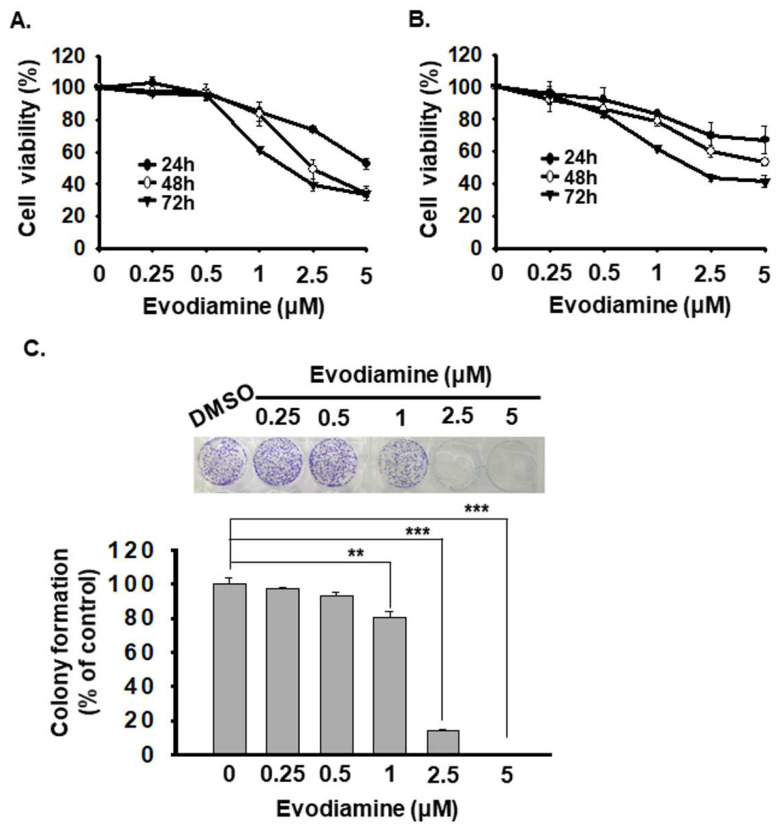 Figure 1
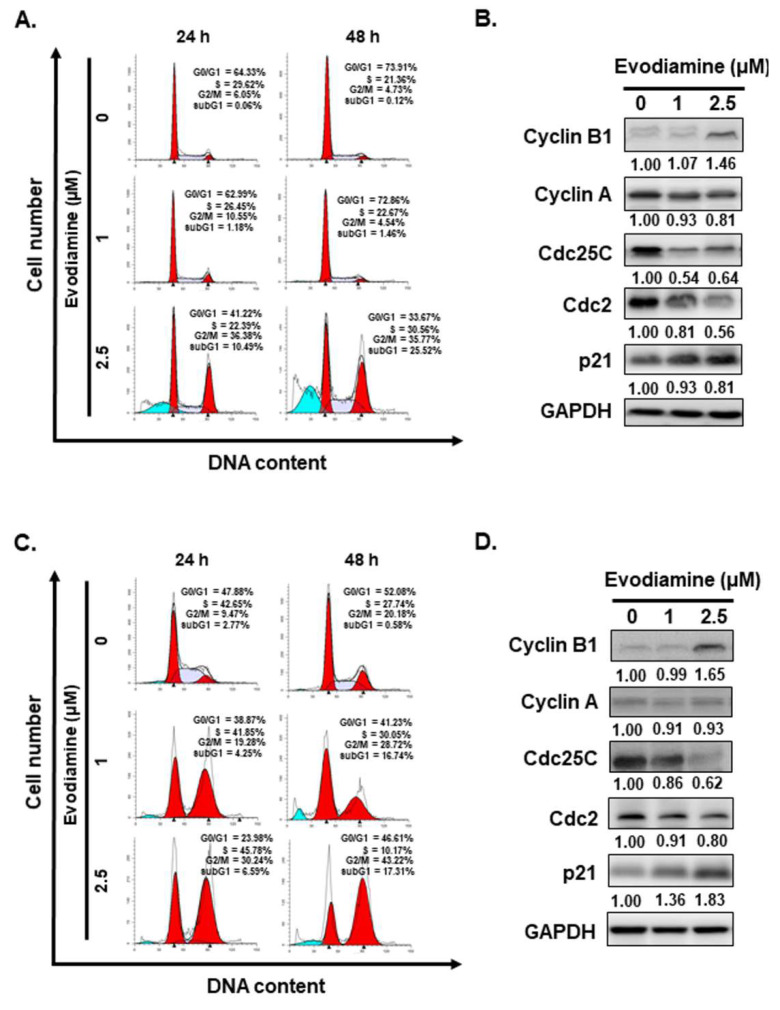 Figure 2
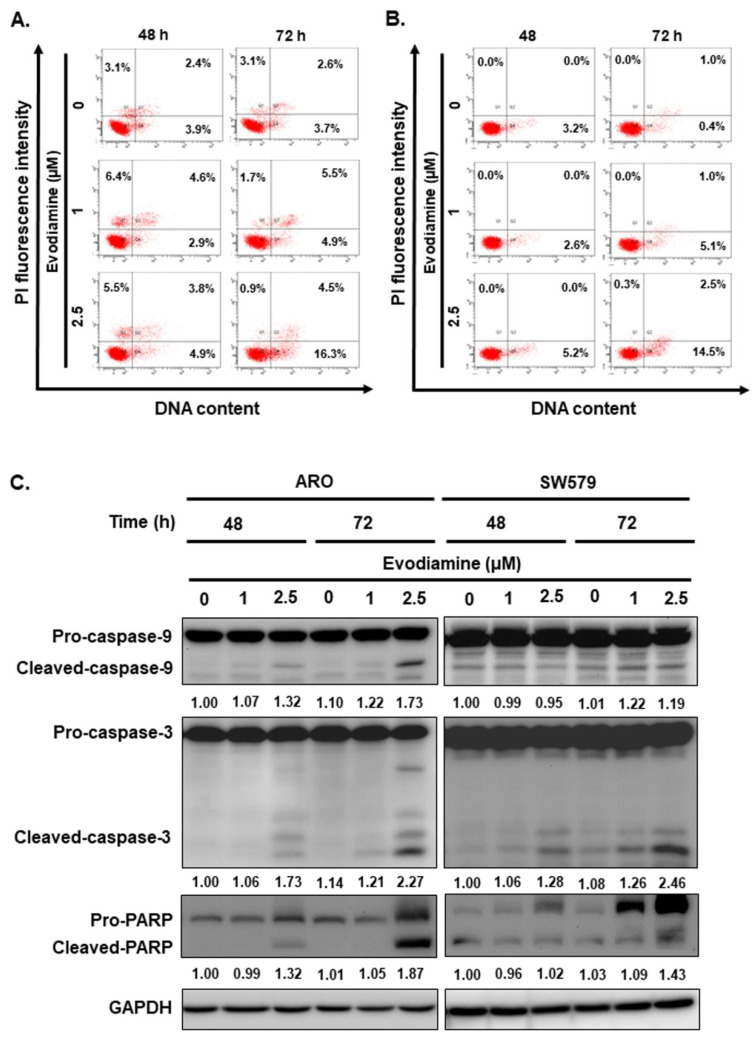 Figure 3
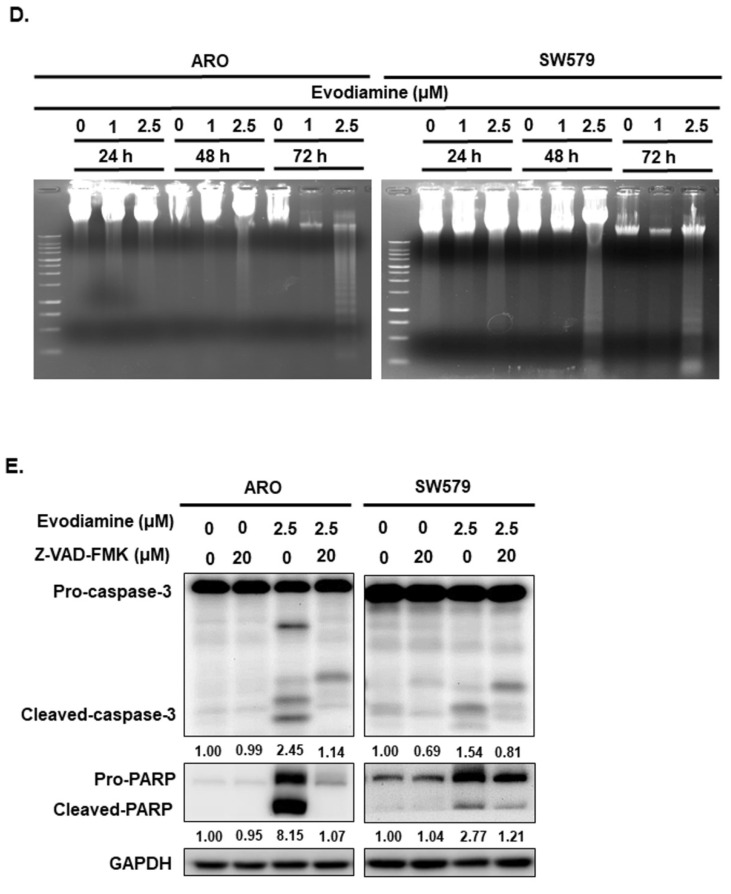 Figure 4
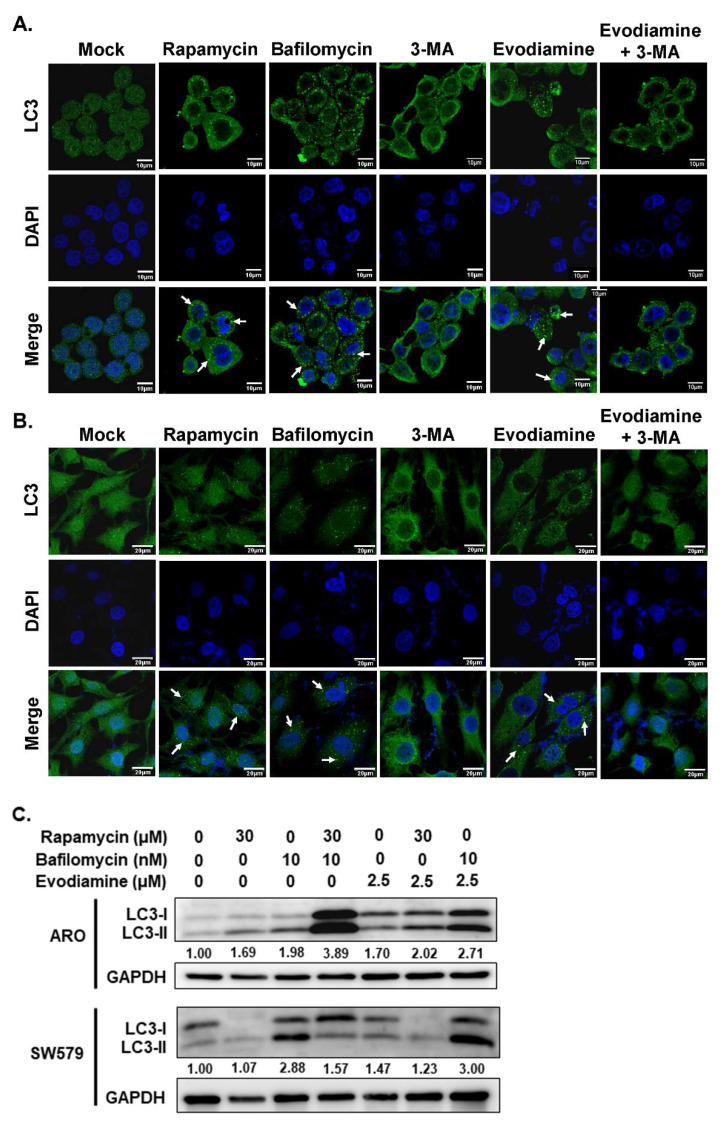 Figure 5
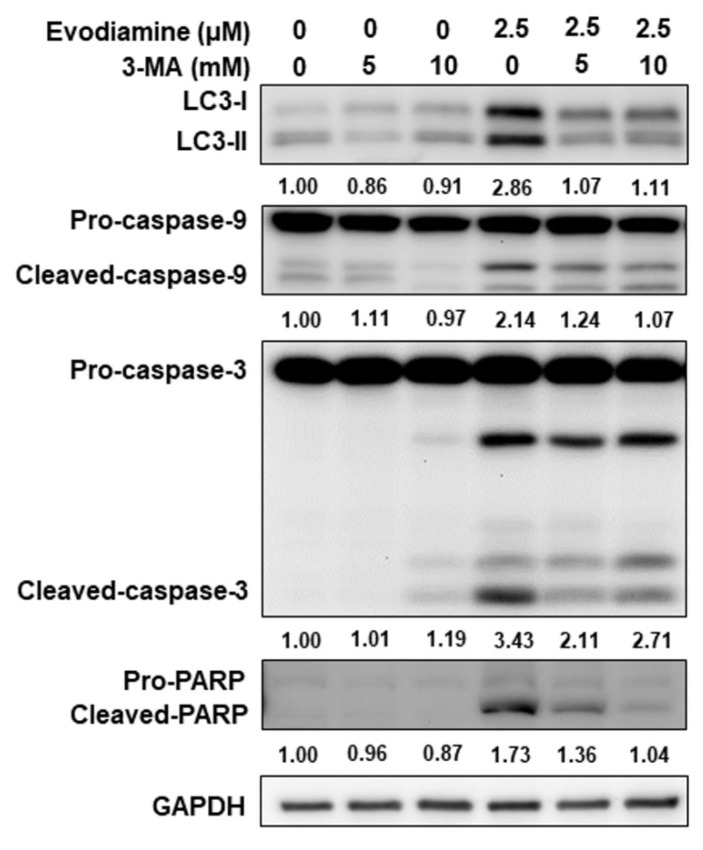 Figure 6
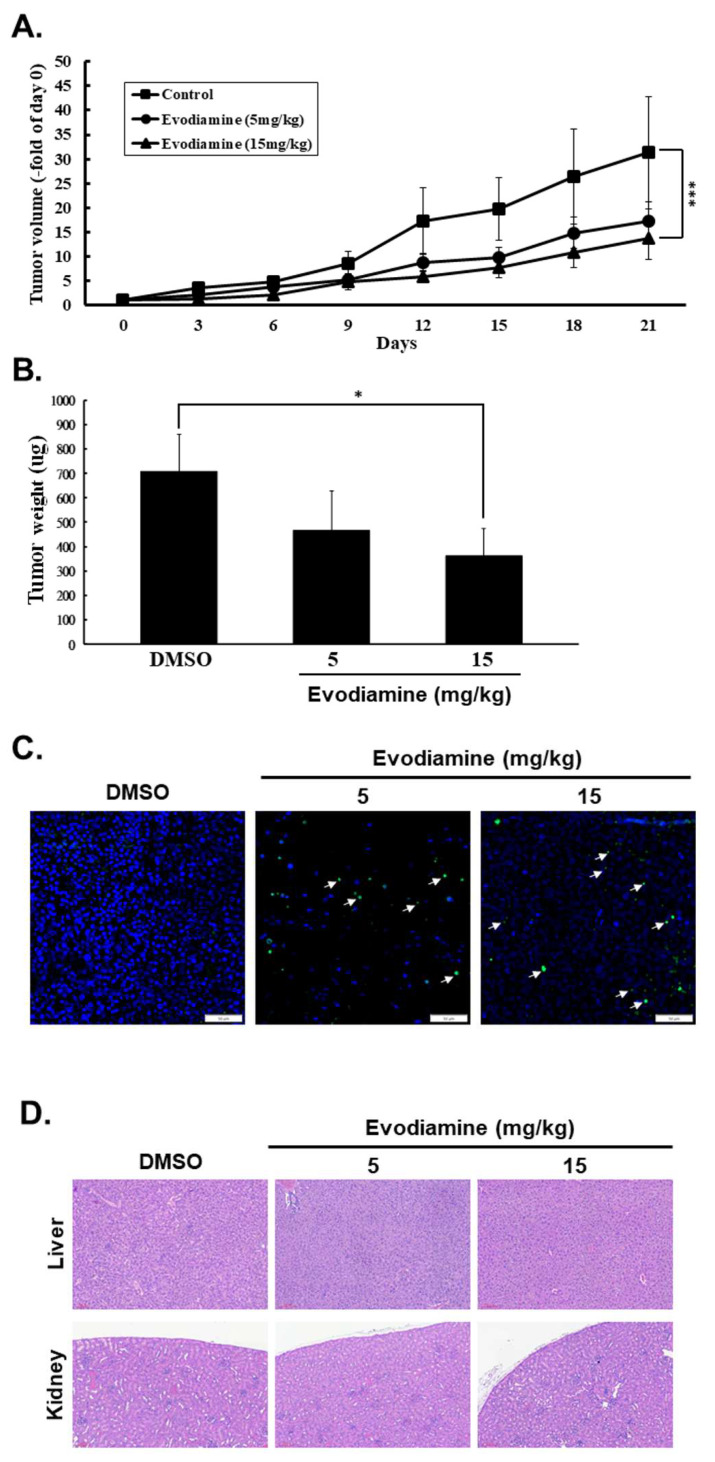 Figure 7
Peer Reviews
No public reviews on file for this paper yet. If you reviewed it on a platform where reviews are public (OpenReview, ICLR, NeurIPS, ICML), you can paste yours below so the community can read it here.
Videos
No videos yet. Explain this paper in a talk, walkthrough, or lecture? Add one.
Taxonomy
TopicsQuinazolinone synthesis and applications · Autophagy in Disease and Therapy · Studies on Chitinases and Chitosanases