Homology-mediated transformation of frog-killing fungus Batrachochytrium dendrobatidis illuminates chytrid development and pathogenesis
Stephanie M. Brody, Erik Kalinka, Sarah M. Prostak, Tamilie Carvalho, Jarrett Man, Timothy Y. James, Lillian K. Fritz-Laylin

TL;DR
Scientists developed a new genetic tool for the frog-killing fungus Bd, enabling targeted gene changes and improving understanding of its pathogenesis.
Contribution
Established homologous recombination for targeted genetic manipulation in Batrachochytrium dendrobatidis.
Findings
Homologous recombination enables targeted gene deletion and protein tagging in Bd.
Chitin synthase Myo17D relocates to the plasma membrane during cell wall assembly.
URA3 gene knockout confirmed via sequencing and drug resistance assays.
Abstract
The chytrid fungus Batrachochytrium dendrobatidis (Bd) causes chytridiomycosis, a disease driving global amphibian declines. Despite its ecological importance, Bd has been difficult to study at the molecular level due to the lack of genetic tools. Our work establishes homologous recombination as a method to introduce targeted genetic changes in Bd, including the first targeted gene deletion. This system allows us to directly show the function of individual genes in Bd infection. We demonstrate its utility by visualizing Bd infection in live amphibians and confirming the role of chitin synthase in cell wall assembly. This genetic system provides a critical tool for understanding Bd’s biology and pathogenesis, enabling future studies that could inform conservation efforts. The chytrid fungus Batrachochytrium dendrobatidis (Bd) infects amphibians and causes chytridiomycosis, a disease…
Genes, proteins, chemicals, diseases, species, mutations and cell lines named across the full text — each resolved to its canonical identifier and authoritative record.
Click any figure to enlarge with its caption.
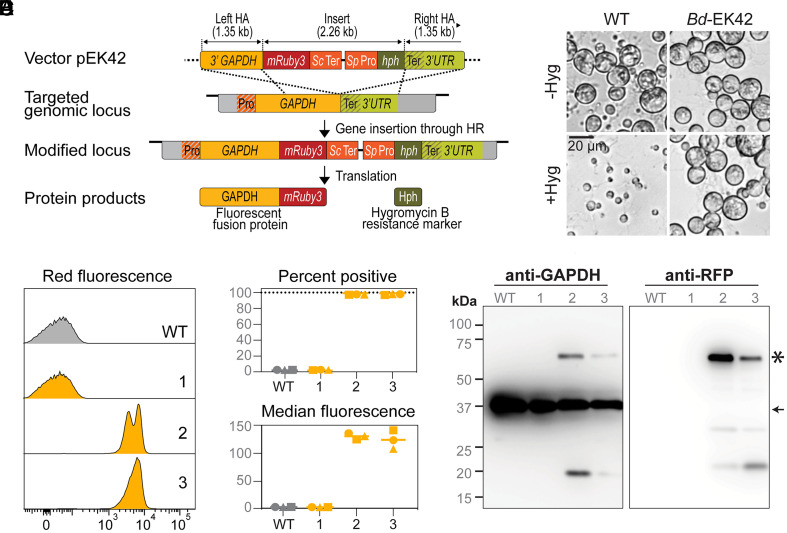 Figure 1
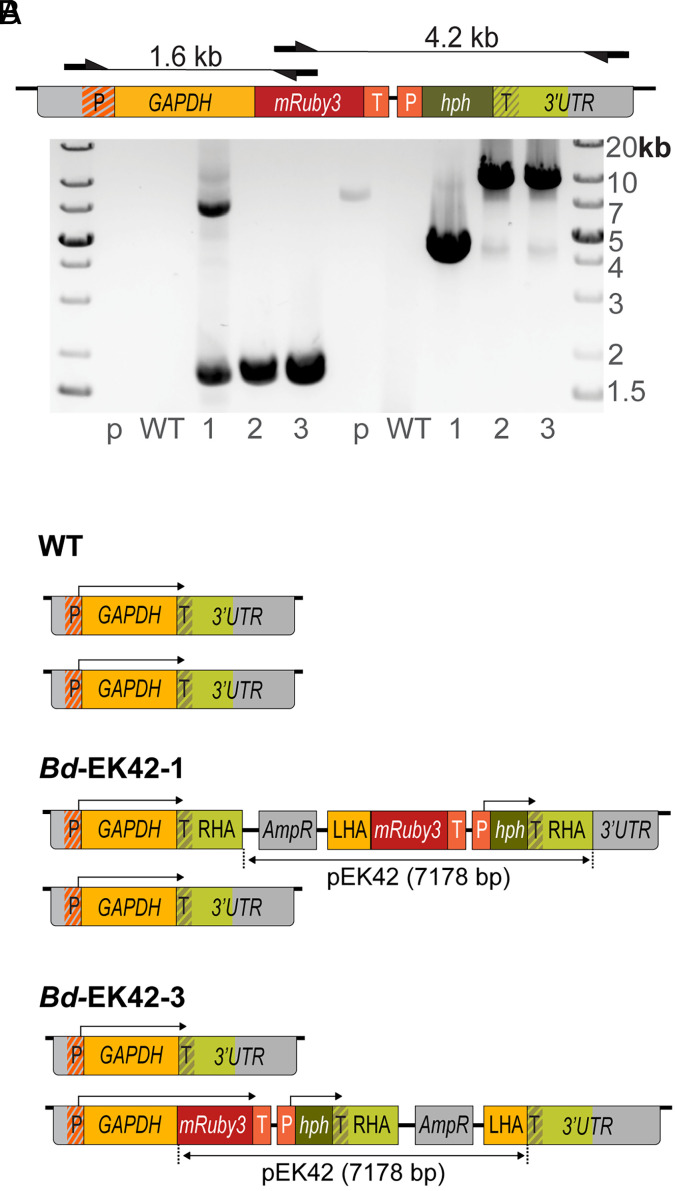 Figure 2
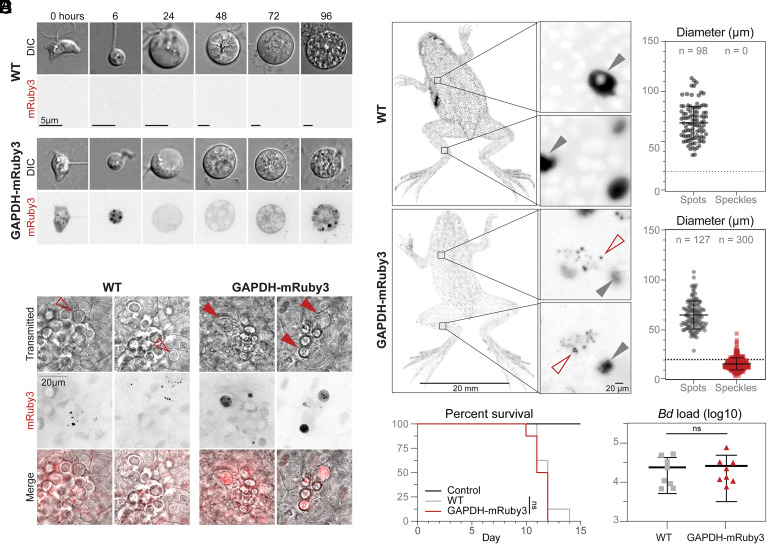 Figure 3
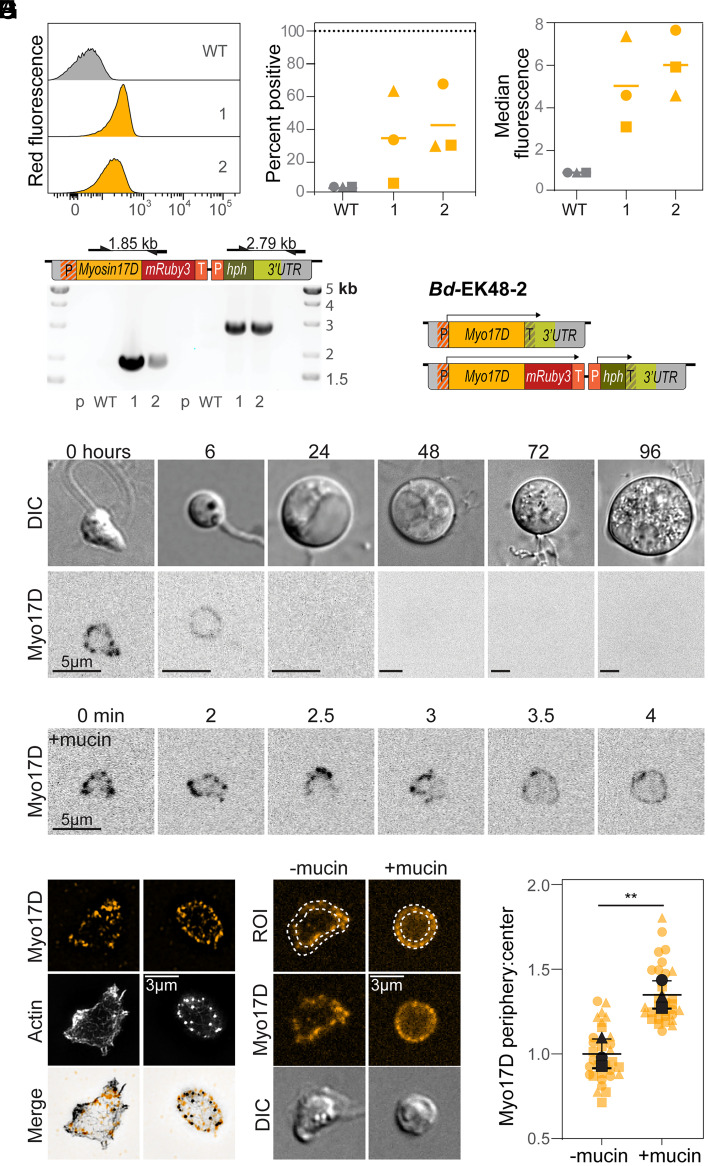 Figure 4
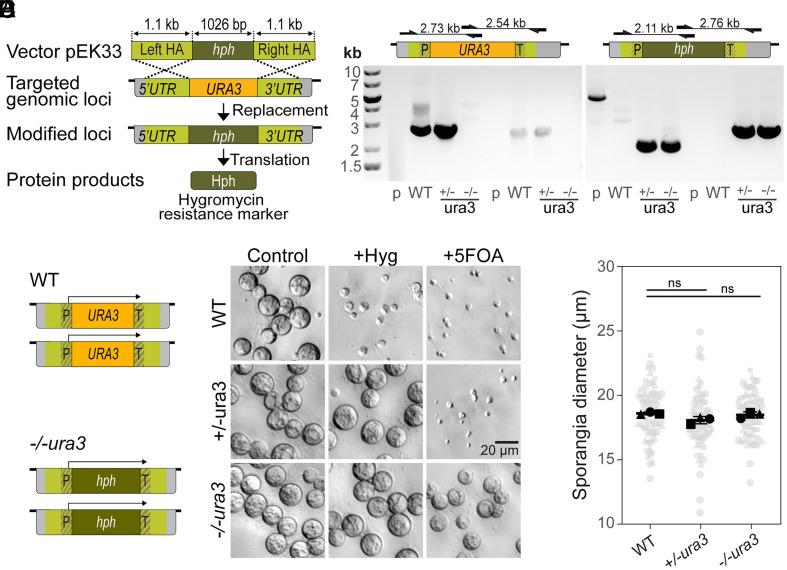 Figure 5
Peer Reviews
No public reviews on file for this paper yet. If you reviewed it on a platform where reviews are public (OpenReview, ICLR, NeurIPS, ICML), you can paste yours below so the community can read it here.
Videos
No videos yet. Explain this paper in a talk, walkthrough, or lecture? Add one.
Taxonomy
TopicsAmphibian and Reptile Biology · Subterranean biodiversity and taxonomy · Skin and Cellular Biology Research