Can Any Procedure Be Hypnosis? Exploring the Effect of Framing on Hypnotic Depth and Electrophysiological Correlates of Hypnosis in a Balanced Placebo Design
Zoltan Kekecs, Endre Csikos, Nguyen Dang Quy Minh, Yeganeh Farahzadi, Peter Simor, Balazs Nyiri, Pietro Rizzo, Jay A. Olson, Gary Elkins

TL;DR
This study investigates how labeling affects hypnosis experiences and brain activity, finding that framing influences subjective depth but not all brain responses.
Contribution
A novel balanced placebo design to separate the effects of labeling from procedural differences in hypnosis inductions.
Findings
Labeling strongly influenced subjective hypnosis depth, with 'white noise hypnosis' matching conventional inductions.
EEG changes were largely unaffected by labeling, contradicting expectancy theory predictions.
Decreased occipital gamma power emerged as a potential EEG correlate of hypnosis.
Abstract
Expectancy theory of hypnosis posits that any procedure can serve as a hypnotic induction provided it is labeled as “hypnosis”. The present study explored this hypothesis by contrasting the effects of two conventional and two unconventional (placebo) hypnotic inductions on hypnotic experiences and electrophysiological correlates. In a 2 × 2 balanced placebo design, all participants were exposed to four conditions: conventional induction labeled as “hypnosis”, conventional induction labeled as “control”, unconventional induction labeled as “hypnosis”, and unconventional induction labeled as “control”. EEG was recorded from 61 channels. We computed EEG features that were identified in previous studies as correlates of hypnosis or hypnotizability. Consistent with the predictions of expectancy theory, we found that labeling of the procedure was most influential in determining subjective…
Genes, proteins, chemicals, diseases, species, mutations and cell lines named across the full text — each resolved to its canonical identifier and authoritative record.
Click any figure to enlarge with its caption.
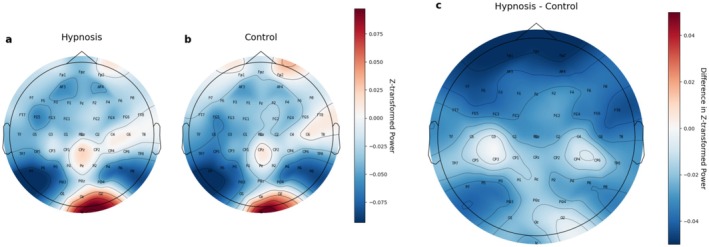 Figure 1
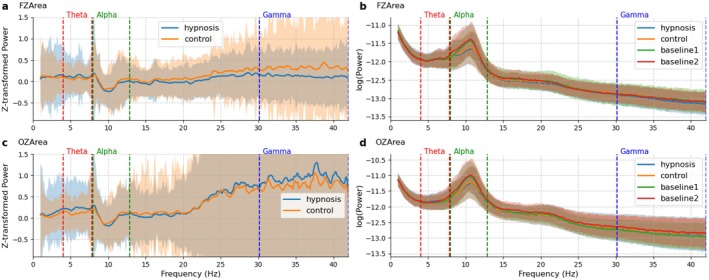 Figure 2
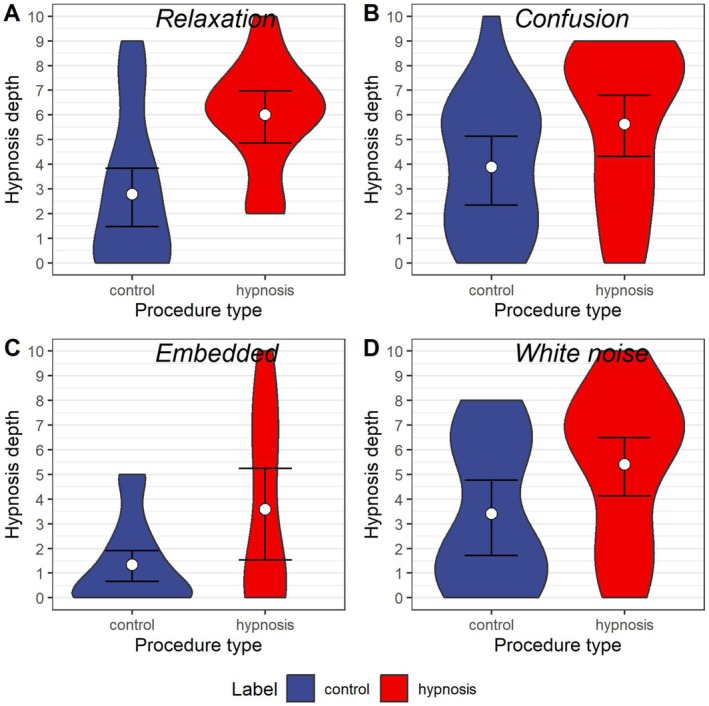 Figure 3
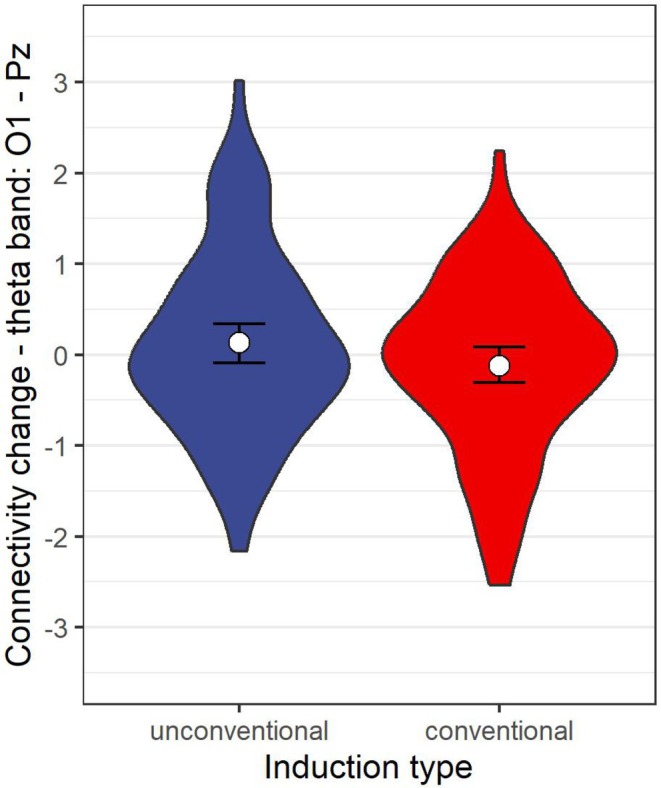 Figure 4
Peer Reviews
No public reviews on file for this paper yet. If you reviewed it on a platform where reviews are public (OpenReview, ICLR, NeurIPS, ICML), you can paste yours below so the community can read it here.
Videos
No videos yet. Explain this paper in a talk, walkthrough, or lecture? Add one.
Taxonomy
TopicsPain Management and Placebo Effect · Acupuncture Treatment Research Studies · Paranormal Experiences and Beliefs