Demoralization and dignity loss in breast cancer: A network analysis and computer simulation study
Ying Xiong, Hongman Li, Keqing Cai, Miao Yu, Jian Zhou, Jiaying Li, M. Tish Knobf, Zengjie Ye

TL;DR
This study explores how demoralization and loss of dignity are linked in breast cancer survivors, identifying distress and loss of life meaning as key factors that could be targeted for intervention.
Contribution
The study introduces a novel network-based approach to uncover symptom-level pathways linking demoralization and dignity loss in breast cancer survivors.
Findings
Illness uncertainty was the most central symptom in the network, and loss of life meaning acted as a key bridge symptom.
Distress was identified as an upstream trigger that leads to downstream cascades from demoralization to dignity loss.
Reducing distress was found to significantly decrease overall network activation, suggesting it as a key intervention target.
Abstract
Demoralization and loss of dignity frequently co-occur among individuals with cancer. However, their symptom-level associations remain poorly characterized. This study aimed to delineate the underlying pathways linking demoralization and dignity loss in breast cancer survivors and to identify potential symptom targets for intervention. A total of 411 female breast cancer survivors were assessed using the Demoralization Scale II and the Patient Dignity Inventory. A Gaussian graphical model was used to identify central and bridge symptoms, while a Bayesian network model estimated the directional associations and potential causal pathways between demoralization and dignity-related symptoms. Computer-simulated intervention analyses were conducted to determine which symptom reduction would yield the greatest decrease in overall network activation. In the Gaussian network, illness…
Genes, proteins, chemicals, diseases, species, mutations and cell lines named across the full text — each resolved to its canonical identifier and authoritative record.
Click any figure to enlarge with its caption.
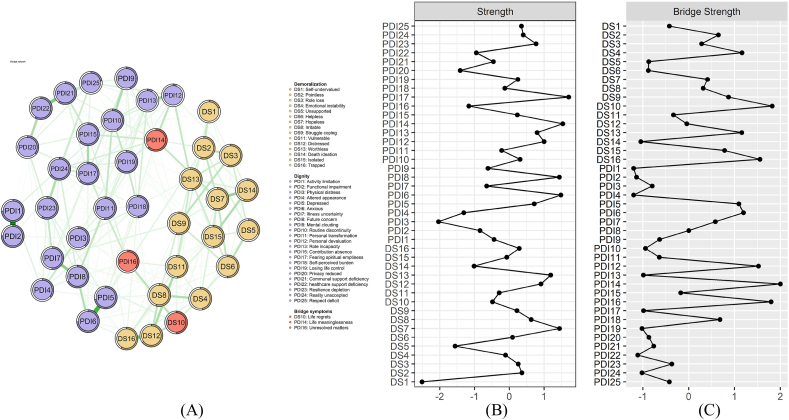 Figure 1
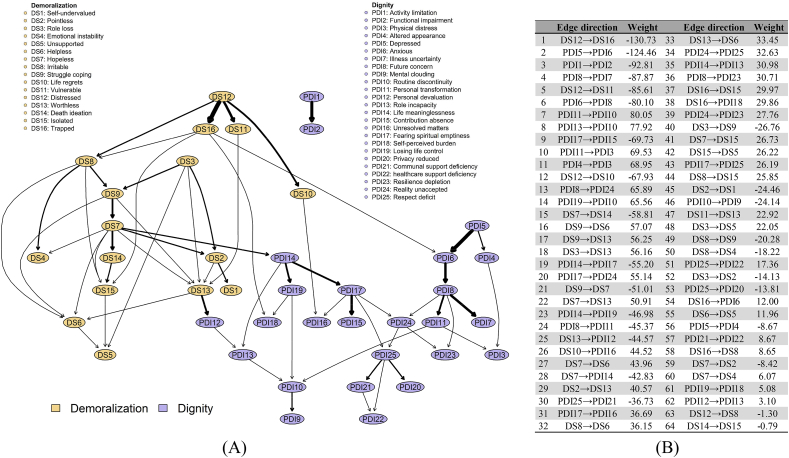 Figure 2
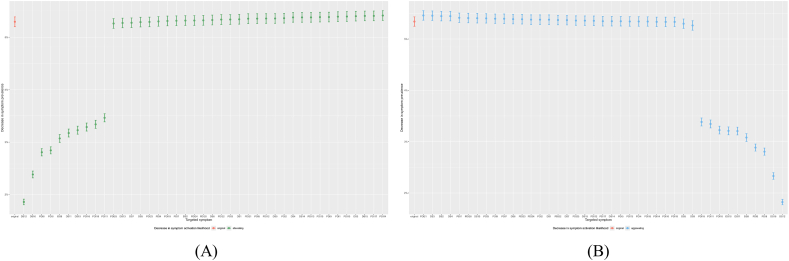 Figure 3
Peer Reviews
No public reviews on file for this paper yet. If you reviewed it on a platform where reviews are public (OpenReview, ICLR, NeurIPS, ICML), you can paste yours below so the community can read it here.
Videos
No videos yet. Explain this paper in a talk, walkthrough, or lecture? Add one.
Taxonomy
TopicsPatient Dignity and Privacy · Palliative Care and End-of-Life Issues · Cancer survivorship and care