Derivation and external validation of community-acquired pneumonia subphenotypes in Southeast Asia: a secondary analysis of prospective cohort studies
Taylor D. Coston, Prapassorn Poolchanuan, Jesse E. Ross, Lu Xia, Leila R. Zelnick, Viriya Hantrakun, Parinya Chamnan, Gumphol Wongsuvan, David Furfaro, Max R. O'Donnell, Ali Shojaie, Sina A. Gharib, Pavan K. Bhatraju, Khie C. Lie, Chuen-Yen Lau, Nguyen V.V. Chau

TL;DR
This study identifies two subtypes of pneumonia in Southeast Asia, which differ in severity and outcomes, and validates a model to classify these subtypes.
Contribution
The study derives and externally validates pneumonia subphenotypes specific to Southeast Asia, and explores their relevance in a U.S. cohort with COVID-19.
Findings
Two CAP subphenotypes (CAP1 and CAP2) were identified in Thailand, with CAP1 associated with higher mortality and inflammation.
A four-variable model accurately classified subphenotypes and showed consistent results in external validation.
Subphenotypes in a U.S. COVID-19 cohort revealed treatment effect heterogeneity with corticosteroids.
Abstract
Identifying pneumonia subphenotypes in understudied populations can advance equitable personalized medicine for pneumonia care. We aimed to derive and validate subphenotypes of patients presenting with community-acquired pneumonia (CAP) in Southeast Asia. This secondary analysis included three prospective cohorts conducted between March 2013 and April 2020. First, we performed latent class analysis to identify subphenotypes using clinical and laboratory variables in a prospective cohort of adults hospitalized with CAP in northeastern Thailand. Next, we compared clinical and biological features between the subphenotypes and then developed a parsimonious classifier model (PCM) for accurate subphenotype assignment. We then validated the accuracy of PCM subphenotype assignment in an external, multinational prospective cohort of patients hospitalized with CAP in Southeast Asia. Finally, in…
Genes, proteins, chemicals, diseases, species, mutations and cell lines named across the full text — each resolved to its canonical identifier and authoritative record.
Click any figure to enlarge with its caption.
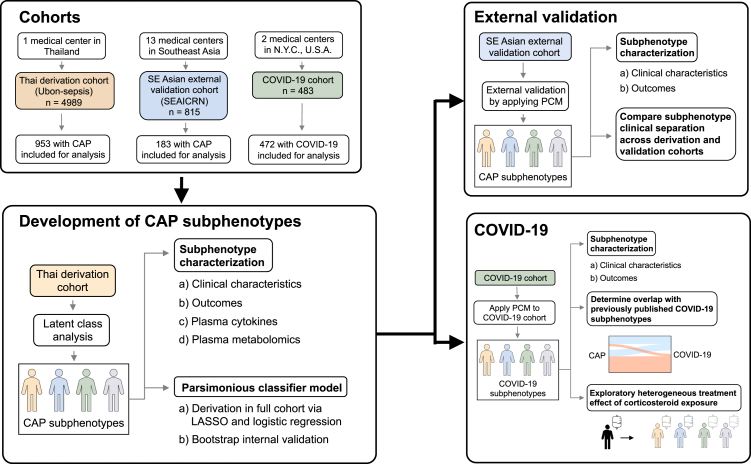 Figure 1
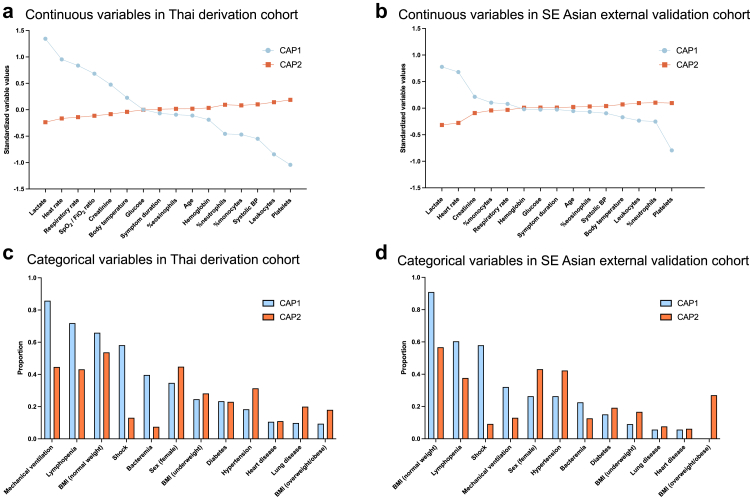 Figure 2
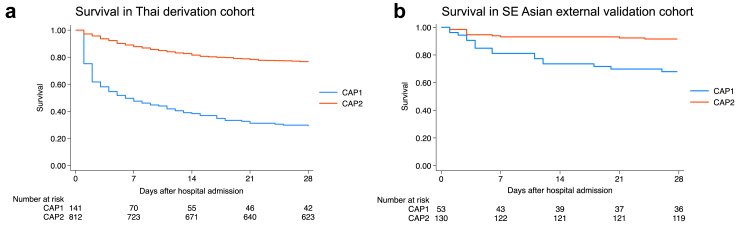 Figure 3
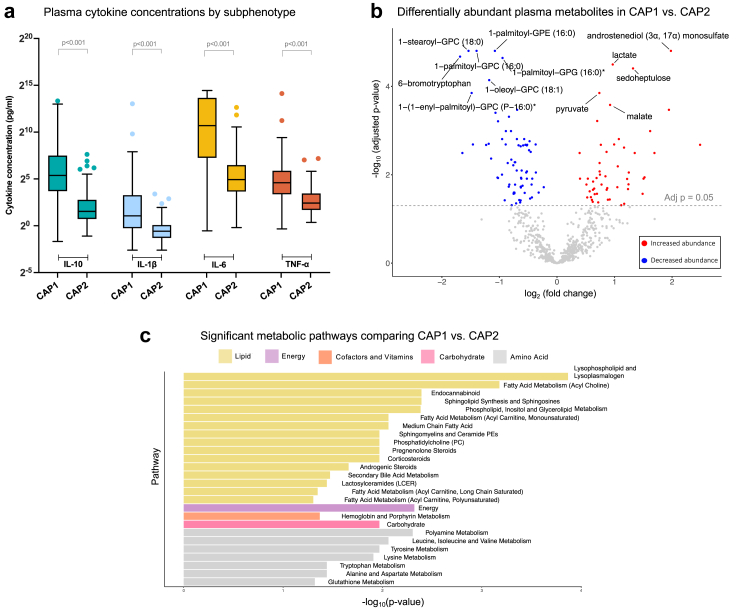 Figure 4
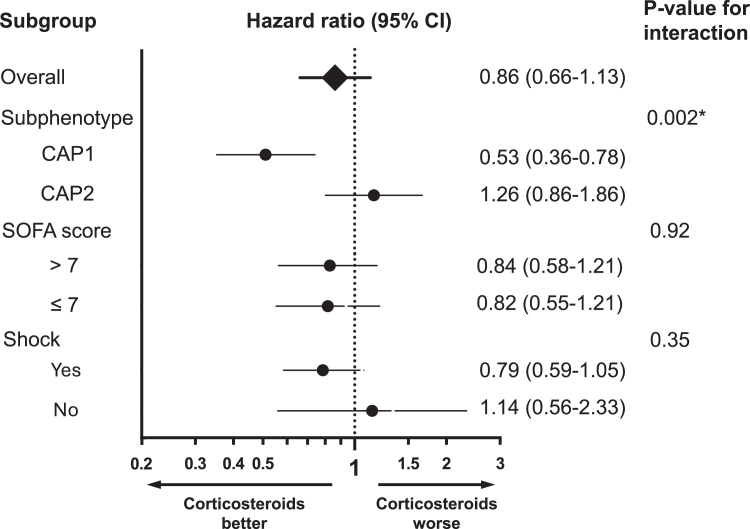 Figure 5
Peer Reviews
No public reviews on file for this paper yet. If you reviewed it on a platform where reviews are public (OpenReview, ICLR, NeurIPS, ICML), you can paste yours below so the community can read it here.
Videos
No videos yet. Explain this paper in a talk, walkthrough, or lecture? Add one.
Taxonomy
TopicsPneumonia and Respiratory Infections · Tuberculosis Research and Epidemiology · Sepsis Diagnosis and Treatment