Variation in Response to Water Availability Across Phlox Species
Christina Steinecke, Julius A. Tabin, James Caven, Charles O. Hale, Antonio Serrato‐Capuchina, Robin Hopkins

TL;DR
This study explores how three Phlox species and their hybrids respond to water availability, revealing that plasticity and niche breadth may evolve independently.
Contribution
The study challenges the assumption that species with broader environmental niches evolve greater plasticity.
Findings
All Phlox species showed significant morphological responses to drought, including reduced biomass and fewer flowers.
Phlox drummondii, from intermediate habitats, exhibited the strongest plastic response despite not having the broadest niche.
Hybrids involving P. drummondii showed intermediate phenotypes, while others displayed hybrid vigor.
Abstract
Plants adapt to environmental variation both by evolving divergent trait means and by plastically adjusting trait expression in response to local conditions. While these dual strategies are essential for persistence in diverse environments, there are still outstanding questions about how they interact and vary across closely related species. For plants, water availability is a particularly important selective force that shapes species distributions, selects for growth habit and life history strategy, and can dictate individuals' plastic expressions of trait values and reproductive success. Here, we use ecological niche modeling, field soil characterization, and a controlled dry‐down experiment to understand how geographic distribution and evolutionary background among three closely related Phlox wild flower species and their F1 hybrids explain their responses to water availability. We…
Genes, proteins, chemicals, diseases, species, mutations and cell lines named across the full text — each resolved to its canonical identifier and authoritative record.
Click any figure to enlarge with its caption.
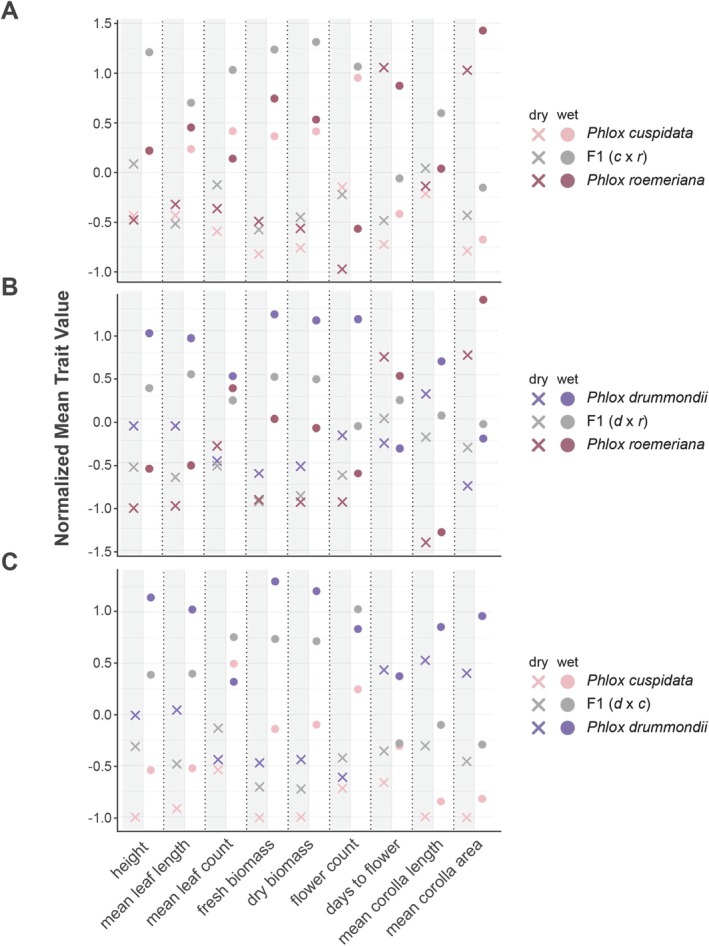 Figure 1
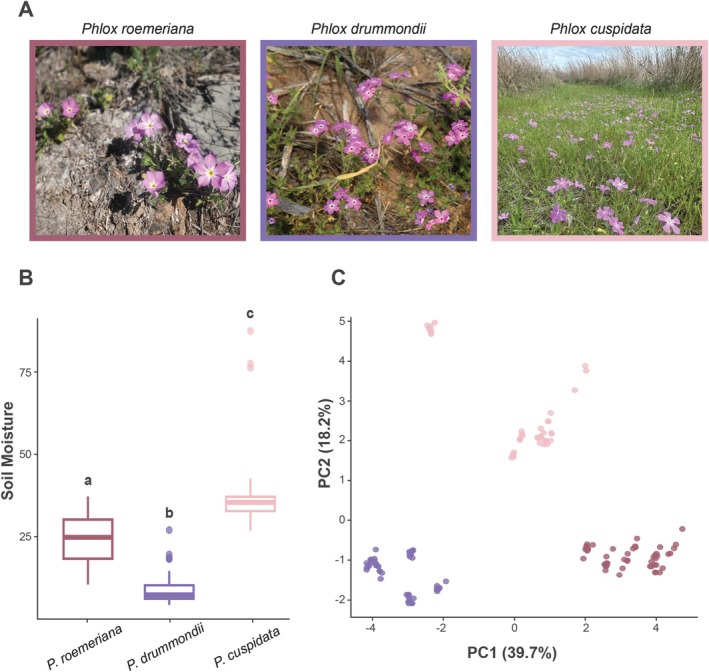 Figure 2
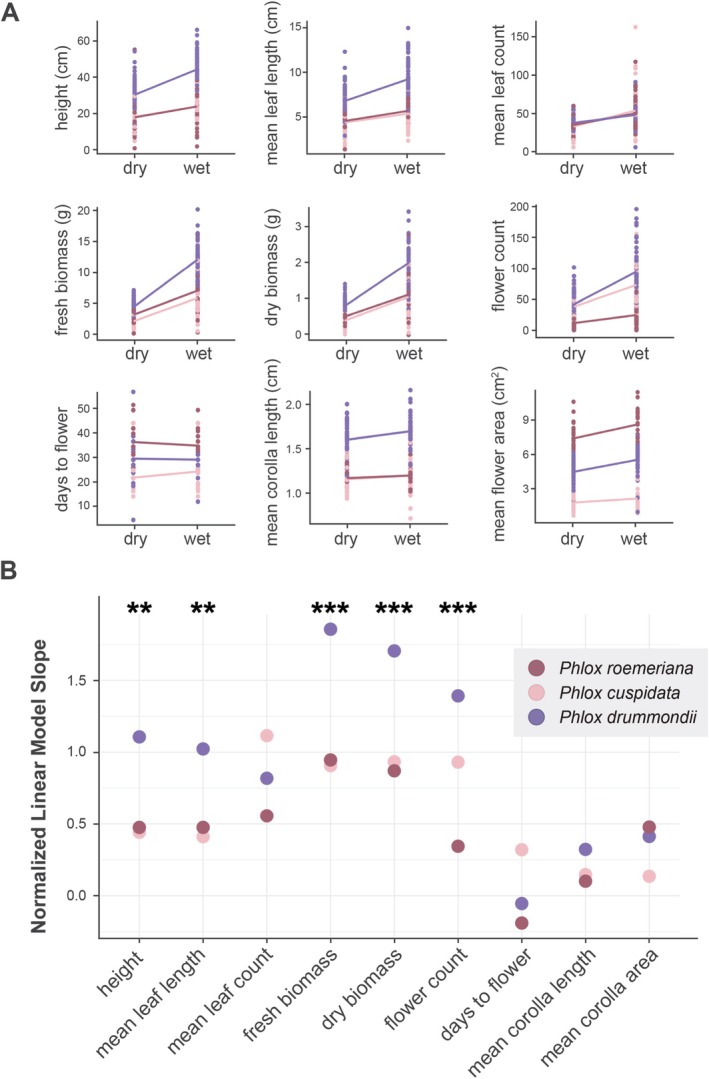 Figure 3
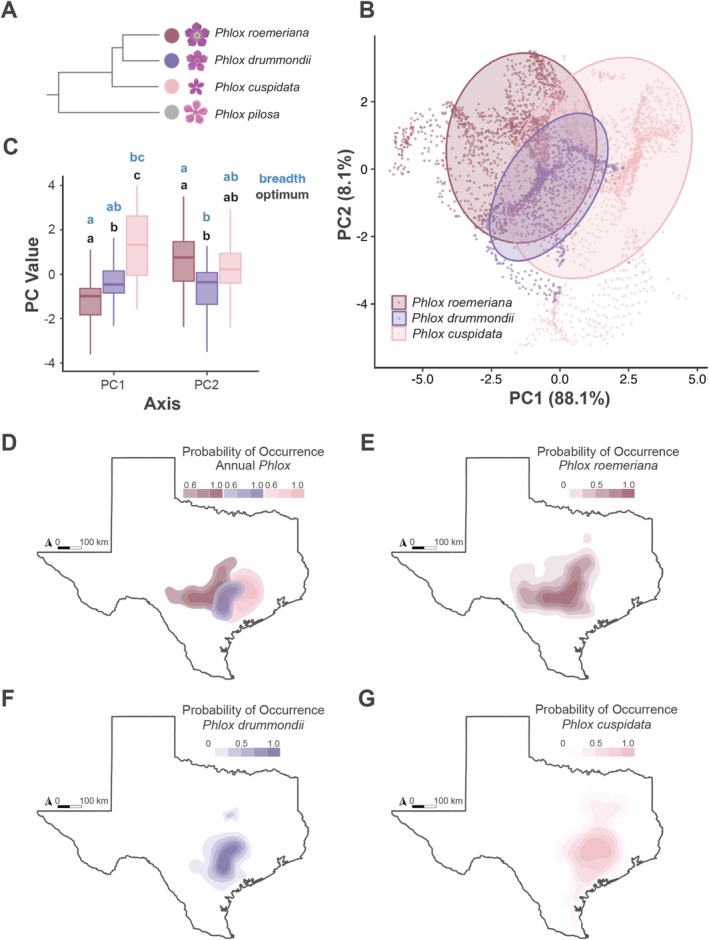 Figure 4
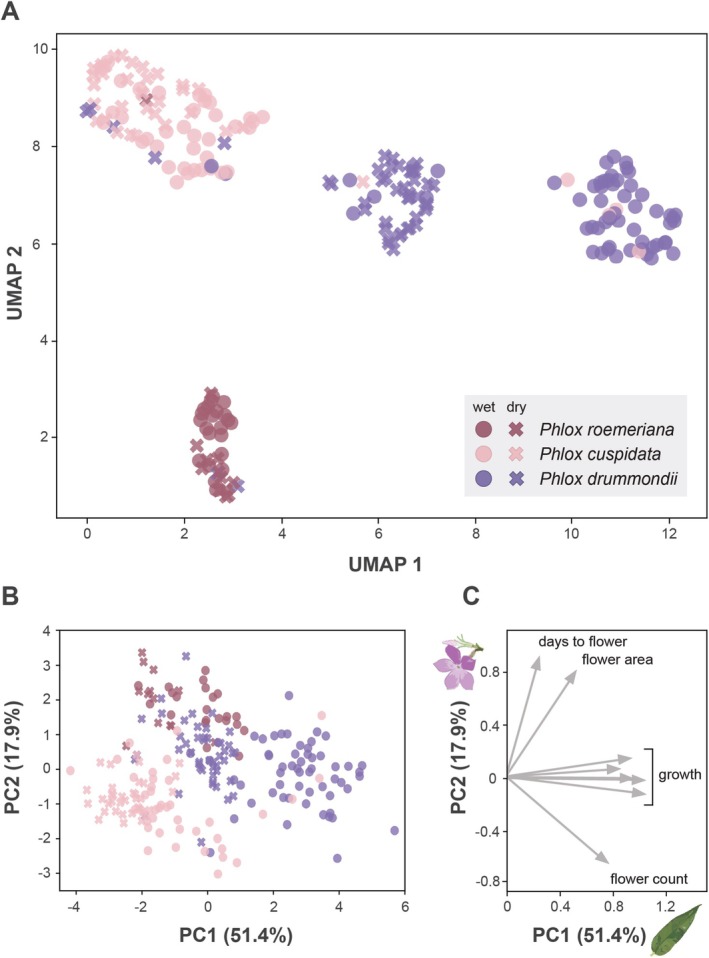 Figure 5
Peer Reviews
No public reviews on file for this paper yet. If you reviewed it on a platform where reviews are public (OpenReview, ICLR, NeurIPS, ICML), you can paste yours below so the community can read it here.
Videos
No videos yet. Explain this paper in a talk, walkthrough, or lecture? Add one.
Taxonomy
TopicsPlant and animal studies · Plant and Biological Electrophysiology Studies · Ecology and Vegetation Dynamics Studies