Effects of Conical Positive Expiratory Pressure Mask Application During Exercise Training on Pulmonary Rehabilitation Outcomes in Moderate to Severe COPD Cases: A Randomized Controlled Trial
Chulee Ubolsakka-Jones, David Arthur Jones, Malipron Pukdeechat, Watchara Boonsawat, Wilaiwan Khrisanapant, Pornanan Domthong, Seksan Chaisuksant, Piyaraid Dongkhanti, Aung Aung Nwe, Chatchai Phimphasak

TL;DR
This study found that using a conical PEP mask during exercise training for COPD patients did not significantly improve outcomes compared to training without it.
Contribution
The study provides new evidence on the effectiveness of conical PEP during pulmonary rehabilitation for COPD.
Findings
No significant differences in 6MWD or ESMT endurance time between conical-PEP and control groups.
Conical-PEP did not significantly reduce end-exercise IC compared to the control group.
No significant differences in TDI, SGRQ, or CAT scores between the groups.
Abstract
The use of positive expiratory pressure (PEP), which includes conical-PEP breathing, has been proposed for use during exercise among patients with chronic obstructive pulmonary disease (COPD) to reduce dynamic hyperinflation (DH) and improve exercise capacity. However, evidence on the effects of exercise training with conical-PEP for pulmonary rehabilitation (PR) remains limited. This study was conducted to evaluate the aforementioned effects on exercise capacity, DH, and quality of life among patients with moderate to very severe COPD. Forty-two patients with moderate to very severe COPD were assigned to a home-based PR program. They were then randomly allocated to exercise training with conical-PEP (n = 21, age 64.5 ± 6.8 years) or without conical-PEP (control group, n = 21, age 67.2 ± 8.0 years) for 8–10 weeks. The outcomes of the 6-min walk distance (6MWD), the endurance spot…
Genes, proteins, chemicals, diseases, species, mutations and cell lines named across the full text — each resolved to its canonical identifier and authoritative record.
Click any figure to enlarge with its caption.
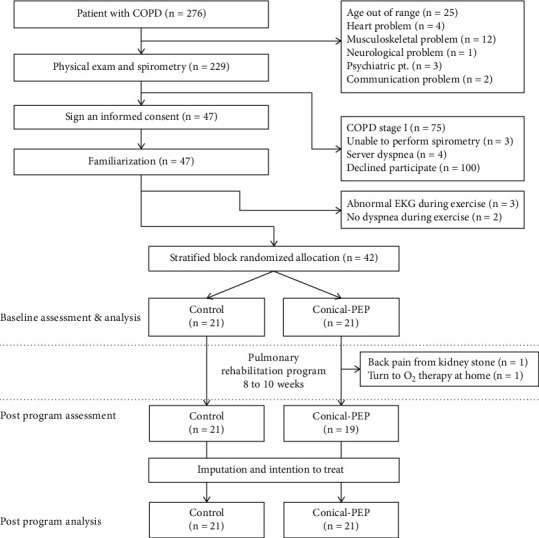 Figure 1
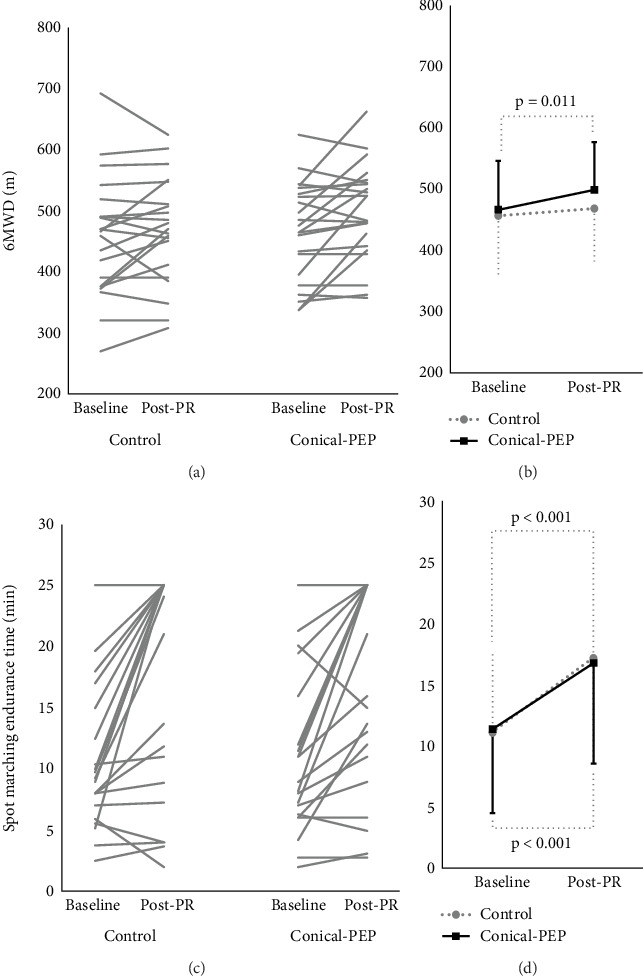 Figure 2
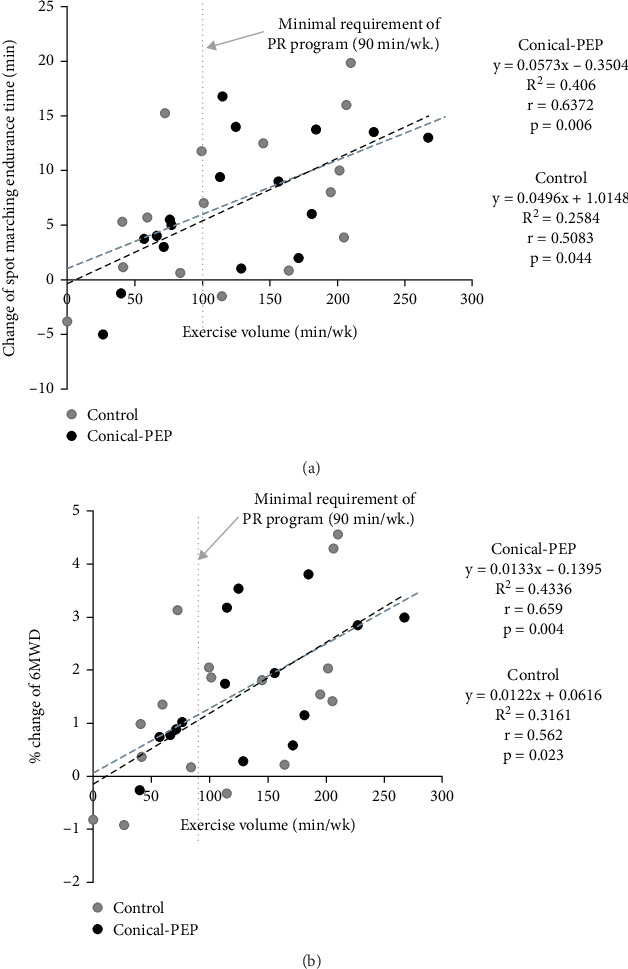 Figure 3
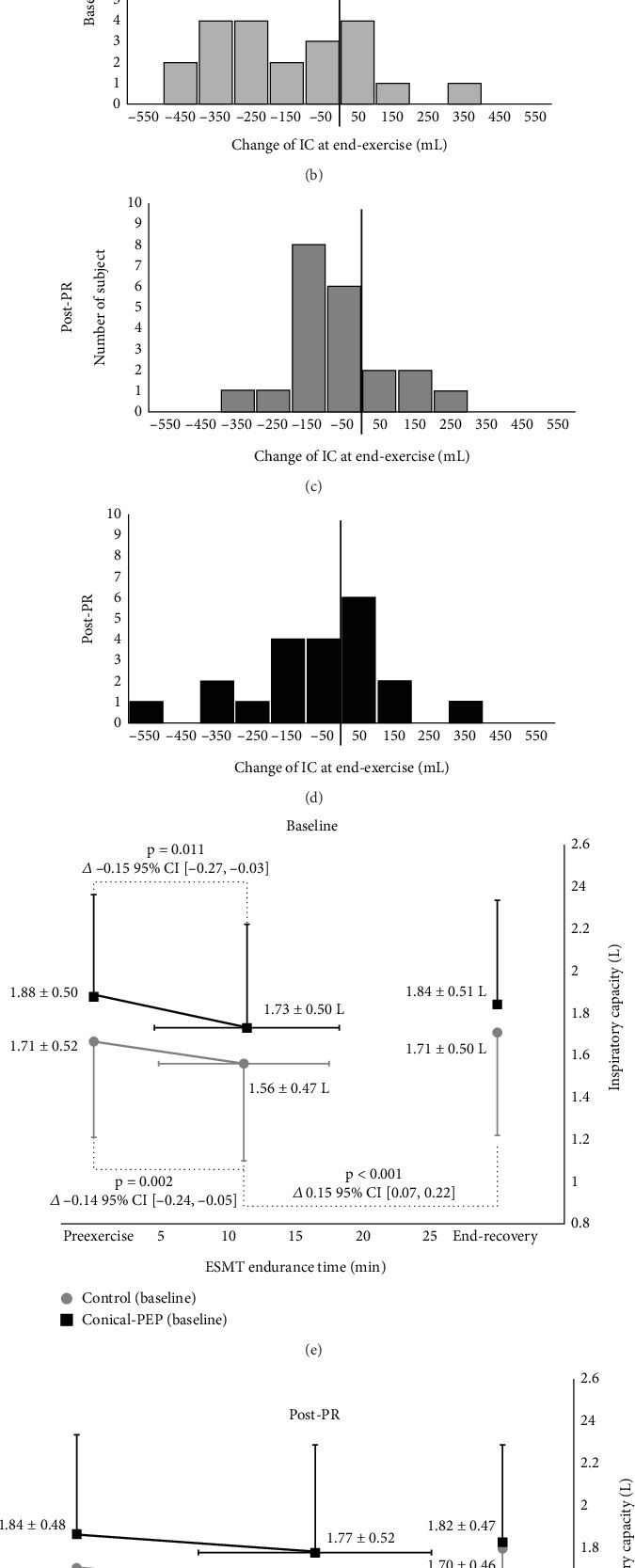 Figure 4
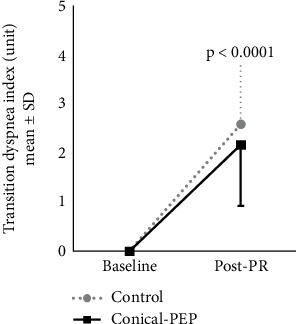 Figure 5
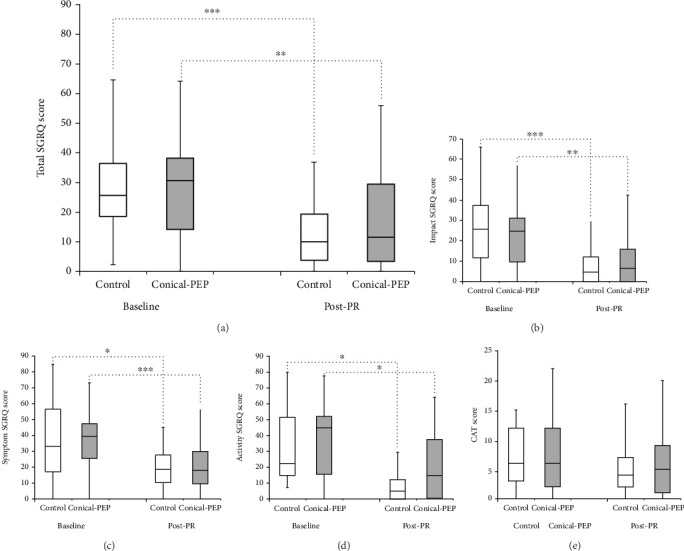 Figure 6
Peer Reviews
No public reviews on file for this paper yet. If you reviewed it on a platform where reviews are public (OpenReview, ICLR, NeurIPS, ICML), you can paste yours below so the community can read it here.
Videos
No videos yet. Explain this paper in a talk, walkthrough, or lecture? Add one.
Taxonomy
TopicsChronic Obstructive Pulmonary Disease (COPD) Research · Respiratory Support and Mechanisms · Cardiovascular and exercise physiology