Endoscopic Ultrasound With Fine Needle Biopsy Confirming a Diagnosis of Immune Checkpoint Inhibitor-Related Type 3 Autoimmune Pancreatitis
Dana Ley, Kusum Sharma, Saqib Walayat, Mark R. Albertini, Rashmi M. Agni, Deepak V. Gopal

TL;DR
A case of immune checkpoint inhibitor-related pancreatitis is diagnosed using endoscopic ultrasound and biopsy, revealing immune cell infiltration and guiding treatment.
Contribution
This case provides novel histopathologic insights into type 3 autoimmune pancreatitis linked to immune checkpoint inhibitors.
Findings
Endoscopic ultrasound with fine needle biopsy confirmed T-lymphocyte infiltration in pancreatic tissue consistent with type 3 AIP.
Histologic findings showed CD4 and CD8 lymphocyte damage to pancreatic structures, supporting immune-mediated injury from ICI therapy.
The case highlights the diagnostic utility of endoscopic ultrasound in managing immune-related adverse events.
Abstract
Immune checkpoint inhibitor-related pancreatitis, also known as type 3 autoimmune pancreatitis (AIP), is uncommon and has a widely ranging clinical presentation. We present the biopsy findings of a case consistent with type 3 AIP—an entity recently described in the literature, the pathologic findings of which have not been well characterized. A 71-year-old male with metastatic mucosal melanoma of the urethra was treated with immune checkpoint inhibitor (ICI) therapy (nivolumab/relatlimab) and developed vague epigastric discomfort. He was found to have an elevated lipase, which increased to > 20x the upper limit of normal. Subsequent imaging showed new infiltrative masses in the pancreatic head and distal body/tail. Endoscopic ultrasound with fine needle biopsy (FNB) was performed. This showed T-lymphocyte predominant infiltrates, in the acini and septal areas, with concomitant acinar,…
Genes, proteins, chemicals, diseases, species, mutations and cell lines named across the full text — each resolved to its canonical identifier and authoritative record.
Click any figure to enlarge with its caption.
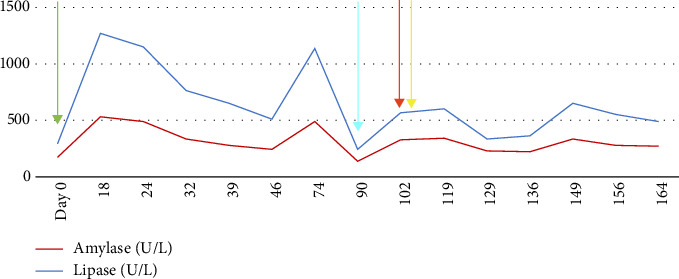 Figure 1
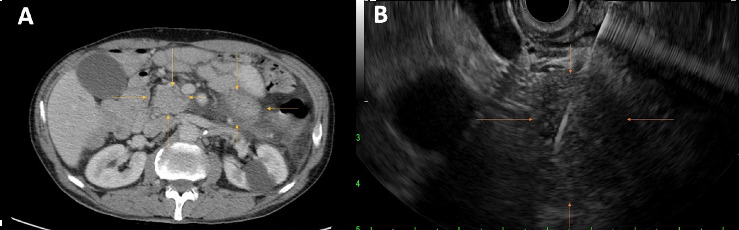 Figure 2
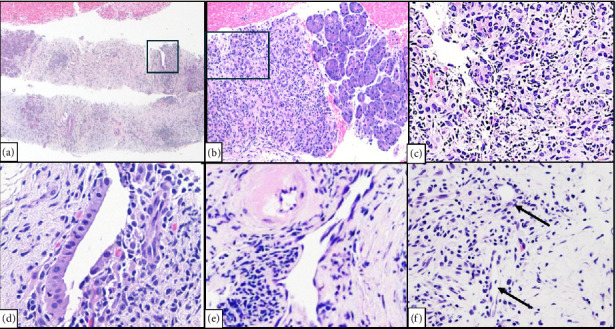 Figure 3
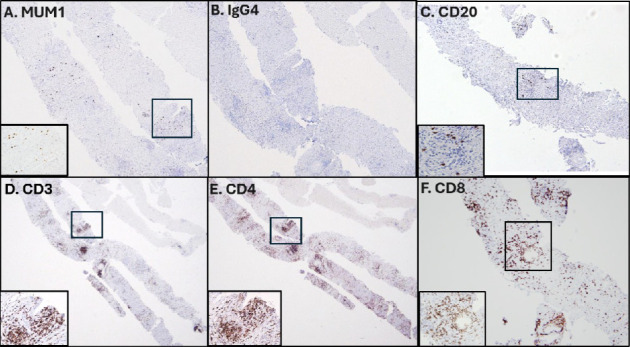 Figure 4
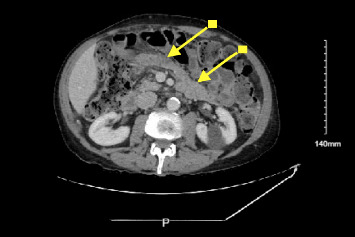 Figure 5
Peer Reviews
No public reviews on file for this paper yet. If you reviewed it on a platform where reviews are public (OpenReview, ICLR, NeurIPS, ICML), you can paste yours below so the community can read it here.
Videos
No videos yet. Explain this paper in a talk, walkthrough, or lecture? Add one.
Taxonomy
TopicsIgG4-Related and Inflammatory Diseases · Cancer Immunotherapy and Biomarkers · Neuroendocrine Tumor Research Advances