Cervical myelopathy symptom severity, posterior-based cervical surgical approach, and lower body mass index are associated with postoperative delirium: A retrospective observational study
Catherine R. Olinger, Pei-fu Chen, Sarah J. Lee, Daniel F. Waldschmidt, Reagan A. Grieser-Yoder, Lauren G. Havertape, Debra J. O’Connell-Moore, Lanchi B. Nguyen, Jill D. Corlette, Bradley J. Hindman, Matthew A. Howard

TL;DR
This study found that cervical spine surgery patients with more severe CSM symptoms, lower BMI, and posterior surgical approaches are more likely to experience postoperative delirium.
Contribution
The study identifies specific risk factors for postoperative delirium in cervical spine surgery patients, particularly those with cervical spondylotic myelopathy.
Findings
Posterior-based surgical approach was independently associated with higher postoperative delirium incidence and severity.
Lower body mass index and more severe CSM symptoms (lower mJOA scores) were linked to greater delirium severity in CSM patients.
Obstructive sleep apnea and depression were also associated with increased delirium risk.
Abstract
Cervical spine surgery is often performed to alleviate symptoms of cervical spondylotic myelopathy (CSM) and/or cervical radiculopathy (CR). Although postoperative delirium (POD) is common after cervical spine surgery, it is not known if CSM, CSM symptom severity, and/or surgical approach (anterior vs. posterior) affect POD incidence or severity. The purpose of this study was to determine 1) If the preoperative diagnosis of CSM was an independent risk factor for POD incidence or severity; 2) Among patients who had CSM, which patient and intraoperative characteristics, including CSM symptom severity, were independently associated with POD incidence or severity. A retrospective search of the electronic medical record of a tertiary academic medical center identified patients undergoing cervical spine surgery. Patients who had: 1) POD assessments within the first 7 days of surgery…
Genes, proteins, chemicals, diseases, species, mutations and cell lines named across the full text — each resolved to its canonical identifier and authoritative record.
Click any figure to enlarge with its caption.
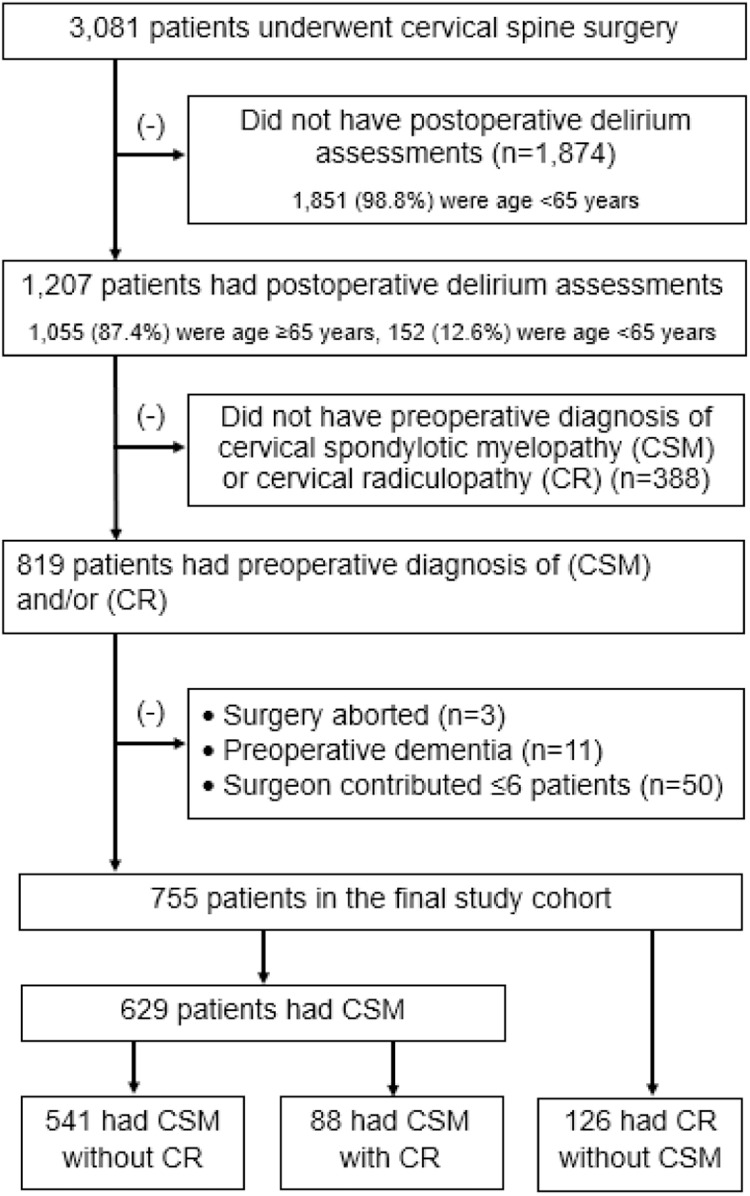 Figure 1
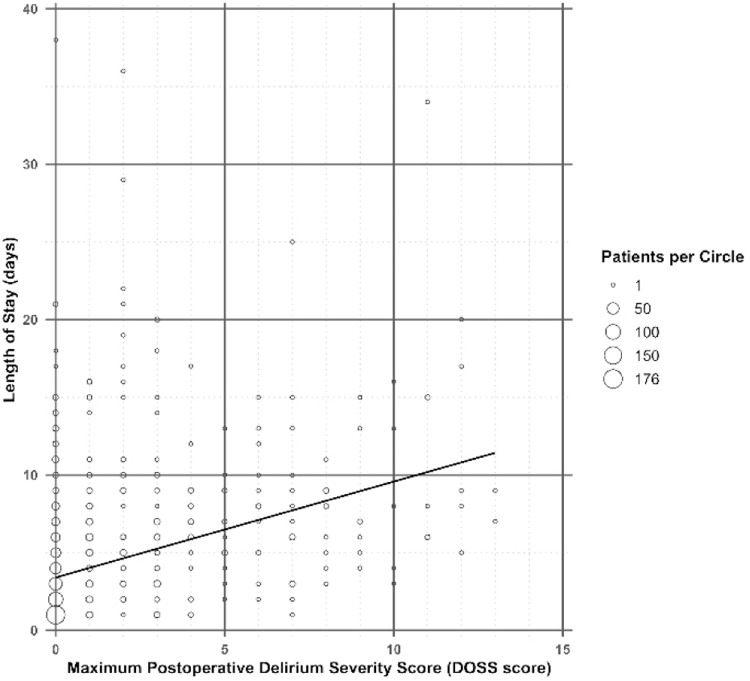 Figure 2
Peer Reviews
No public reviews on file for this paper yet. If you reviewed it on a platform where reviews are public (OpenReview, ICLR, NeurIPS, ICML), you can paste yours below so the community can read it here.
Videos
No videos yet. Explain this paper in a talk, walkthrough, or lecture? Add one.
Taxonomy
TopicsIntensive Care Unit Cognitive Disorders · Cervical and Thoracic Myelopathy · Enhanced Recovery After Surgery