Exercise, manipulation and traction physiotherapy in the conservative management of lumbar disc herniation: A systematic review and meta-analysis
Santhosh G. Thavarajasingam, Daniele S.C. Ramsay, Srikar R. Namireddy, Abith G. Kamath, Sree Kanakala, Hasan Zaidi, Rishi Parikh, Amaan Peerbhai, Hariharan Subbiah Ponniah, Aksaan Arif, Ahmed Salih, Ahkash Thavarajasingam, Jonathan Neuhoff, Daniel Scurtu, Dragan Jankovic

TL;DR
This study compares the effectiveness of exercise, manipulation, and traction therapies for treating lower back pain caused by disc herniation, finding traction to be most effective but noting significant variability in results.
Contribution
The study provides a meta-analysis comparing three conservative physiotherapy approaches for lumbar disc herniation, identifying traction therapy as having the highest pooled effect size.
Findings
Traction therapy showed the largest effect size (SMC = 2.52) compared to exercise and manipulation therapies.
High heterogeneity (I² = 97.9%) suggests variability in study protocols and populations.
Shorter follow-up durations were associated with larger treatment effects (p < 0.001).
Abstract
Lumbar disc herniation (LDH) is a leading cause of global back pain with significant socioeconomic impact. Conservative physiotherapy, including exercise, manipulation, and traction therapies, is a common first-line treatment. However, their relative efficacy and applicability to specific subgroups remain unclear. This systematic review and meta-analysis evaluated the efficacy of these three modalities, identified factors influencing variability, and explored subgroup-specific applications. Following PRISMA guidelines, a systematic review was conducted with searches of PubMed, MEDLINE, EMBASE, OVID, Scopus, and grey literature. Forty-three studies were included in the qualitative synthesis and 20 in the meta-analysis. Random-effects models estimated pooled standardized mean changes (SMCs), and meta-regression examined covariates influencing variability. The pooled SMC across…
Genes, proteins, chemicals, diseases, species, mutations and cell lines named across the full text — each resolved to its canonical identifier and authoritative record.
Click any figure to enlarge with its caption.
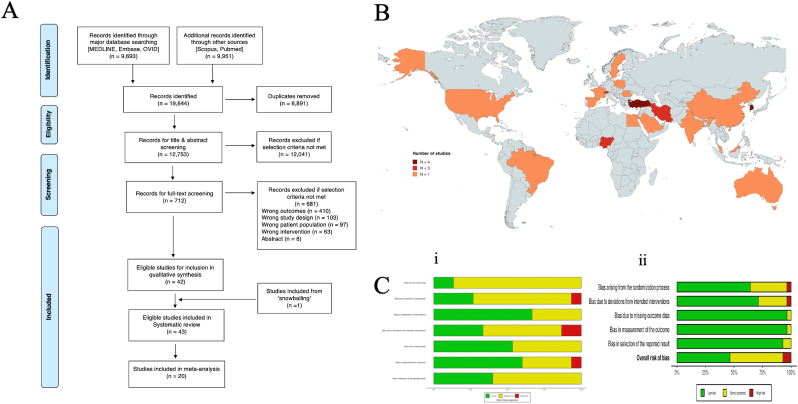 Figure 1
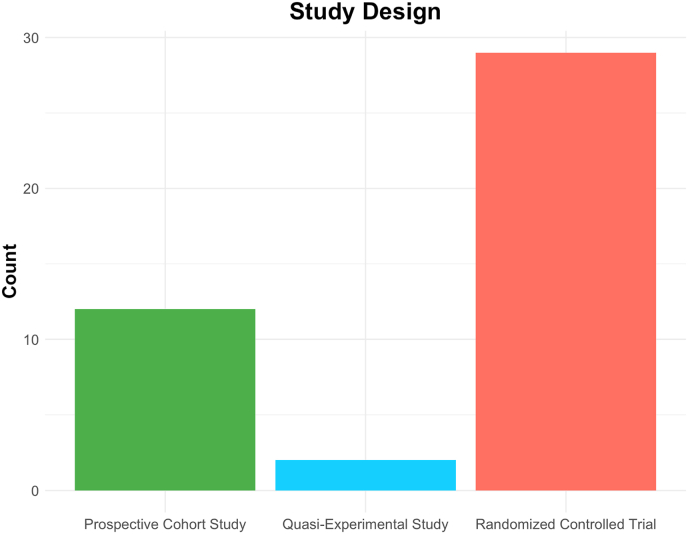 Figure 2
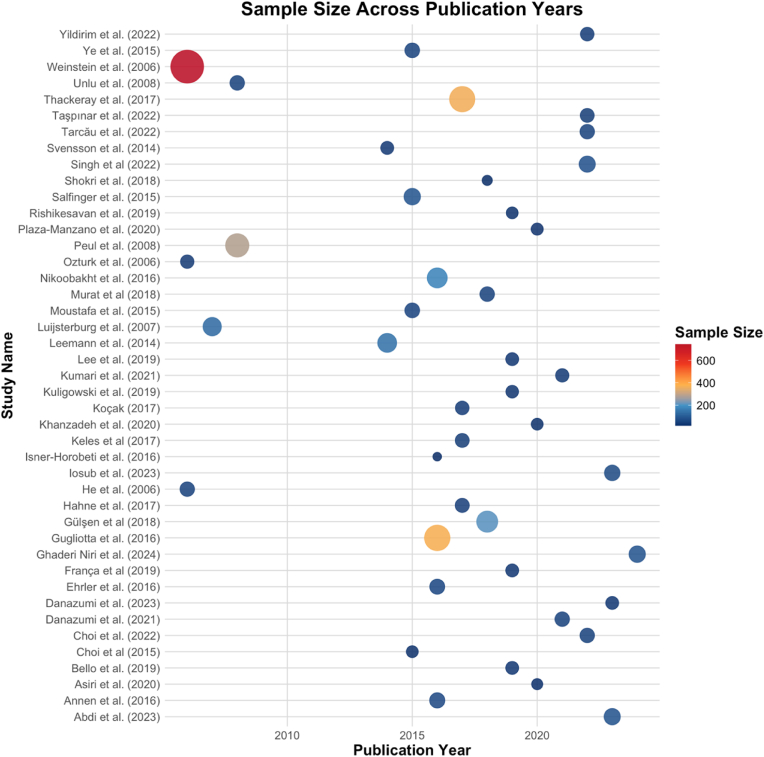 Figure 3
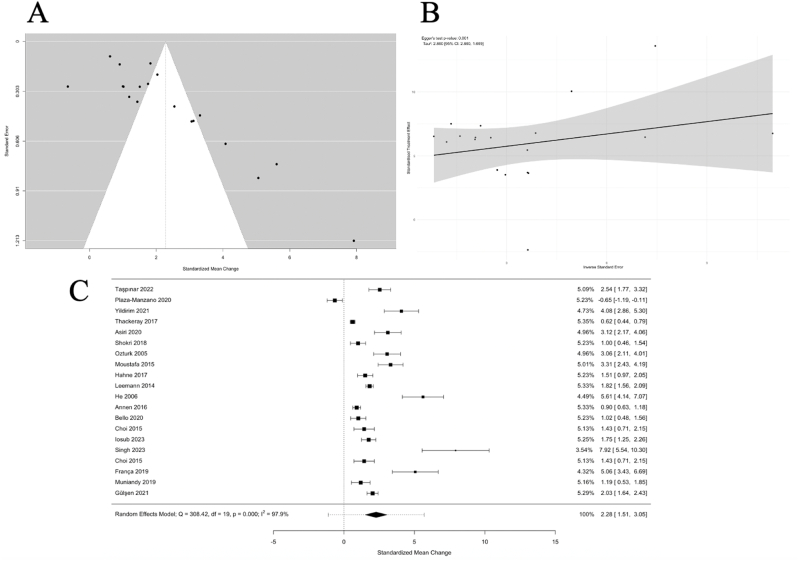 Figure 4
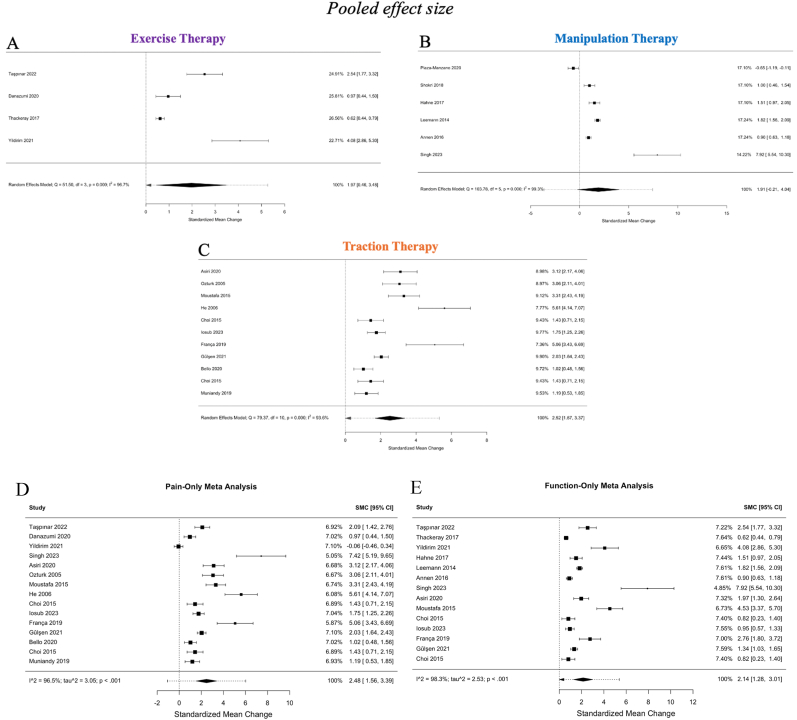 Figure 5
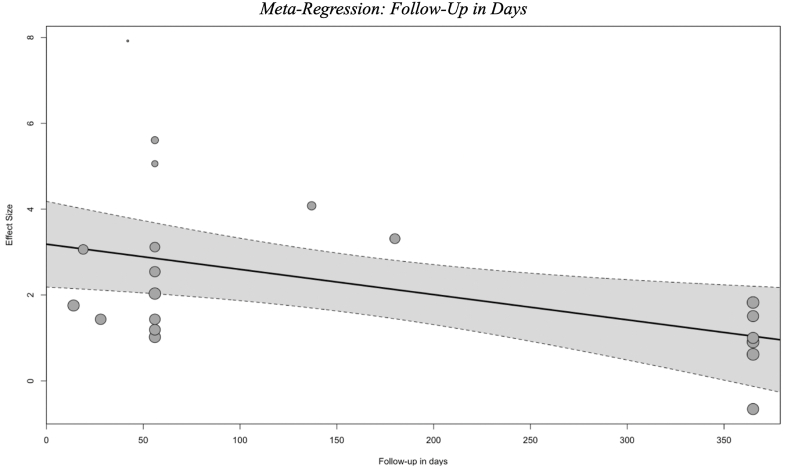 Figure 6
Peer Reviews
No public reviews on file for this paper yet. If you reviewed it on a platform where reviews are public (OpenReview, ICLR, NeurIPS, ICML), you can paste yours below so the community can read it here.
Videos
No videos yet. Explain this paper in a talk, walkthrough, or lecture? Add one.
Taxonomy
TopicsSpine and Intervertebral Disc Pathology · Musculoskeletal pain and rehabilitation · Anesthesia and Pain Management