Comparative insights into posthumous organ donation attitudes in chronically ill and healthy Egyptians
Ammal M. Metwally, Safaa I. Abd El Hady, Hend I. Salama, Ghada A. Elshaarawy, Raefa R. Alam, Wafaa M. Elboraey, Zeinab M. El-Bouraey, Hanan M. Badran, Hanan M. Mohamed, Mohamed Abdelrahman, Amira S. ElRifay, Shereen M. El Khateeb, Abdelrahman K. Hassanein

TL;DR
This study compares attitudes toward posthumous organ donation in chronically ill and healthy Egyptians, finding that patients are more willing to donate and that legal awareness and consent models significantly influence donation willingness.
Contribution
The study provides novel insights into how chronic illness and socio-demographic factors influence organ donation attitudes and preferences in Egypt.
Findings
Patients with chronic illness showed significantly higher willingness to donate (91%) compared to healthy individuals (60%).
Written consent was preferred over verbal consent in both groups, highlighting the importance of formal documentation.
Legal awareness was significantly associated with higher willingness to donate, suggesting the need for public education on organ donation laws.
Abstract
Organ transplantation is a life-saving intervention, yet a persistent global organ shortage threatens patient survival. In Egypt, cultural, religious, and legal factors significantly influence donation willingness, contributing to persistently low consent rates. This study aimed to: (1) compare attitudes toward posthumous organ donation between patients with chronic illness and healthy individuals; (2) assess their preferences for eleven distinct consent models; and (3) evaluate awareness of Egyptian organ donation laws and how this and key socio-demographic predictors influence willingness to donate. This cross-sectional study included 6,000 participants (3,000 patients and 3,000 healthy individuals) from two Egyptian governorates. Participants were selected through stratified random sampling. Structured interviews and self-administered questionnaires collected data on…
Genes, proteins, chemicals, diseases, species, mutations and cell lines named across the full text — each resolved to its canonical identifier and authoritative record.
Click any figure to enlarge with its caption.
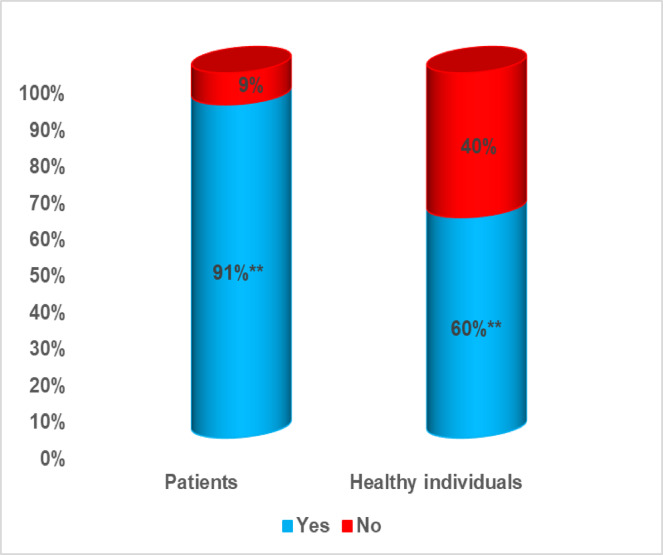 Figure 1
 Figure 2
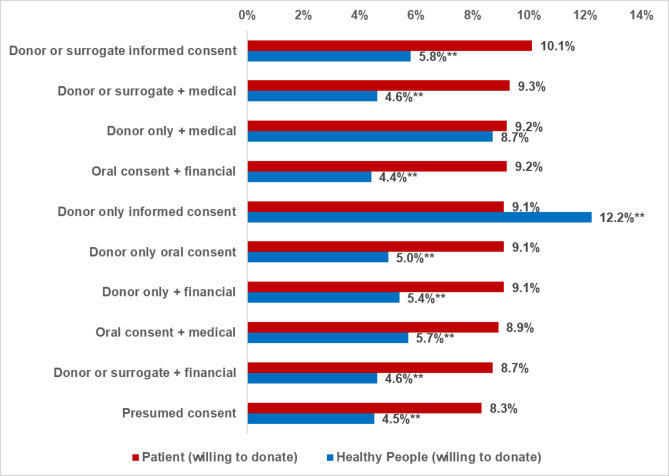 Figure 3
Peer Reviews
No public reviews on file for this paper yet. If you reviewed it on a platform where reviews are public (OpenReview, ICLR, NeurIPS, ICML), you can paste yours below so the community can read it here.
Videos
No videos yet. Explain this paper in a talk, walkthrough, or lecture? Add one.
Taxonomy
TopicsOrgan Donation and Transplantation · Palliative Care and End-of-Life Issues · Renal Transplantation Outcomes and Treatments