The composition and structure of the outer kinetochore KMN complex is conserved across kingdoms
Dipesh Kumar Singh, Birgit Walkemeier, Anjali Nayini, Jelle Van Leene, Stéphanie Durand, Geert De Jaeger, Raphael Guerois, Raphael Mercier

TL;DR
The study shows that the KMN complex, important for chromosome segregation, is conserved across different eukaryotic kingdoms, including plants.
Contribution
The discovery of thirteen KMN proteins in Arabidopsis, including six uncharacterized ones, reveals conservation across distant eukaryotes.
Findings
Affinity purification identified thirteen KMN proteins in Arabidopsis, seven of which were previously known.
Six newly identified proteins show remote similarity to known KMN-associated proteins and are essential for kinetochore function.
AlphaFold3 predicts a similar 3D organization of the KMN complex in plants and mammals.
Abstract
In eukaryotes, chromosome segregation relies on attachment to the spindle, ensured by the kinetochore. The outer kinetochore attaches to the microtubules and is named after three sub-complexes KNL1C, MIS12C, and NDC80C (KMN). While the KMN complex comprises ten proteins in humans S. cerevisiae, its conservation in more distant eukaryotes is unclear. Here, we aimed to define the KMN complex in the plant Arabidopsis using affinity purification and identified thirteen KMN proteins. Seven were previously known to have a conserved function (atMIS12, atNNF1, atNDC80, atSPC24, atSPC25, atNUF2, and atKNL1) and six were uncharacterized. These six proteins show remote similarity to yeast/human KMN-associated proteins, whose homologs have not yet been characterized in plants. We named them atDSN1, atCSM1, atNSL1.1/.2, and atZWINT1.1/.2. We confirmed kinetochore localization for atDSN1, atCSM1,…
Genes, proteins, chemicals, diseases, species, mutations and cell lines named across the full text — each resolved to its canonical identifier and authoritative record.
Click any figure to enlarge with its caption.
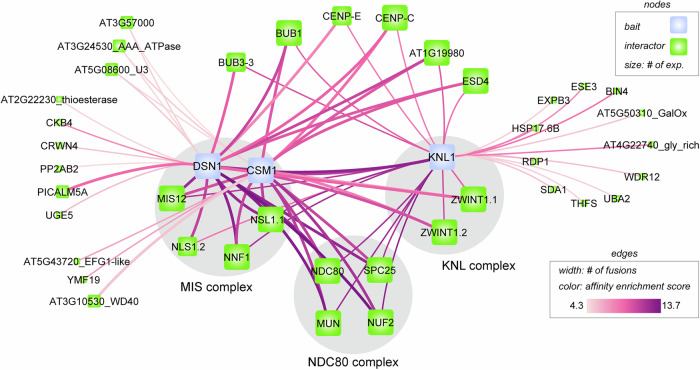 Figure 1
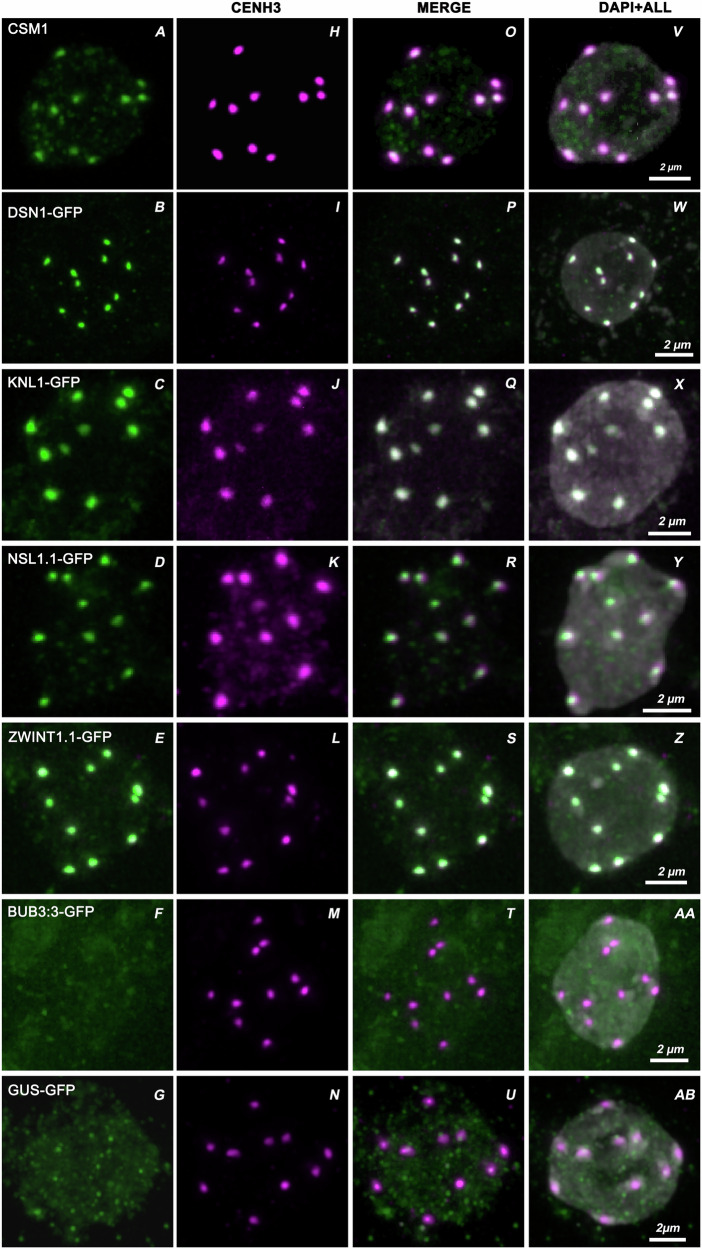 Figure 2
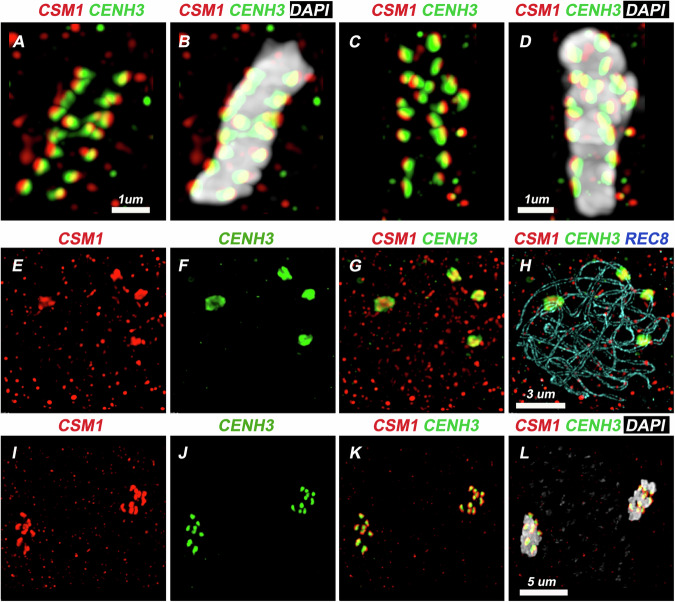 Figure 3
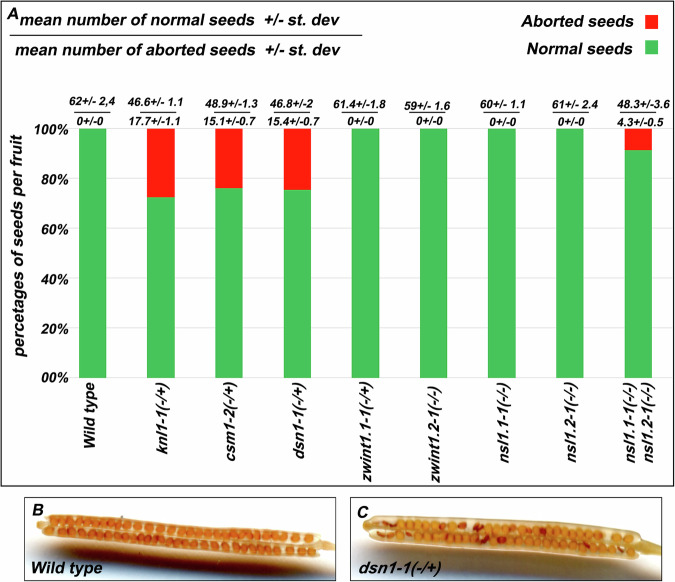 Figure 4
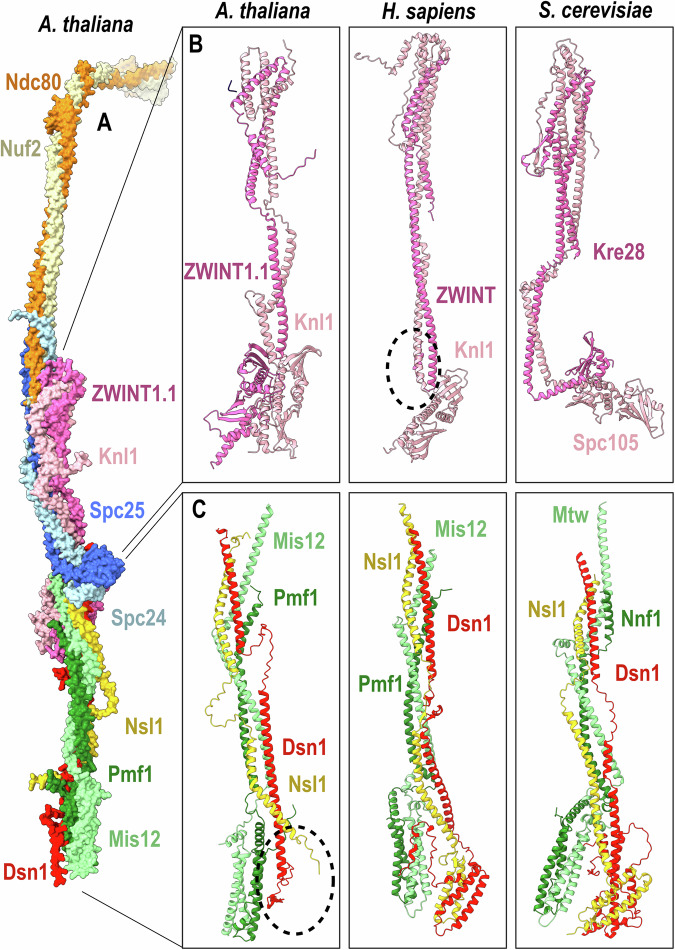 Figure 5
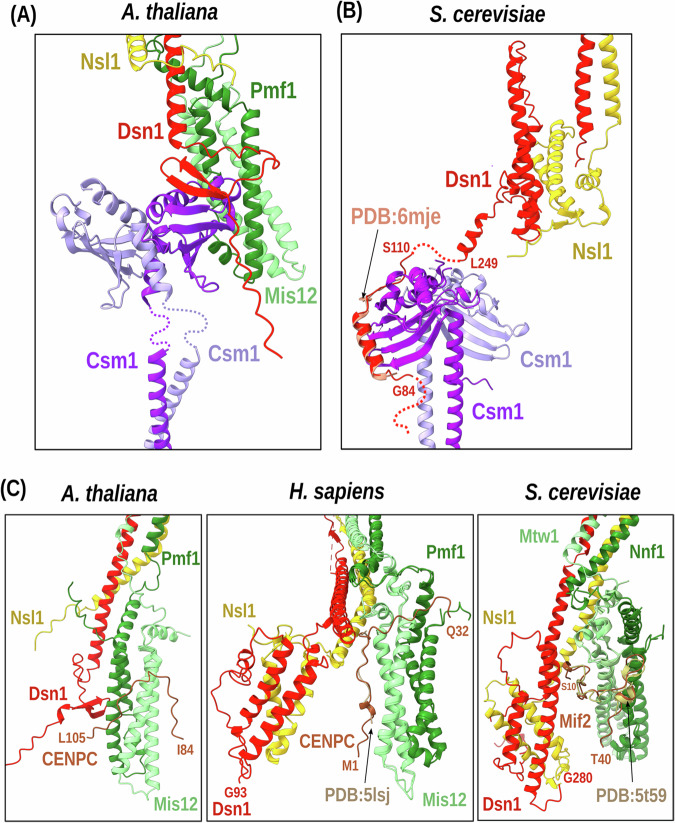 Figure 6
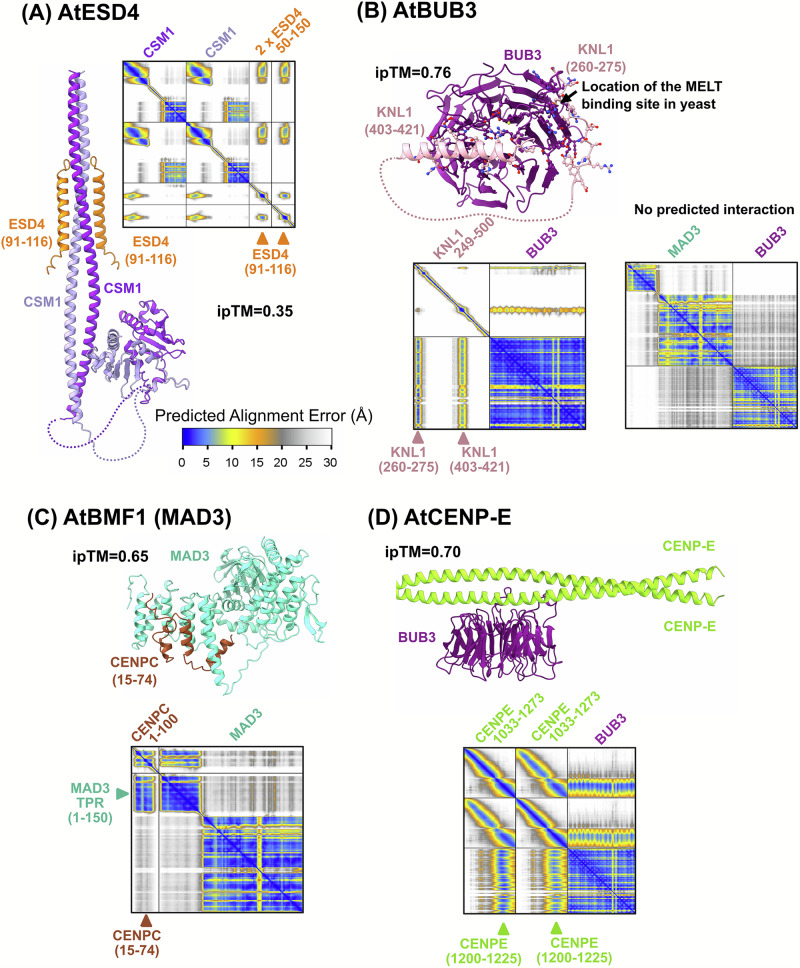 Figure 7
Peer Reviews
No public reviews on file for this paper yet. If you reviewed it on a platform where reviews are public (OpenReview, ICLR, NeurIPS, ICML), you can paste yours below so the community can read it here.
Videos
No videos yet. Explain this paper in a talk, walkthrough, or lecture? Add one.
Taxonomy
TopicsMicrotubule and mitosis dynamics · Mitochondrial Function and Pathology · Nuclear Structure and Function