How intense is high-intensity interval training? Biomarker responses and associations with training load and fitness
Nils Haller, Hannah L. Widauer, Tilmann Strepp, Natalia Nunes, Julia C. Blumkaitis, Mario Wenger, Thomas Stöggl, Lorenz Aglas

TL;DR
This study shows how high-intensity interval training affects blood biomarkers related to fitness and recovery, helping personalize training monitoring.
Contribution
The study identifies specific biomarkers that correlate with training load, muscle soreness, and cardiorespiratory fitness during HIIT.
Findings
Repeated HIIT decreases hemoglobin, hematocrit, red blood cells, and certain cytokines.
Creatine kinase strongly correlates with training load and muscle soreness.
VO2max correlates with specific cytokines like IL-5, -6, -10, -17F, -22.
Abstract
High-intensity interval training (HIIT) enhances physical performance but requires close monitoring to avoid illnesses/injuries. We monitored physiological responses at rest during and up to 14 days following a 7-day HIIT intervention to identify chronic physiological changes and to explore correlations between blood biomarkers (blood count, cytokines, creatine kinase [CK], urea, ferritin, and transferrin), training load, cardiorespiratory fitness (VO2max), and muscle soreness. Thirty participants were randomly allocated to either HIIT shock cycle (10× HIIT in 7 days) (1) with or (2) without additional low-intensity training after each HIIT session or (3) control group. Repeated HIIT resulted in a chronic decrease of hemoglobin, hematocrit, red blood cells, CK, interleukin [IL]-2, -4, -9, -17A, -17F, tumor necrosis factor alpha (TNF-α), and ferritin. CK showed highest positive…
Genes, proteins, chemicals, diseases, species, mutations and cell lines named across the full text — each resolved to its canonical identifier and authoritative record.
Click any figure to enlarge with its caption.
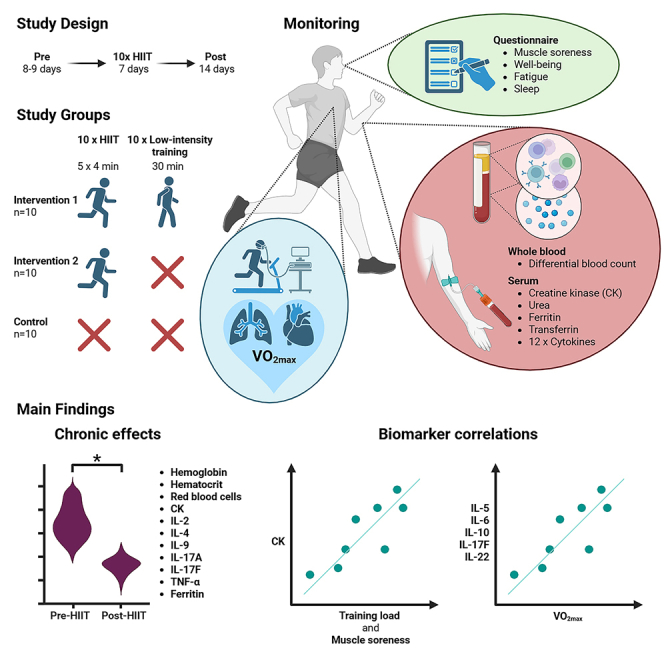 Figure 1
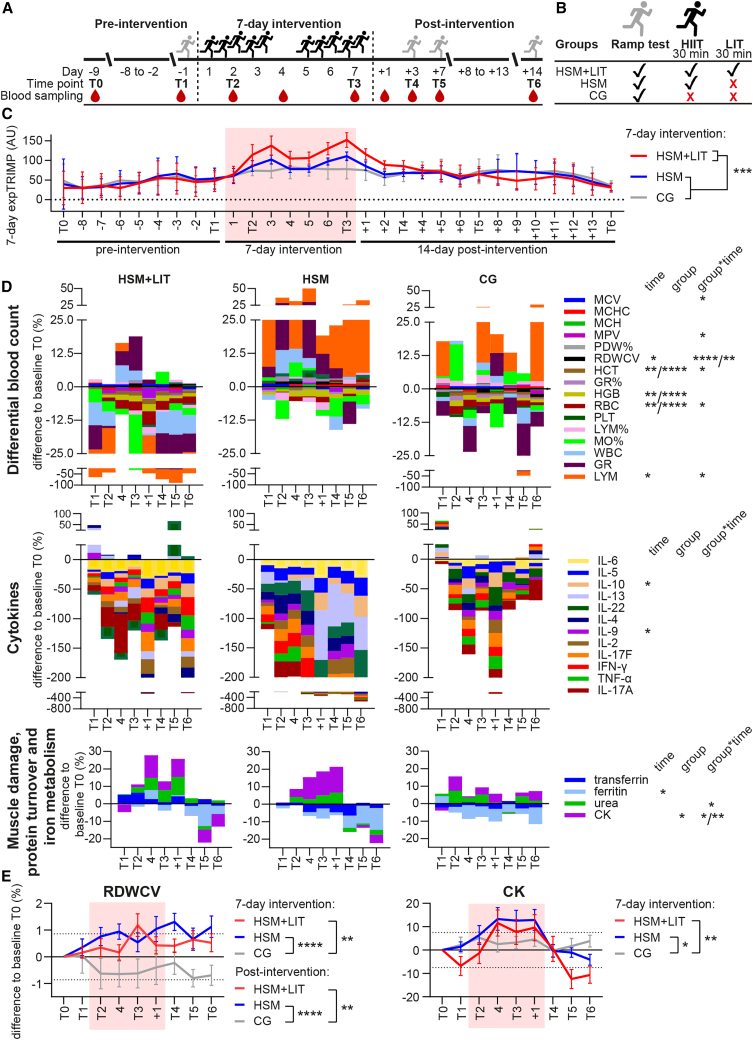 Figure 2
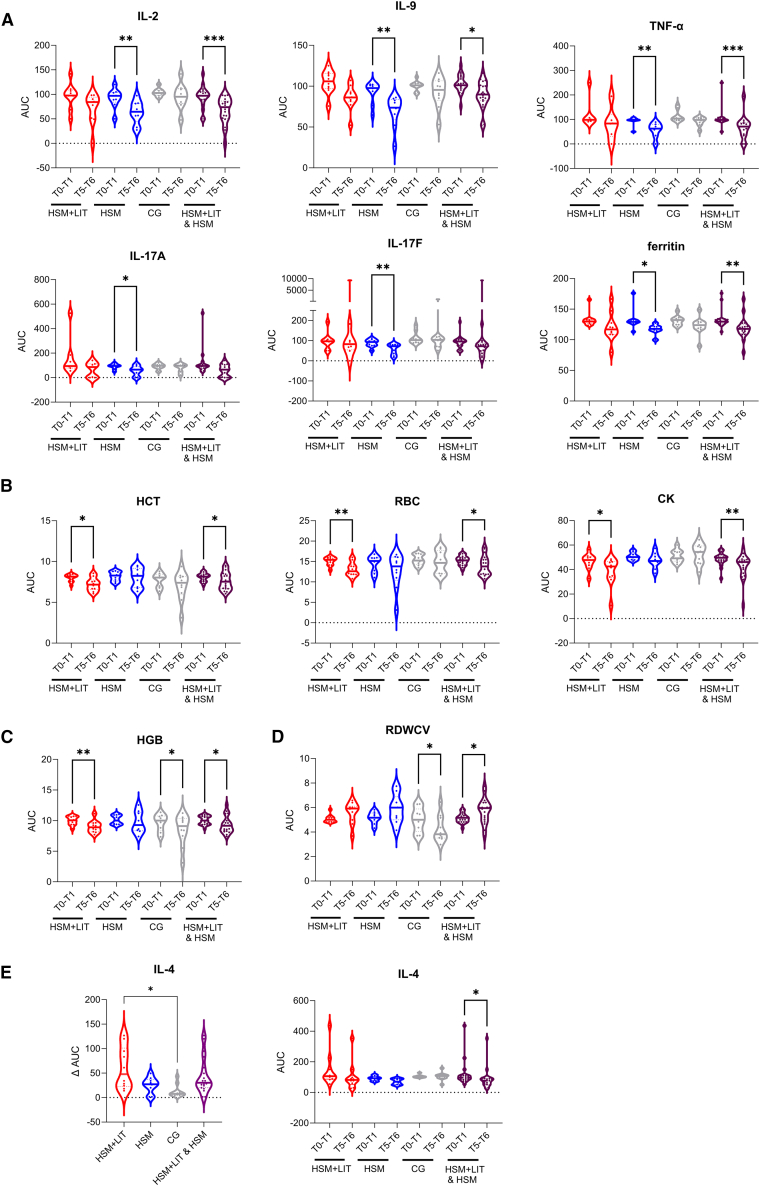 Figure 3
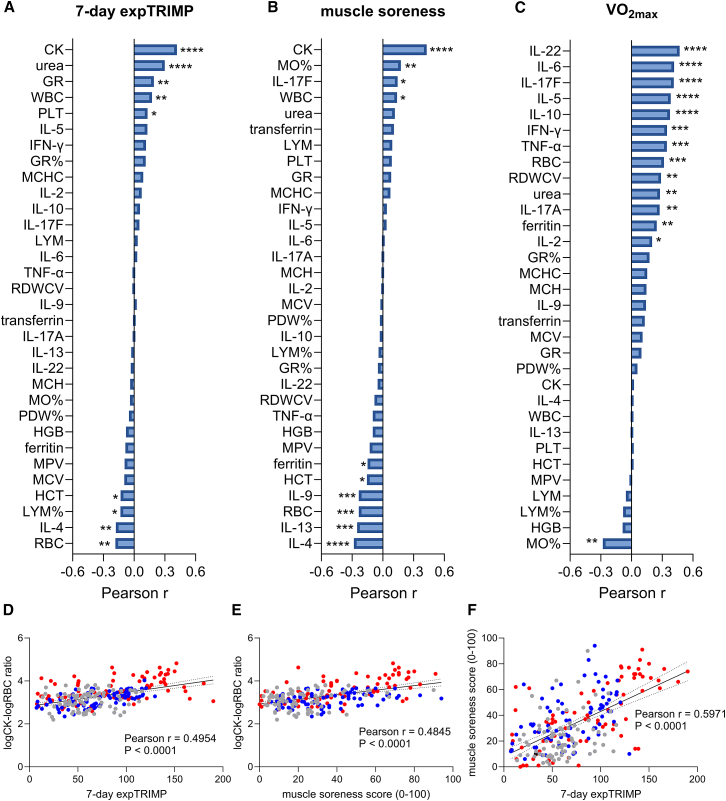 Figure 4
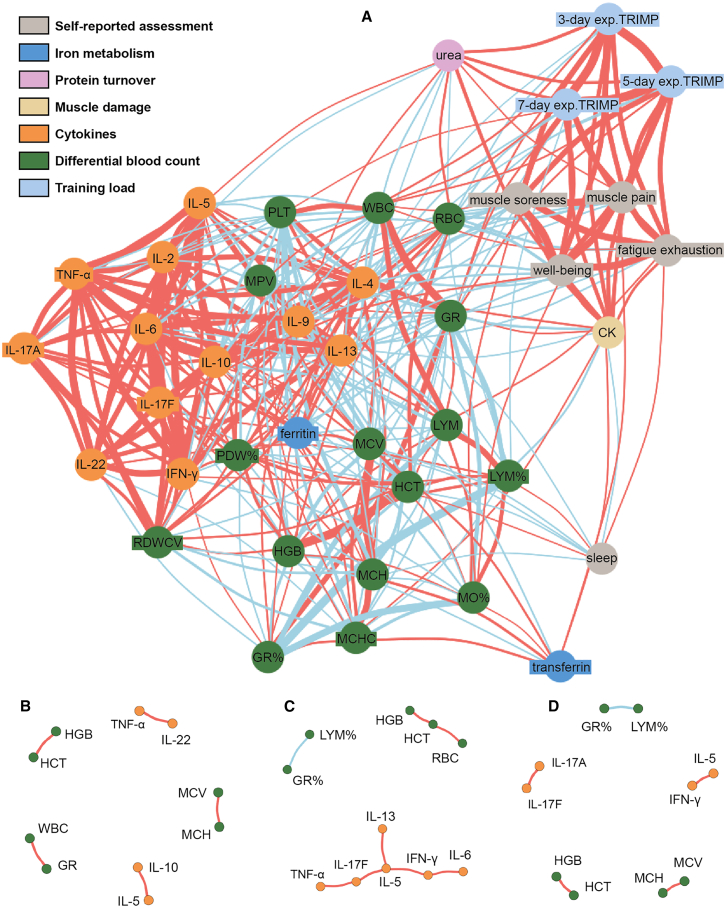 Figure 5
Peer Reviews
No public reviews on file for this paper yet. If you reviewed it on a platform where reviews are public (OpenReview, ICLR, NeurIPS, ICML), you can paste yours below so the community can read it here.
Videos
No videos yet. Explain this paper in a talk, walkthrough, or lecture? Add one.
Taxonomy
TopicsCardiovascular and exercise physiology · Sports Performance and Training · Genetics and Physical Performance