NFATc1-mediated activation of the pentose phosphate pathway and cell cycle dysregulation collectively drive tumor progression
Suyang Zhang, Guangyao Xu, Tianyu Cao, Fei Yu, Moses Okotel, Mingyue Wu, Shourong Wu, Vivi Kasim, Can Huang

TL;DR
This study shows that NFATc1 promotes tumor growth by boosting a key metabolic pathway and cell cycle progression, suggesting that blocking NFATc1 could be a new treatment for colorectal cancer.
Contribution
The paper reveals a novel role of NFATc1 in metabolic reprogramming and cell cycle regulation in colorectal cancer.
Findings
NFATc1 increases NADK expression, enhancing the pentose phosphate pathway and tumor cell proliferation.
NFATc1 sustains MDM2 expression by binding to its promoters, promoting metabolic reprogramming and cell cycle progression.
Inhibiting NFATc1 suppresses colorectal cancer growth and synergizes with oxaliplatin treatment.
Abstract
The pentose phosphate pathway (PPP) supplies abundant reducing equivalents and biosynthetic precursors to support the rapid proliferation of tumor cells. An increased PPP flux is a hallmark of metabolic reprogramming in tumors. Although nuclear factor of activated T-cells c1 (NFATc1) promotes oncogenesis in various cancers, its role in metabolic reprogramming remains unclear. Here, we demonstrate that NFATc1 enhances NAD kinase (NADK) expression, elevating intracellular NADP+ levels to activate the PPP, thereby boosting proliferation. Furthermore, NFATc1 binds to both the p1 and p2 promoters of MDM2, sustaining its expression, thereby promoting metabolic reprogramming and accelerating cell cycle progression. Finally, we demonstrated that NFATc1 inhibitors suppress colorectal cancer (CRC) growth by targeting the NFATc1/NADK and NFATc1/MDM2 axis and synergize with oxaliplatin. In summary,…
Genes, proteins, chemicals, diseases, species, mutations and cell lines named across the full text — each resolved to its canonical identifier and authoritative record.
Click any figure to enlarge with its caption.
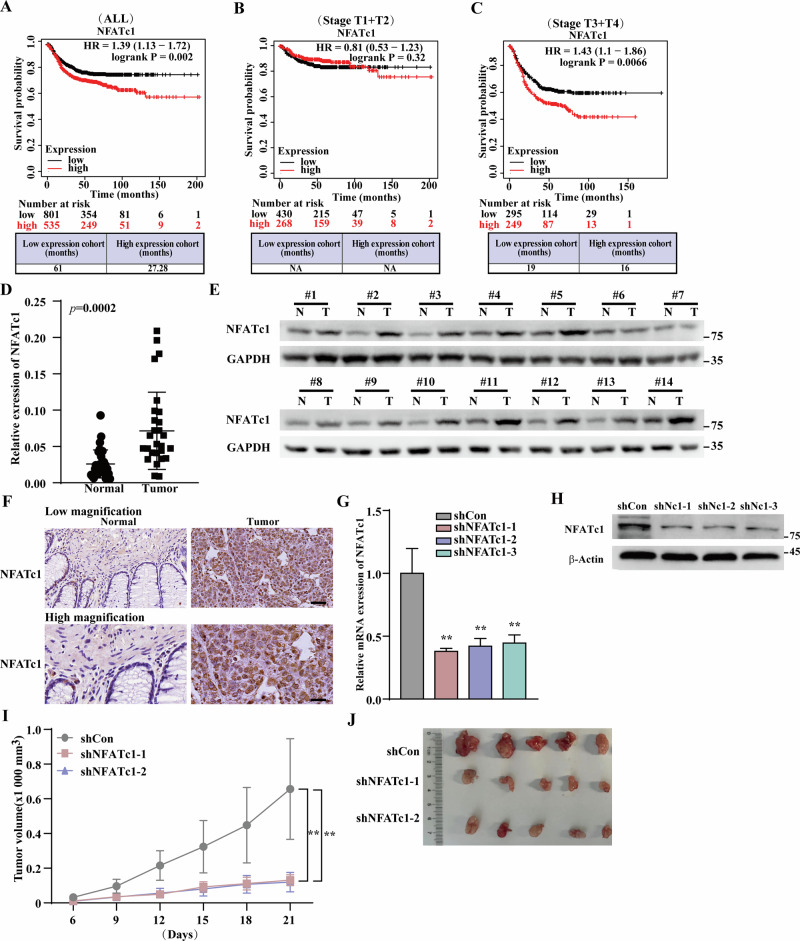 Figure 1
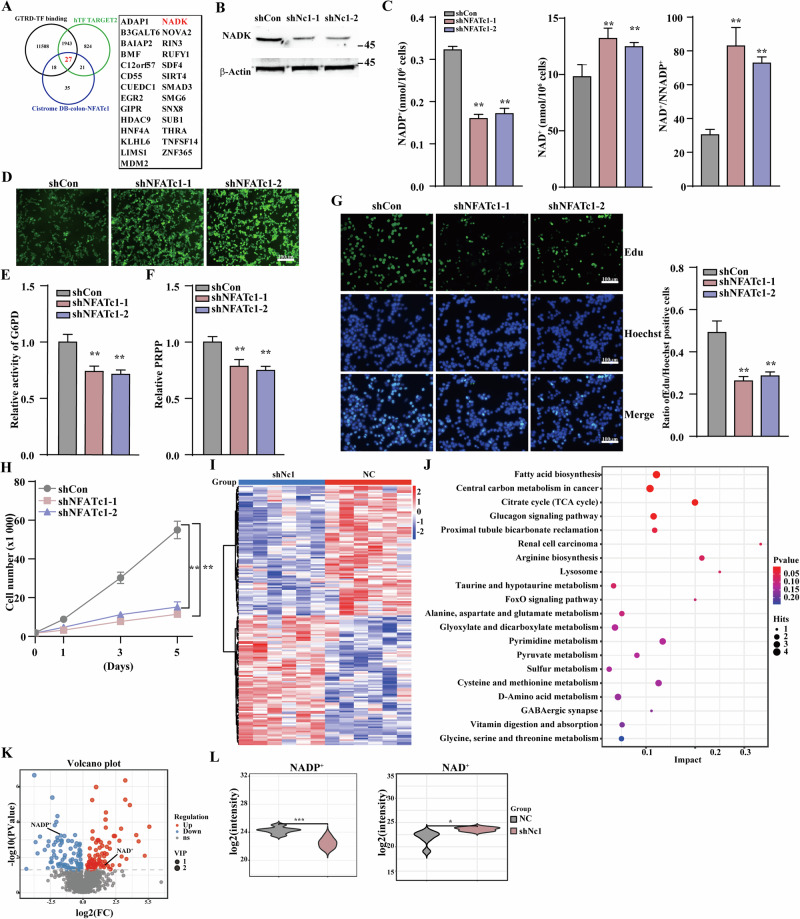 Figure 2
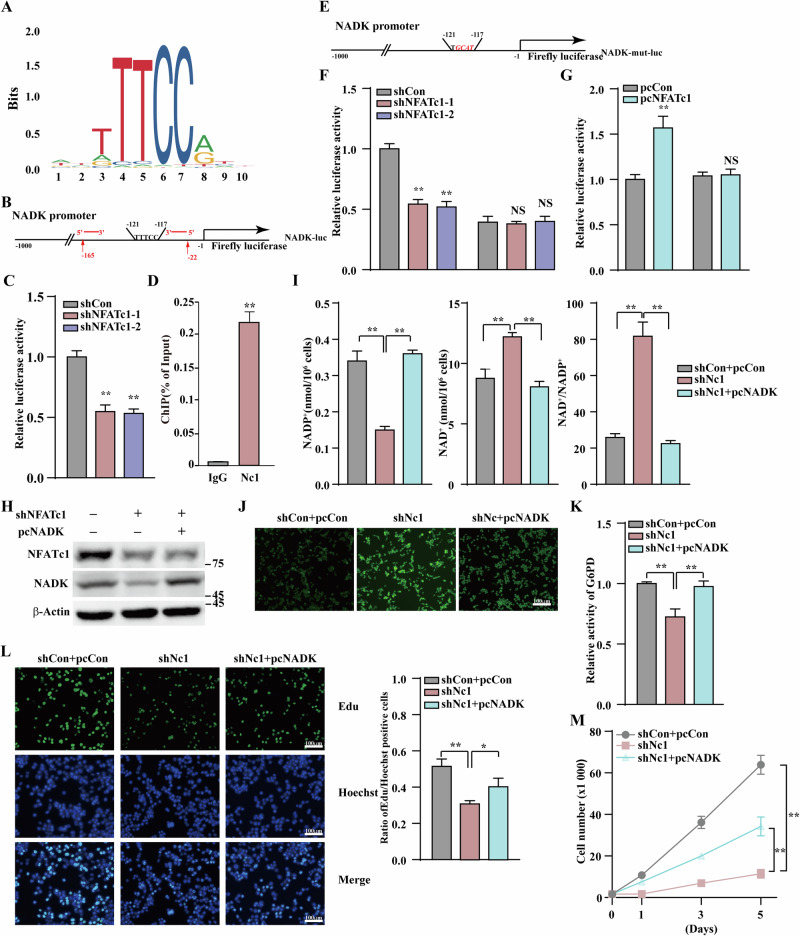 Figure 3
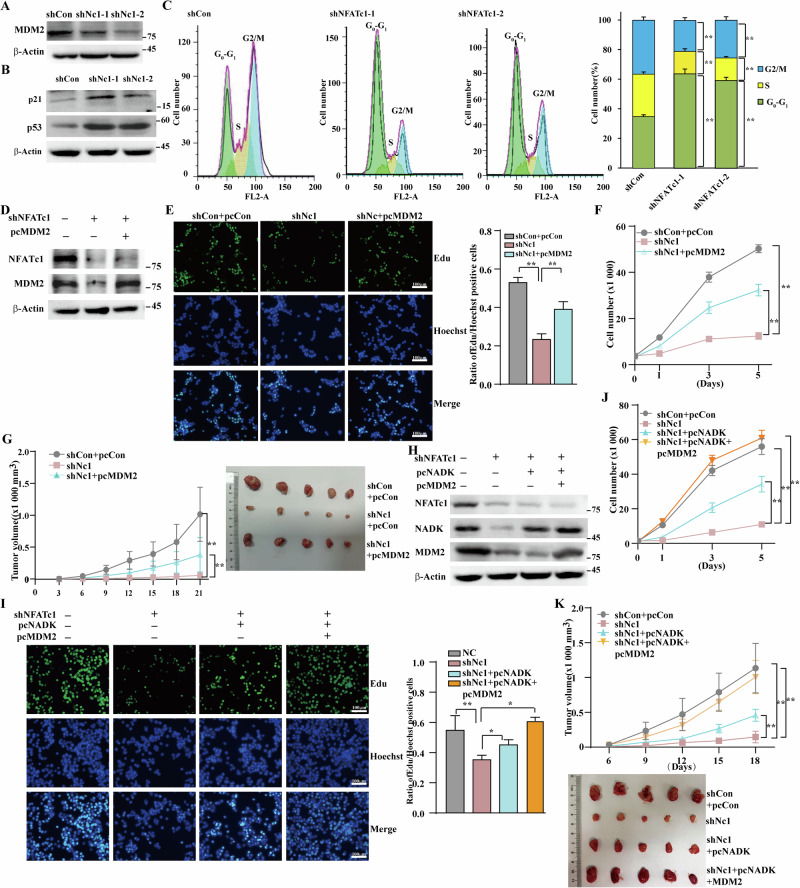 Figure 4
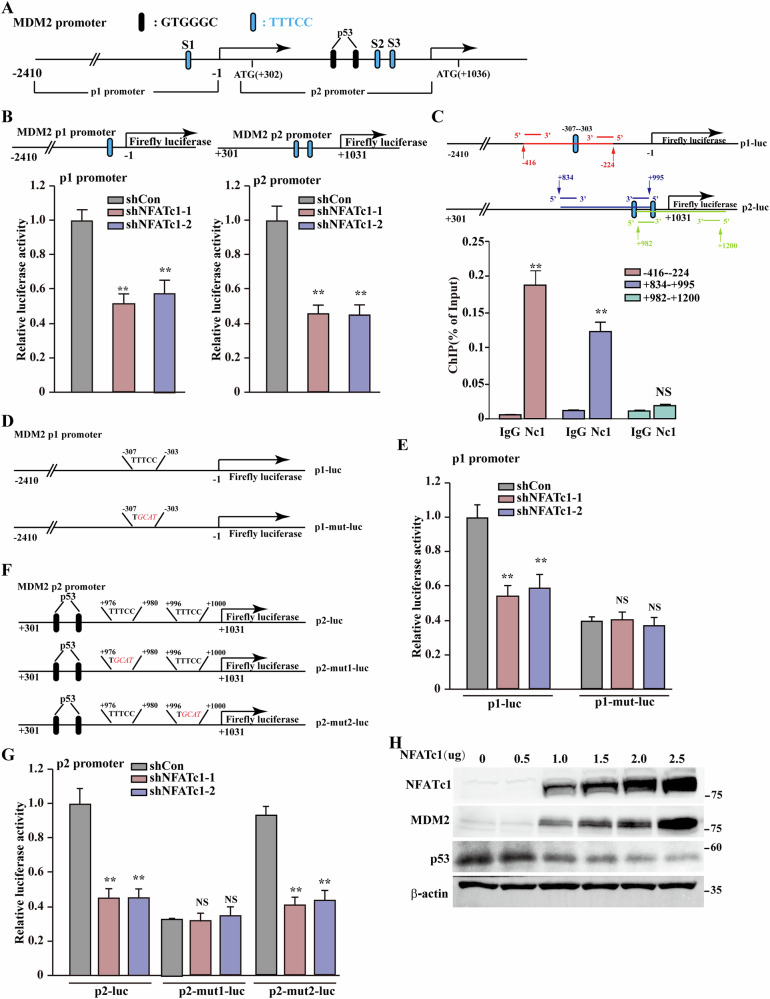 Figure 5
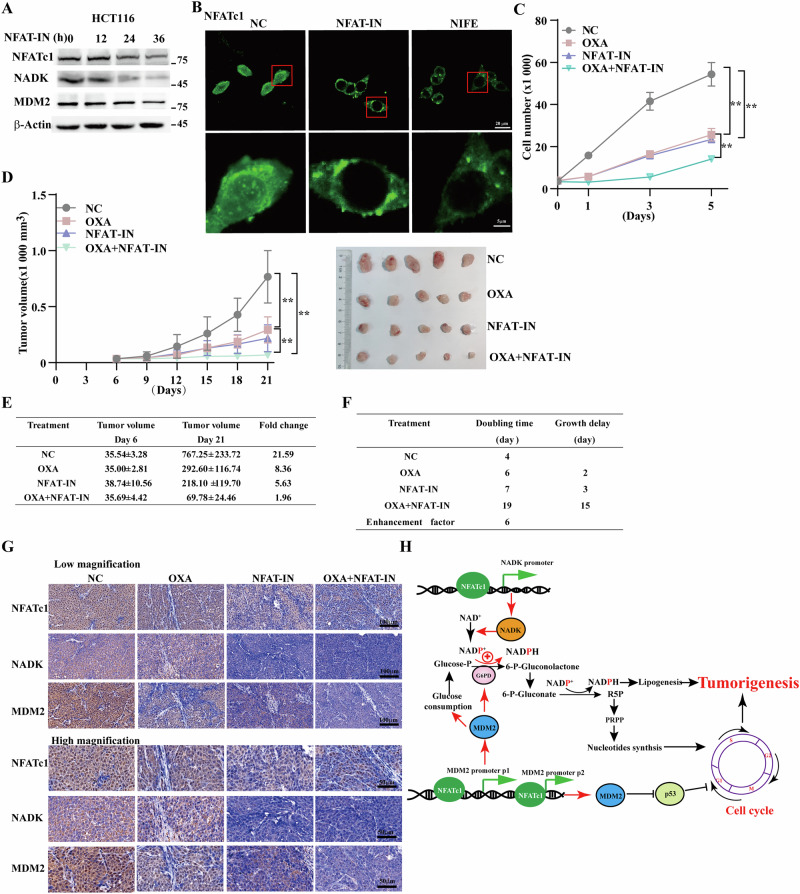 Figure 6
Peer Reviews
No public reviews on file for this paper yet. If you reviewed it on a platform where reviews are public (OpenReview, ICLR, NeurIPS, ICML), you can paste yours below so the community can read it here.
Videos
No videos yet. Explain this paper in a talk, walkthrough, or lecture? Add one.
Taxonomy
TopicsSignaling Pathways in Disease · Aldose Reductase and Taurine · Biochemical and Molecular Research