Long-term outcome after surgical ventricular septal defect closure: Longitudinal follow-up into the fifth decade
Sahra Ünlütürk, Robert M. Kauling, Judith A.A.E. Cuypers, Annemien E. van den Bosch, Alexander Hirsch, Chiara Pelosi, Daniel J. Bowen, Raluca G. Chelu, Ad J.J.C. Bogers, Willem A. Helbing, Isabella Kardys, Jolien W. Roos-Hesselink

TL;DR
This study tracks patients who had heart surgery for a ventricular septal defect into their 40s and finds that most have good long-term quality of life despite some complications.
Contribution
The study provides the longest follow-up to date on patients with surgically closed ventricular septal defects, reaching into the fifth decade of life.
Findings
Event-free survival at 49 years was 50%, with arrhythmias, pacemaker implantation, and VSD-related interventions as common complications.
Quality of life remained stable and comparable to the general population despite mild reductions in exercise capacity.
Early postoperative arrhythmias were a predictor of long-term mortality.
Abstract
To evaluate survival, clinical outcome and quality of life (QoL) of patients up to 49 years after surgical ventricular septal defect (VSD) closure. Single-center, longitudinal cohort study evaluating consecutive patients with surgical VSD closure between 1968 and 1980 with extensive cardiac and QoL evaluation every decade. Of the original cohort of 174 patients, 39 died (22 %), 8 were lost to follow-up and 38 had not participated previously. Survival rate at 49 years follow-up was 77 % and 86 % when excluding early postoperative mortality. Of the 89 eligible survivors, 76 (85 %) were evaluated (59 % male, median age 49 [44–54] years) with a median follow-up of 44 (range 40–49) years after surgery. Event-free survival at 49 years was 50 %, with symptomatic arrhythmias (10 %), pacemaker implantation (8 %) and VSD-related interventions (3 %) being common complications. At last follow-up,…
Genes, proteins, chemicals, diseases, species, mutations and cell lines named across the full text — each resolved to its canonical identifier and authoritative record.
Click any figure to enlarge with its caption.
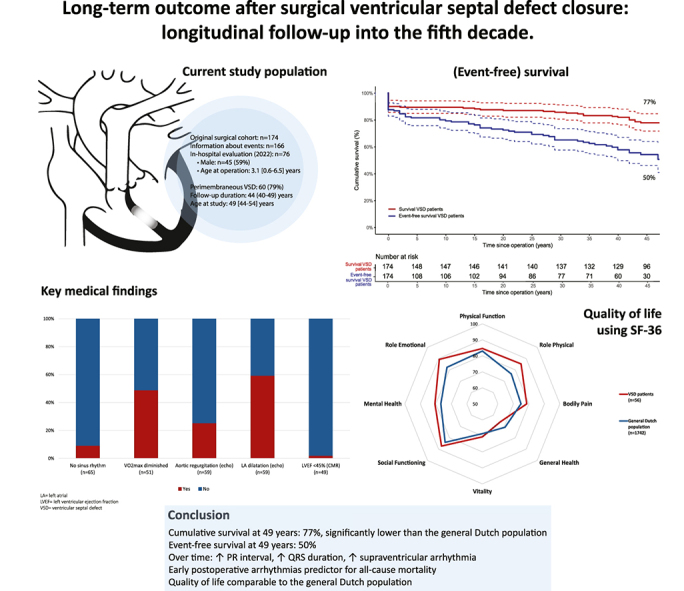 Figure 1
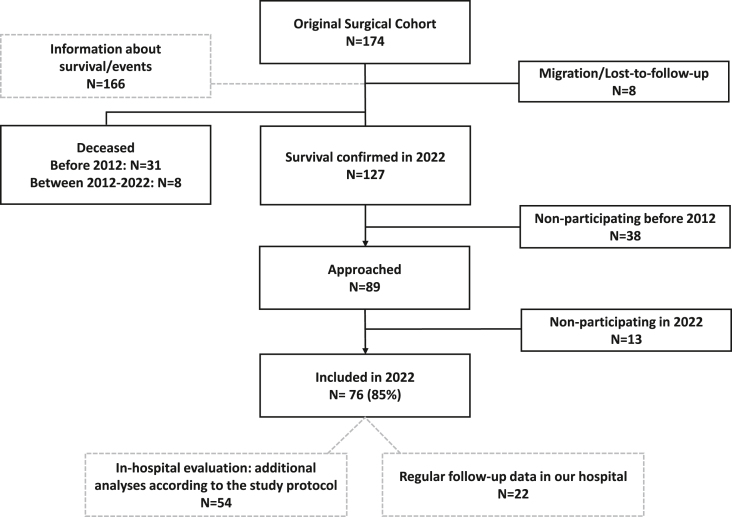 Figure 2
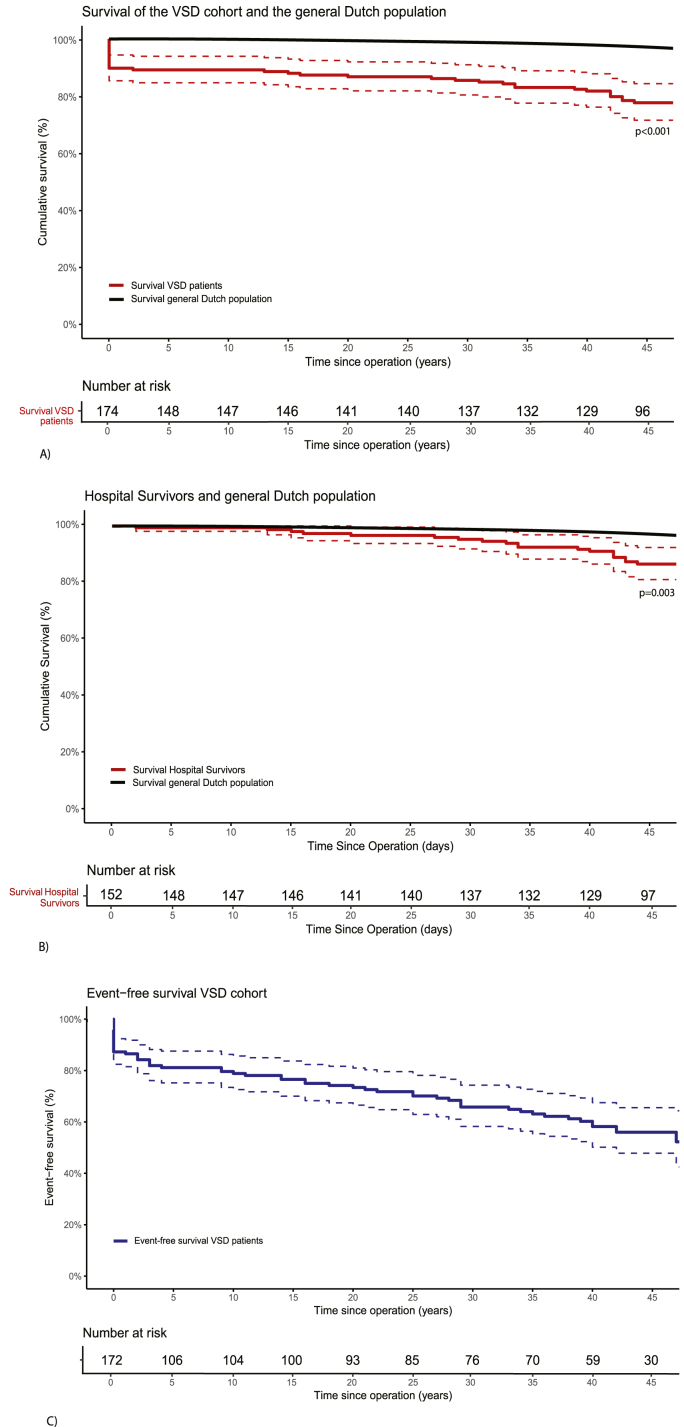 Figure 3
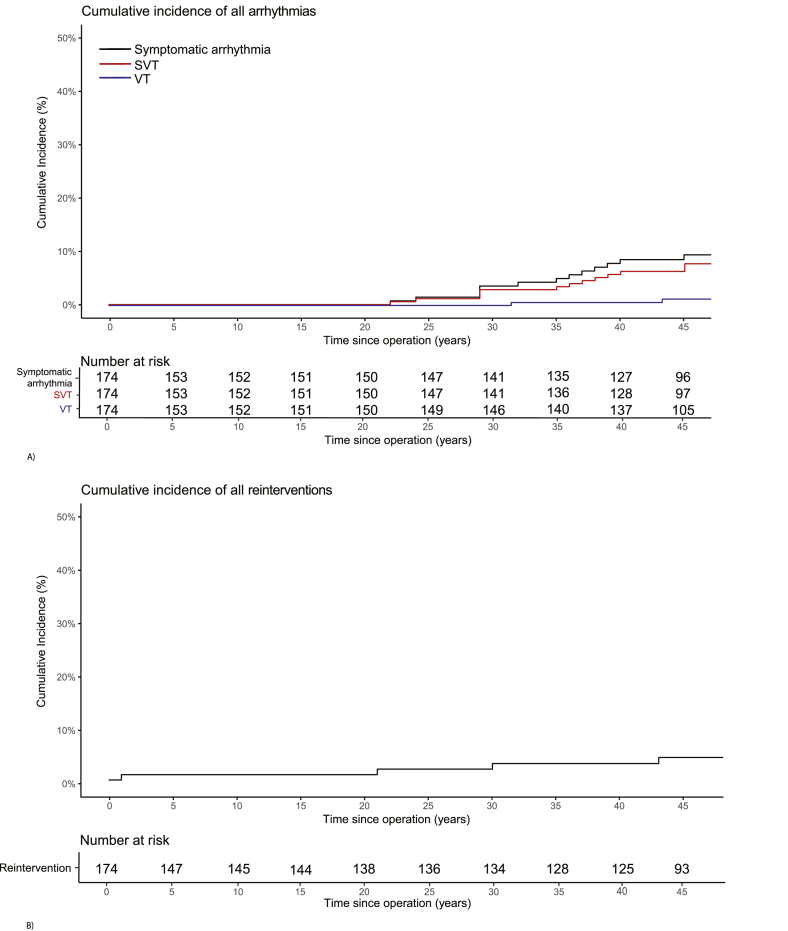 Figure 4
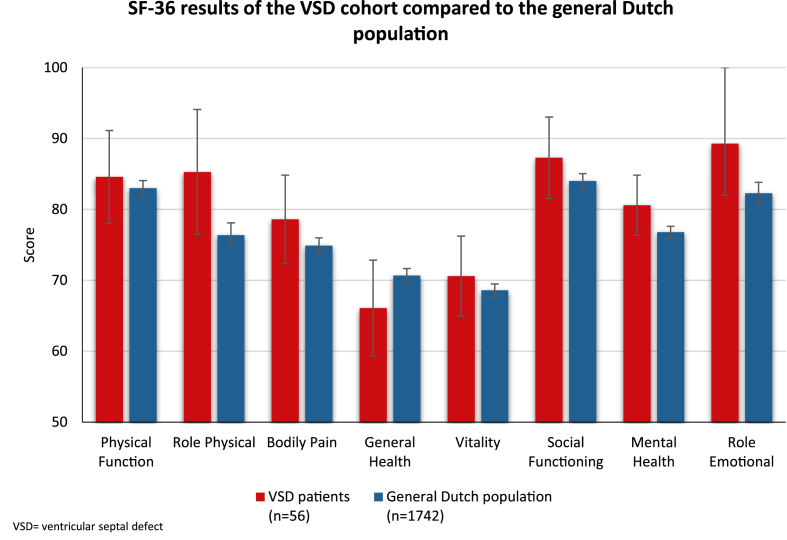 Figure 5
Peer Reviews
No public reviews on file for this paper yet. If you reviewed it on a platform where reviews are public (OpenReview, ICLR, NeurIPS, ICML), you can paste yours below so the community can read it here.
Videos
No videos yet. Explain this paper in a talk, walkthrough, or lecture? Add one.
Taxonomy
TopicsCardiac Structural Anomalies and Repair · Congenital Heart Disease Studies · Cardiac Valve Diseases and Treatments