Breeder turnover creates allelic variation in groups of gray wolves
David E. Ausband

TL;DR
This study shows how changes in breeding wolves affect genetic diversity in groups over time.
Contribution
The study reveals how breeder turnover, especially of males, influences allelic variation in gray wolf groups.
Findings
Turnover of breeding males is strongly linked to allelic change in wolf groups.
Groups gain and lose alleles equally, but male turnover causes episodic changes.
Harvest affects female turnover but not male turnover or overall allelic change.
Abstract
Genetic diversity is an important driver affecting the health of wildlife populations. In cooperatively breeding species, human impacts and breeder turnover can affect genetic diversity in groups. We generally do not have strong inferences about how the genetic composition of a group changes through time as individuals are lost (e.g., die, emigrate) or adopted (e.g., immigrate). I wanted to know how breeder turnover, group size, and harvest affected the fluctuation of unique alleles in groups of gray wolves (Canis lupus) in Idaho, USA, during 2008–2020. Turnover of breeding males was strongly associated with allelic change in groups. Turnover of breeding females also had a strong association with allelic change in groups, but was not the most supported model. Harvest was strongly correlated with breeding female turnover but not breeding male turnover. Outside of breeding female…
Genes, proteins, chemicals, diseases, species, mutations and cell lines named across the full text — each resolved to its canonical identifier and authoritative record.
Click any figure to enlarge with its caption.
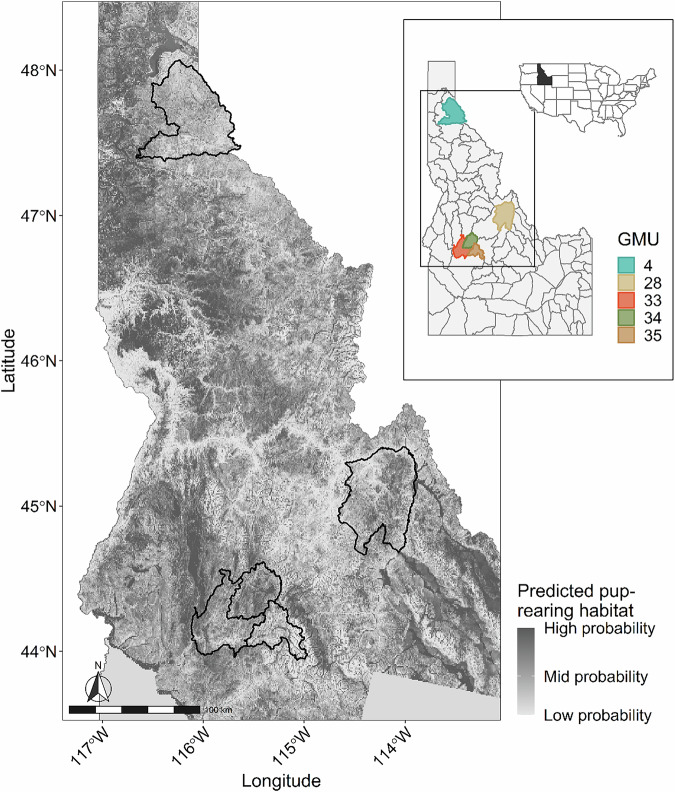 Figure 1
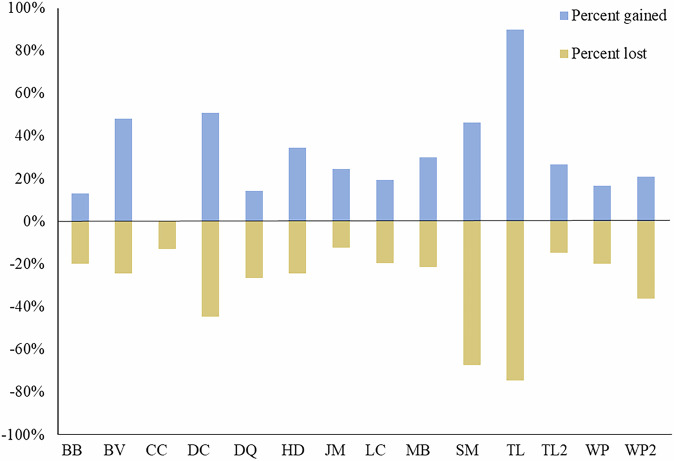 Figure 2
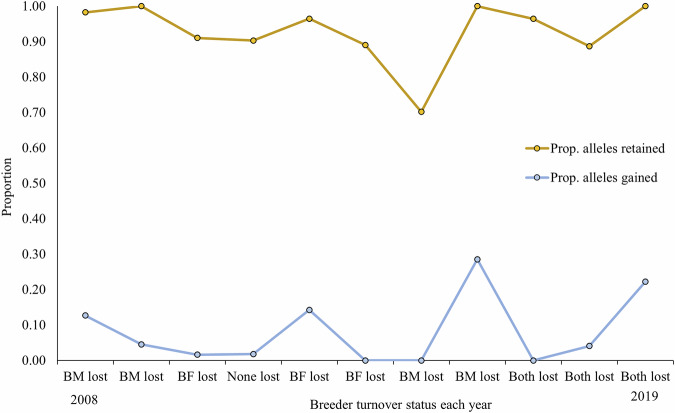 Figure 3
Peer Reviews
No public reviews on file for this paper yet. If you reviewed it on a platform where reviews are public (OpenReview, ICLR, NeurIPS, ICML), you can paste yours below so the community can read it here.
Videos
No videos yet. Explain this paper in a talk, walkthrough, or lecture? Add one.
Taxonomy
TopicsGenetic and phenotypic traits in livestock · Wildlife Ecology and Conservation · Genetic diversity and population structure