Thermal variability and diet interaction as driver of developmental overwintering in Drosophila buzzatii
Lucas Kreiman, Valeria Careaga, Eduardo M. Soto, Daniela Peluso, Esteban Hasson, Pablo E. Schilman, Julián Mensch

TL;DR
This study shows how diet and temperature fluctuations together affect the survival and cold tolerance of Drosophila buzzatii, suggesting they can overwinter in cooler regions.
Contribution
The study reveals synergistic effects of diet and thermal variability on Drosophila buzzatii's viability and cold tolerance, supporting the homeoviscous adaptation hypothesis.
Findings
Cactus diet and thermal fluctuations improved viability at low temperatures and reduced negative effects at higher temperatures.
Flies reared in fluctuating low temperatures showed greater cold tolerance and higher unsaturated-to-saturated fatty acid ratios.
Findings suggest D. buzzatii may overwinter as larvae and pupae in temperate areas due to diet-thermal interactions.
Abstract
Global warming influences organisms through direct and indirect effects on abiotic and biotic factors, such as temperature and food availability. This study examines how developmental diet and thermal regime influence fitness and thermal tolerance in Drosophila buzzatii, a cactophilic fly with a broad thermal tolerance, and a model organism in evolutionary ecology. Using a factorial design, we reared flies at 10 °C and 25 °C, with and without daily thermal fluctuations, on two natural cactus-based diets and a standard lab diet. We measured viability, development time, wing length, ovariole number, chill coma recovery time and fatty acid composition. We found synergistic effects between cactus diet and thermal daily fluctuations, overcoming the complete loss of viability observed at 10 °C and mitigating the negative effects shown at 25 °C. In addition, flies reared at a low fluctuating…
Genes, proteins, chemicals, diseases, species, mutations and cell lines named across the full text — each resolved to its canonical identifier and authoritative record.
Click any figure to enlarge with its caption.
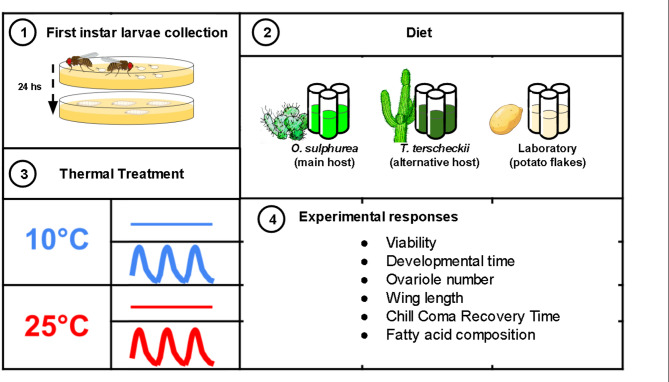 Figure 1
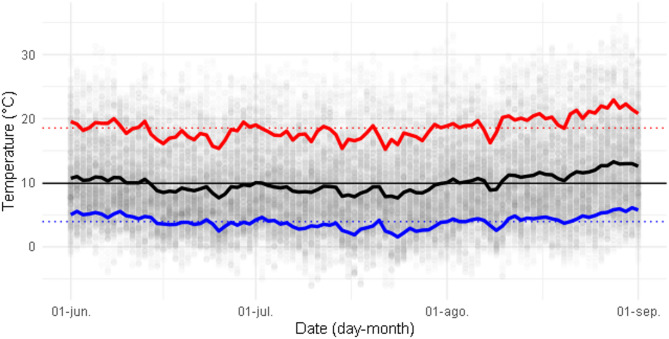 Figure 2
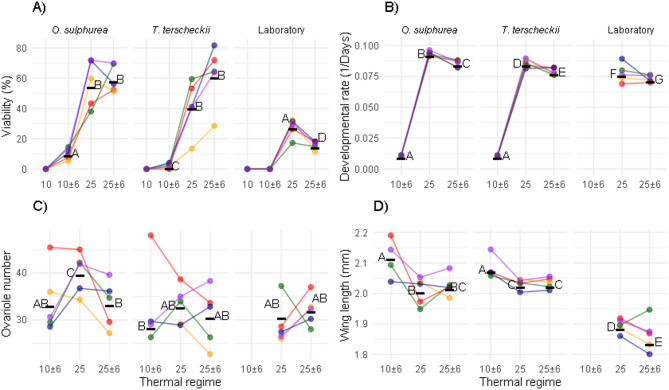 Figure 3
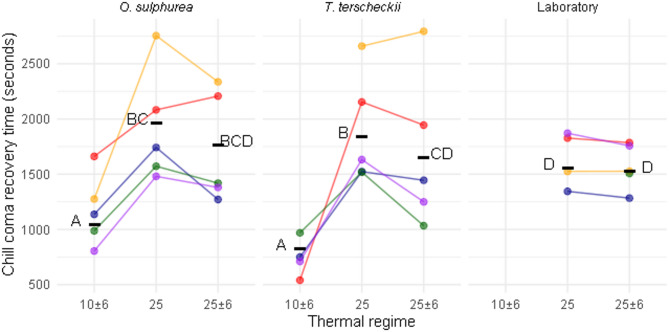 Figure 4
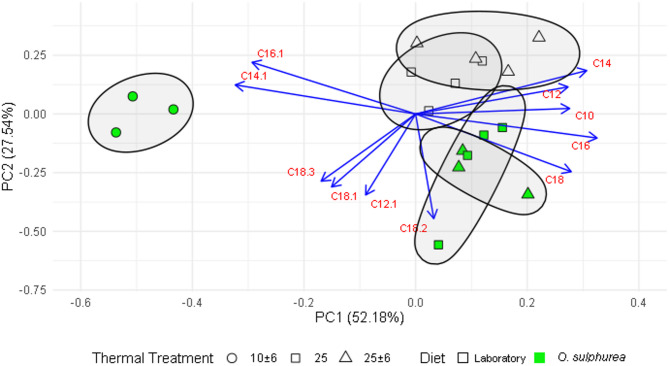 Figure 5
Peer Reviews
No public reviews on file for this paper yet. If you reviewed it on a platform where reviews are public (OpenReview, ICLR, NeurIPS, ICML), you can paste yours below so the community can read it here.
Videos
No videos yet. Explain this paper in a talk, walkthrough, or lecture? Add one.
Taxonomy
TopicsPhysiological and biochemical adaptations · Animal Behavior and Reproduction · Insect behavior and control techniques