Pregnane X receptor protects against age-related bone loss in males via PI3K/Akt-mediated inhibition of apoptosis
Shangzhi Li, Yu Xu, Wenpeng Xu, Dingxin Zhang, Xiangyu Lin, Peijie Hu, Haipeng Si

TL;DR
This study shows that the Pregnane X receptor helps protect male bones from aging by reducing cell death through the PI3K/Akt pathway.
Contribution
The study identifies Pxr as a novel regulator of bone homeostasis via the PI3K/Akt pathway in age-related bone loss.
Findings
Pxr deficiency in bones leads to osteoporotic phenotypes, including reduced bone mass and increased apoptosis.
Pxr overexpression in aged mice restores PI3K/Akt activation and improves bone quality.
Pharmacological activation of Pxr mitigates age-related bone loss by inhibiting apoptosis and enhancing osteogenesis.
Abstract
The pregnane X receptor (Pxr) regulates metabolism and inflammation, but its roles in bone homeostasis remain elusive. This study demonstrates that Pxr deficiency in bones induces osteoporotic phenotypes, with reduced trabecular bone mass, impaired osteogenesis, increased inflammation, and apoptosis. RNA sequencing reveals downregulation of the PI3K/Akt signaling pathway in Pxr-deficient bones, a key pathway linked to cell survival and differentiation. In vitro, primary bone marrow mesenchymal stem cells (BMSCs) with Pxr deficiency exhibited inhibited antioxidant enzyme activity, elevated intracellular reactive oxygen species level, activated pro-inflammatory cytokines, suppressed PI3K/Akt pathway, enhanced apoptosis, and decreased osteogenic differentiation. Conversely, Pxr overexpression in BMSCs from aged mice restores PI3K/Akt activation, mitigates apoptosis, and rescues osteogenic…
Genes, proteins, chemicals, diseases, species, mutations and cell lines named across the full text — each resolved to its canonical identifier and authoritative record.
Click any figure to enlarge with its caption.
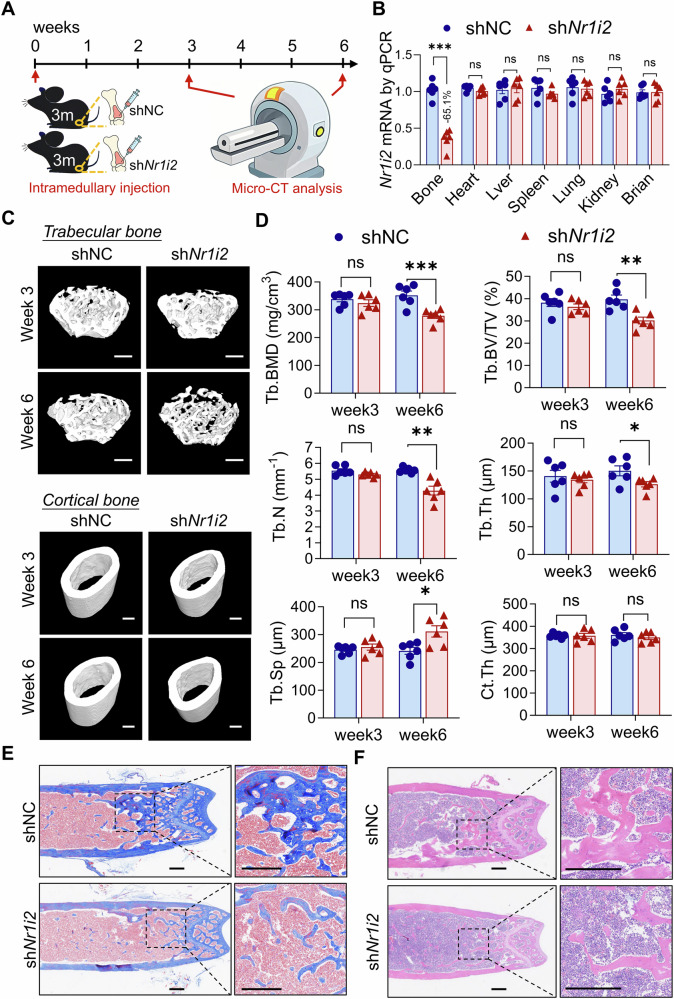 Figure 1
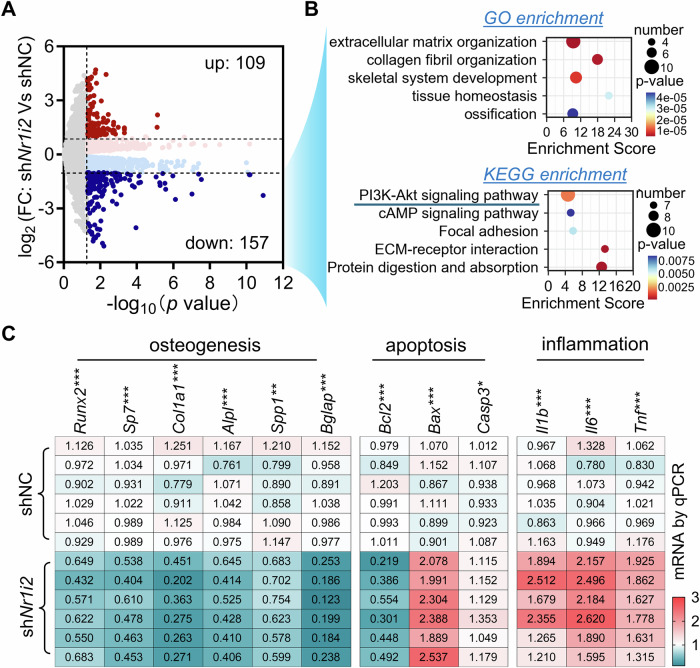 Figure 2
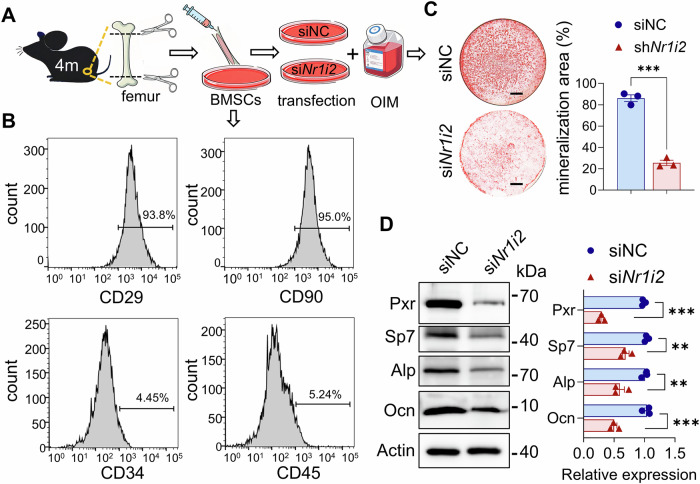 Figure 3
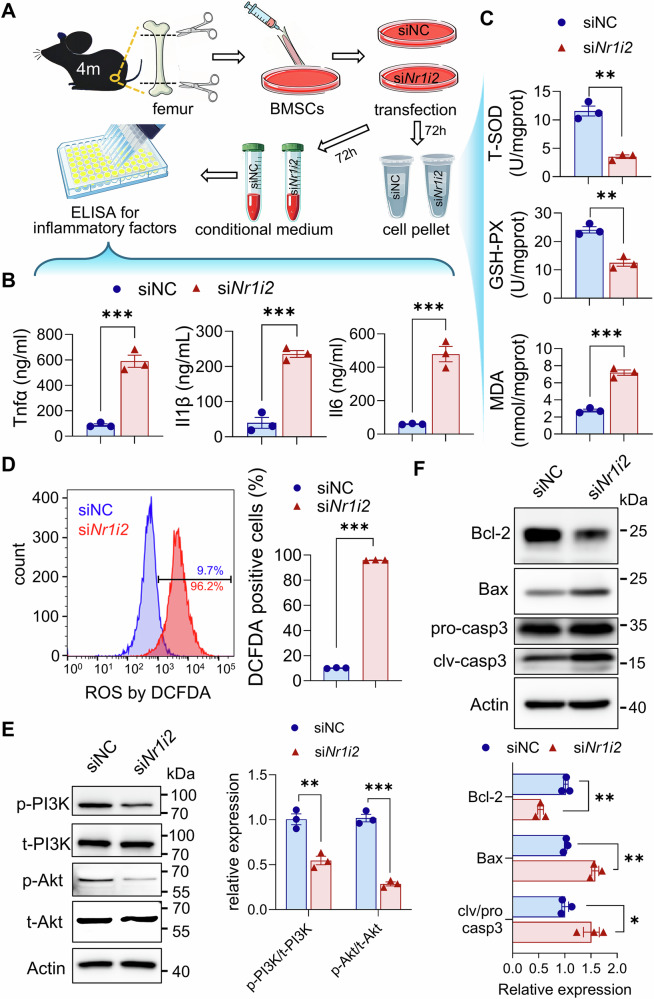 Figure 4
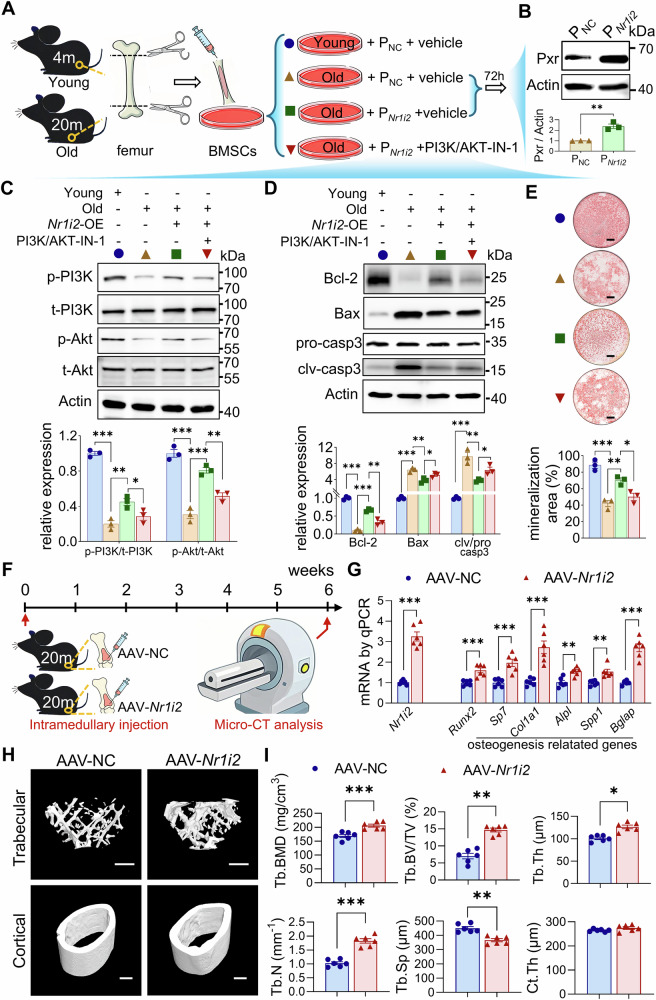 Figure 5
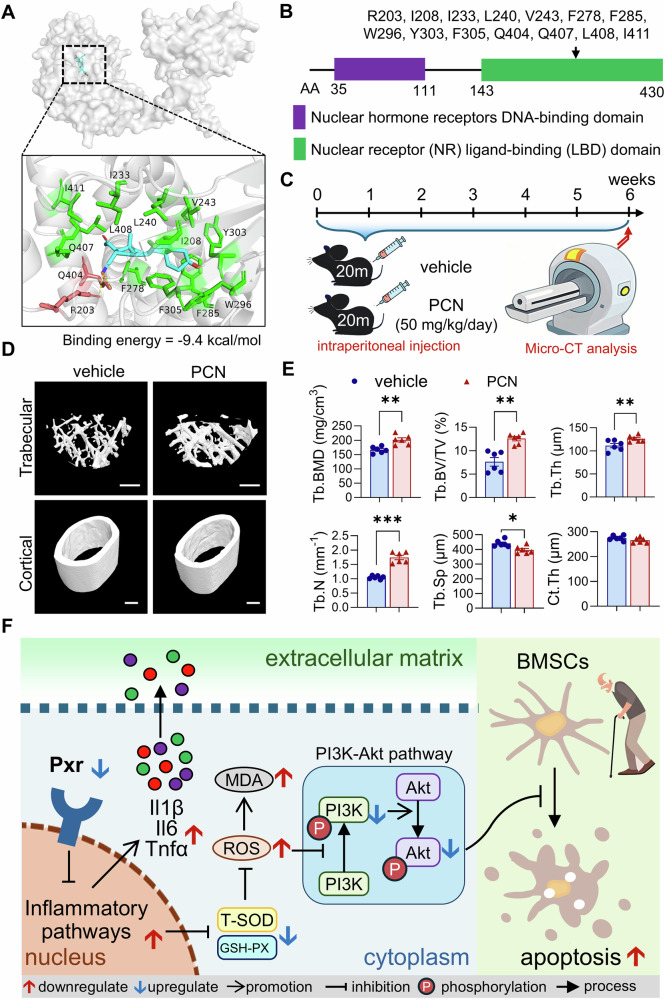 Figure 6
Peer Reviews
No public reviews on file for this paper yet. If you reviewed it on a platform where reviews are public (OpenReview, ICLR, NeurIPS, ICML), you can paste yours below so the community can read it here.
Videos
No videos yet. Explain this paper in a talk, walkthrough, or lecture? Add one.
Taxonomy
TopicsBone Metabolism and Diseases · Bone health and osteoporosis research · Genetic Syndromes and Imprinting