Cellular activity upregulation of the thermolabile p53 cancer mutant Y220C by small molecule indazole derivatives
Raniya Khadiullina, Vitaly Chasov, Elvina Gilyazova, Damir Davletshin, Regina Mirgayazova, Rimma Mingaleeva, Joseph R. Stephenson Clarke, Matthias GJ Baud, Emil Bulatov

TL;DR
This study identifies small molecule indazole derivatives that reactivate a cancer-causing p53 mutant, potentially offering a new approach to cancer therapy.
Contribution
The study introduces novel indazole derivatives that selectively reactivate the p53-Y220C mutant in cancer cells.
Findings
JC16 and JC36 show selective cytotoxicity and pro-apoptotic activity in p53-Y220C mutant cancer cells.
The compounds induce a conformational shift in p53-Y220C, activating p53 target genes like BBC3 and MDM2.
The reactivation occurs without increasing total p53 protein levels, suggesting a conformation-based mechanism.
Abstract
The TP53 gene is one of the most frequently mutated genes in human cancers. Mutations often result in loss of tumor-suppressive functions and acquisition of oncogenic properties by p53, contributing to tumor progression and resistance to therapy. Among structural p53 mutations, Y220C is particularly notable for creating a surface-exposed hydrophobic pocket that destabilizes the protein while preserving partial function, making it a promising target for pharmacological reactivation. In this study, we performed a structure-guided phenotypic screen of an in-house heterocyclic compound library to identify novel small-molecule modulators of p53-Y220C. This led to the identification of a series of (1H-pyrrol-1-yl)indazole derivatives (JC16, JC36, JC65), structurally inspired by known Y220C binders. JC16 and JC36 exhibited selective cytotoxicity and pro-apoptotic activity in p53-Y220C mutant…
Genes, proteins, chemicals, diseases, species, mutations and cell lines named across the full text — each resolved to its canonical identifier and authoritative record.
Click any figure to enlarge with its caption.
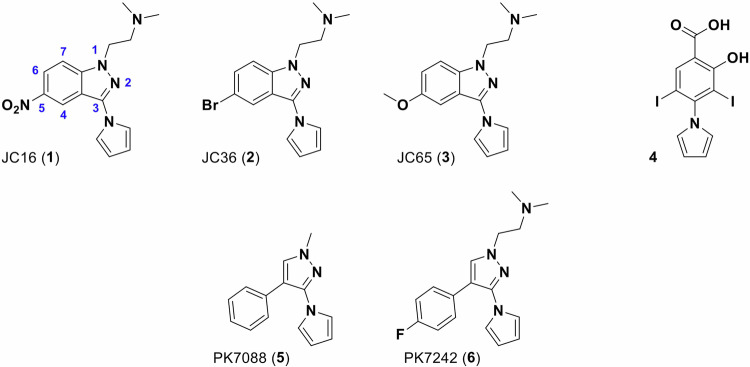 Figure 1
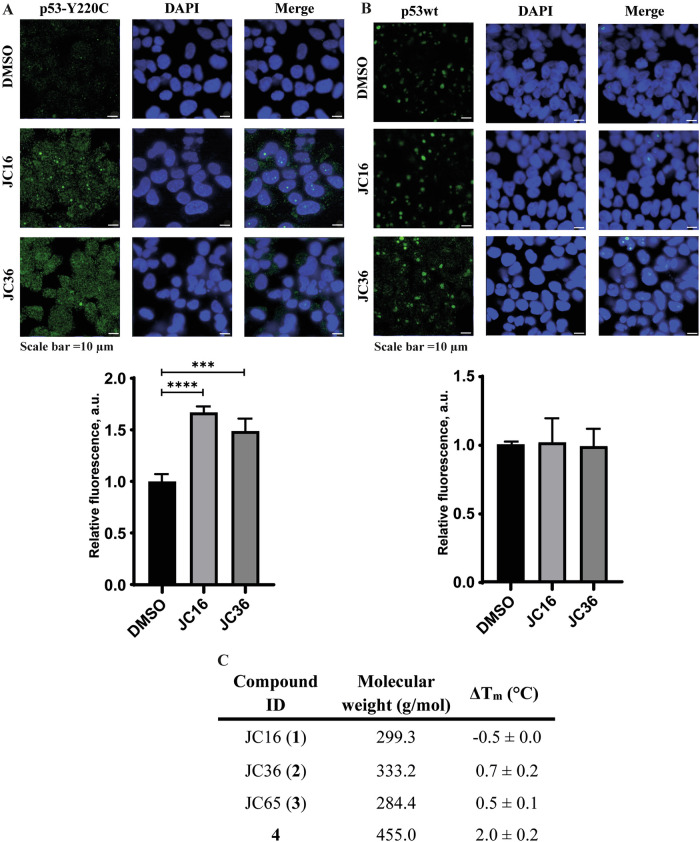 Figure 2
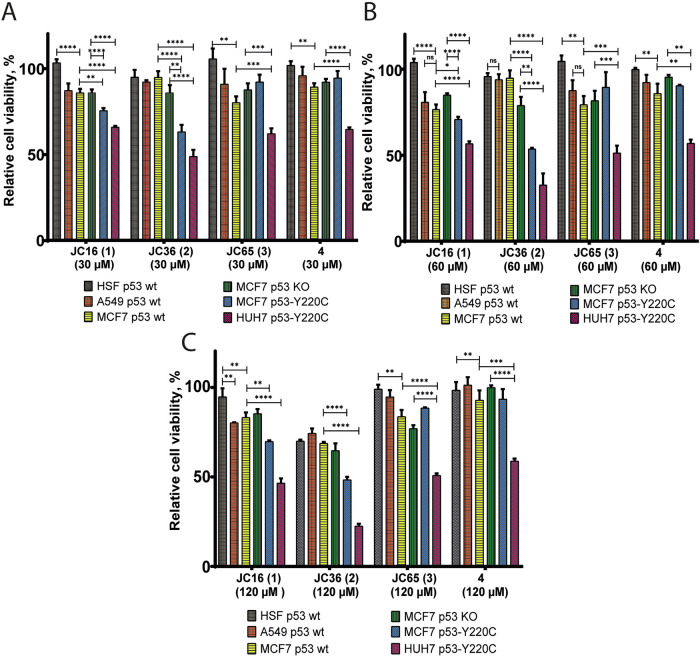 Figure 3
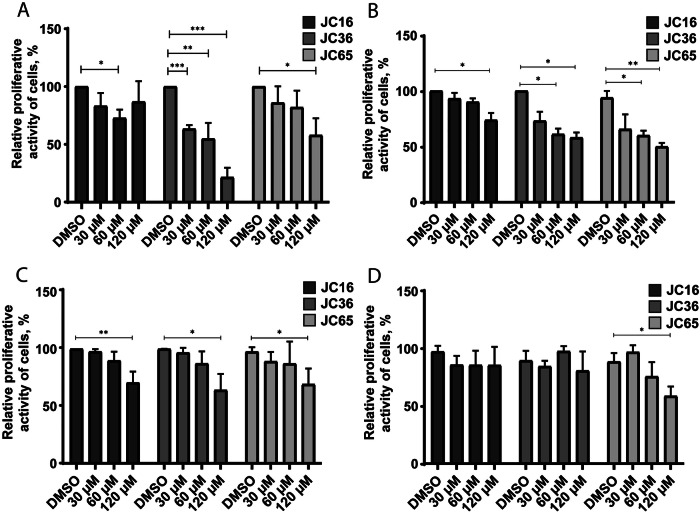 Figure 4
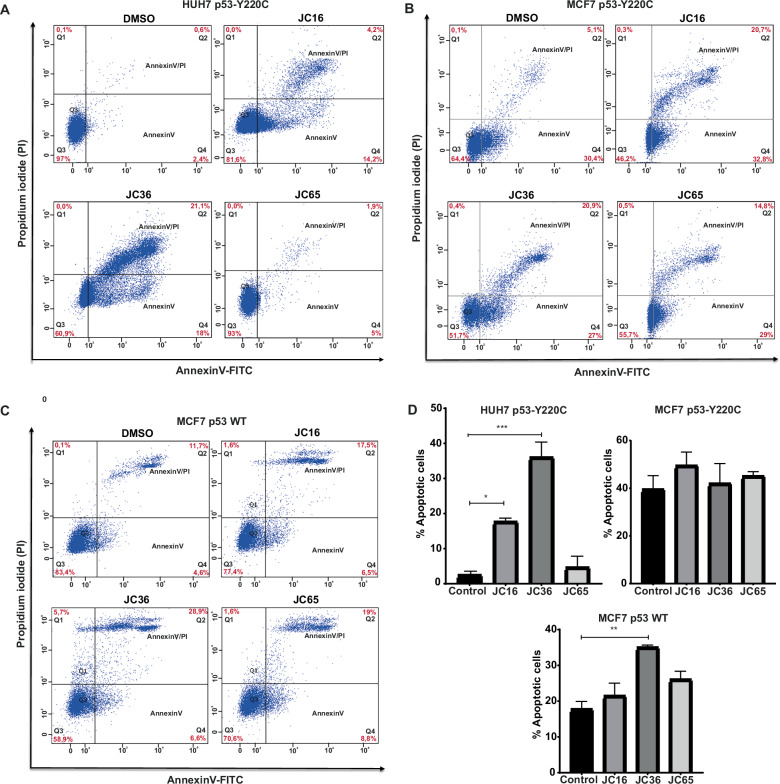 Figure 5
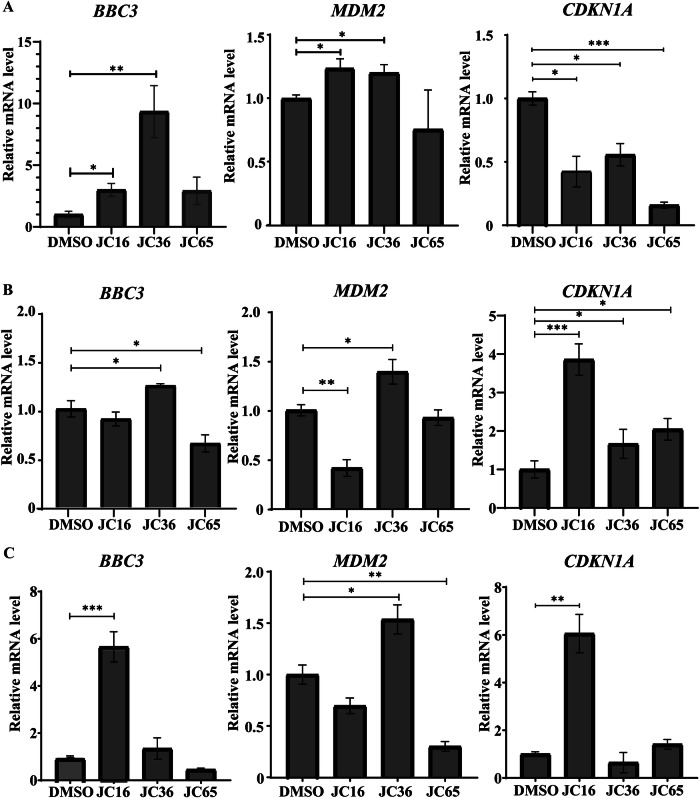 Figure 6
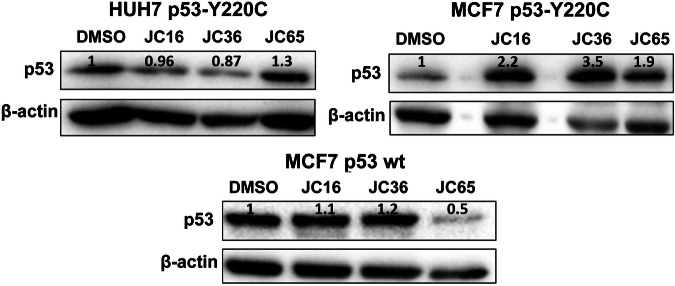 Figure 7
Peer Reviews
No public reviews on file for this paper yet. If you reviewed it on a platform where reviews are public (OpenReview, ICLR, NeurIPS, ICML), you can paste yours below so the community can read it here.
Videos
No videos yet. Explain this paper in a talk, walkthrough, or lecture? Add one.
Taxonomy
TopicsCancer-related Molecular Pathways · Protein Degradation and Inhibitors · Synthesis and Reactivity of Heterocycles