Suitability of prolonged meloxicam treatment in mice seems limited due to unfavorable pharmacokinetics, side effects, and impact on home-cage behaviors
Aylina Glasenapp, Jens P. Bankstahl, Heike Bähre, Jana Hauser, Amisha R. Parmar, Andrey V. Kozlov, Silke Glage, Rupert Palme, Marion Bankstahl

TL;DR
Meloxicam treatment in mice is unsuitable due to inconsistent drug levels, side effects, and negative impacts on behavior.
Contribution
The study evaluates meloxicam's pharmacokinetics, safety, and behavioral effects in mice via two administration methods.
Findings
Oral meloxicam intake in mice leads to fluctuating plasma levels and poor tolerability.
Meloxicam causes side effects like reduced grip strength, increased vocalization, and changes in body weight and behavior.
Histopathological analysis shows inflammation and hyperplasia in the stomach and jejunum of treated mice.
Abstract
Meloxicam is commonly used for analgesia, but no preparation approved specifically for use in mice. Here, we determined plasma concentrations, safety, and impact on home-cage behaviors for subcutaneous injection (5 mg/kg) and oral self-intake (sweetened drinking water, 20 mg/kg/24h, 5 days) for C57BL/6J mice (n = 21/sex). After injection, plasma concentrations measured by LC–MS/MS were higher in females (2h) and remained within an estimated therapeutic range (390–911 ng/mL) for up to 6h. T1/2 was 2.32 h. Despite acceptance, plasma levels fluctuated strongly during oral self-intake. Side effects comprised reduced grip strength and increased vocalization (Irwin test), increased clinical score values (females, oral treatment) with two individuals reaching humane endpoint, increase in body temperature, body weight drop, decreased wheel-running activity, increased burrowing latency (males),…
Genes, proteins, chemicals, diseases, species, mutations and cell lines named across the full text — each resolved to its canonical identifier and authoritative record.
Click any figure to enlarge with its caption.
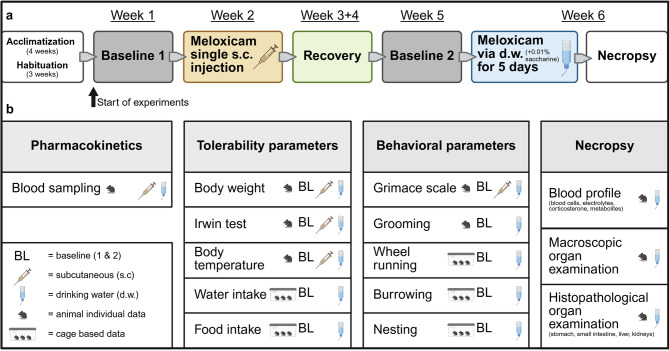 Figure 1
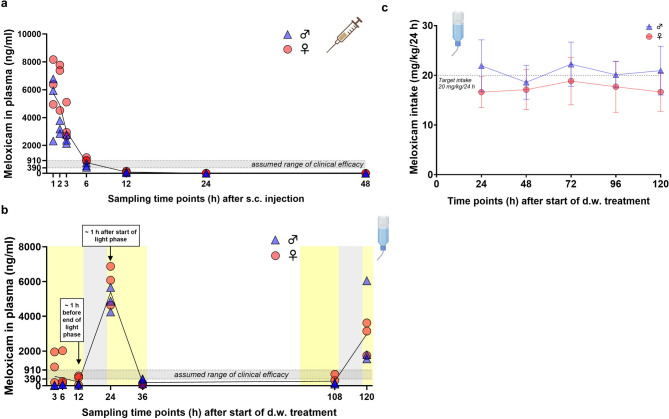 Figure 2
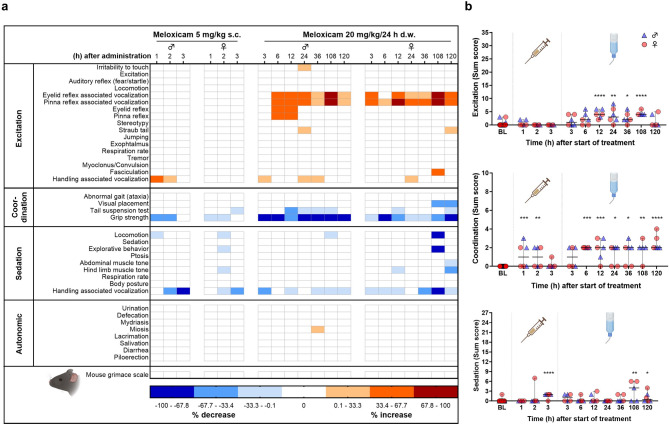 Figure 3
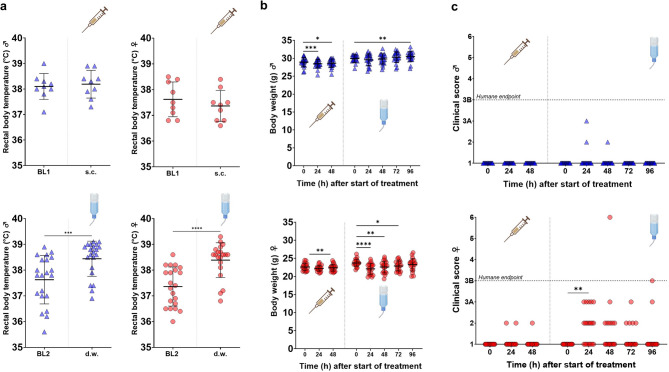 Figure 4
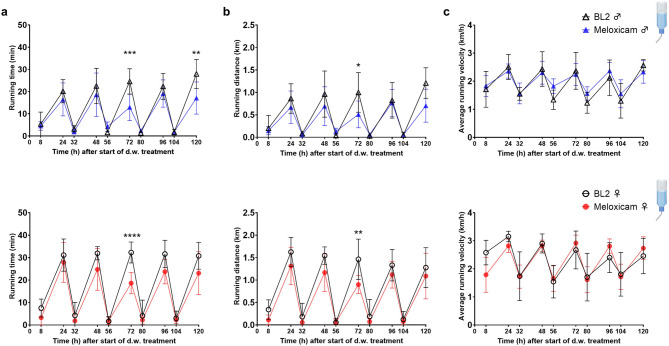 Figure 5
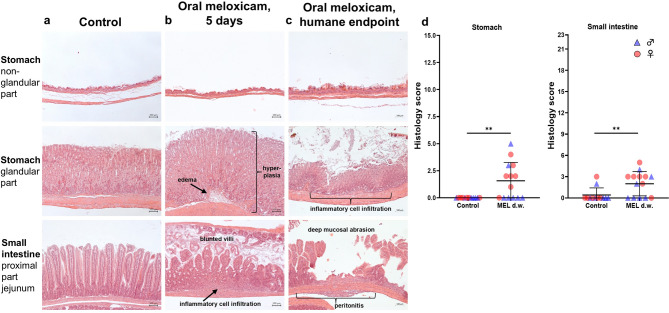 Figure 6
Peer Reviews
No public reviews on file for this paper yet. If you reviewed it on a platform where reviews are public (OpenReview, ICLR, NeurIPS, ICML), you can paste yours below so the community can read it here.
Videos
No videos yet. Explain this paper in a talk, walkthrough, or lecture? Add one.
Taxonomy
TopicsVeterinary Pharmacology and Anesthesia · Inflammatory mediators and NSAID effects · Neuropeptides and Animal Physiology