Deciphering the molecular mechanisms of FET fusion oncoprotein–DNA hollow co-condensates
Linyu Zuo, Qirui Guo, Cheng Li, Kecheng Zhang, Yancao Chen, Baiyi Jiang, Zhixing Chen, Yufei Xia, Long Qian, Lei Zhang, Zhi Qi

TL;DR
This paper explores how a cancer-related protein forms hollow structures with DNA, revealing new insights into their structure and potential uses in biotechnology.
Contribution
The study introduces the concept of nested asymmetric phase separation and demonstrates how hollow condensates can be used for DNA-based data sorting.
Findings
FUS-ERG oncoprotein forms hollow co-condensates with DNA containing GGAA microsatellites.
Hollow condensates enable targeted DNA deletion and hierarchical data selection.
Nested asymmetric phase separation is a novel property of hollow co-condensate surfaces.
Abstract
Biomolecules such as nucleic acids and proteins can undergo phase separation to form biomolecular condensates with diverse architectures. Here, we report that the FUS/EWS/TAF15 family fusion oncoprotein FUS-ERG forms hollow co-condensates with double-stranded DNA containing GGAA microsatellites. Through a combination of biochemical assays, super-resolution imaging, and mathematical modeling, we reveal that the interior surface of hollow co-condensates exhibits properties distinct from those of the external surface, a phenomenon we term nested asymmetric phase separation. Furthermore, we harness FUS-ERG for DNA-based information manipulation and demonstrated the hollow condensate morphology uniquely enhances data sorting specificity, enabling targeted DNA deletion within dsDNA libraries and facilitating dynamic, hierarchical data selection. These findings provide critical insights into…
Genes, proteins, chemicals, diseases, species, mutations and cell lines named across the full text — each resolved to its canonical identifier and authoritative record.
Click any figure to enlarge with its caption.
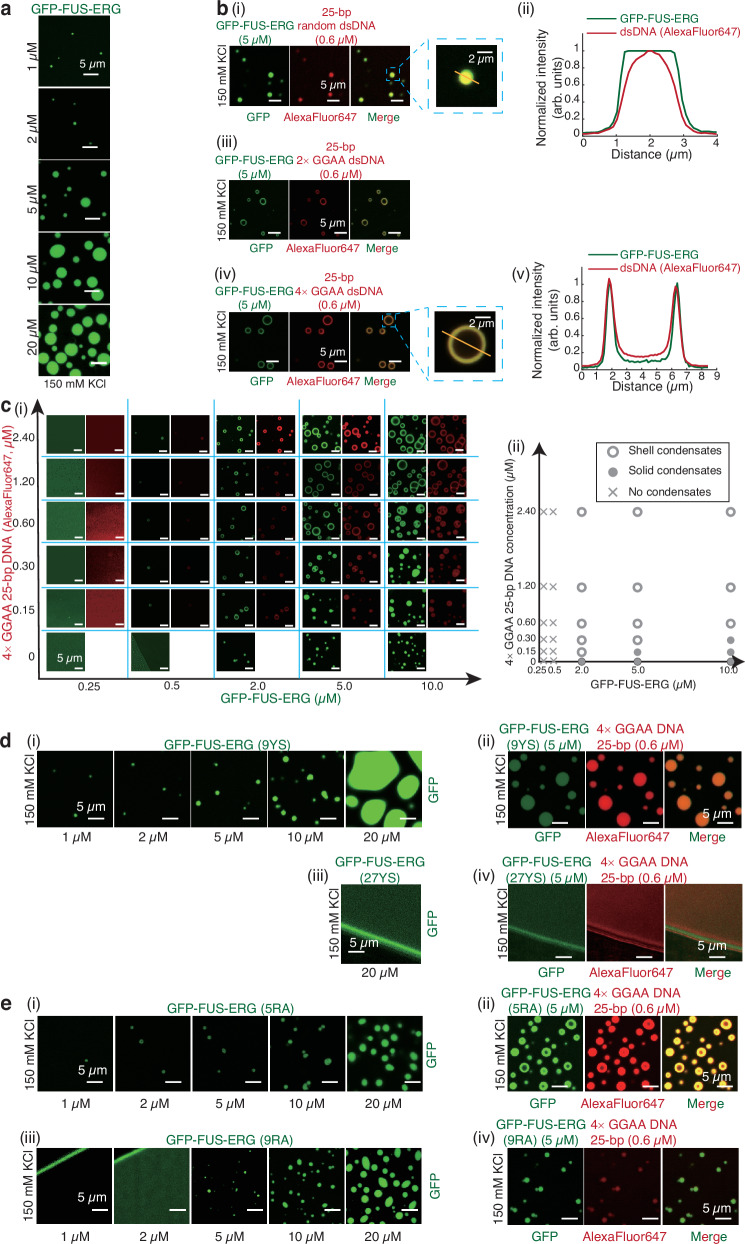 Figure 1
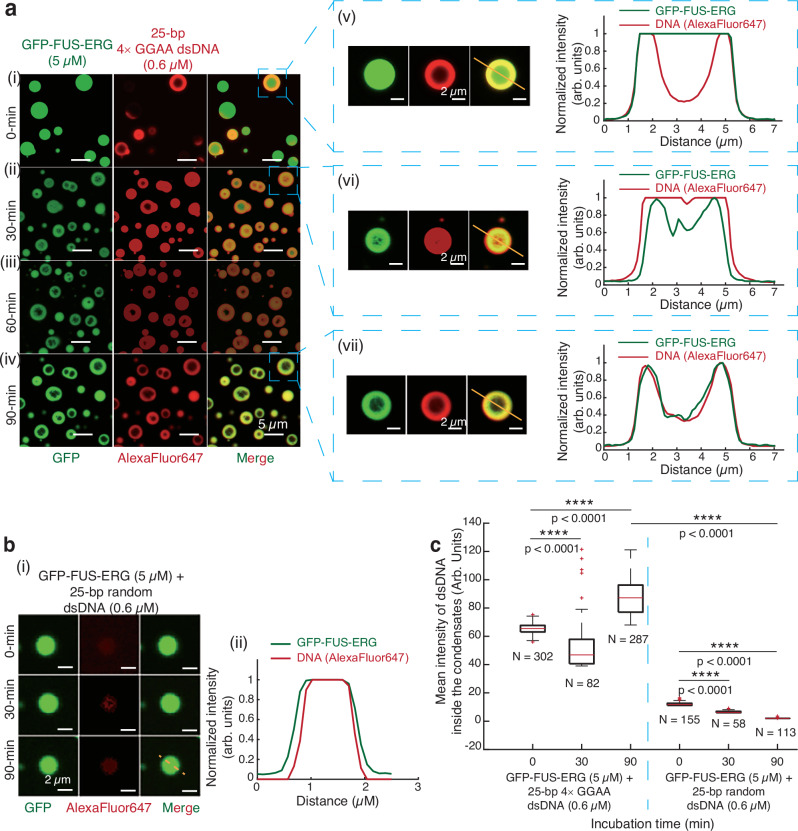 Figure 2
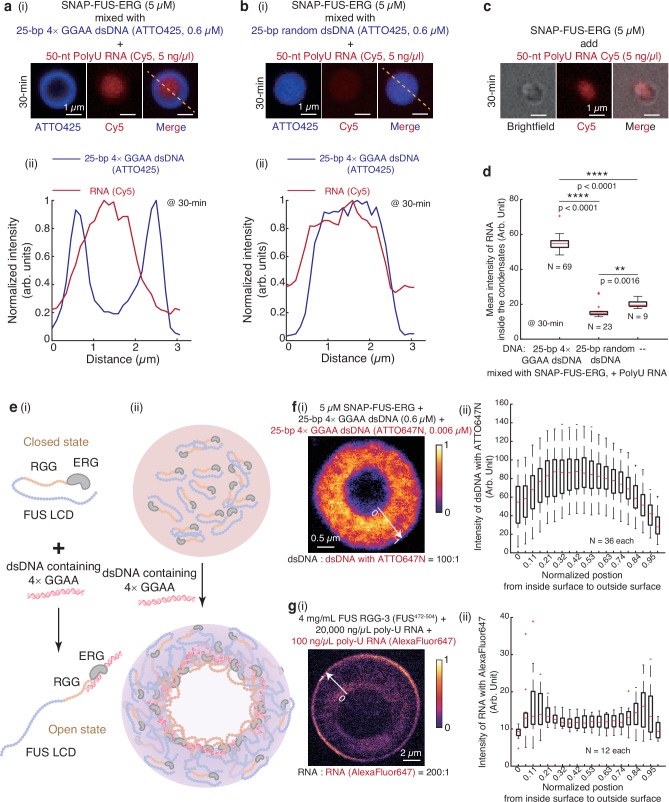 Figure 3
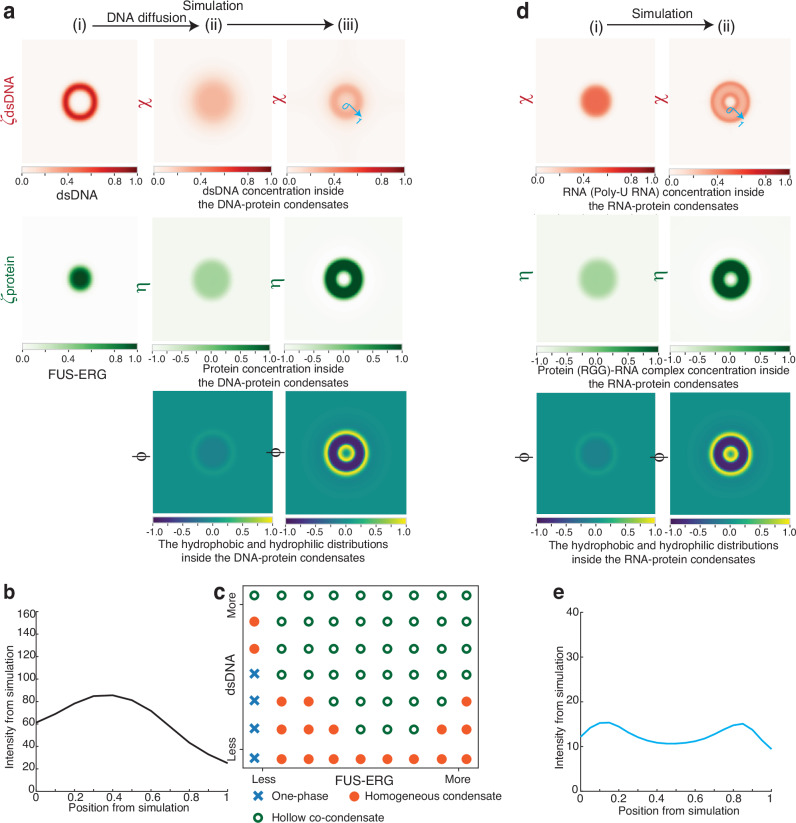 Figure 4
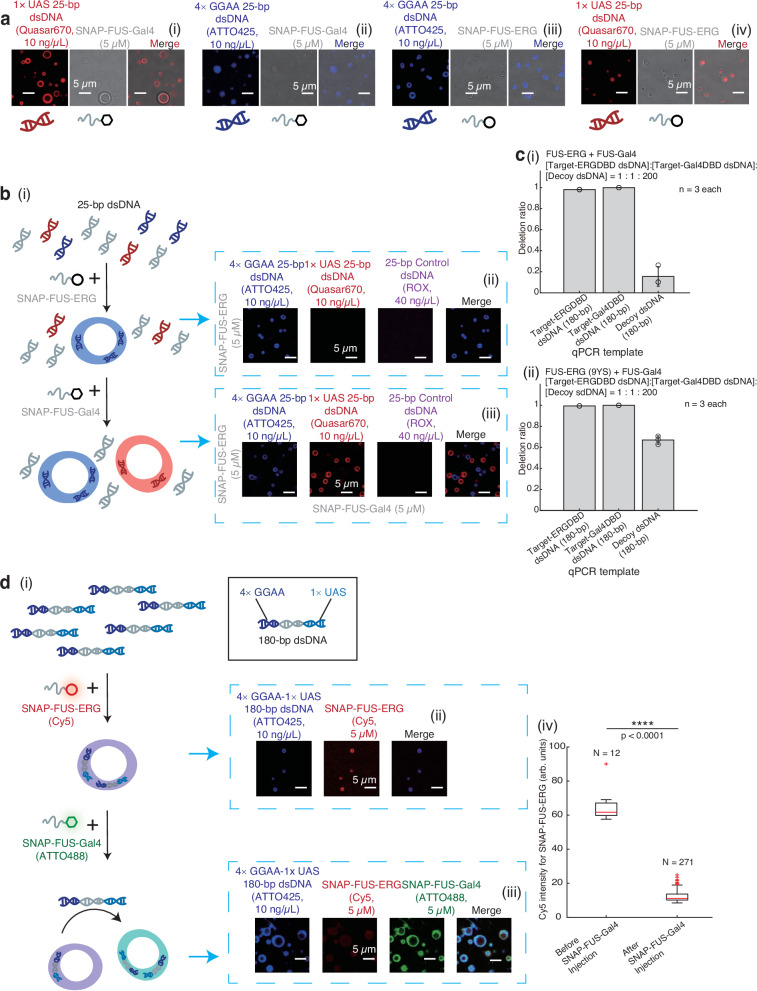 Figure 5
Peer Reviews
No public reviews on file for this paper yet. If you reviewed it on a platform where reviews are public (OpenReview, ICLR, NeurIPS, ICML), you can paste yours below so the community can read it here.
Videos
No videos yet. Explain this paper in a talk, walkthrough, or lecture? Add one.
Taxonomy
TopicsRNA Research and Splicing · DNA and Nucleic Acid Chemistry · Genomics and Chromatin Dynamics