Pain neuroscience education with physical activity improves physical and psychological outcomes in older women with chronic low back pain
Teppei Abiko, Shin Murata, Hiroaki Iwase, Koji Nonaka, Kunihiko Anami, Yuki Kikuchi, Katsuyuki Madoba, Kayoko Shiraiwa

TL;DR
Teaching older women about pain science and encouraging physical activity improves both physical and mental health outcomes for those with chronic back pain.
Contribution
Pain Neuroscience Education combined with physical activity shows superior outcomes compared to traditional biomechanical treatments for older women with chronic low back pain.
Findings
PNE-PA improved physical function and step count significantly more than traditional treatments.
PNE-PA reduced pain catastrophizing and fear-avoidance beliefs more effectively.
Improvements were measured using intention-to-treat and bootstrap resampling methods.
Abstract
Chronic low back pain (CLBP) significantly impairs quality of life and increases mortality among older adults, making its effective management essential for healthy aging. This quasi-randomized trial compared Pain Neuroscience Education emphasizing physical activity (PNE-PA) with traditional biomechanical treatments (BM) in older women with CLBP over 12 weeks. Community-dwelling women aged 65–90 years with CLBP were assigned to either group based on recruitment timing, using a double-blinded design. PNE-PA aimed to reduce pain-related fear by educating patients about pain neuroscience and encouraging physical activity. Outcomes included physical function, pain intensity, self-reported disability and psychological factors. Analyses used intention-to-treat and bootstrap resampling methods. Between-group differences were assessed using mean differences, 95% confidence intervals (CI), and…
Genes, proteins, chemicals, diseases, species, mutations and cell lines named across the full text — each resolved to its canonical identifier and authoritative record.
Click any figure to enlarge with its caption.
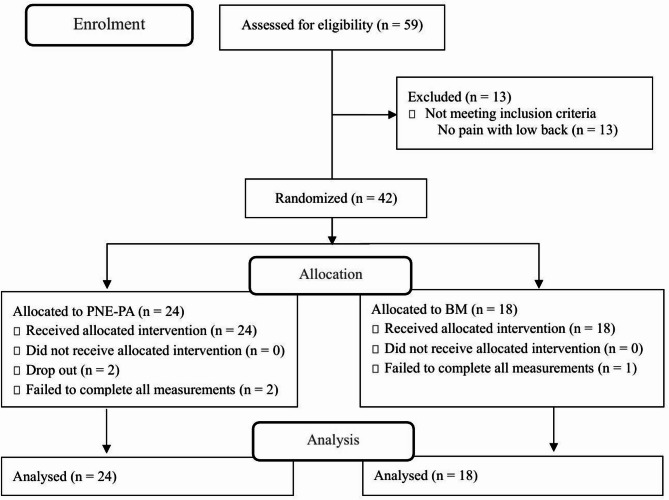 Figure 1
Peer Reviews
No public reviews on file for this paper yet. If you reviewed it on a platform where reviews are public (OpenReview, ICLR, NeurIPS, ICML), you can paste yours below so the community can read it here.
Videos
No videos yet. Explain this paper in a talk, walkthrough, or lecture? Add one.
Taxonomy
TopicsMusculoskeletal pain and rehabilitation · Pain Mechanisms and Treatments · Spinal Cord Injury Research