Evaluation of hybrid stroke quality indicators by integrating NIHSS and claims data for improved outcome prediction
Thomas Datzmann, Caroline Lang, Falko Tesch, Melissa Spoden, Patrik Dröge, Franz Ehm, Ekkehard Schuler, Christos Krogias, Christian Günster, Jochen Schmitt, Christoph Gumbinger, Jessica Barlinn

TL;DR
This study shows that combining stroke severity data with claims data improves the accuracy of predicting stroke outcomes and evaluating hospital performance.
Contribution
The paper introduces hybrid quality indicators that integrate NIHSS scores with claims data for better risk adjustment in stroke care evaluation.
Findings
NIHSS was the most important determinant for all three outcomes, outperforming age in claims data models.
Hybrid models using NIHSS and claims data showed higher predictive power than models using claims data alone.
Including NIHSS improved risk adjustment for quality indicators across different stroke types and outcomes.
Abstract
Accurately measuring the quality of stroke care based on claims data alone is challenging. Traditional outcome metrics, e.g. mortality rates, do not capture the effectiveness of critical stroke care processes. We aimed to develop hybrid quality indicators (QIs) by integrating clinical stroke severity data with claims data. Claims data were linked to patient-level clinical data from 15 hospitals (2017–2020) and harmonized in the Observational Medical Outcome Partnership (OMOP) data model. Inclusion criteria, outcomes and risk factors were developed by medical expert panels. We applied machine learning for modeling the outcomes 30-day-mortality, reinfarction within 90 days, and care degree increase within 180 days. We compared extreme gradient boosting (XGBoost) models with and without the National Institutes of Health Stroke Scale (NIHSS) using…
Genes, proteins, chemicals, diseases, species, mutations and cell lines named across the full text — each resolved to its canonical identifier and authoritative record.
Click any figure to enlarge with its caption.
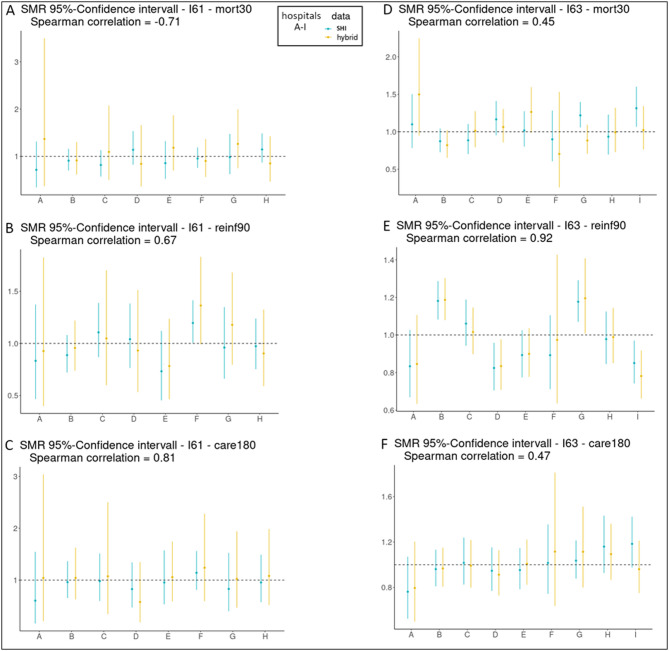 Figure 1
Peer Reviews
No public reviews on file for this paper yet. If you reviewed it on a platform where reviews are public (OpenReview, ICLR, NeurIPS, ICML), you can paste yours below so the community can read it here.
Videos
No videos yet. Explain this paper in a talk, walkthrough, or lecture? Add one.
Taxonomy
TopicsAcute Ischemic Stroke Management · Sepsis Diagnosis and Treatment · Machine Learning in Healthcare