Neuronal conversion of single-chain tissue-type plasminogen activator into its two-chain form: implications in neurodevelopment, learning, and memory
Hortense Triniac, Simon Lebatard, Valerie Roussel, Charlotte Lechevallier, Laurent Lebouvier, Denis Vivien, Benoit D. Roussel

TL;DR
This paper shows how neurons convert a single-chain form of tPA into a two-chain form, which may influence brain development and memory.
Contribution
The study identifies neurons as the primary cells responsible for converting single-chain tPA into two-chain tPA in the brain.
Findings
Neurons are the main brain cells that cleave single-chain tPA into two-chain tPA.
The conversion process involves plasminogen binding, activation into plasmin, and subsequent cleavage of tPA.
The cleavage mechanism depends on the Kringle 2 domain of tPA and is independent of plasminogen LBS.
Abstract
Tissue-type plasminogen activator (tPA) is a serine protease expressed in the central nervous system (CNS) that exhibits various effects, from neurodevelopment to learning and memory processes. tPA is secreted in its single-chain form (sc-tPA) and can be cleaved into a two-chain form (tc-tPA), with the two isoforms displaying sometimes opposite effects within the CNS. Using Alexa Fluor-conjugated recombinant tPA and complementary pharmacological approaches, we evaluated the ability of brain cells to process sc- into tc-tPA and the mechanisms involved. Our data revealed that neurons are the main brain cells capable to cleave sc-tPA into tc-tPA. This process occurs in three steps: 1) plasminogen binds to the cell surface of cortical neurons; 2) sc-tPA activates plasminogen into plasmin; 3) the generated plasmin cleaves sc-tPA into tc-tPA. The cleavage of tPA requires its Kringle 2 domain…
Genes, proteins, chemicals, diseases, species, mutations and cell lines named across the full text — each resolved to its canonical identifier and authoritative record.
Click any figure to enlarge with its caption.
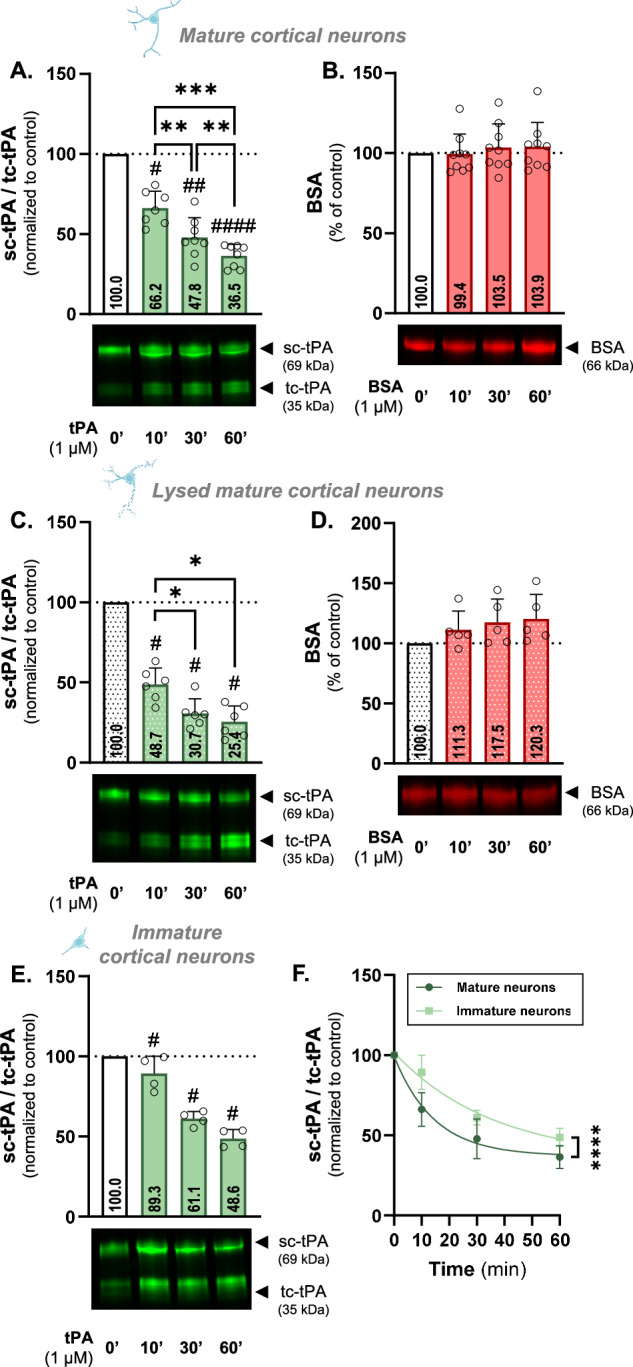 Figure 1
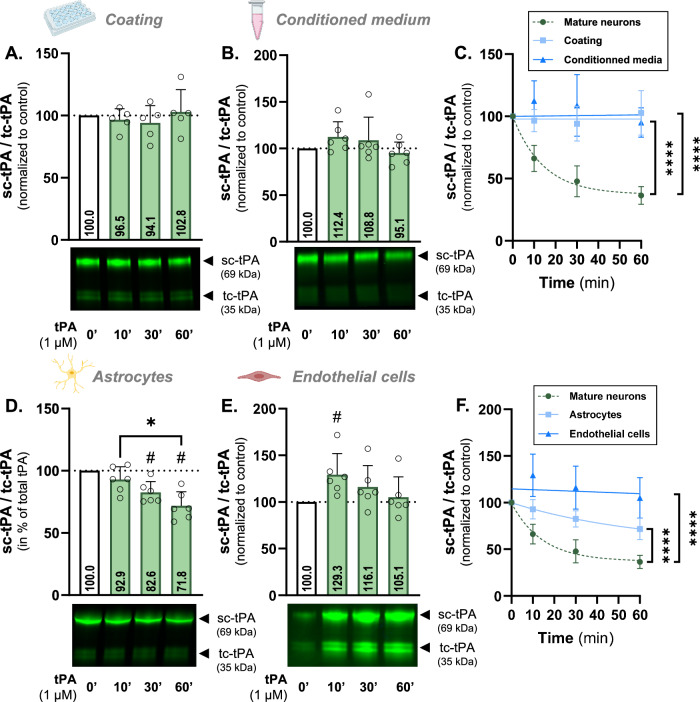 Figure 2
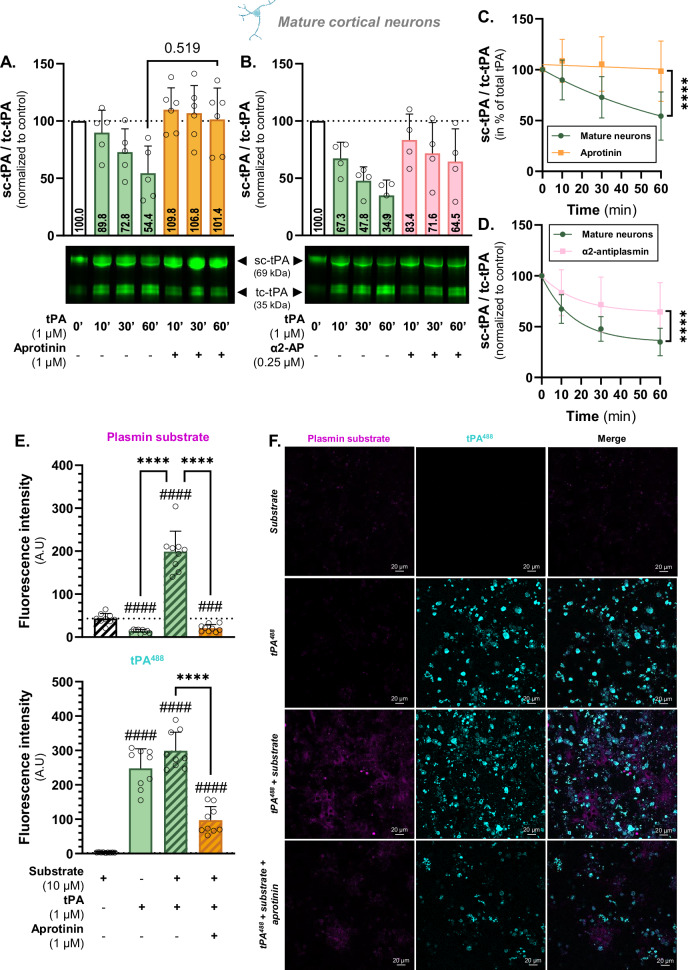 Figure 3
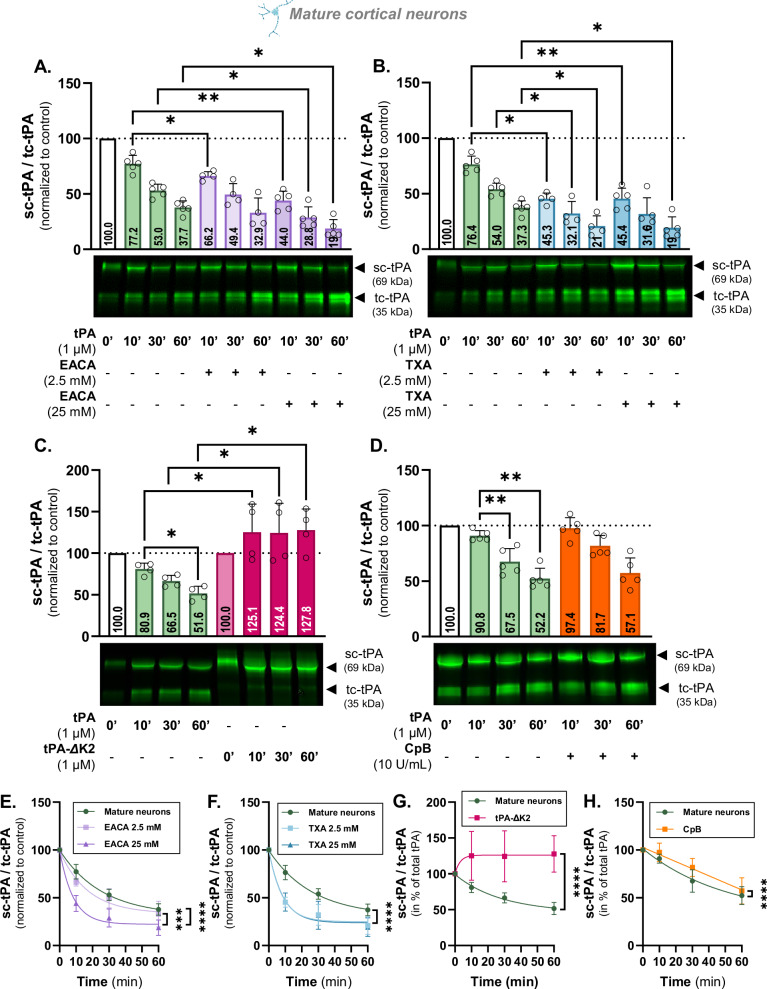 Figure 4
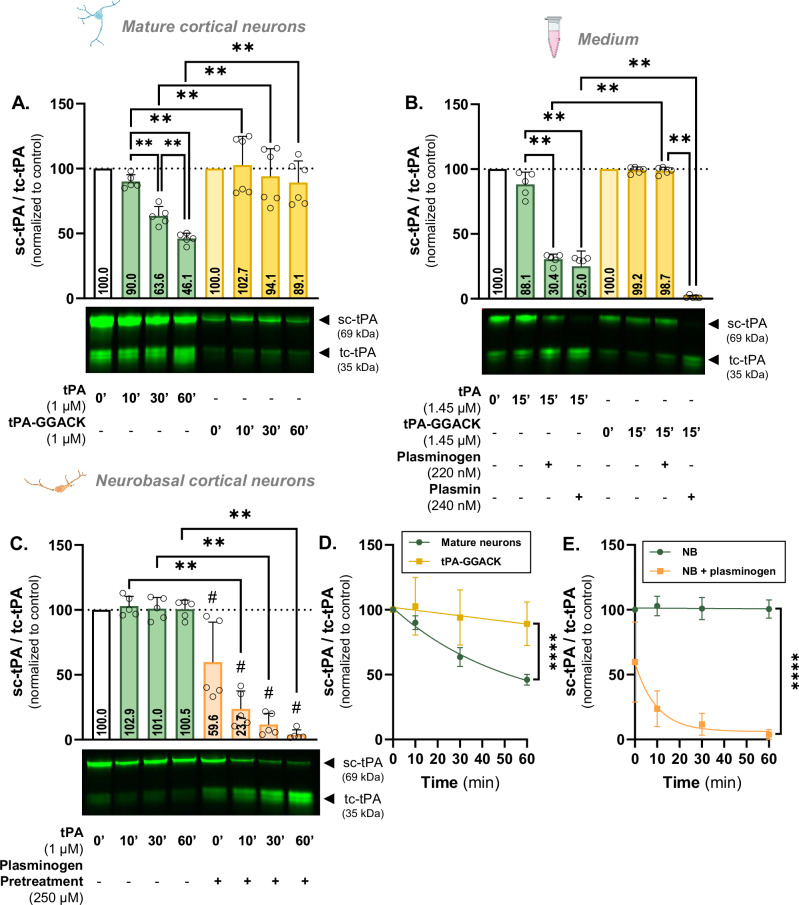 Figure 5
Peer Reviews
No public reviews on file for this paper yet. If you reviewed it on a platform where reviews are public (OpenReview, ICLR, NeurIPS, ICML), you can paste yours below so the community can read it here.
Videos
No videos yet. Explain this paper in a talk, walkthrough, or lecture? Add one.
Taxonomy
TopicsProtease and Inhibitor Mechanisms · Cerebrovascular and genetic disorders · Barrier Structure and Function Studies