Relationship between fibrosis induced by preoperative chemoradiotherapy and real-time tissue elastography of internal anal sphincter
Akira Sakamoto, Kazuhito Sasaki, Hiroyuki Abe, Ryosuke Kikuchi, Hiroaki Nozawa, Koji Murono, Shigenobu Emoto, Yuichiro Yokoyama, Yuzo Nagai, Shinya Abe, Takahide Shinagawa, Yuichi Tachikawa, Satoshi Okada, Tetsuo Ushiku, Soichiro Ishihara

TL;DR
This study shows that preoperative chemoradiotherapy may cause fibrosis in the internal anal sphincter, leading to tissue hardening detectable via elastography.
Contribution
First quantitative investigation of the relationship between chemoradiotherapy-induced fibrosis and sphincter elasticity using real-time tissue elastography.
Findings
Patients who received chemoradiotherapy had significantly higher fibrosis in the internal anal sphincter.
Elastography showed reduced elasticity in patients who underwent chemoradiotherapy compared to those who did not.
Elasticity decreased as the percentage of fibrosis increased in the sphincter tissue.
Abstract
It has been suggested that chemoradiotherapy may cause fibrosis of the internal anal sphincter, resulting in sclerosis. However, no report has quantitatively investigated this relationship by using real-time tissue elastography. To clarify the relationship between fibrosis and elasticity of the internal anal sphincter in patients undergoing surgery for lower rectal cancer with or without preoperative chemoradiotherapy from a histological perspective. A single-center, prospective cohort study. The surgical and pathological departments in a tertiary referral university hospital. Eighteen patients with rectal cancer who underwent abdominoperineal resection between May 2019 and May 2022 were included in the study. Real-time tissue elastography was performed before surgery to measure internal anal sphincter hardness as “elasticity” (hardest (0) to softest (255); decreased elasticity…
Genes, proteins, chemicals, diseases, species, mutations and cell lines named across the full text — each resolved to its canonical identifier and authoritative record.
Click any figure to enlarge with its caption.
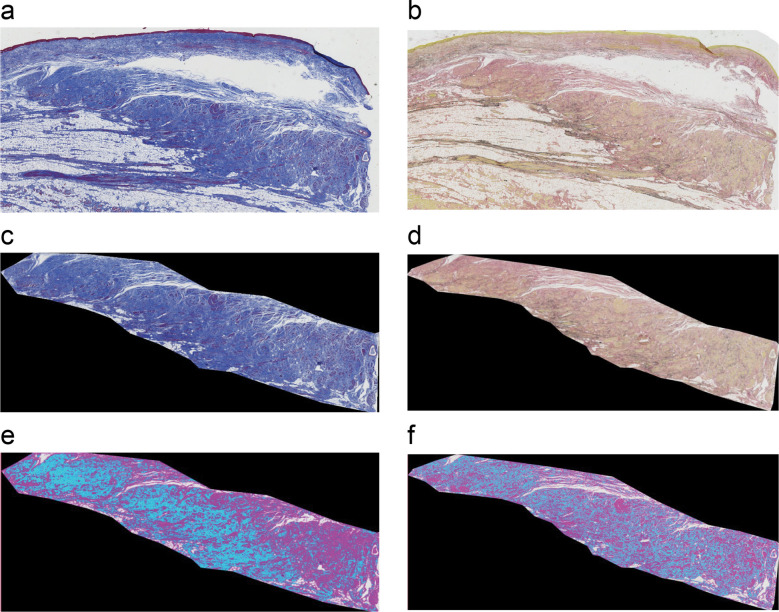 Figure 1
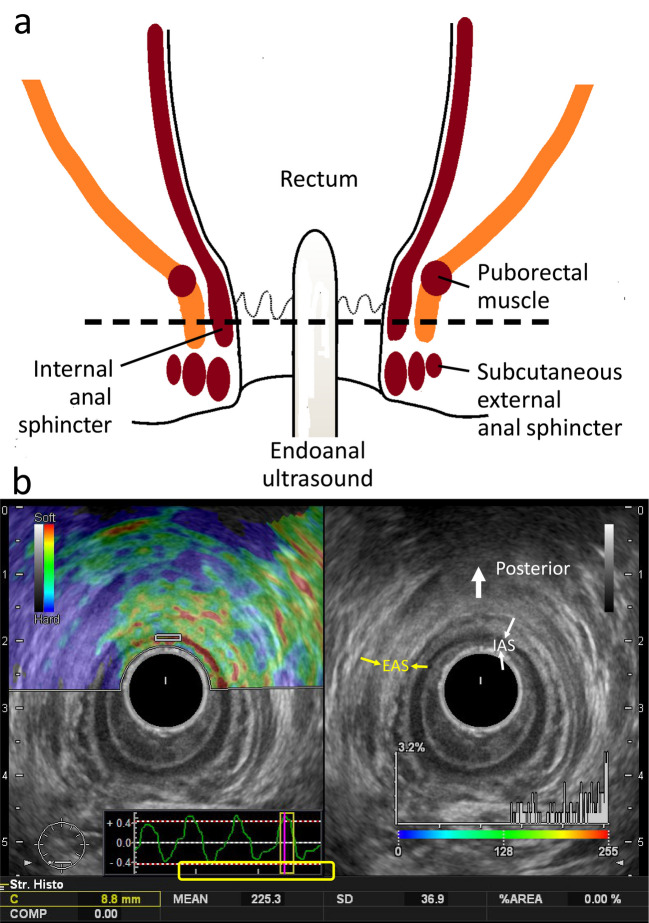 Figure 2
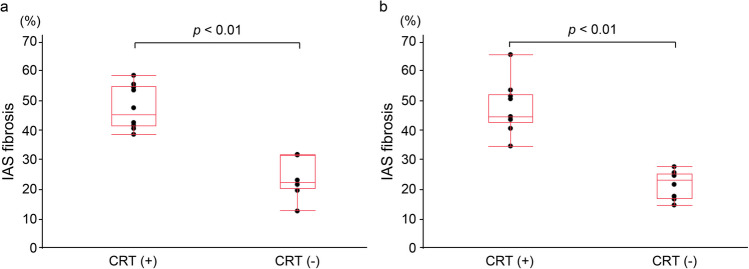 Figure 3
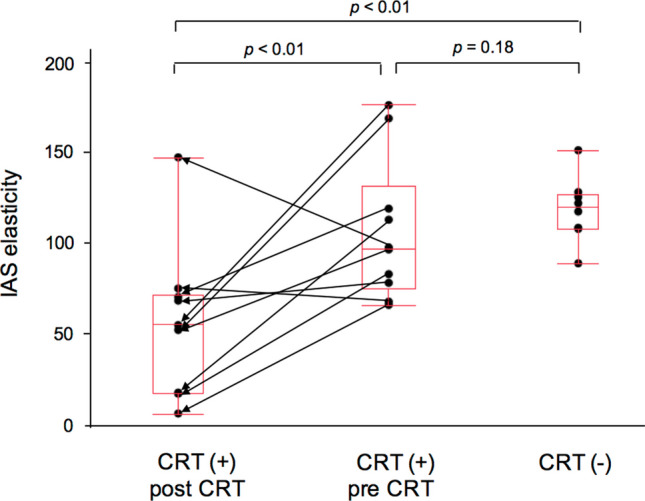 Figure 4
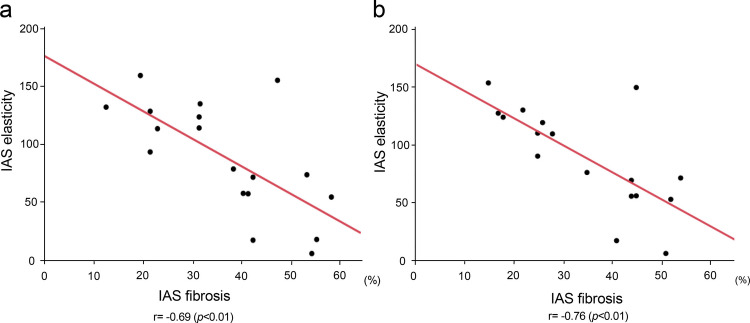 Figure 5
Peer Reviews
No public reviews on file for this paper yet. If you reviewed it on a platform where reviews are public (OpenReview, ICLR, NeurIPS, ICML), you can paste yours below so the community can read it here.
Videos
No videos yet. Explain this paper in a talk, walkthrough, or lecture? Add one.
Taxonomy
TopicsPelvic floor disorders treatments · Anorectal Disease Treatments and Outcomes · Colorectal and Anal Carcinomas