Using glucagon receptor antagonism to evaluate the physiological effects of extrapancreatic glucagon in totally pancreatectomised individuals: a randomised controlled trial
Caroline Trunk-Black Juel, Asger B. Lund, Sofie Hædersdal, Maria M. Andersen, Carsten P. Hansen, Jan H. Storkholm, Gerrit van Hall, Bolette Hartmann, Mette M. Rosenkilde, Camilla J. Kibsgaard, Flemming Dela, Nicolai J. Wewer Albrechtsen, Jens J. Holst, Tina Vilsbøll

TL;DR
This study tested if blocking glucagon receptors affects metabolism in people without a pancreas, finding no significant changes in glucose, lipid, or amino acid levels.
Contribution
The study provides empirical evidence that extrapancreatic glucagon does not significantly influence metabolism in totally pancreatectomised individuals.
Findings
Blocking glucagon receptors had no detectable effect on glucose, lipid, or amino acid metabolism in pancreatectomised individuals.
In healthy controls, glucagon receptor antagonism lowered fasting glucose and increased amino acid levels.
Extrapancreatic glucagon appears to have minimal physiological role in glucose regulation in pancreatectomised individuals.
Abstract
Previous studies have indicated that 29-amino-acid glucagon (i.e. ‘pancreatic’ glucagon) circulates in totally pancreatectomised individuals and that a postprandial glucagon response can be detected. Using a glucagon receptor antagonist (GRA), we investigated the possible role of extrapancreatic glucagon on glucose, lipid and amino acid metabolism in totally pancreatectomised individuals. In a randomised, crossover study, nine totally pancreatectomised individuals and nine matched healthy control individuals were given, in randomised order (planned on the website www.random.org), 300 mg GRA (LY2409021; Eli Lilly) or placebo 10 h before two 3 h OGTTs. The experiment was double-masked (i.e. both participants and investigator were masked for the type of the experimental day [day A vs day B]). The key inclusion criteria for the healthy control participants were age >18 years, normal…
Genes, proteins, chemicals, diseases, species, mutations and cell lines named across the full text — each resolved to its canonical identifier and authoritative record.
Click any figure to enlarge with its caption.
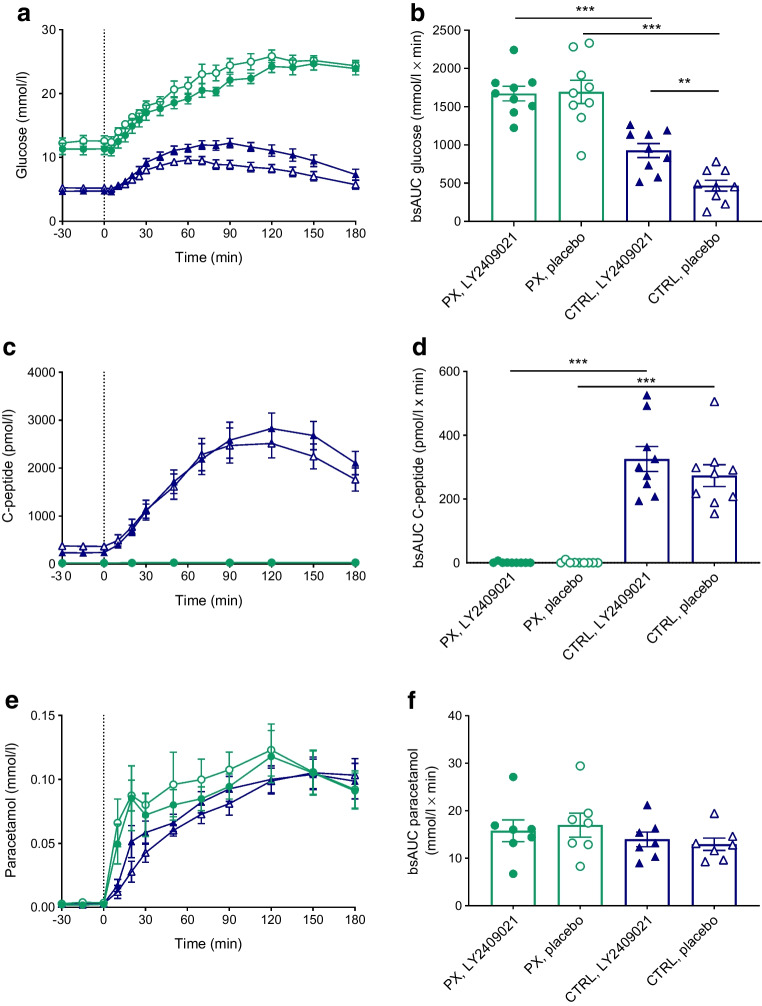 Figure 1
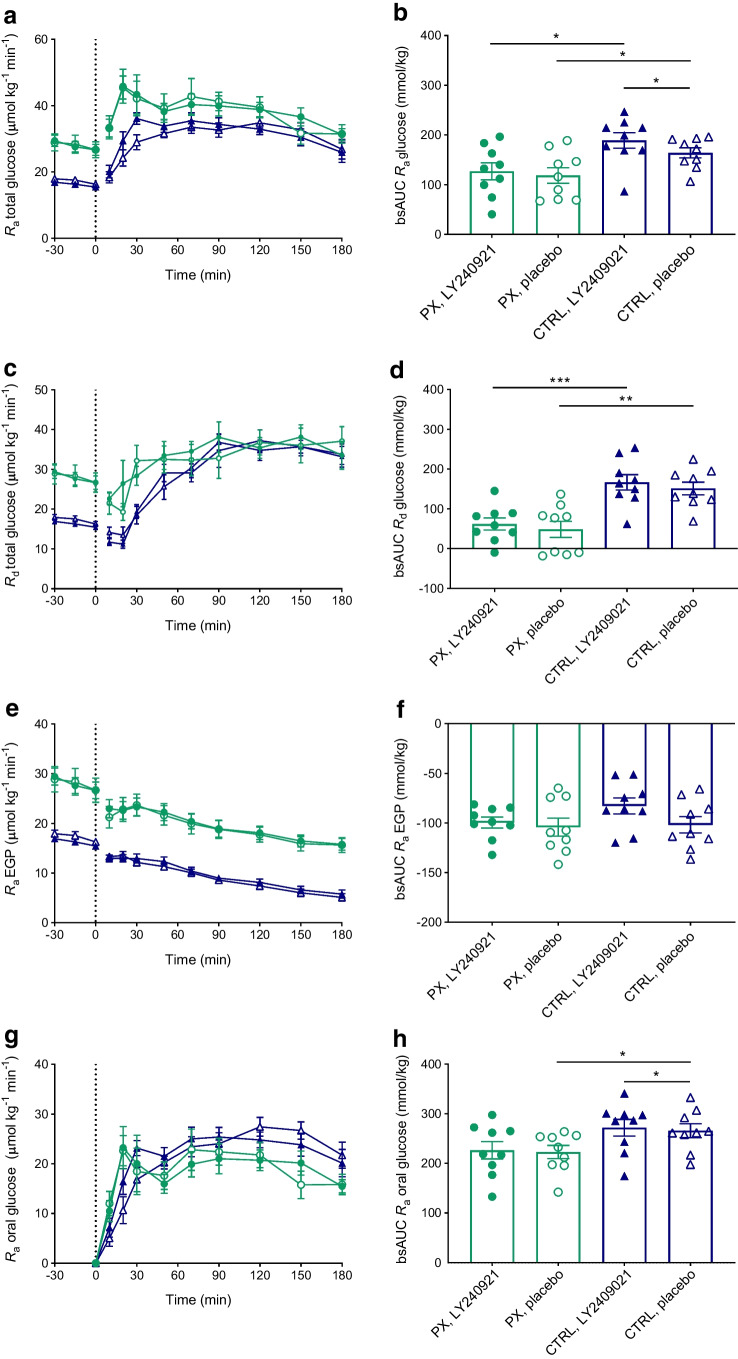 Figure 2
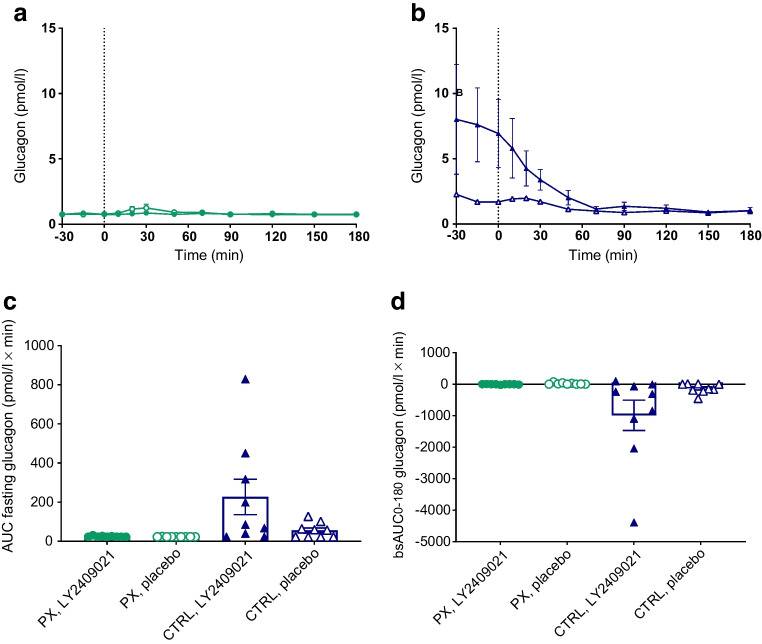 Figure 3
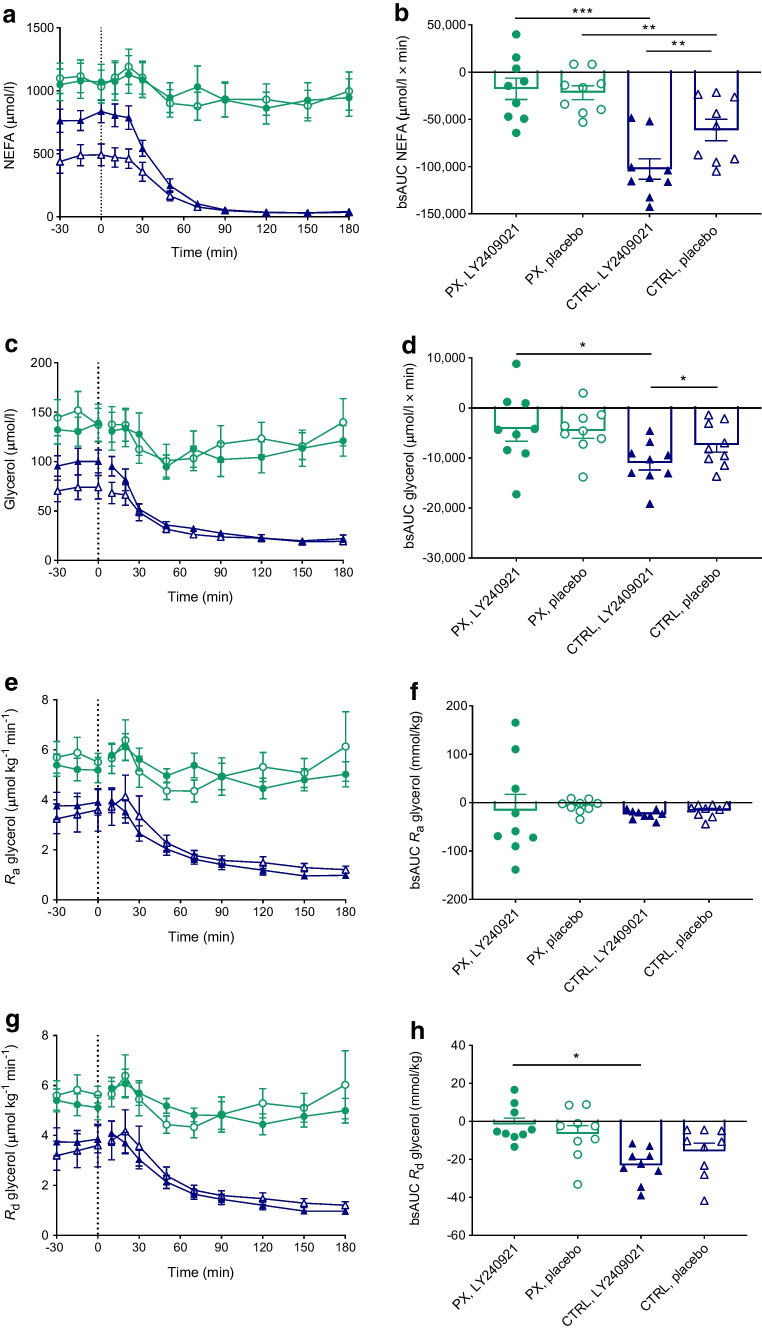 Figure 4
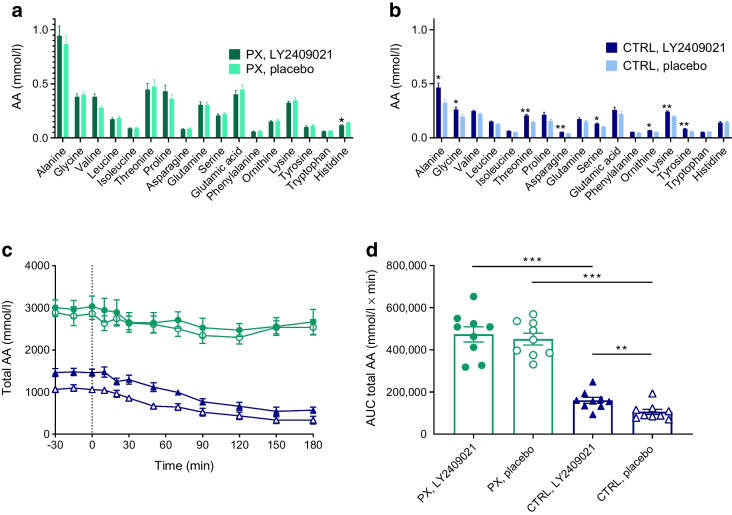 Figure 5
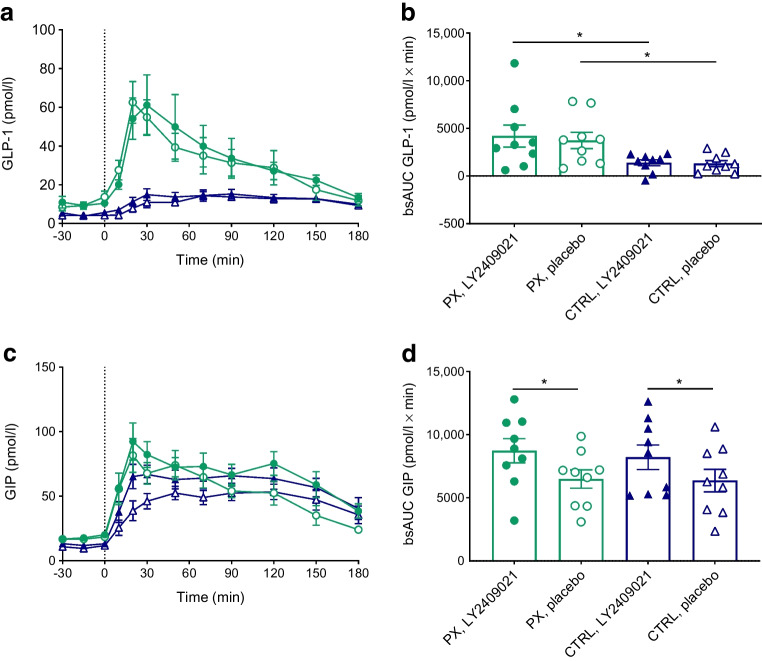 Figure 6
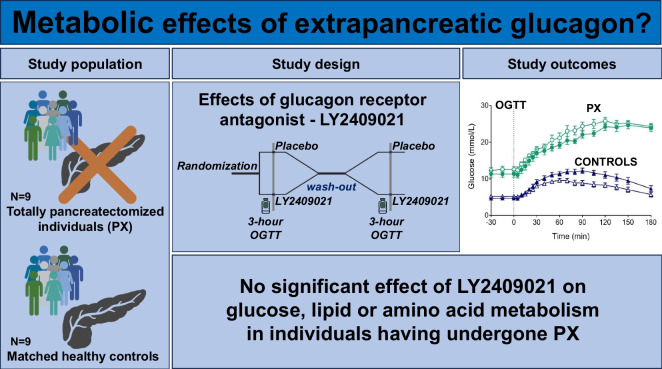 Figure 7
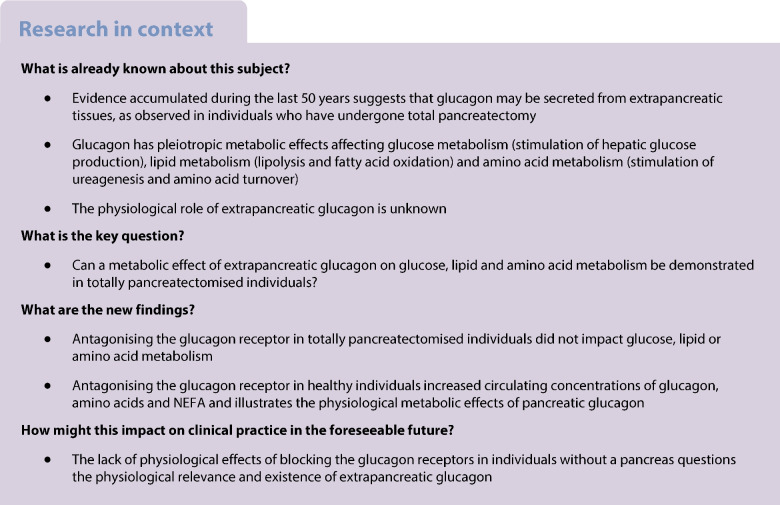 Figure 8
Peer Reviews
No public reviews on file for this paper yet. If you reviewed it on a platform where reviews are public (OpenReview, ICLR, NeurIPS, ICML), you can paste yours below so the community can read it here.
Videos
No videos yet. Explain this paper in a talk, walkthrough, or lecture? Add one.
Taxonomy
TopicsDiabetes Treatment and Management · Pancreatitis Pathology and Treatment · Pancreatic function and diabetes