Homeostatic Influence of Fig4 Outside of the Fab1‐Vac14‐Fig4 Complex in Saccharomyces cerevisiae
Hannah E. Reeves, Anna King, Imran Khan, Asha Thomas, Corey Chung, Anirudan Sivaprakash, Harrison A. Hall, Cole McGuire, Victoria Cruz, Alim Habib, Lauren Dotson, Sophia R. Lee, Caroline L. Darbro, Bethany S. Strunk

TL;DR
A yeast study shows that disease-related mutations in the Fig4 protein can alter how cells respond to a drug, suggesting new ways this protein might influence health.
Contribution
The study reveals a novel role for Fig4 mutants in modulating TORC1 signaling and drug tolerance independently of their usual complex and catalytic activity.
Findings
Fig4 disease-related mutants confer rapamycin tolerance in yeast without binding to the Fab1-Vac14-Fig4 complex.
Rapamycin tolerance conferred by Fig4 mutants is independent of Vac14 and catalytic activity.
Catalytically dead Fig4 that binds the complex increases rapamycin sensitivity.
Abstract
The lipid phosphatase Fig4 is conserved in all eukaryotes and is associated with human neurological diseases for which there are currently no specific therapies. Fig4 functions in both the production and turnover of its lipid substrate, PI3,5P2, through participation in the Fab1‐Vac14‐Fig4 complex with its opposing kinase Fab1. The molecular mechanisms through which Fig4 influences PI3,5P2 production are not fully understood but are believed to require Fig4 binding to the scaffold protein Vac14. We unexpectedly found that multiple Fig4 disease‐related mutants that are impaired in binding to the Fab1‐Vac14‐Fig4 complex dominantly confer tolerance to rapamycin, an inhibitor of the Target of Rapamycin Complex 1 (TORC1), when expressed in Saccharomyces cerevisiae . Fig4‐dependent rapamycin tolerance is conferred under moderate heat stress, independent of Vac14 and Fig4 catalytic activity.…
Genes, proteins, chemicals, diseases, species, mutations and cell lines named across the full text — each resolved to its canonical identifier and authoritative record.
Click any figure to enlarge with its caption.
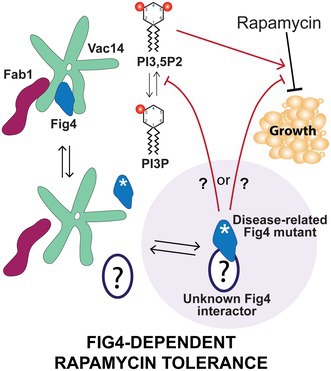 Figure 1
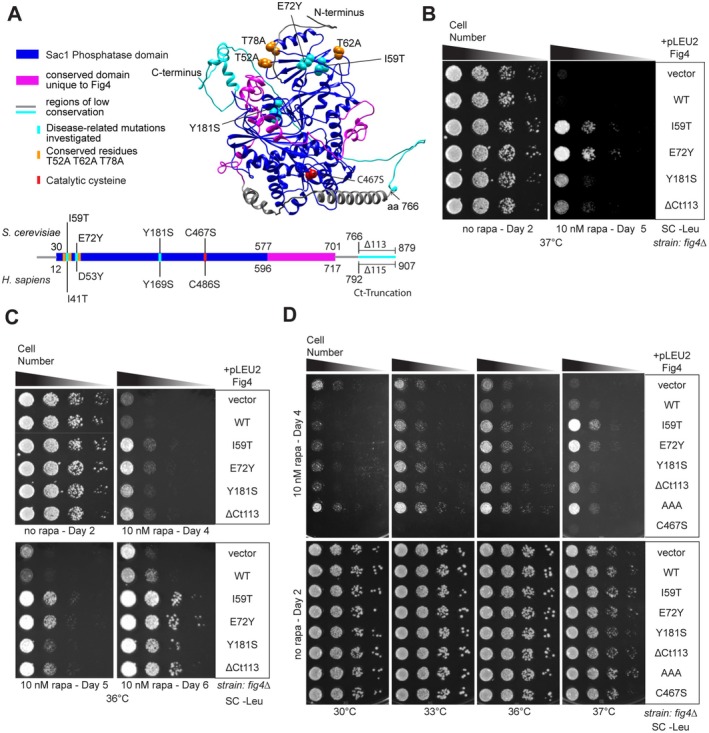 Figure 2
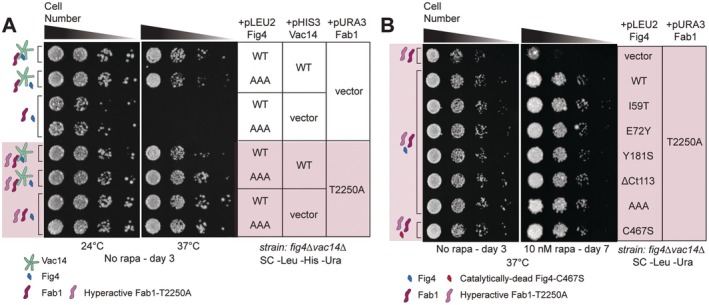 Figure 3
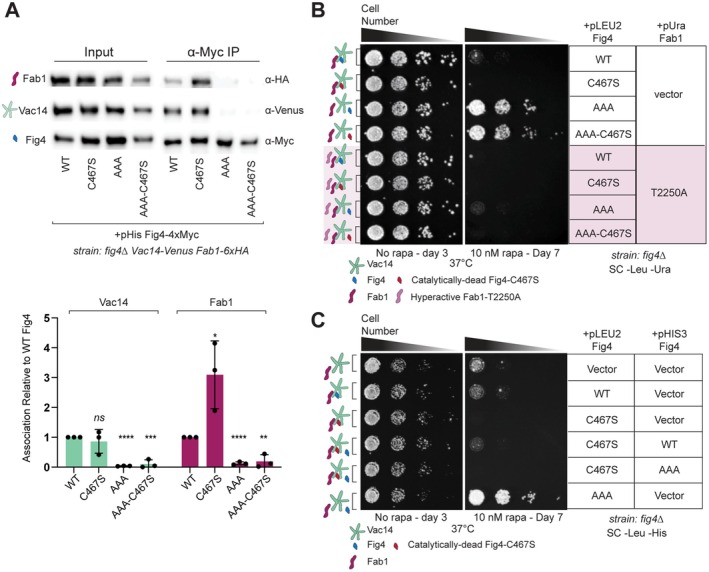 Figure 4
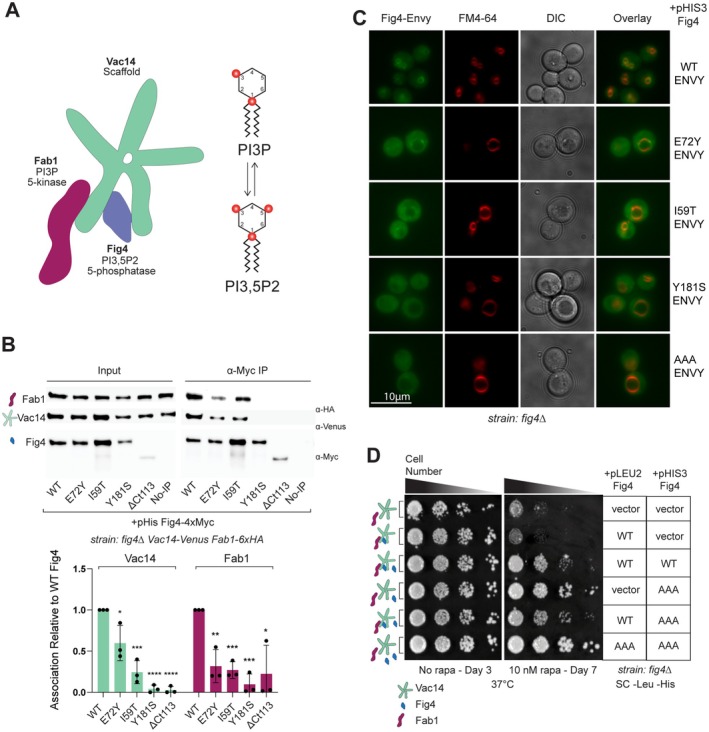 Figure 5
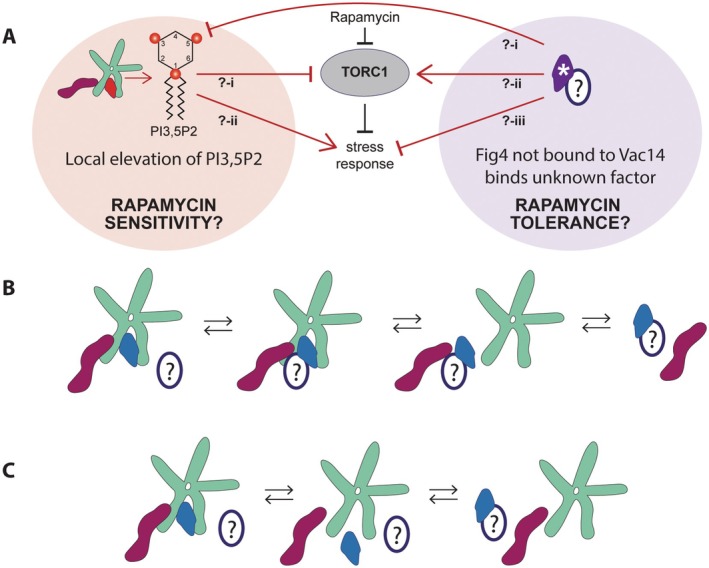 Figure 6
Peer Reviews
No public reviews on file for this paper yet. If you reviewed it on a platform where reviews are public (OpenReview, ICLR, NeurIPS, ICML), you can paste yours below so the community can read it here.
Videos
No videos yet. Explain this paper in a talk, walkthrough, or lecture? Add one.
Taxonomy
TopicsCellular transport and secretion · Ubiquitin and proteasome pathways · Fungal and yeast genetics research