Neuroprotective Effects of Ginsenoside Rg3 in Depressed Mice via Inhibition of the C1q Complement Pathway
Daofeng Yang, Xinran Xu, Xuerui Zhuo, Hui Cai, HaoTian Wang, Hao Liu, Yiming Sun

TL;DR
Ginsenoside Rg3 protects neurons in depressed mice by inhibiting the C1q complement pathway and reducing microglial activation.
Contribution
This study identifies Ginsenoside Rg3 as a potential treatment for depression by targeting the C1q complement pathway and microglial activation.
Findings
Depressed mice showed increased C1q levels and activated microglia with reduced synapses.
Ginsenoside Rg3 reduced C1q levels, inhibited microglial activation, and improved depression-like behaviors.
In vitro, Rg3 protected neurons by reducing complement factor secretion and inhibiting apoptosis.
Abstract
To explore the neuroprotective effect of Ginsenoside Rg3 in a mouse model of depression induced by chronic restraint, and to elaborate whether it exerts a protective effect by inhibiting the upregulation of complement factor C1q and related microglial cell‐mediated synaptic injury. The mouse chronic restraint model of depression was prepared from male C57BL/6 mice. The depression‐like behaviors of mice were detected by sugar water preference, forced swimming test and tail suspension test. The neuronal phenotypes of mice were detected by Nissl staining, HE and Golgi staining. The expression of complement‐related pathway proteins was detected by Western Blot. The corticosterone content in the peripheral blood of mice in each group was detected by corticosterone kit. Molecular simulation and MST were used to detect the binding of Rg3 and C1q. Establish a co‐culture model of microglia and…
Genes, proteins, chemicals, diseases, species, mutations and cell lines named across the full text — each resolved to its canonical identifier and authoritative record.
Click any figure to enlarge with its caption.
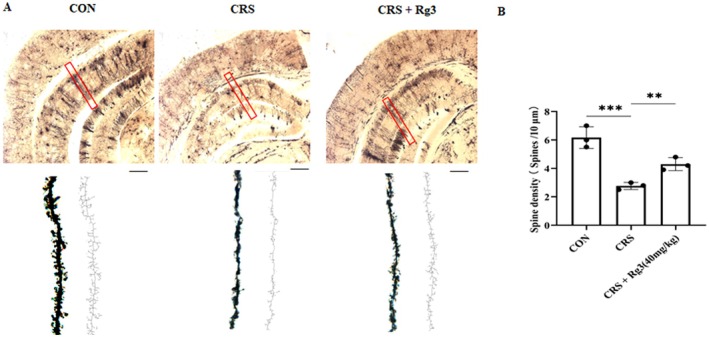 Figure 1
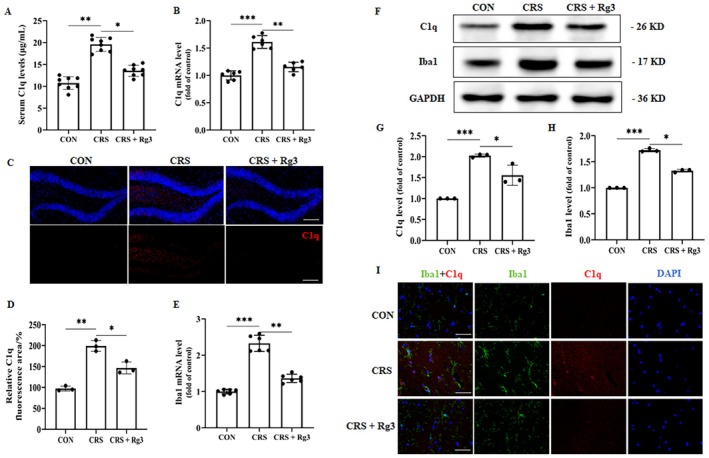 Figure 2
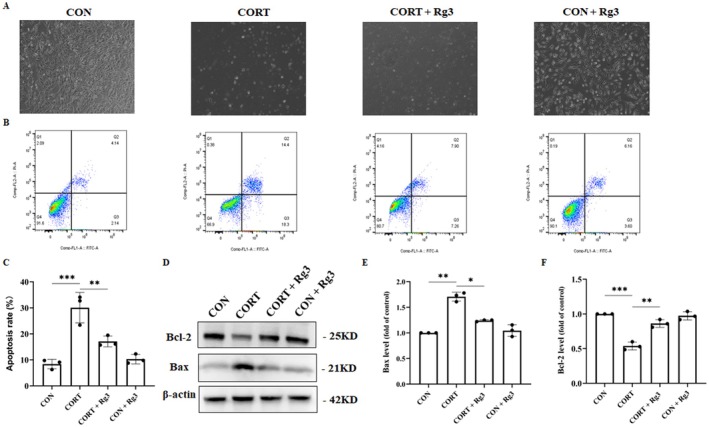 Figure 3
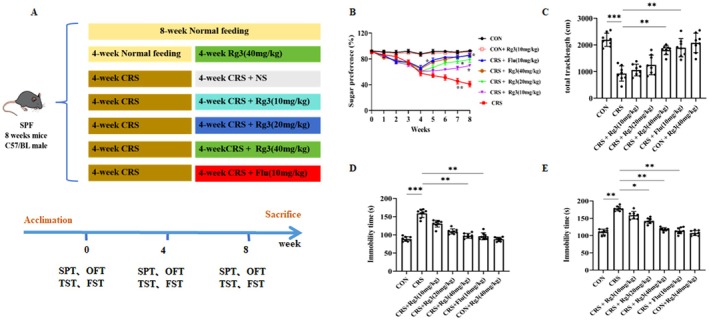 Figure 4
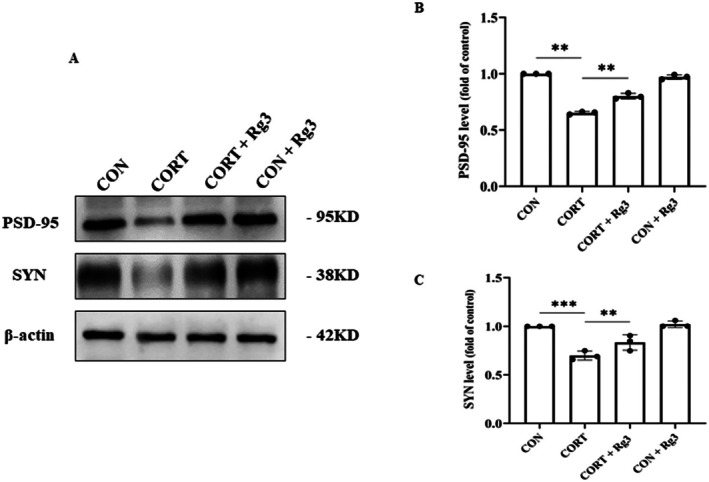 Figure 5
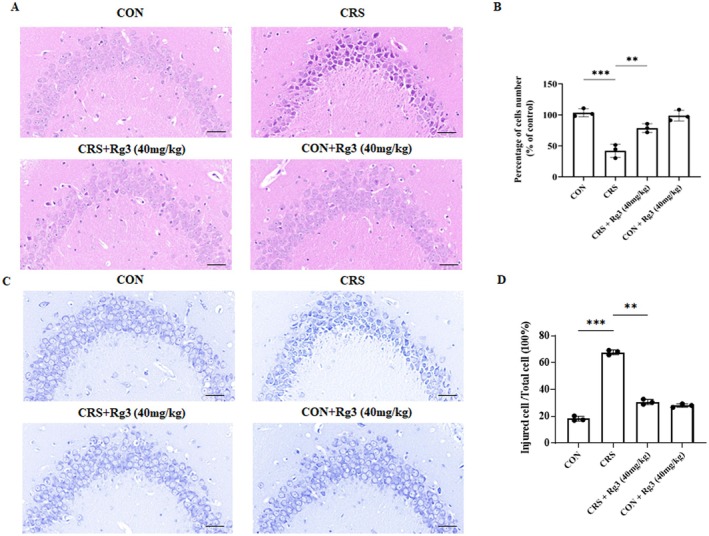 Figure 6
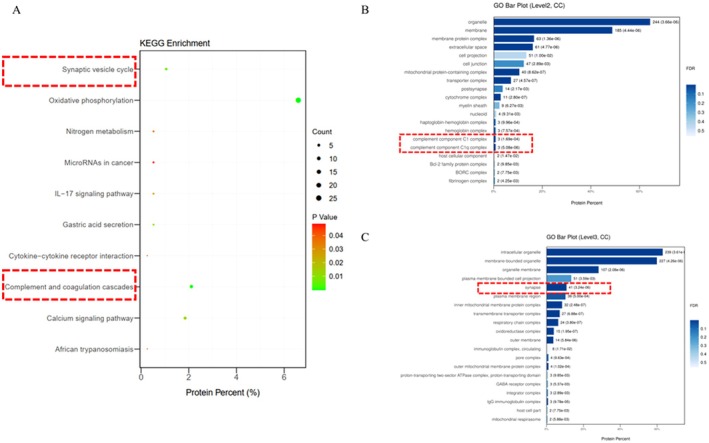 Figure 7
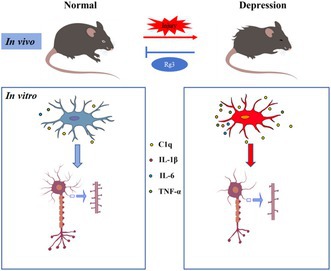 Figure 8
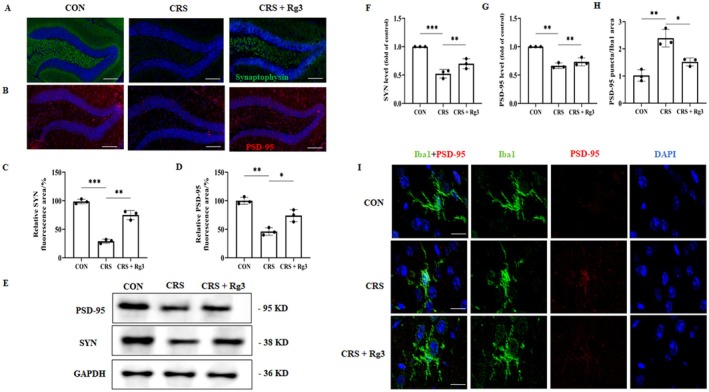 Figure 9
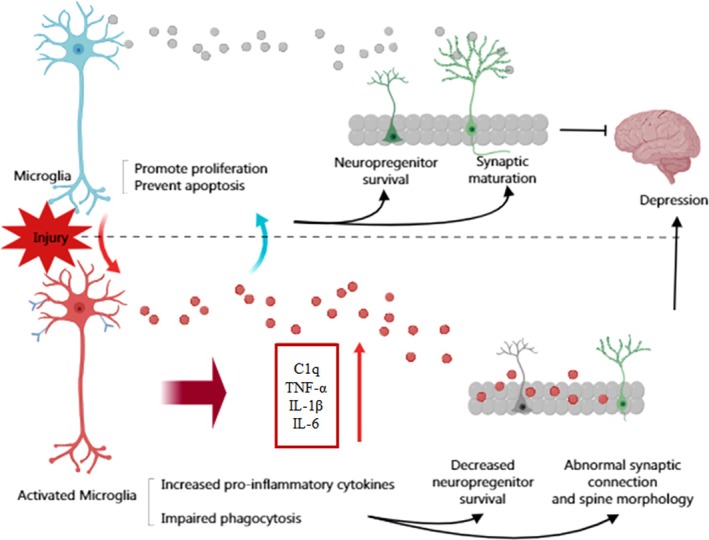 Figure 10
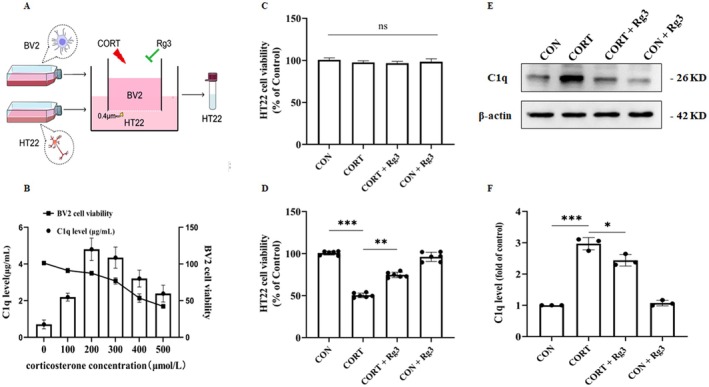 Figure 11
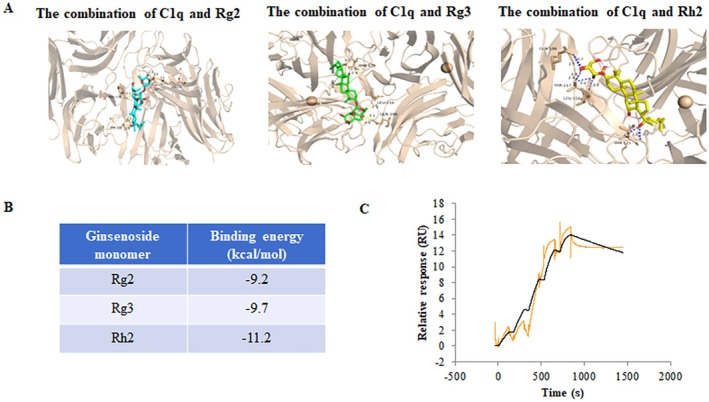 Figure 12
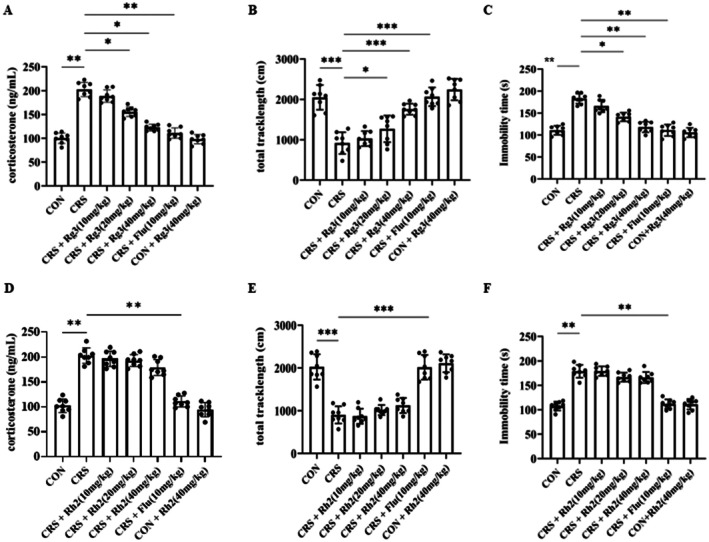 Figure 13
Peer Reviews
No public reviews on file for this paper yet. If you reviewed it on a platform where reviews are public (OpenReview, ICLR, NeurIPS, ICML), you can paste yours below so the community can read it here.
Videos
No videos yet. Explain this paper in a talk, walkthrough, or lecture? Add one.
Taxonomy
TopicsGinseng Biological Effects and Applications · Tryptophan and brain disorders · Neuroinflammation and Neurodegeneration Mechanisms