Synergistic Effects of Radiotherapy and PD‑1 Blockade in a Human‑Mimetic BRCAness Model of Triple-Negative Breast Cancer
Eun Ju Cho, Min Kyung Ki, Hye Jung Baek, Dong Hoon Shin, Eun Jung Park, Tae Hyun Kim, Chu-Xia Deng, Beom K. Choi, Sang Soo Kim

TL;DR
This study shows that combining radiotherapy with PD-1 blockade can effectively treat BRCA1-deficient triple-negative breast cancer in a mouse model that mimics human disease.
Contribution
The study demonstrates a synergistic effect of radiotherapy and PD-1 blockade in a human-mimetic BRCAness model of TNBC.
Findings
PD-1 blockade delayed tumor progression and reduced proliferation while enhancing apoptosis in BRCA1-deficient TNBC.
Combining radiotherapy with PD-1 blockade significantly reduced extracellular matrix and increased T cell infiltration.
The model supports preclinical evaluation of combined DNA damaging agents and immunotherapy for BRCA1-associated breast cancer.
Abstract
BRCA1‑deficient triple‑negative breast cancer (TNBC) presents significant treatment challenges owing to the absence of estrogen receptor (ER), progesterone receptor (PR), and human epidermal growth factor receptor 2 (HER2) targets, exhibits marked molecular heterogeneity that precludes the application of effective targeted therapies, and harbors a highly immunosuppressive tumor microenvironment. Here, we used the Brca1co/co MMTV‑Cre mouse model that recapitulates human BRCA1‑mutant TNBC, characterized by early dominance of CD11b⁺Gr‑1⁻F4/80Low blood‑derived macrophages and subsequent enrichment of F4/80High tissue macrophages within adipose‑rich mammary glands. PD‑1 blockade with anti‑mPD‑1 monoclonal antibodies (mAb) significantly delayed primary tumor progression, reduced proliferation marker levels (PCNA, Ki‑67), enhanced apoptosis (as indicated by increased cleaved PARP levels), and…
Genes, proteins, chemicals, diseases, species, mutations and cell lines named across the full text — each resolved to its canonical identifier and authoritative record.
Click any figure to enlarge with its caption.
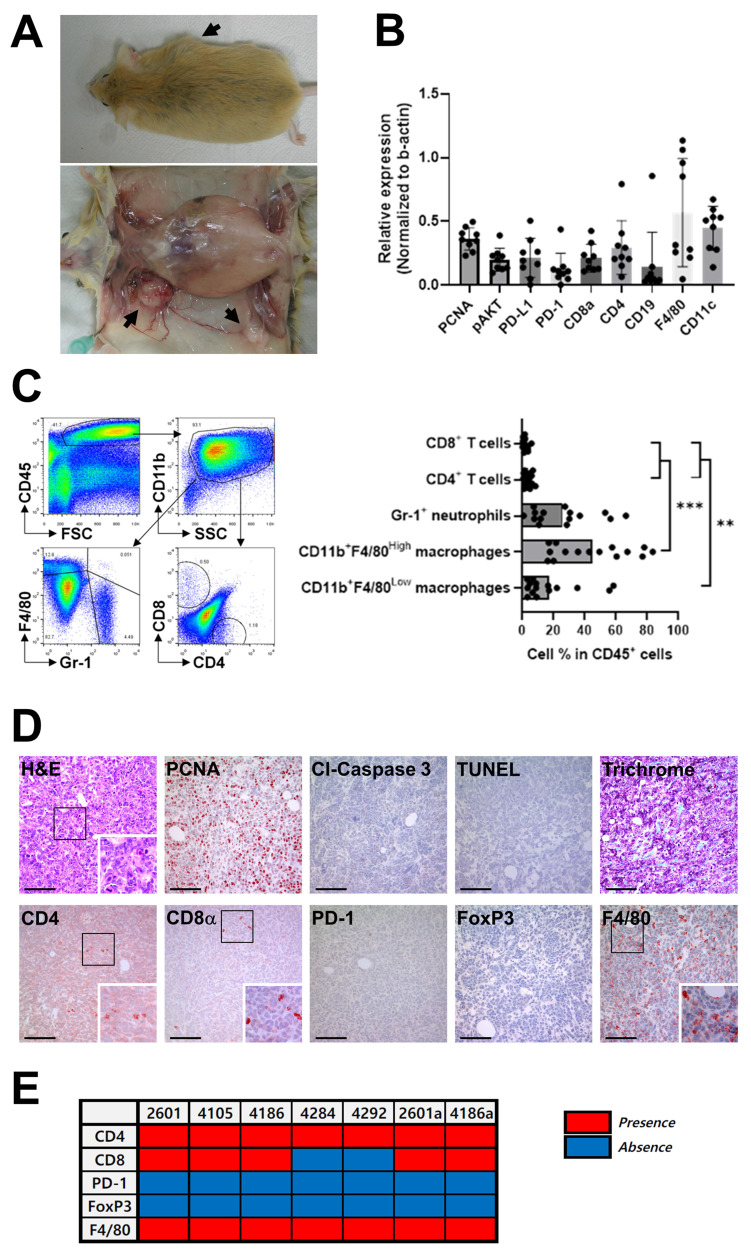 Figure 1
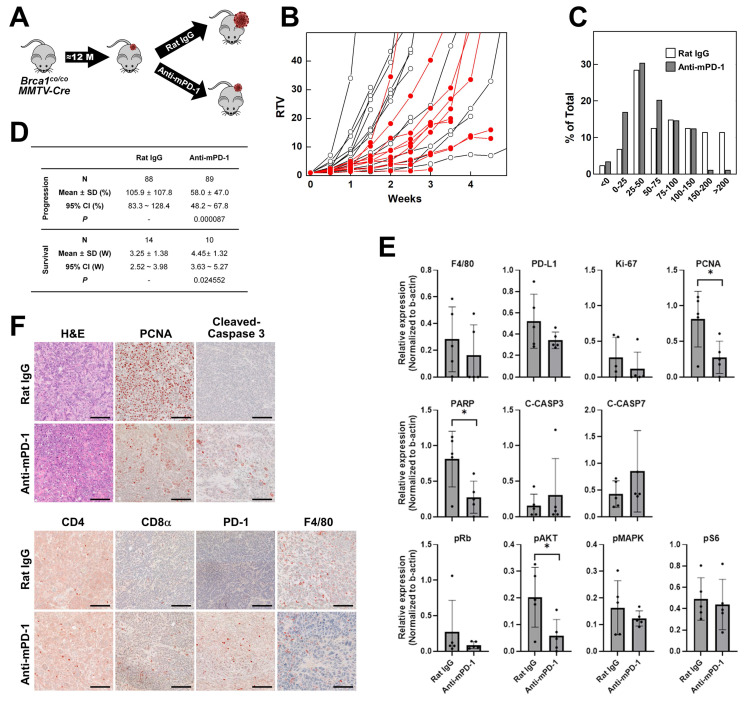 Figure 2
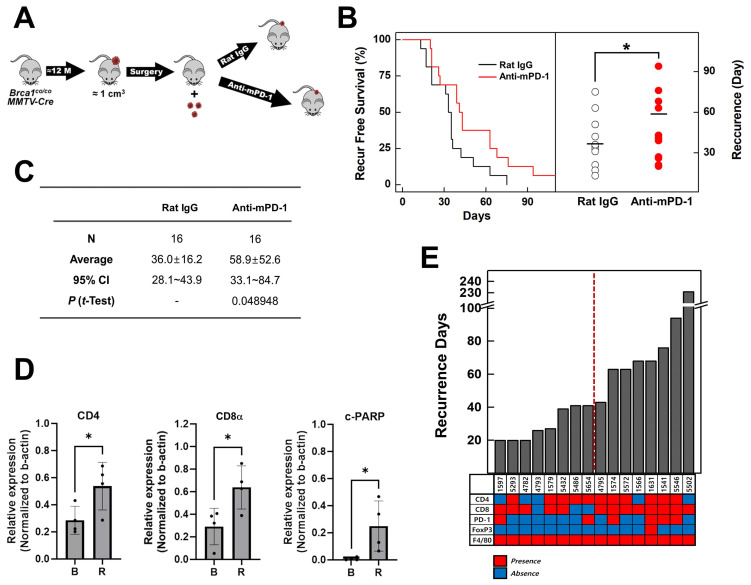 Figure 3
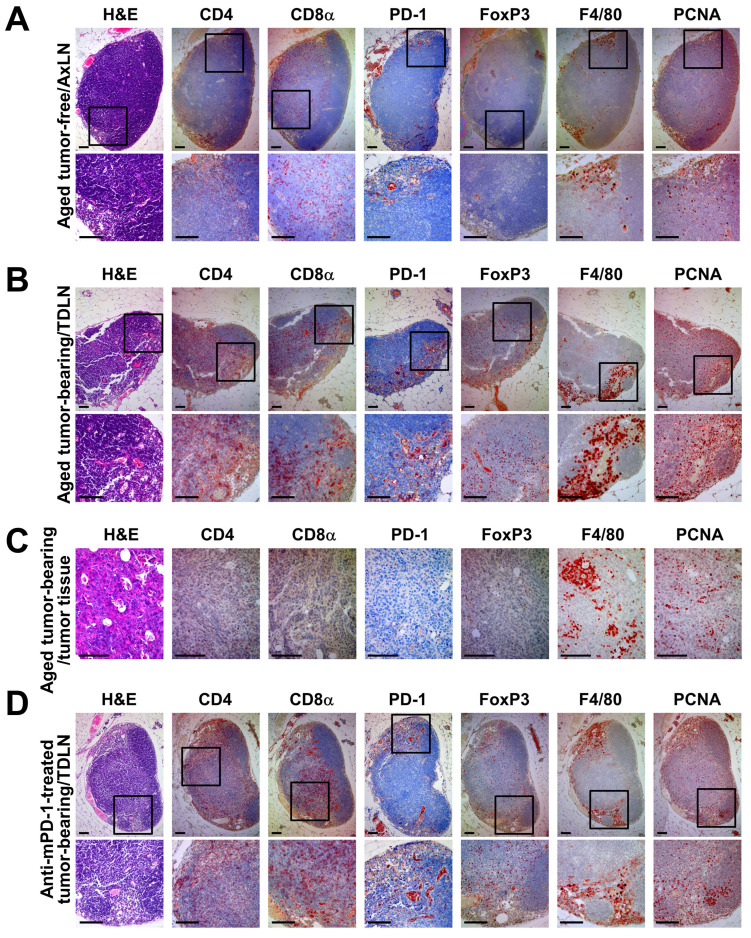 Figure 4
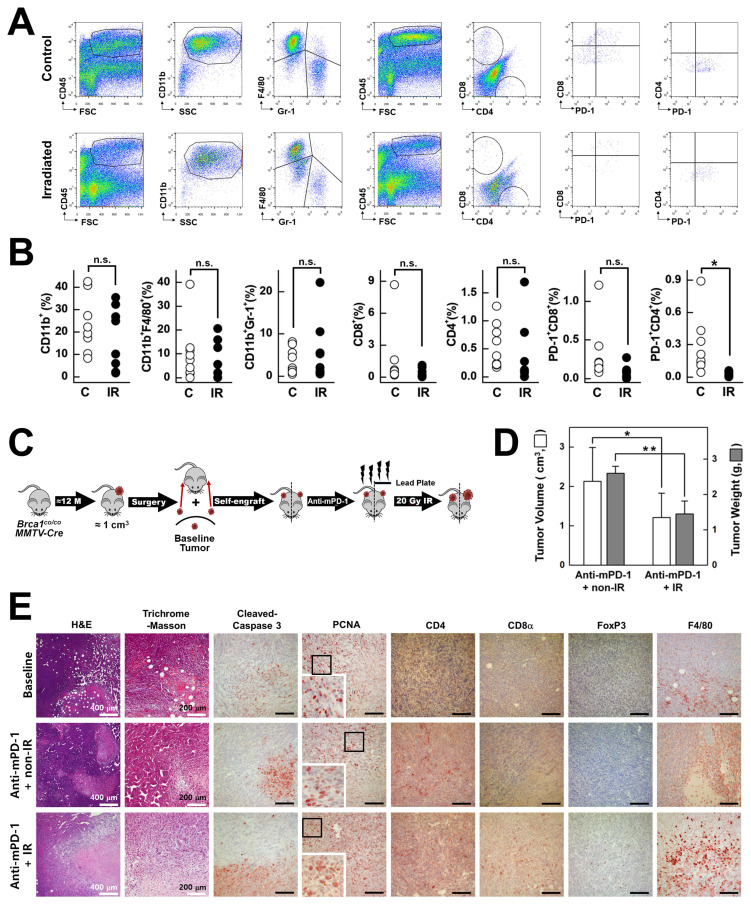 Figure 5
Peer Reviews
No public reviews on file for this paper yet. If you reviewed it on a platform where reviews are public (OpenReview, ICLR, NeurIPS, ICML), you can paste yours below so the community can read it here.
Videos
No videos yet. Explain this paper in a talk, walkthrough, or lecture? Add one.
Taxonomy
TopicsComputational Drug Discovery Methods · BRCA gene mutations in cancer · Science, Research, and Medicine