Impact of outer width of the metacarpal diaphysis on the identification of low bone mass in children
Samantha Hertz, Finnegan Klein, Todd L. Bredbenner, Miranda Cosman, Karl J. Jepsen, Heather Macdonald, Heather Macdonald, Heather Macdonald, Heather Macdonald

TL;DR
The study shows that bone size affects how low bone mass is identified in children, suggesting better diagnosis when comparing to peers with similar bone size.
Contribution
The study introduces a method to reduce bias in identifying low bone mass by comparing children to peers with similar external bone size.
Findings
Comparing bone mass to peers with similar external bone size improves identification accuracy.
Using group averages leads to overrepresentation of children with narrow bones in low bone mass categories.
Cohen’s kappa showed poor agreement for narrow and wide bone size tertiles but strong agreement for intermediate sizes.
Abstract
Developing a strong skeleton during growth is critical for minimizing fractures later in life. Prior work showed that bone mass varied with external bone size, a measure of the outer bone width. We tested how this association affected the identification of children with low bone mass. Radiographs of the nondominant hand of 45 White females and 54 White males, all ~ 8 years old, were assessed and second metacarpal length (Le) and the midshaft outer and inner widths were measured at the 40, 50, and 60% midshaft sites. The average total area (Tt.Ar), a measure of the area enclosed by the periosteal surface, and cortical area (Ct.Ar), a measure of bone mass, were calculated assuming a circular cross-section. Individuals were sorted into tertiles using robustness (Tt.Ar/Le). Z-scores were calculated for Ct.Ar first using the cohort mean and standard deviation and second using each robustness…
Genes, proteins, chemicals, diseases, species, mutations and cell lines named across the full text — each resolved to its canonical identifier and authoritative record.
Click any figure to enlarge with its caption.
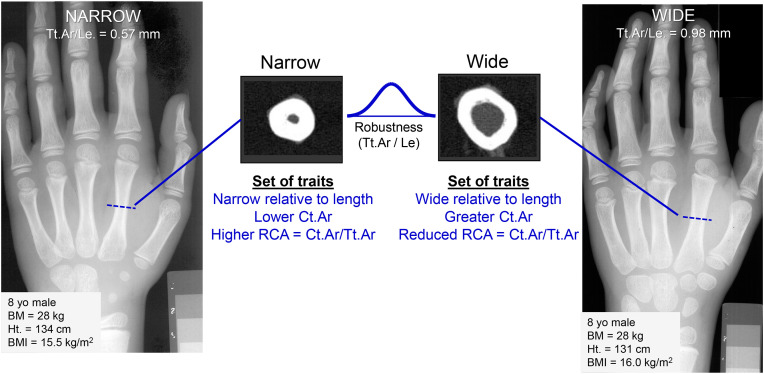 Figure 1
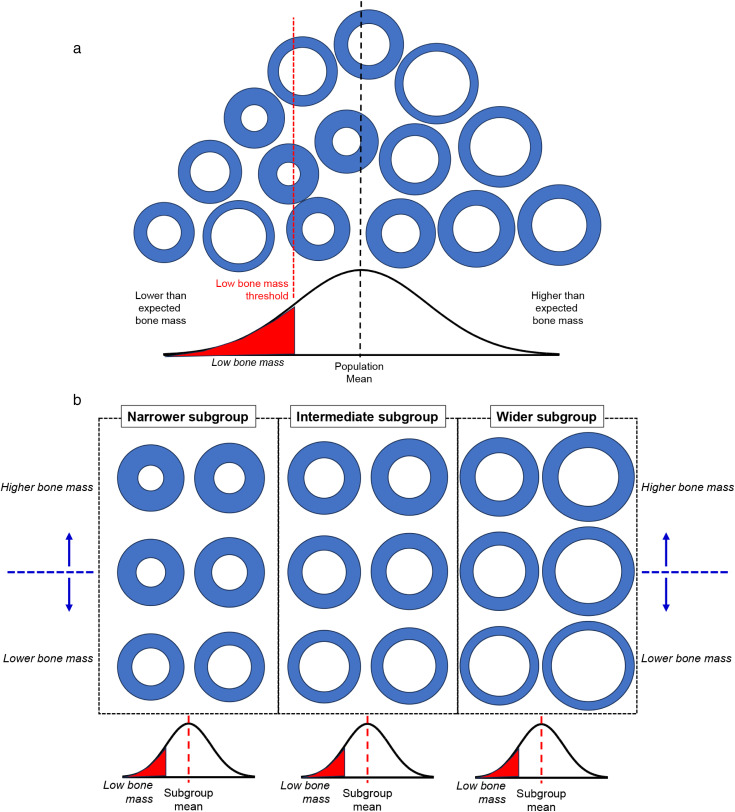 Figure 2
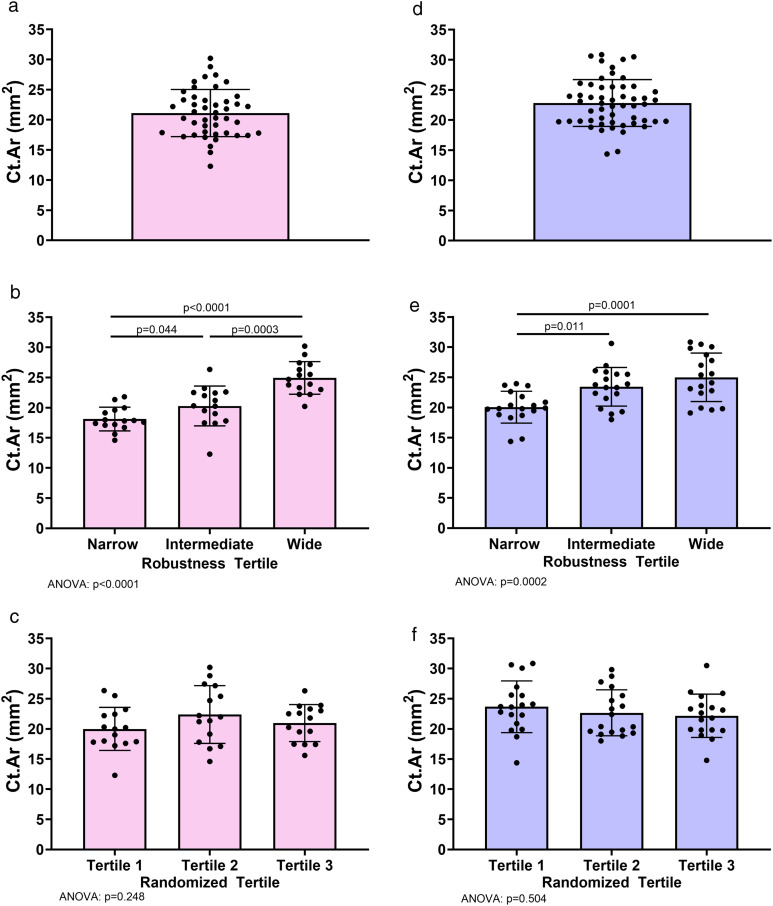 Figure 3
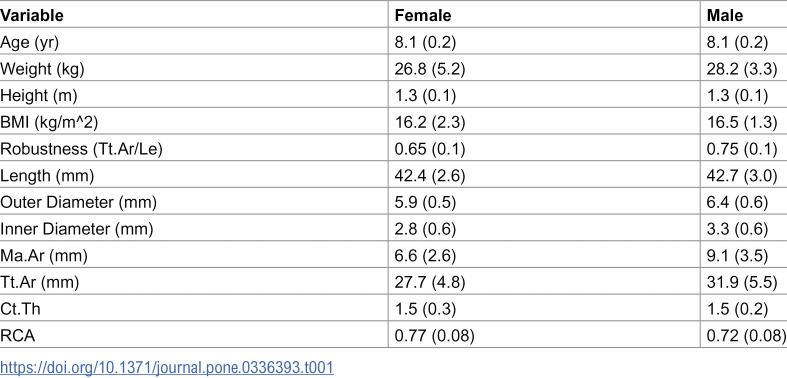 Figure 4
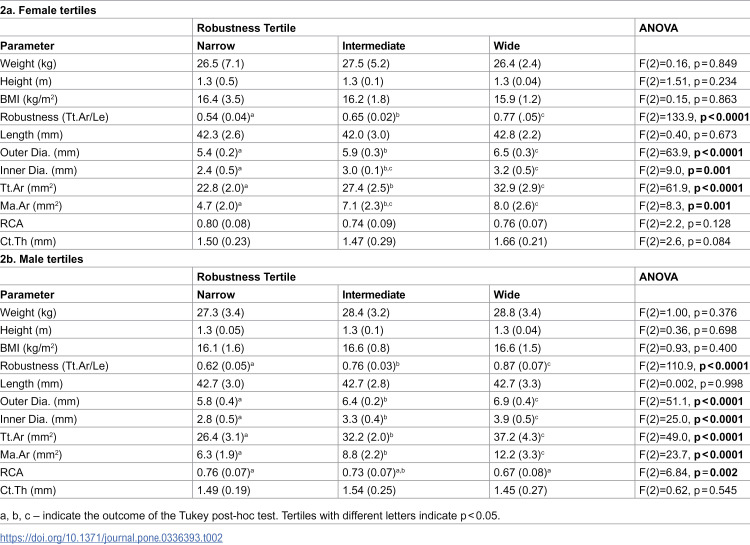 Figure 5
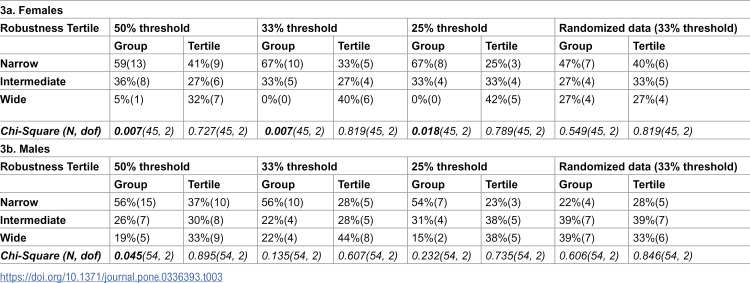 Figure 6
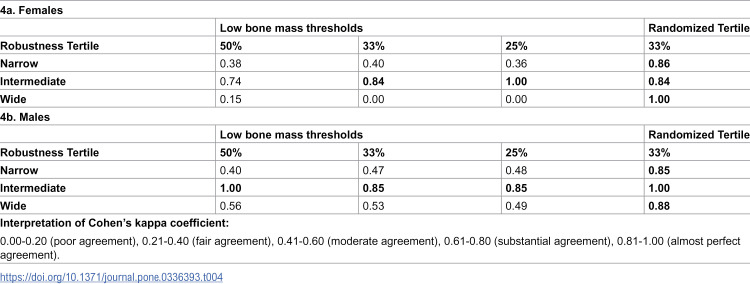 Figure 7
Peer Reviews
No public reviews on file for this paper yet. If you reviewed it on a platform where reviews are public (OpenReview, ICLR, NeurIPS, ICML), you can paste yours below so the community can read it here.
Videos
No videos yet. Explain this paper in a talk, walkthrough, or lecture? Add one.
Taxonomy
TopicsBone health and osteoporosis research · Forensic Anthropology and Bioarchaeology Studies · Orthopedic Surgery and Rehabilitation