missForestPredict—Missing data imputation for prediction settings
Elena Albu, Shan Gao, Laure Wynants, Ben Van Calster, Santiago Callegari, Leona Cilar Budler, Leona Cilar Budler, Leona Cilar Budler, Leona Cilar Budler

TL;DR
The missForestPredict package offers a fast and user-friendly method for imputing missing data in prediction models using random forests.
Contribution
It introduces an adaptation of the missForest algorithm tailored for prediction settings with customizable imputation models.
Findings
missForestPredict provides competitive prediction results compared to other imputation methods.
The algorithm achieves convergence with a unified criterion for continuous and categorical variables.
It performs well on both simulated and public datasets with short computation times.
Abstract
Prediction models are used to predict an outcome based on input variables. Missing data in input variables often occur at model development and at prediction time. The missForestPredict R package proposes an adaptation of the missForest imputation algorithm that is fast, user-friendly and tailored for prediction settings. The algorithm iteratively imputes variables using random forests until a convergence criterion, unified for continuous and categorical variables, is met. The imputation models are saved for each variable and iteration and can be applied later to new observations at prediction time. The missForestPredict package offers extended error monitoring, control over variables used in the imputation and custom initialization. This allows users to tailor the imputation to their specific needs. The missForestPredict algorithm is compared to mean/mode imputation, linear regression…
Genes, proteins, chemicals, diseases, species, mutations and cell lines named across the full text — each resolved to its canonical identifier and authoritative record.
Click any figure to enlarge with its caption.
 Figure 1
 Figure 2
 Figure 3
 Figure 4
 Figure 5
 Figure 6
 Figure 7
 Figure 8
 Figure 9
 Figure 10
 Figure 11
 Figure 12
 Figure 13
 Figure 14
 Figure 15
 Figure 16
 Figure 17
 Figure 18
 Figure 19
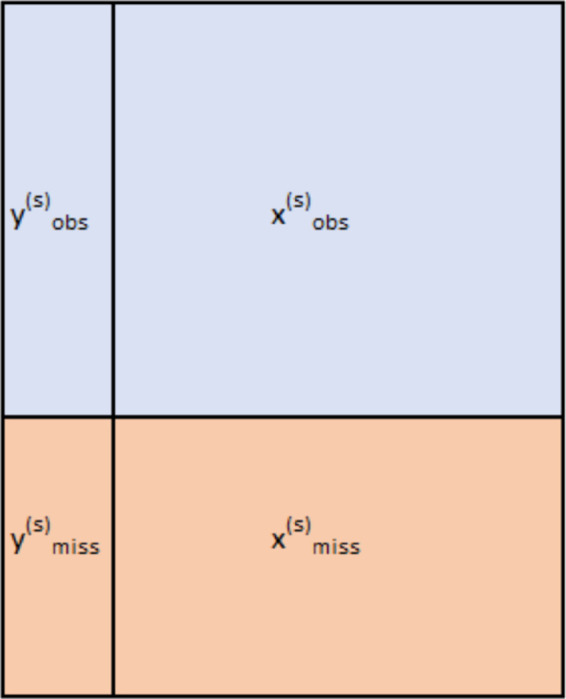 Figure 20
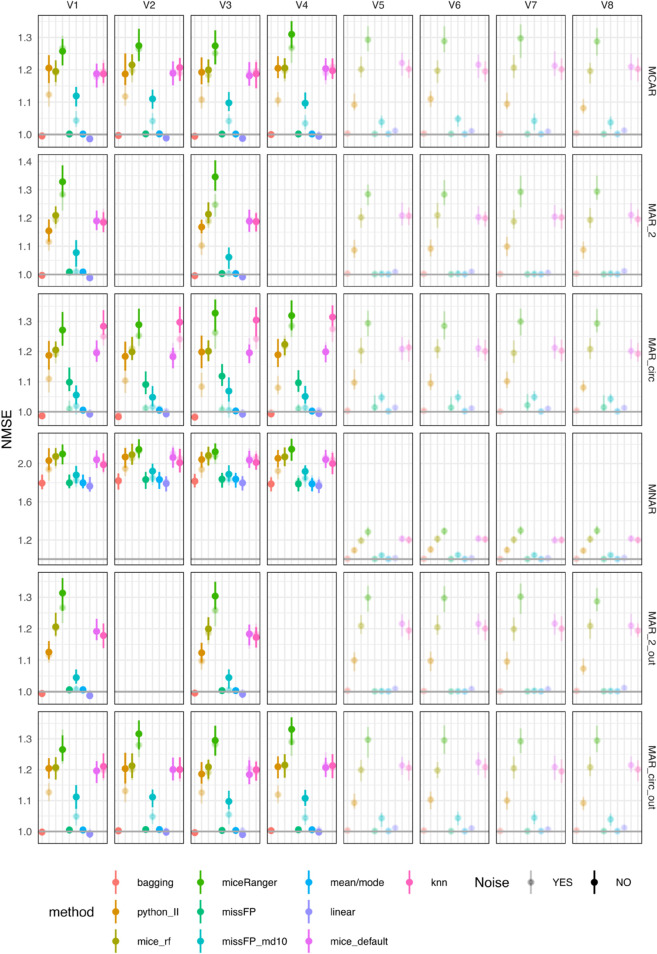 Figure 21
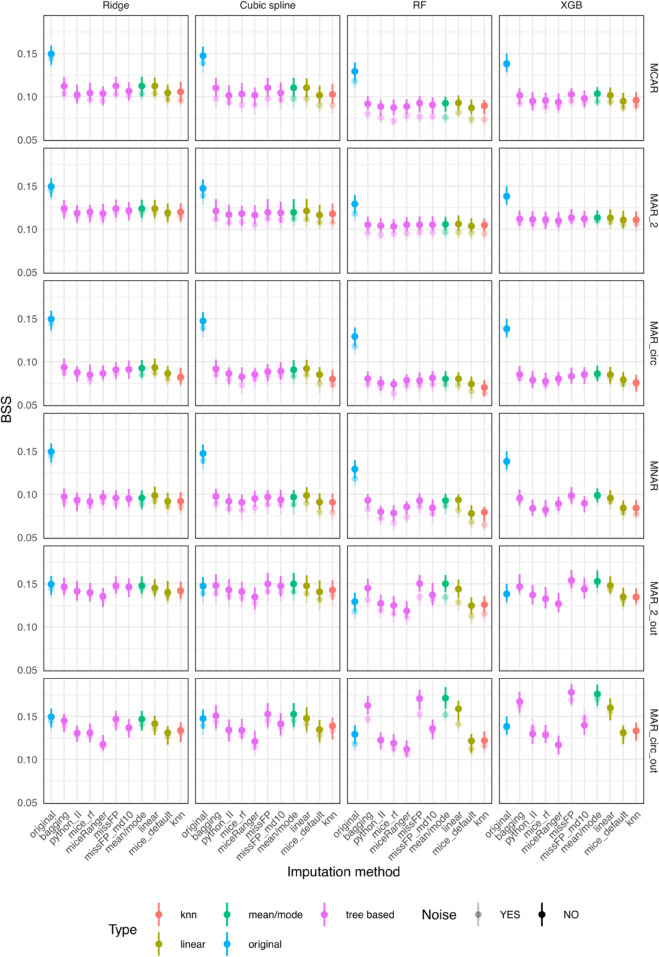 Figure 22
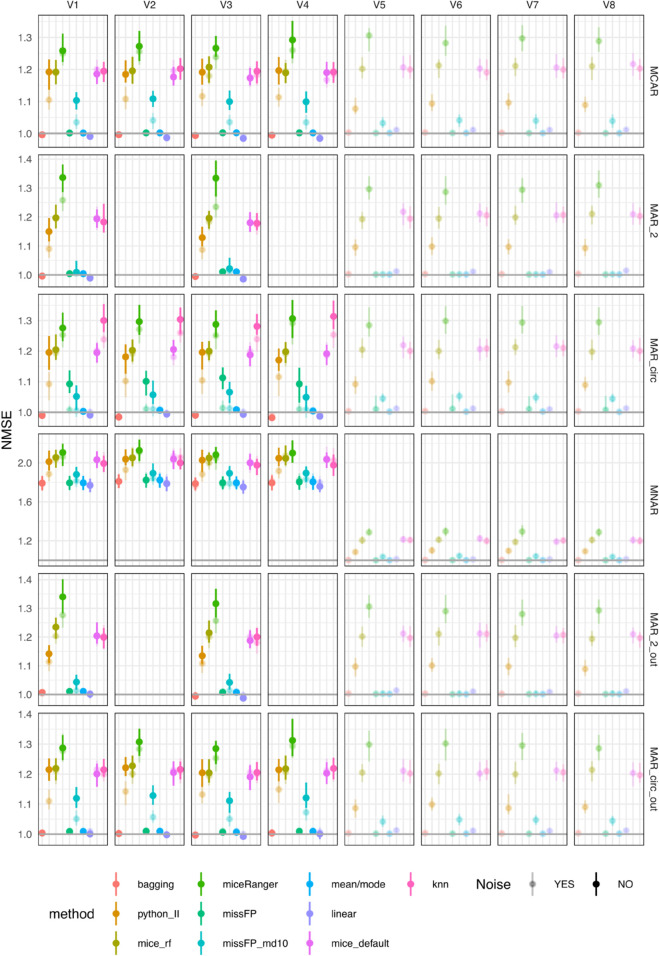 Figure 23
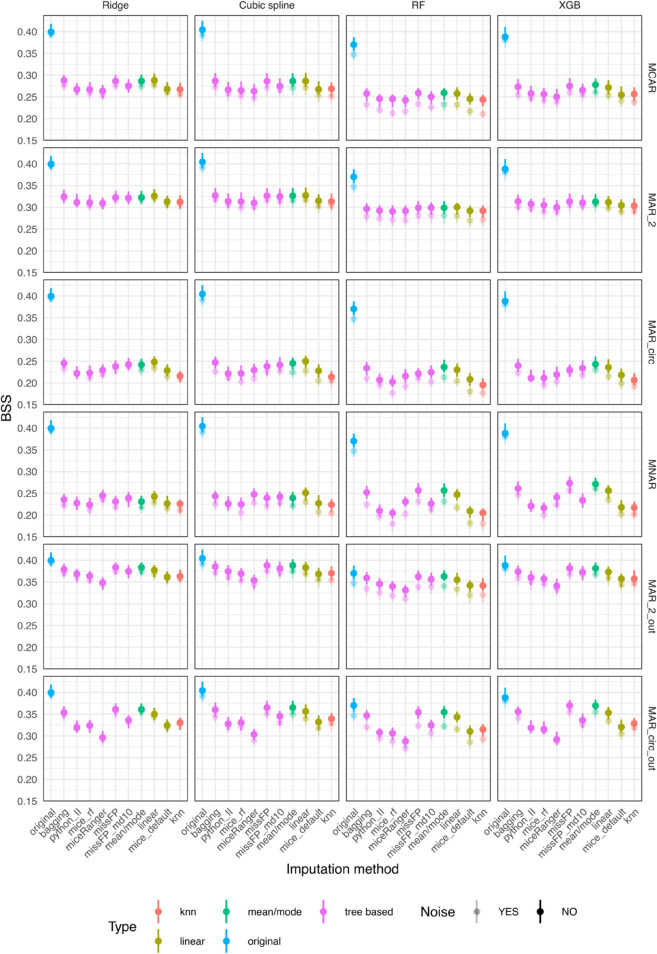 Figure 24
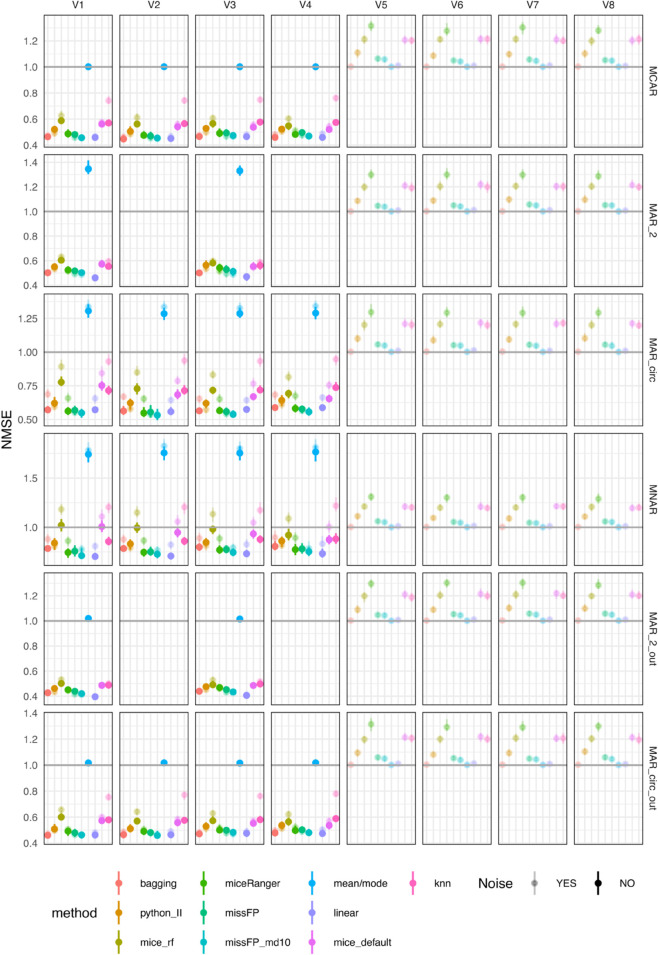 Figure 25
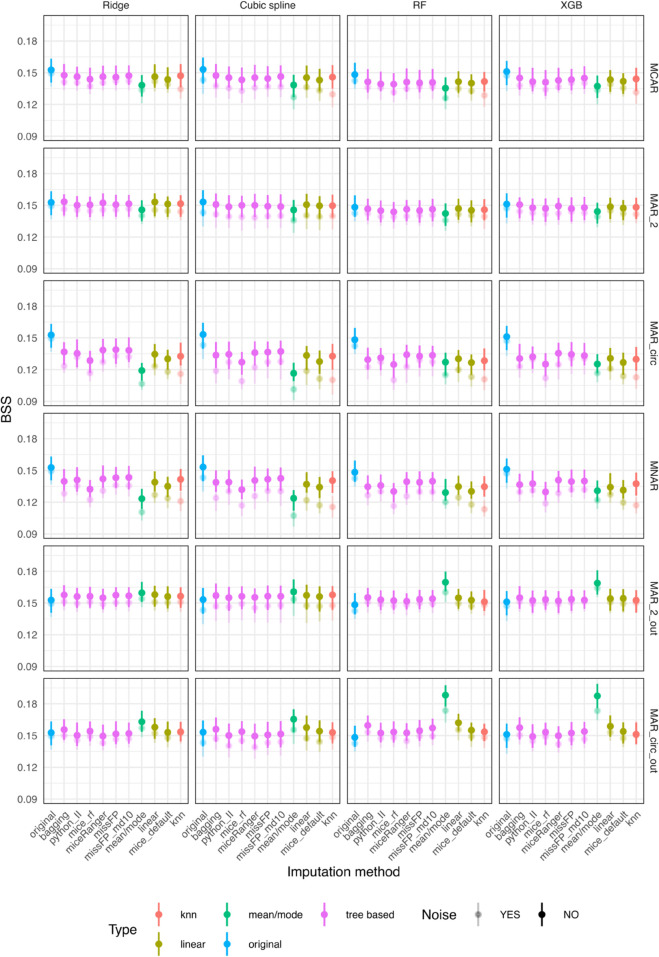 Figure 26
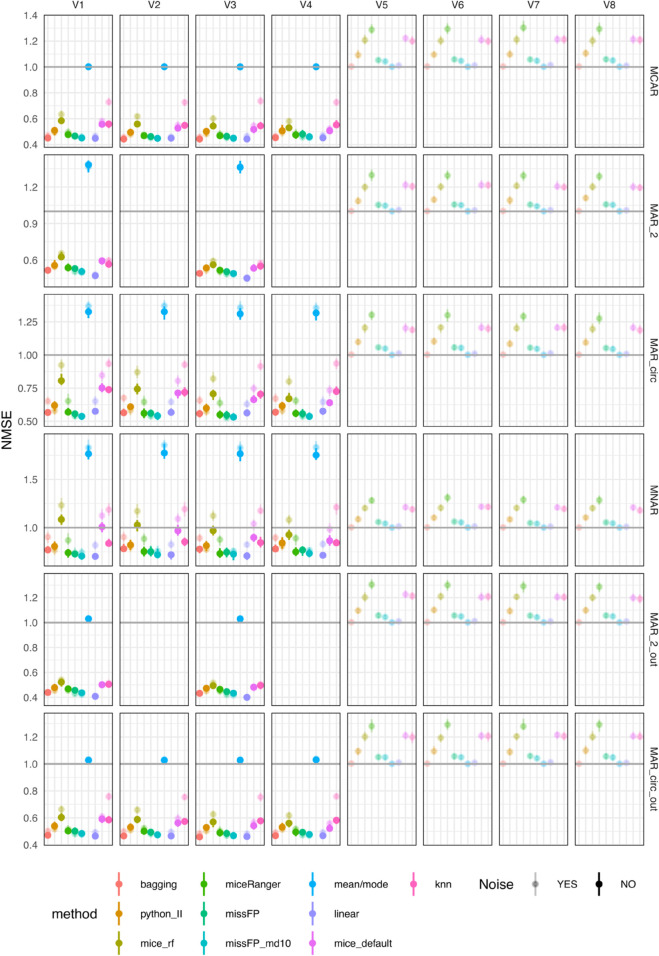 Figure 27
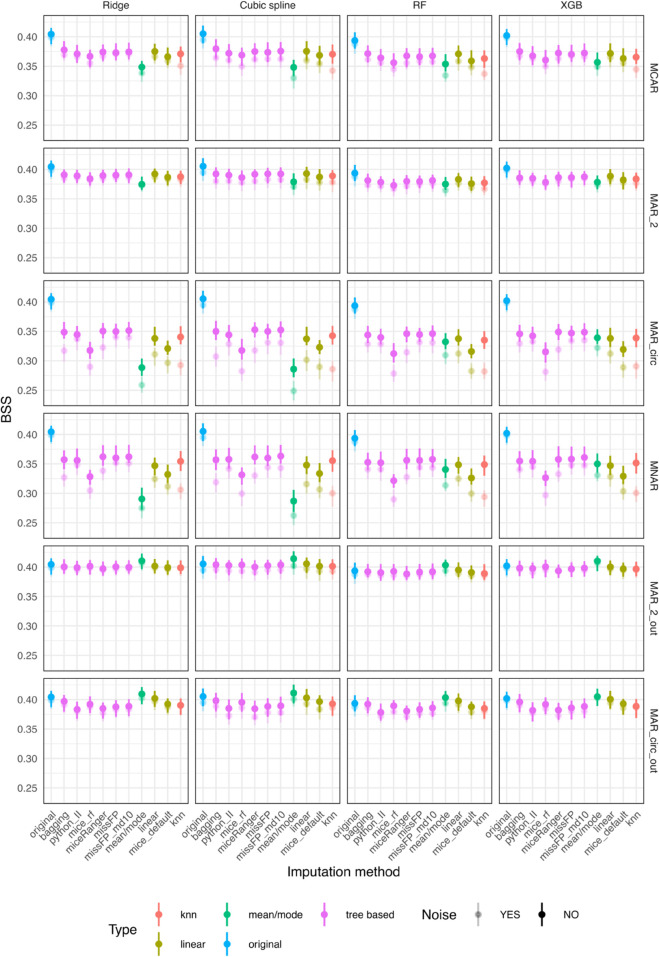 Figure 28
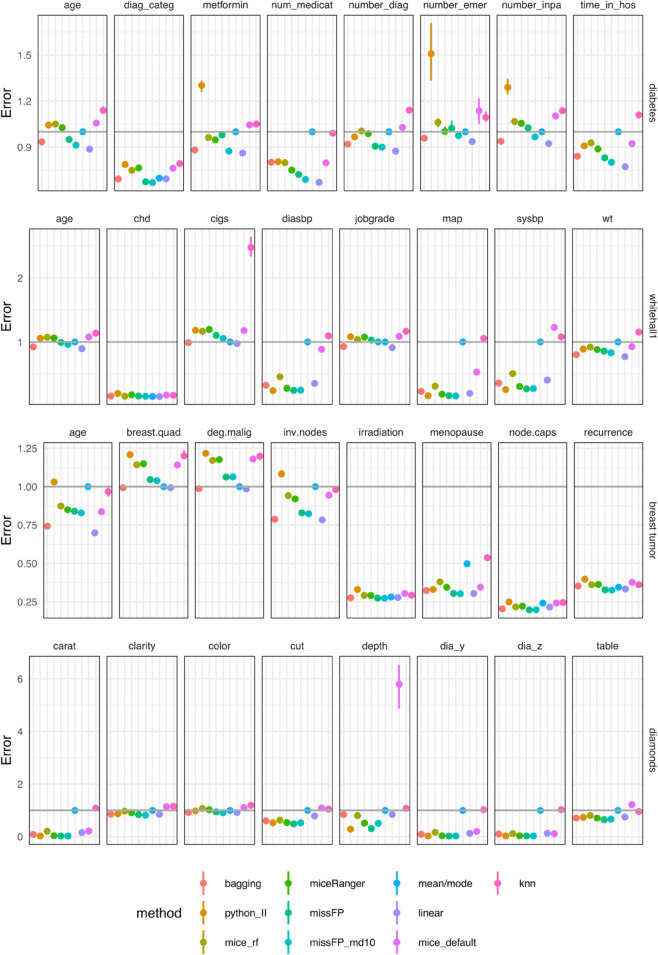 Figure 29
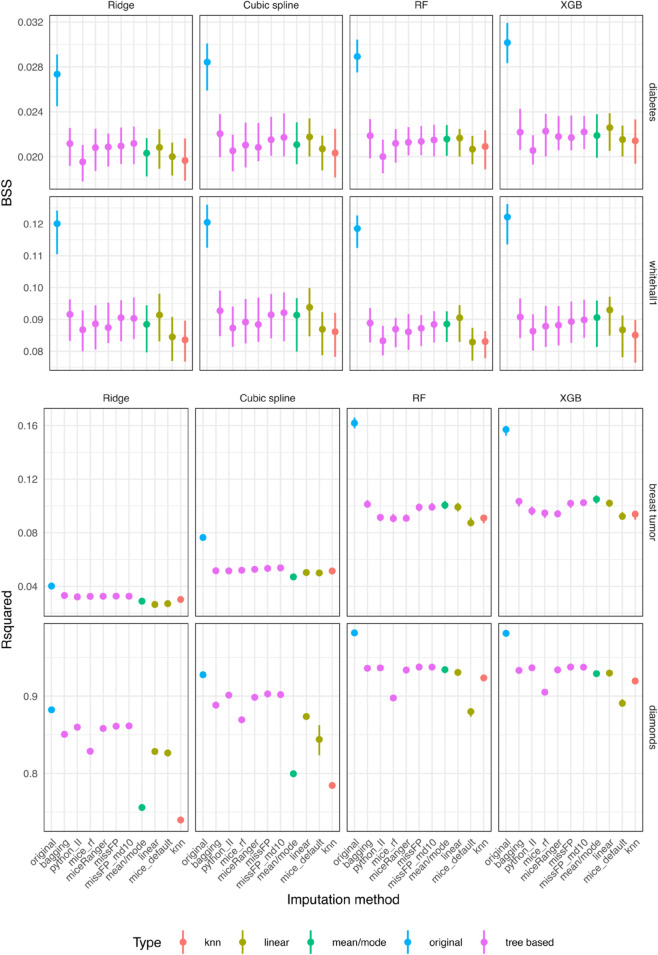 Figure 30
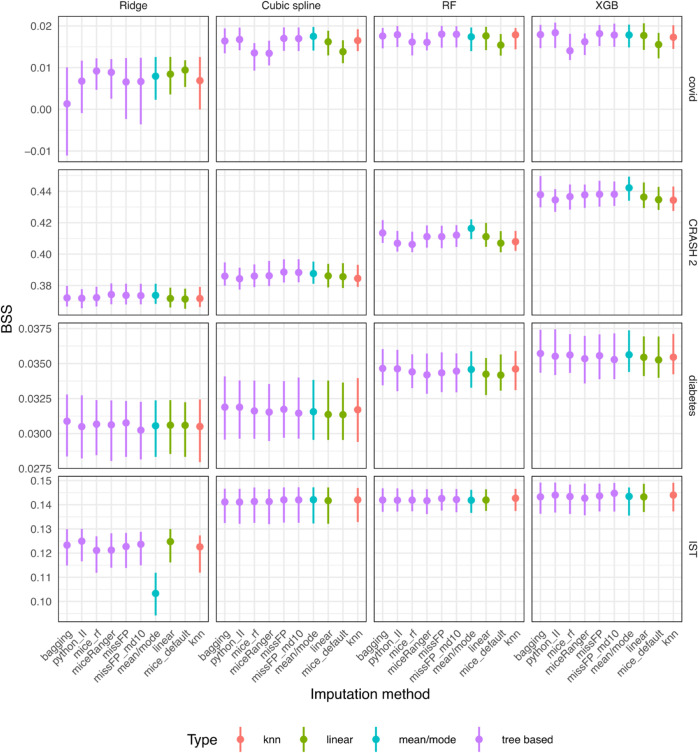 Figure 31
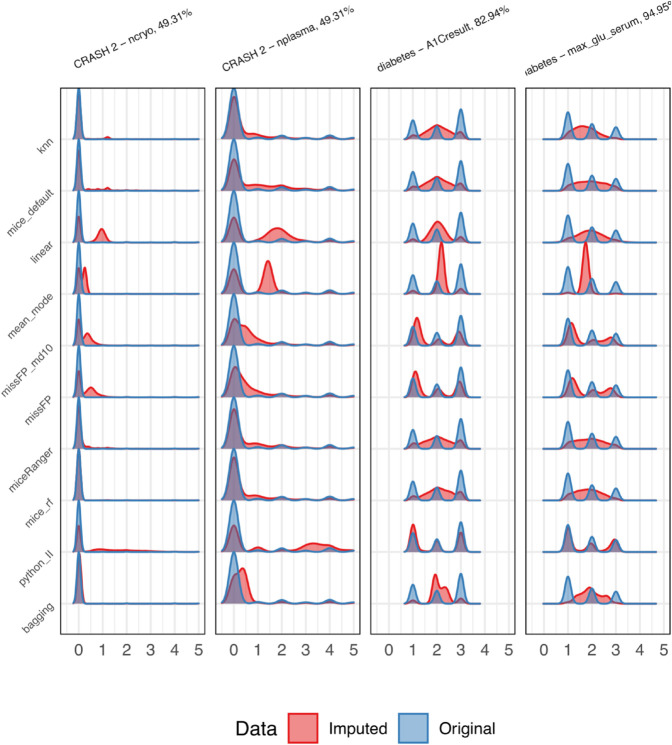 Figure 32
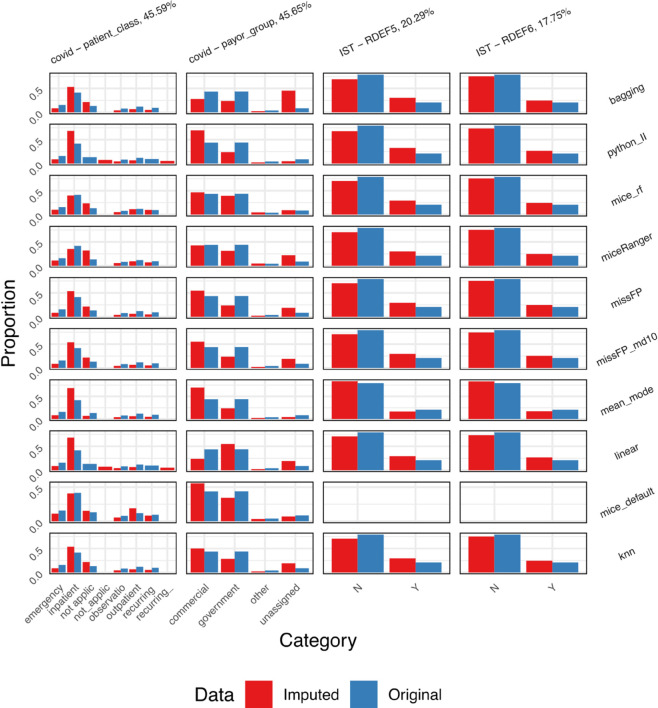 Figure 33
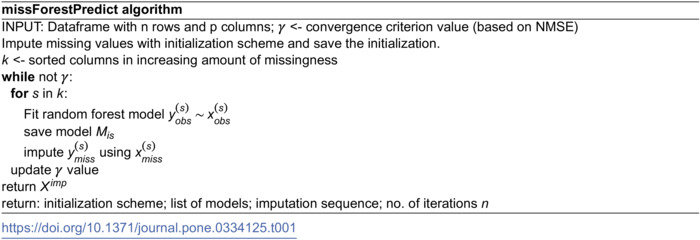 Figure 34
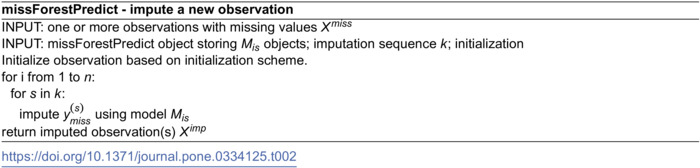 Figure 35
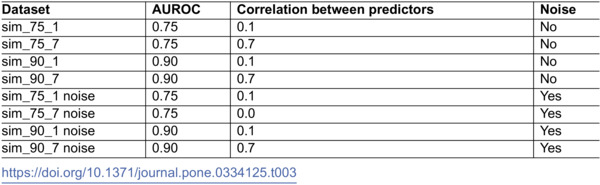 Figure 36
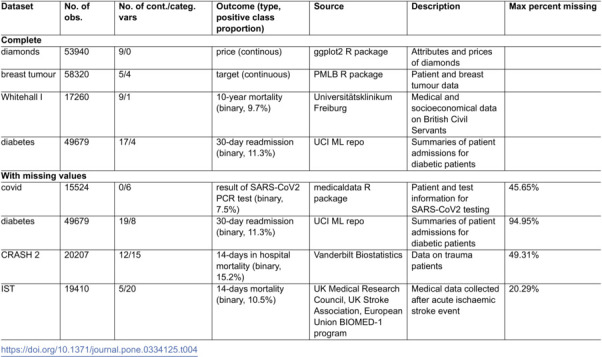 Figure 37
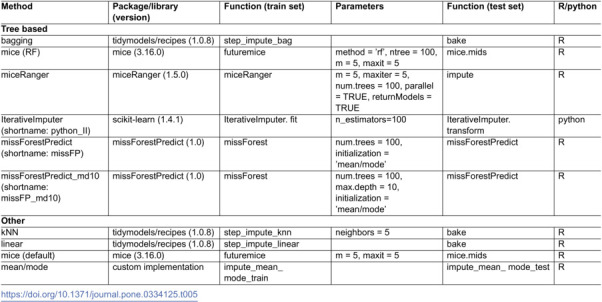 Figure 38
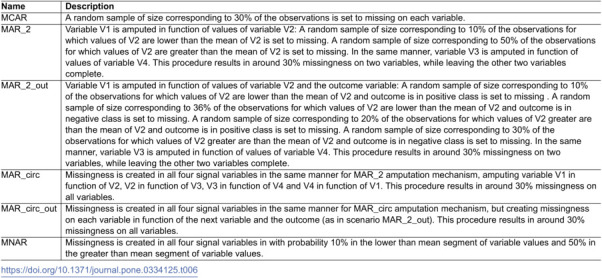 Figure 39
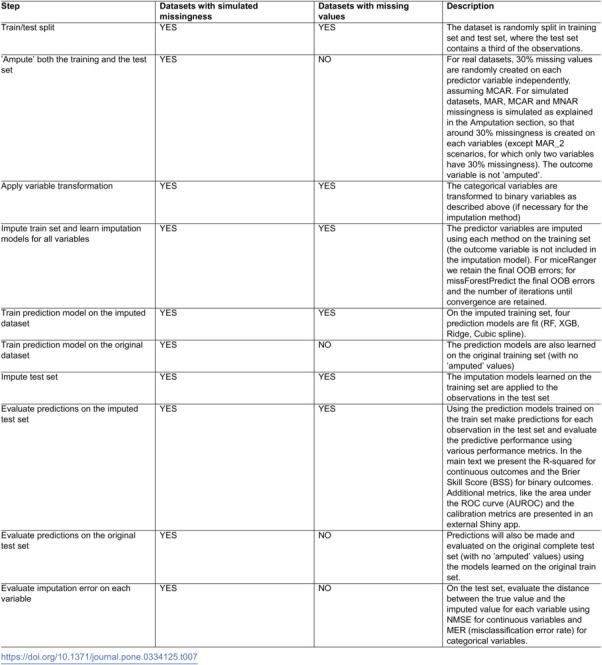 Figure 40
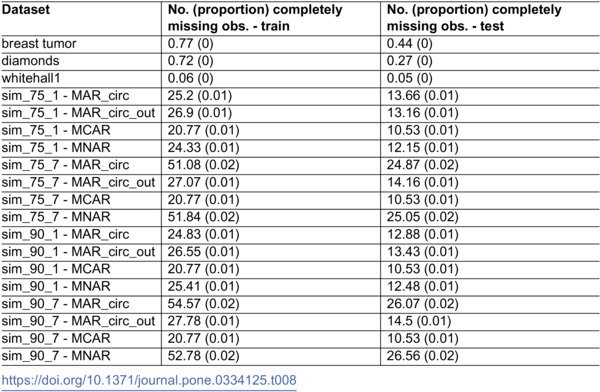 Figure 41
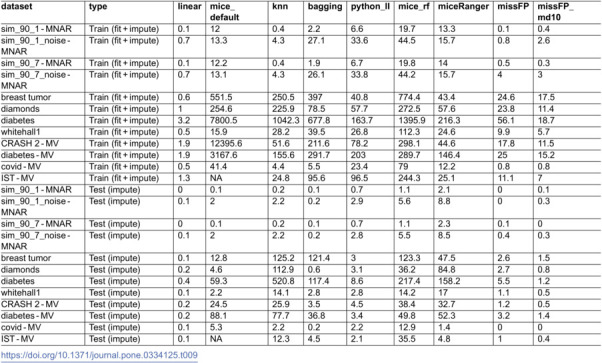 Figure 42
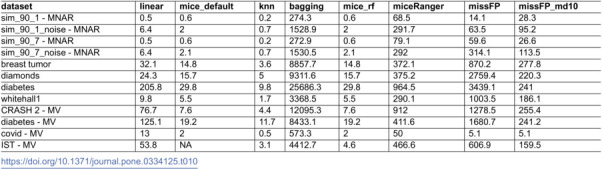 Figure 43
Peer Reviews
No public reviews on file for this paper yet. If you reviewed it on a platform where reviews are public (OpenReview, ICLR, NeurIPS, ICML), you can paste yours below so the community can read it here.
Videos
No videos yet. Explain this paper in a talk, walkthrough, or lecture? Add one.
Taxonomy
TopicsStatistical Methods and Bayesian Inference · Data Analysis with R · Markov Chains and Monte Carlo Methods