Convergence and stability analysis of recurrent neural networks for rapid structural damage assessment under seismic loads
Feng Zeng, Fujiang Chen, Yongyi Yang, Xin Zhang

TL;DR
This paper introduces a stable and efficient LSTM model for real-time structural damage assessment during earthquakes, even with noisy sensor data.
Contribution
A stability-controlled, lightweight LSTM with gradient overshoot penalization, temporal attention, and multi-scale inference for damage assessment.
Findings
The method achieves loss < 0.01 in 18 epochs with minimal gradient-explosion events under 10 dB noise.
It outperforms standard RNN variants in accuracy, stability, and latency.
On-device tests show < 5 ms delay at 100 Hz, enabling real-time deployment.
Abstract
Non-stationary earthquake responses and sensor noise often make RNN-based damage assessment difficult to optimize and unstable at inference. We develop a stability-controlled, lightweight LSTM that: (i) penalizes gradient overshoot to smooth the update trajectory and prevent exploding/vanishing gradients; (ii) uses a temporal attention gate to emphasize damage-critical segments; and (iii) performs multi-scale sliding-window inference to stabilize long-horizon predictions. Casting the LSTM-with-attention into a discrete-time state-space view, we provide sufficient conditions for non-expansive updates and BIBO stability by bounding the Jacobian spectral norm and constraining attention gains.Empirically, under 10 dB noise our method reaches loss < 0.01 in 18 epochs with only 3 gradient-explosion events, and achieves σ(out)=0.032 with max Δ-rate = 0.085 ± 0.009, outperforming standard…
Genes, proteins, chemicals, diseases, species, mutations and cell lines named across the full text — each resolved to its canonical identifier and authoritative record.
Click any figure to enlarge with its caption.
 Figure 1
 Figure 2
 Figure 3
 Figure 4
 Figure 5
 Figure 6
 Figure 7
 Figure 8
 Figure 9
 Figure 10
 Figure 11
 Figure 12
 Figure 13
 Figure 14
 Figure 15
 Figure 16
 Figure 17
 Figure 18
 Figure 19
 Figure 20
 Figure 21
 Figure 22
 Figure 23
 Figure 24
 Figure 25
 Figure 26
 Figure 27
 Figure 28
 Figure 29
 Figure 30
 Figure 31
 Figure 32
 Figure 33
 Figure 34
 Figure 35
 Figure 36
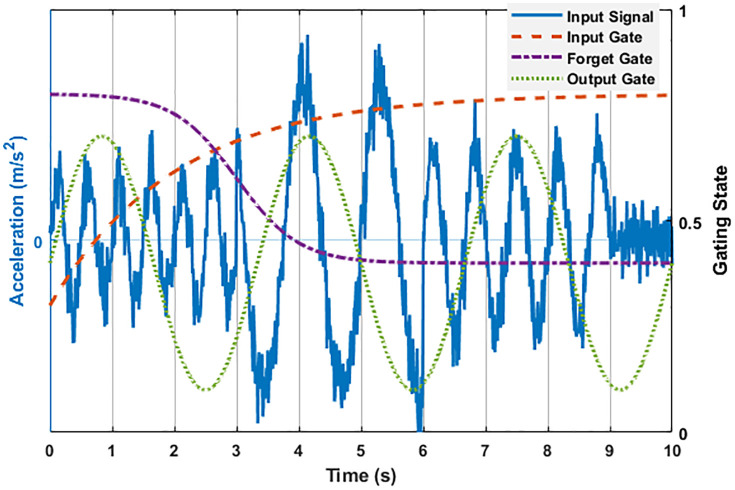 Figure 37
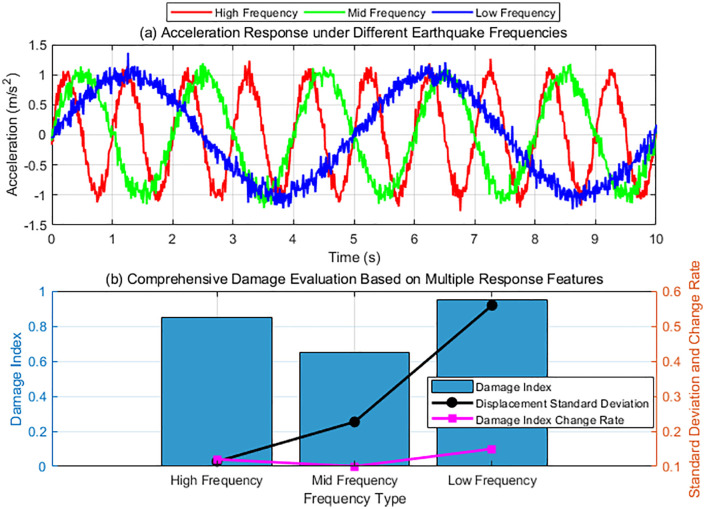 Figure 38
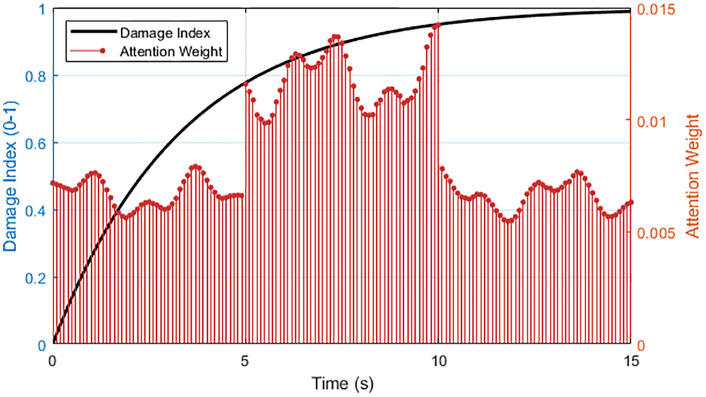 Figure 39
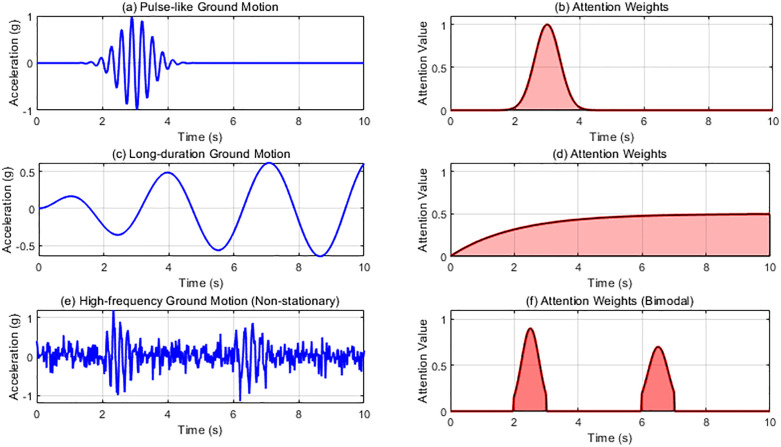 Figure 40
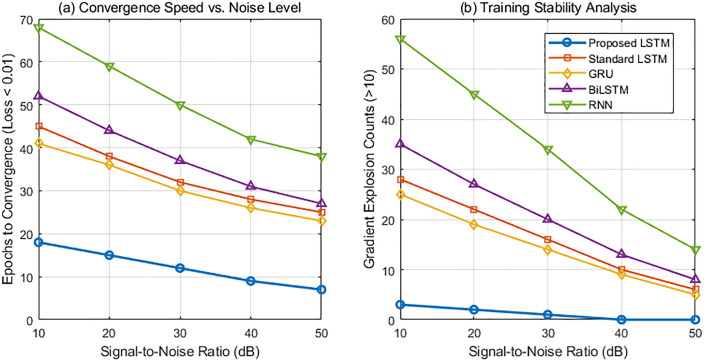 Figure 41
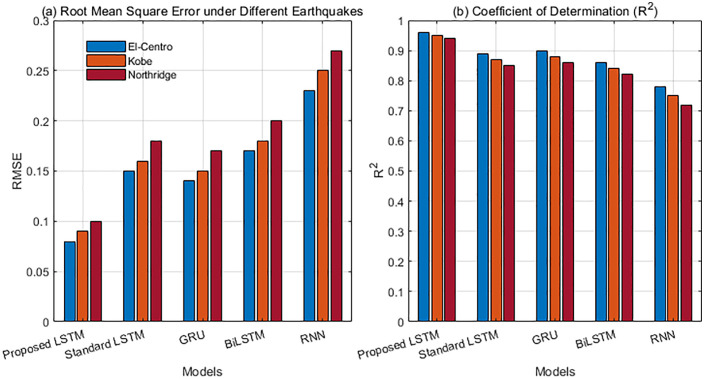 Figure 42
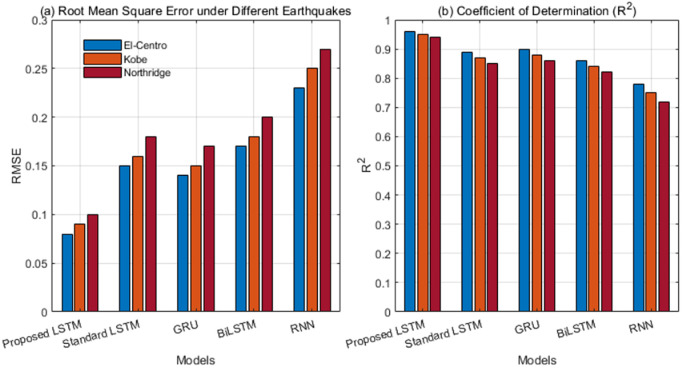 Figure 43
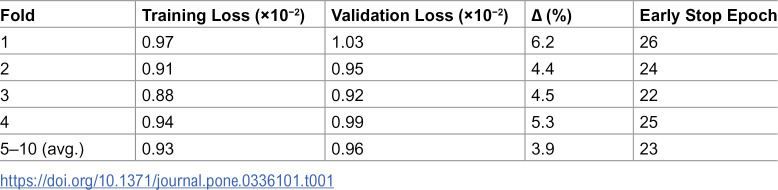 Figure 44
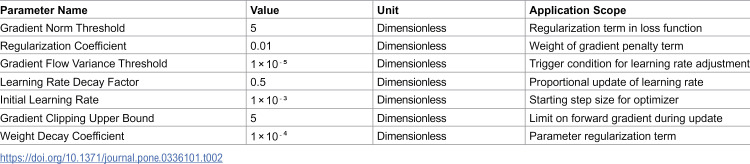 Figure 45
 Figure 46
 Figure 47
 Figure 48
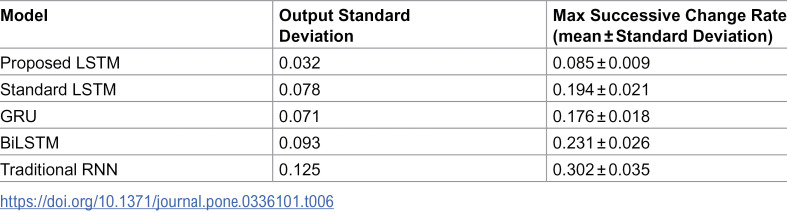 Figure 49
 Figure 50
Peer Reviews
No public reviews on file for this paper yet. If you reviewed it on a platform where reviews are public (OpenReview, ICLR, NeurIPS, ICML), you can paste yours below so the community can read it here.
Videos
No videos yet. Explain this paper in a talk, walkthrough, or lecture? Add one.
Taxonomy
TopicsSeismology and Earthquake Studies · Structural Health Monitoring Techniques · Seismic Performance and Analysis