Economic evaluation of Manchester procedure versus sacrospinous hysteropexy: A follow-up analysis of a randomized clinical trial
Sascha F. M. Schulten, Rosa A. Enklaar, Mirjam Weemhoff, Hugo W.F. van Eijndhoven, Sanne A.L. van Leijsen, Eddy M.M. Adang, Kirsten B. Kluivers, Ahmed Maged, Ahmed Maged, Ozan Karadeniz, Ozan Karadeniz, Ozan Karadeniz, Ozan Karadeniz

TL;DR
This study compares the costs and effectiveness of two pelvic organ prolapse surgeries, finding the Manchester procedure is cheaper without sacrificing quality of life.
Contribution
The study provides new economic insights showing the cost-effectiveness of the Manchester procedure over sacrospinous hysteropexy.
Findings
The Manchester procedure was significantly less expensive than sacrospinous hysteropexy by 1458.34 euros.
No significant difference in quality-adjusted life years (QALYs) was observed between the two procedures.
The cost difference was statistically significant while effectiveness remained comparable over two years.
Abstract
Pelvic organ prolapse is a common condition in females. The reported lifetime risk of undergoing pelvic organ prolapse surgery is estimated to affect up to 20% of women. Recently, a higher level of surgical success after the Manchester procedure has been shown compared to sacrospinous hysteropexy. As the costs in healthcare are rising, it is also important to consider the resources and associated cost implications of the choice between these two procedures. An economic evaluation was conducted to compare the alternative costs and benefits. An economic evaluation alongside a randomized controlled trial (RCT) was performed from a societal and healthcare perspective at 2 years of follow-up according to the intention to treat principle. The RCT was a multicenter, randomized, open label trial, executed in 26 Dutch hospitals. 434 women were randomly assigned to the Manchester procedure or…
Genes, proteins, chemicals, diseases, species, mutations and cell lines named across the full text — each resolved to its canonical identifier and authoritative record.
Click any figure to enlarge with its caption.
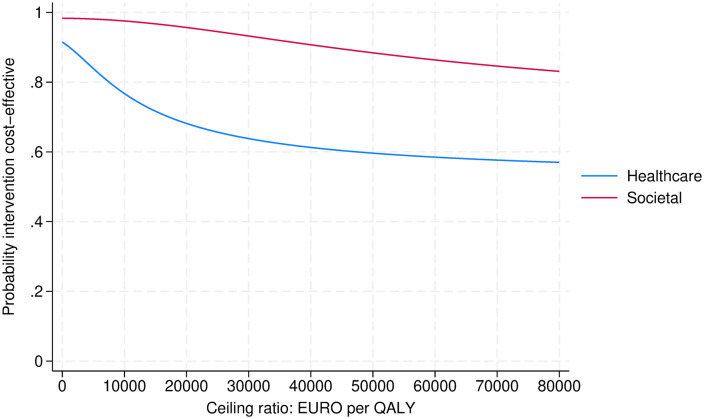 Figure 1
 Figure 2
 Figure 3
 Figure 4
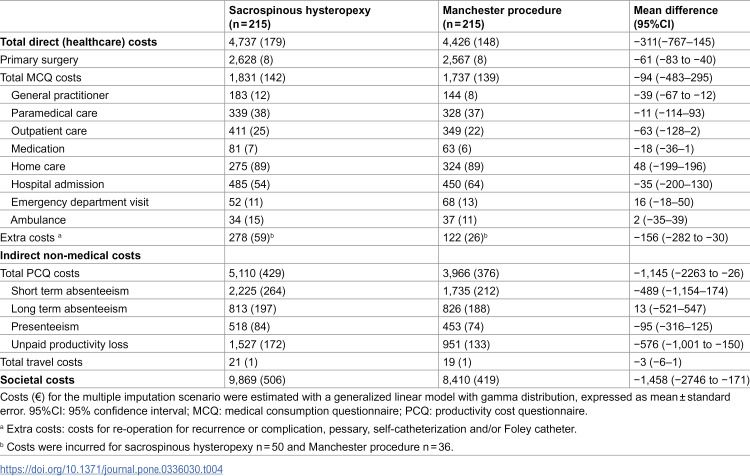 Figure 5
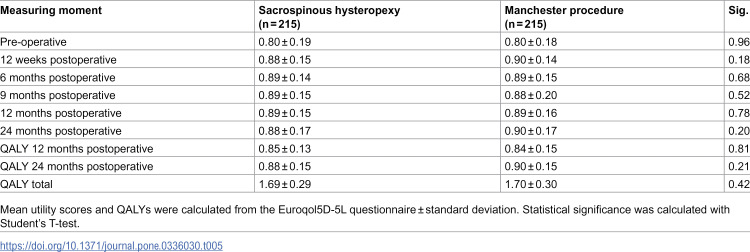 Figure 6
Peer Reviews
No public reviews on file for this paper yet. If you reviewed it on a platform where reviews are public (OpenReview, ICLR, NeurIPS, ICML), you can paste yours below so the community can read it here.
Videos
No videos yet. Explain this paper in a talk, walkthrough, or lecture? Add one.
Taxonomy
TopicsMaternal and Perinatal Health Interventions · Pelvic floor disorders treatments · Gynecological conditions and treatments